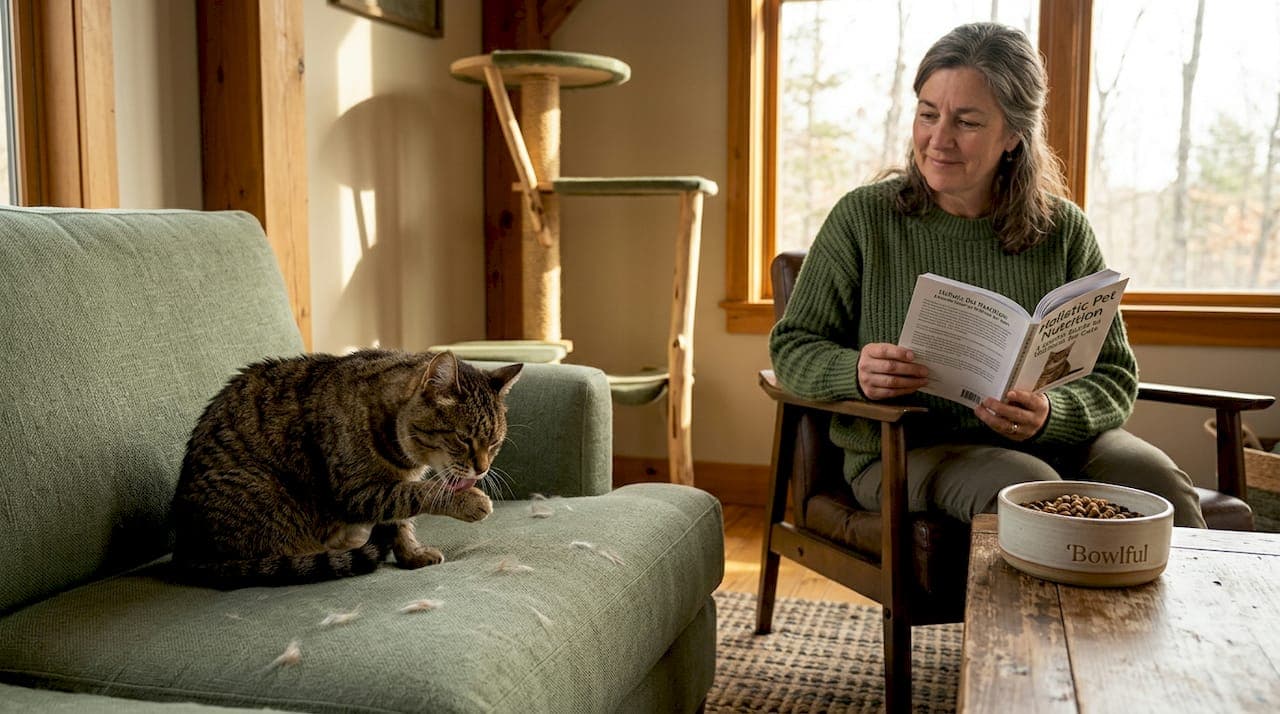
Your senior cat eating well but losing weight anyway is one of the most confusing and worrying things you can experience as an owner. To manage senior cat weight loss effectively, you need to understand that it is rarely just "getting old." Approximately 59.5% of US domestic cats are already overweight or obese, which means the senior population carries significant health risk in both directions. The stakes are high, and the margin for error is narrow. This guide walks you through everything you need to know, from identifying red flags to building a feeding plan that protects muscle and supports healthy aging.
Table of Contents
- Key takeaways
- Managing senior cat weight loss: causes and red flags
- Assessing and monitoring your cat's weight at home
- Nutritional strategies for safe weight management
- Lifestyle changes that support healthy weight
- Troubleshooting and when to call your vet
- My honest take on senior cat weight management
- How Bowlful supports your senior cat's nutrition
- FAQ
Key takeaways
| Point | Details |
|---|---|
| Weight loss is rarely "just aging" | Unexplained loss over 10% of body weight in 3–6 months demands a veterinary workup. |
| Measure food by grams, not cups | Measuring cups introduce up to 80% error; digital scales are the only reliable tool. |
| Protein is your senior cat's ally | High-protein, low-carbohydrate diets preserve lean muscle and support metabolic function. |
| Monitor BCS and MCS together | Body Condition Score tracks fat; Muscle Condition Score reveals hidden muscle loss. |
| Safe weight loss is slow by design | Losing more than 2% body weight per week increases the risk of hepatic lipidosis. |
Managing senior cat weight loss: causes and red flags
Weight loss in a cat aged 10 and older is almost never a single-cause problem. The most common culprits are hyperthyroidism, chronic kidney disease, diabetes mellitus, inflammatory bowel disease, and dental pain severe enough to make eating uncomfortable. Each condition has a distinct clinical profile, but all of them share one trait: they become far easier to treat when caught early.
One of the more counterintuitive presentations you might see is a cat eating more than usual but still shrinking. Polyphagia with weight loss in a senior cat is a near-classic sign of hyperthyroidism or diabetes, where the body is either burning through calories at an accelerated rate or failing to convert nutrients properly. If your cat is cleaning the bowl but visibly thinner, that is not a good sign. It is actually a more urgent one.
There is also an important distinction between losing fat and losing muscle. Sarcopenia, the progressive loss of skeletal muscle mass, is underdiagnosed in senior cats and will not always show up obviously on a scale. A cat can stay at the same weight while replacing muscle with fat, masking a deteriorating body composition. This is why the number on the scale is only part of the picture.
The practical threshold to keep in mind is this: weight loss exceeding 10% of body weight over three to six months is a clinical red flag. At that point, your vet needs to run bloodwork and, in many cases, imaging.
- Watch for weight loss paired with increased thirst or urination (kidney disease, diabetes)
- Note any change in coat quality, hyperactivity, or increased vocalization (hyperthyroidism)
- Track muscle wasting around the spine, hips, and shoulders separately from overall weight
- Flag any vomiting, diarrhea, or changes in stool consistency lasting more than a few days
Pro Tip: Veterinary experts caution against dismissing weight loss as normal aging without blood panels. A basic thyroid and kidney screen can rule out the most common causes within one appointment.
Assessing and monitoring your cat's weight at home
The single most important habit you can build is weekly weight tracking under consistent conditions. Weigh your cat at the same time of day, before meals, on the same scale. Small digital kitchen scales work well for most cats. If your cat will not cooperate, weigh yourself holding your cat, then weigh yourself alone, and subtract.
Here is a simple weekly monitoring protocol to follow:
- Record your cat's weight every seven days in a notebook or phone app.
- Calculate weekly percentage change: divide the change in weight by last week's weight, then multiply by 100.
- Apply the 1% Rule: if your cat loses more than 0.5% to 1% of total body weight for two consecutive weeks, contact your vet.
- Perform a hands-on body check monthly using the Body Condition Score (BCS) and Muscle Condition Score (MCS) systems.
- Bring your weight log to every vet visit. Trends over time are far more useful to your vet than a single measurement.
The BCS and MCS used together give you a complete picture that the scale alone cannot. BCS measures fat deposits on a 9-point scale. A score of 4 to 5 is ideal. MCS assesses muscle mass at specific landmarks, particularly the spine, skull, and shoulders.
| Score | BCS description | What it means |
|---|---|---|
| 1–3 | Underweight | Ribs, spine, and hip bones visually prominent; immediate vet attention needed |
| 4–5 | Ideal weight | Ribs easily felt but not visible; waist visible from above |
| 6–7 | Overweight | Ribs require firm pressure to feel; waist barely visible |
| 8–9 | Obese | Ribs not palpable; heavy fat deposits; waist absent |
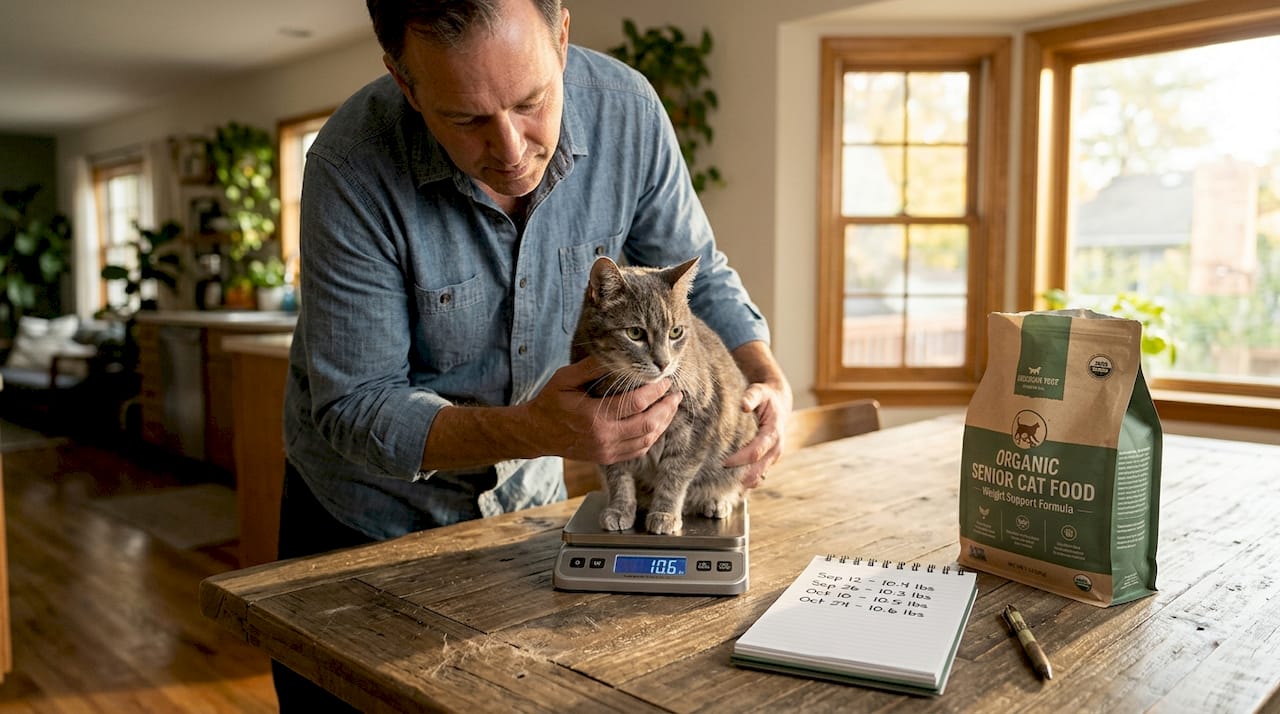
Owner monitoring is critical because cats mask illness well, and weight loss typically precedes any outward signs of disease by weeks. You will catch problems your vet cannot see between annual visits.
Pro Tip: Using measuring cups can introduce up to 80% error in portion sizes. Switch to a digital gram scale for every meal and eliminate guesswork entirely.
Nutritional strategies for safe weight management
Getting the diet right for a senior cat is genuinely more complex than cutting back on food. Simple calorie restriction without nutritional planning can strip your cat of the protein needed to maintain muscle, depress immune function, and even trigger a life-threatening condition called hepatic lipidosis.
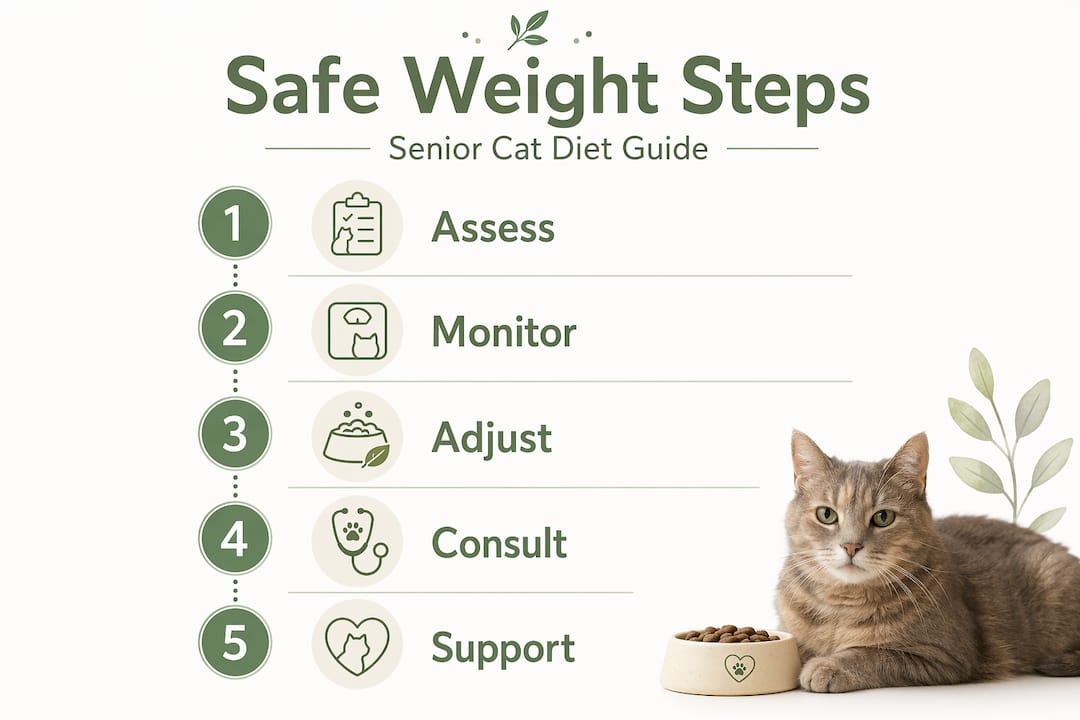
The foundation of any sound feeding plan is a high-protein, low-carbohydrate diet calibrated to your cat's ideal body weight, not their current weight. Cats are obligate carnivores, and as they age, their ability to digest and absorb protein actually declines. This means older cats need more dietary protein per pound of lean body mass, not less. Feeding a senior cat the same formula you gave them at age three is likely leaving them nutritionally short.
Therapeutic weight loss diets formulated specifically for cats are designed to be calorie-light while maintaining the full spectrum of nutrients. These outperform home-managed calorie cuts because they account for the fact that a reduced-calorie diet that is not also nutrient-dense will create deficiencies over time.
A note on caloric math: Calculate your cat's caloric target based on their ideal weight, not their current weight. Feeding to ideal weight creates a modest, safe deficit. Adjust weekly based on measured weight change, targeting 0.5% to 2% of body weight lost per week. Anything faster increases the risk of hepatic lipidosis, a condition where fat mobilizes faster than the liver can process it.
A few nutritional principles that matter most in practice:
- Feed two to three measured meals daily rather than free feeding. Meal structure supports metabolic regularity and gives you accurate intake data.
- Count treats as part of the daily calorie budget. Even small treats add up quickly on a restricted plan.
- Avoid rapid food switches. Transition over seven to ten days to prevent gastrointestinal upset and food refusal.
- Choose foods with named meat sources as the first ingredient and avoid formulas with high grain or starch content.
- If your cat is losing weight despite an adequate caloric intake, the problem may be absorption, not quantity. That is a veterinary conversation, not a dietary one.
The key to successful weight management is steady caloric control. Unmonitored dietary changes in either direction create unpredictable results and mask the data you need to make good decisions.
Lifestyle changes that support healthy weight
Diet does the heavy lifting in cat weight management, but environmental and behavioral changes make a real and measurable difference. Puzzle feeders and foraging toys can increase daily energy expenditure by 10 to 30% compared to eating from a standard bowl. For a low-mobility senior, that is significant.
The most impactful lifestyle shift for an overweight cat is transitioning from free feeding to portion-controlled scheduled meals. Free feeding makes accurate calorie tracking nearly impossible and encourages sedentary grazing behavior. Two or three structured meals per day are not only more compatible with a weight loss plan but actually more aligned with how cats naturally eat in the wild.
- Replace flat food bowls with puzzle feeders or scatter feeding trays to slow intake and increase activity
- Add vertical space through cat trees or shelving to encourage movement without high-impact stress on aging joints
- Rotate toys regularly to maintain interest; a bored senior cat is a stationary one
- Use interactive wand toys for short daily play sessions, even five minutes twice a day adds up
- Place food, water, and litter on different levels or opposite ends of your space to create gentle movement goals
Pro Tip: For cats with arthritis or mobility issues, ramps and low-entry litter boxes allow more movement without pain. Increasing access to comfortable spaces is often enough to get a sedentary senior moving again.
Avoid making changes too quickly or too dramatically. Cats are highly sensitive to environmental disruption, and a stressed cat will eat less, hide more, and make your tracking far harder.
Troubleshooting and when to call your vet
There are scenarios you can manage at home with consistency and good monitoring. Then there are scenarios where waiting is dangerous. Knowing the difference matters.
Here are the situations that require a veterinary call, not a dietary adjustment:
- Your cat has not eaten for more than 24 to 48 hours. Short-term anorexia in cats can trigger hepatic lipidosis quickly, and this is a medical emergency.
- Weight loss is rapid or progressive despite a stable or increased food intake.
- You see obvious muscle wasting over the spine or hips paired with a normal or high BCS.
- Behavioral changes accompany weight loss: hiding, aggression, unusual vocalization, or lethargy.
- Vomiting or diarrhea recurs more than twice a week for two or more weeks.
Bring your log: Walk into every vet appointment with at least four weeks of documented weight measurements, daily food amounts in grams, any treats given, and any behavioral changes noted. This data transforms a general checkup into a productive diagnostic conversation.
One of the most common mistakes owners make is adjusting the diet repeatedly without giving any single change enough time to show results. Two weeks is the minimum before evaluating whether a dietary adjustment is working. Changing too frequently generates noise, not information.
Precision feeding technologies and connected activity trackers are becoming genuinely useful tools for complex cases, providing continuous data that your vet can use to catch trends between appointments. These are no longer niche gadgets.
My honest take on senior cat weight management
I have seen a lot of owners arrive at the vet after months of managing a senior cat's weight loss at home, doing everything that sounds reasonable, and still watching the problem worsen. The common thread is not bad intentions. It is misplaced confidence in simple solutions.
The biggest misconception I see is treating weight loss and weight gain as mirror-image problems. In senior cats, they are not. An overweight cat needs careful calorie reduction with preserved protein. A thin cat needs caloric density and muscle support, often simultaneously. And a cat who looks normal on the outside can be quietly losing muscle while fat redistributes. None of these situations respond well to generic advice.
What I have found actually works is treating monitoring as a non-negotiable habit rather than a response to crisis. Weekly weights, documented meals, and regular hands-on condition checks catch problems when they are still manageable. Veterinary collaboration is not something you bring in at the last minute. It works best when your vet has months of your data to work with.
I am also a believer in technology as an honest assistant here. Smart feeders that dispense measured portions and apps that log weight trends remove the human error that derails even well-intentioned plans. Owner education on measuring food precisely is consistently cited as one of the biggest obstacles to success. Tools that automate accuracy remove that obstacle entirely.
Every senior cat is different. A 14-year-old Maine Coon with hyperthyroidism needs a completely different plan than a 12-year-old domestic shorthair who is just inactive. Treat your cat as an individual case, stay patient, and know that small, consistent adjustments over time outperform dramatic interventions every time.
— Robert
How Bowlful supports your senior cat's nutrition
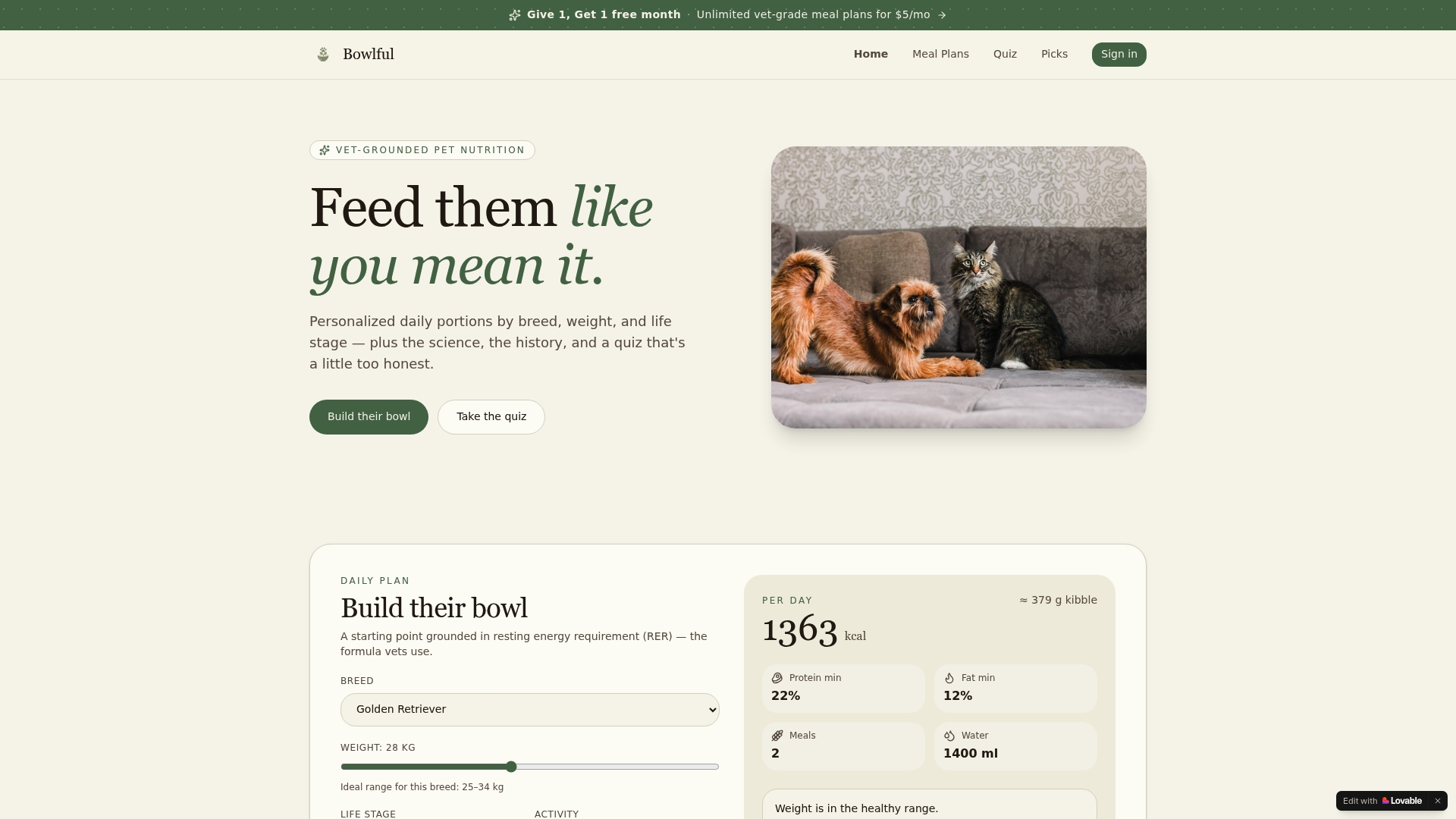
When you are trying to build a feeding plan that actually accounts for your senior cat's age, weight, and health status, generic bag instructions will not cut it. Bowlful builds personalized daily feeding plans using the same resting energy requirement (RER) formula veterinarians use, calibrated to your cat's breed, current weight, and life stage. It removes the guesswork that makes precise senior cat nutrition so difficult in practice.
If you have been juggling portion sizes, questioning whether your cat is getting enough protein, or trying to reverse-engineer caloric needs from a bag label, Bowlful offers a more reliable starting point. Explore personalized senior cat nutrition at Bowlful to find a feeding plan built around your cat's specific needs, not a population average.
FAQ
What causes a senior cat to lose weight while eating normally?
The most common causes are hyperthyroidism, chronic kidney disease, diabetes, and inflammatory bowel disease. A cat eating well but losing weight has a metabolic or absorption problem, not a behavioral one, and needs veterinary diagnostics.
How fast is too fast for senior cat weight loss?
Weight loss exceeding 2% of body weight per week raises the risk of hepatic lipidosis. Safe weight loss targets 0.5% to 2% per week, achieved through measured feeding adjustments rather than sudden food cuts.
What is the best food for a senior cat losing weight?
High-protein, low-carbohydrate formulas with named meat as the first ingredient support muscle preservation during weight loss. Therapeutic diets prescribed by a vet offer the most nutritionally complete approach for cats with underlying health conditions.
How do I know if my senior cat has lost too much muscle?
Use the Muscle Condition Score (MCS) alongside the scale. Run your fingers along the spine, shoulders, and skull. Prominent bones with reduced muscle cushioning, even on a cat with a normal body weight, indicates sarcopenia and warrants a vet visit.
When should I take my senior cat to the vet for weight loss?
Contact your vet if your cat loses more than 10% of body weight over three to six months, stops eating for more than 24 to 48 hours, or shows signs of behavioral change, muscle wasting, or recurring digestive upset alongside weight loss.