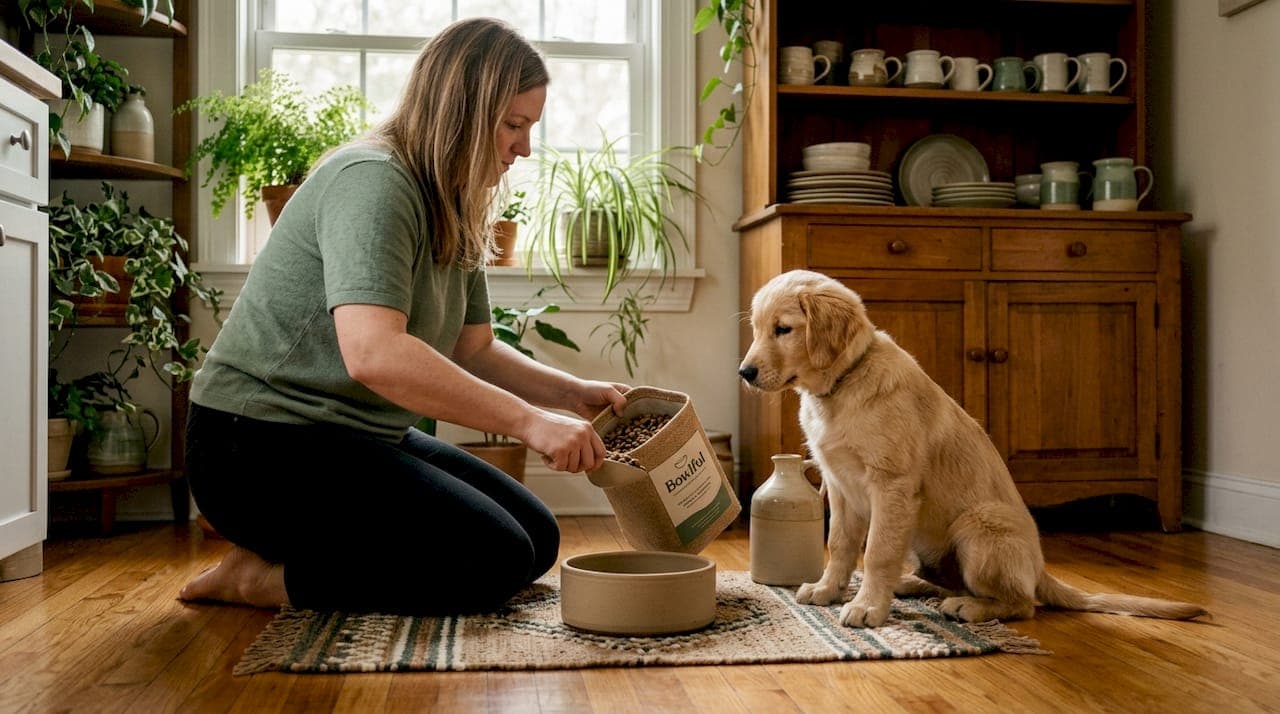
Most dog owners guess at feeding frequency. They follow the bag instructions, stick with whatever schedule they started with, or assume twice a day is always right. But the new dog feeding frequency guidelines emerging from recent research tell a more nuanced story, one where your dog's age, breed size, and health status should drive the schedule, not habit. Get this right, and you're supporting better digestion, steadier energy, healthier weight, and potentially a longer life.
Table of Contents
- Key takeaways
- 1. Key factors that determine the right feeding frequency
- 2. Puppy feeding recommendations: why 3 to 4 meals daily matters
- 3. Adult dog feeding schedule: twice daily and what the latest research says
- 4. Comparing feeding schedules: 3 to 4 meals, twice daily, and once daily
- 5. Situational feeding tips for real-world dog owners
- My honest take on feeding frequency decisions
- How Bowlful takes the guesswork out of feeding
- FAQ
Key takeaways
| Point | Details |
|---|---|
| Age drives frequency | Puppies need 3 to 4 meals daily; adult dogs typically thrive on two; seniors may need adjustment. |
| Breed size matters | Toy breed puppies may need up to 6 meals daily; large breeds do better with 3 to 4 structured meals. |
| Once-daily feeding shows promise | Research on adult dogs links once-daily feeding to better cognitive health and fewer health disorders. |
| Free feeding carries real risks | Leaving food out all day contributes to obesity and disrupts digestion, especially in puppies. |
| Portion size is not optional | Frequency without portion control fails. Both must be calibrated to your dog's size, age, and activity level. |
1. Key factors that determine the right feeding frequency
Before you pick a schedule, you need to understand what actually shapes the right answer for your dog. No single feeding rule applies to every dog, which is exactly why so many owners end up with a schedule that doesn't quite fit.
Here are the main factors to weigh:
- Age. This is the biggest variable. Puppies need frequent small meals to support rapid growth and maintain blood sugar. Adult dogs have more metabolic stability. Senior dogs may need adjusted schedules based on health conditions or reduced activity.
- Breed and size. A Great Dane puppy and a Chihuahua puppy have completely different needs. Breed size and age significantly influence both meal frequency and portion size, with toy breeds sometimes needing up to six meals daily and large breeds needing fewer but carefully portioned meals.
- Health status. Dogs with diabetes, kidney disease, or gastrointestinal issues often require specific feeding windows. Your vet's input here is non-negotiable.
- Activity level. A working dog burning high calories daily has different needs than a couch-loving senior Basset Hound. Higher activity may support more frequent meals to maintain energy.
- Household dynamics. Multi-dog homes add complexity. Scheduled feedings make it far easier to monitor how much each dog eats and catch early signs of appetite changes.
Pro Tip: If you're unsure where to start, write down your dog's breed, current weight, age, and daily activity level before researching schedules. Having this information ready makes vet consultations and nutrition tools like Bowlful far more useful.
2. Puppy feeding recommendations: why 3 to 4 meals daily matters
Puppies are not small adult dogs. Their metabolism runs fast, their stomachs are tiny, and their blood sugar can drop quickly between meals. Getting the puppy feeding recommendations right in these early months sets the foundation for healthy development.
Here's how to approach it by stage:
- 8 to 12 weeks. Feed four meals per day, spaced evenly throughout the day. Puppies this young cannot handle large volumes at once, and their digestive systems are still maturing.
- 3 to 6 months. Three meals per day works well for most breeds at this stage. You're still supporting growth without overloading digestion.
- 6 to 12 months. Most puppies can transition to two meals per day. Large and giant breeds often benefit from staying at three meals slightly longer to reduce bloat risk.
- 12 months and beyond. Most dogs are ready for an adult feeding schedule at this point, though giant breeds may not reach full maturity until 18 to 24 months.
Young puppies fed 3 to 4 times daily are better supported through digestion, growth spurts, and housetraining because predictable meals lead to predictable bathroom habits.
Free feeding, meaning leaving food in the bowl all day, is a genuine problem at this stage. Free feeding risks obesity and problematic bone development, particularly in large-breed puppies whose skeletal growth is sensitive to caloric excess. Scheduled meals give you control over intake and make it easy to spot when your puppy's appetite changes.
Pro Tip: Set a 15-minute window for each meal. If your puppy walks away from the bowl, pick it up and wait until the next scheduled feeding. This builds a healthy relationship with food and prevents grazing habits that are hard to break later.
3. Adult dog feeding schedule: twice daily and what the latest research says
For most adult dogs, twice daily is the standard recommendation. Two meals per day aligns with dogs' natural digestive adaptations and fits most owners' daily routines. Morning and evening feedings, roughly 8 to 12 hours apart, work well for the majority of healthy adult dogs.
The benefits of a consistent twice-daily schedule include:
- Steadier blood sugar and energy levels throughout the day
- Easier portion control and weight monitoring
- Predictable digestion, which reduces gas and bloating
- Simpler management in multi-dog households
But here's where the dog nutrition guidelines are evolving. A large cross-sectional study analyzing over 24,000 dogs found that dogs fed once daily showed lower cognitive dysfunction scores and fewer health disorders compared to dogs fed more frequently. This research, connected to the Dog Aging Project, is reshaping how some veterinarians think about adult feeding frequency.
"Once-daily feeding was associated with better health outcomes across multiple conditions, including gastrointestinal, dental, orthopedic, and cognitive health." — Dog Aging Project Research
This doesn't mean you should immediately switch your dog to one meal a day. The research is cross-sectional, meaning it identifies associations rather than causes. Some dogs, particularly those prone to hypoglycemia or with certain medical conditions, should not be fed once daily. But for healthy adult dogs, it's a schedule worth discussing with your vet.
Portion size paired with frequency is what ultimately determines whether a feeding schedule supports or undermines your dog's health. A dog eating one large, appropriately portioned meal may do better than a dog eating two meals with portions that are slightly too large each time.

4. Comparing feeding schedules: 3 to 4 meals, twice daily, and once daily
Choosing between feeding frequencies isn't just about convenience. Each schedule has real implications for your dog's health, energy, and long-term wellbeing. Here's a direct comparison to help you decide.
| Schedule | Best for | Key benefits | Watch out for |
|---|---|---|---|
| 3 to 4 meals daily | Puppies under 6 months, toy breeds | Stable blood sugar, supports growth and housetraining | Time-intensive; risk of overfeeding if portions aren't measured |
| Twice daily | Most adult dogs, all breeds | Easy to manage, good digestion, steady energy | Portions must be accurate; skipping meals causes hunger stress |
| Once daily | Healthy adult dogs, some seniors | Linked to better cognitive and overall health in research | Not suitable for puppies, small breeds, or dogs with blood sugar issues |
The twice-daily schedule wins on practicality and broad applicability. It fits most dogs and most lifestyles without requiring major dietary adjustment. The once-daily approach is gaining credibility from research showing better cognitive health outcomes in dogs fed this way, but it requires careful monitoring and veterinary input before making the switch.
For owners managing a dog feeding schedule across multiple life stages, the transition points matter as much as the schedule itself. Moving from three meals to two, or from two to one, should happen gradually over one to two weeks to give your dog's digestive system time to adjust.
Pro Tip: When transitioning between feeding frequencies, reduce one meal every five to seven days rather than cutting it abruptly. Watch your dog's energy, stool consistency, and appetite during the transition. These are your clearest signals that the new schedule is working.
5. Situational feeding tips for real-world dog owners
Guidelines are useful. Real life is messier. Here's how to apply the new dog feeding frequency guidelines when your situation doesn't fit the textbook scenario.
- Multi-dog households. Scheduled feedings are especially important when you have more than one dog. Free feeding in a multi-dog home makes it nearly impossible to track individual intake, and dominant dogs often eat more than their share. Feed dogs in separate spaces or at minimum in separate bowls with supervision.
- Picky eaters. If your dog skips meals regularly, resist the urge to leave food out longer. A 15-minute window per meal keeps appetite sharp and helps you identify genuine health issues versus preference-based skipping.
- Dogs with medical conditions. Diabetes, kidney disease, and pancreatitis all require specific feeding protocols. Work with your vet to set times and portions rather than adapting general guidelines on your own.
- Treats and extras. Treats count toward daily caloric intake. If your dog gets frequent training rewards or table scraps, reduce meal portions accordingly. A good rule of thumb is that treats should make up no more than 10 percent of daily calories.
- Aging dogs. Senior dogs often become less active and may need fewer calories, but some benefit from smaller, more frequent meals if they develop digestive sensitivity. Monitor weight closely and adjust portions before adjusting frequency. Feeding strategies for aging dogs and cognitive health are worth exploring as your dog enters their senior years.
- Lifestyle changes. If your schedule shifts significantly, such as returning to an office after working from home, adjust feeding times gradually rather than abruptly. Dogs are creatures of routine, and sudden schedule changes can cause stress-related digestive upset.
My honest take on feeding frequency decisions
I've worked with enough dog owners to know that feeding frequency is one of those topics where people feel confident until they actually dig into the details. Then the uncertainty sets in fast.
What I've found is that most owners are making one of two mistakes. They're either rigidly following the bag instructions without accounting for their specific dog's needs, or they're overthinking it to the point of constant schedule changes that stress the dog out more than any imperfect routine would.
The research on once-daily feeding is genuinely interesting to me. The Dog Aging Project findings are not something to dismiss, but I'd caution against treating them as a mandate. A study of this size identifies patterns across populations. Your dog is an individual.
What I've seen work consistently is a structured schedule paired with accurate portioning. The frequency matters less than the consistency and the precision. A dog fed twice daily with perfectly calibrated portions will almost always be healthier than a dog fed once daily with portions that are slightly off. Get the portions right first, then experiment with frequency if your vet agrees it makes sense.
— Robert
How Bowlful takes the guesswork out of feeding
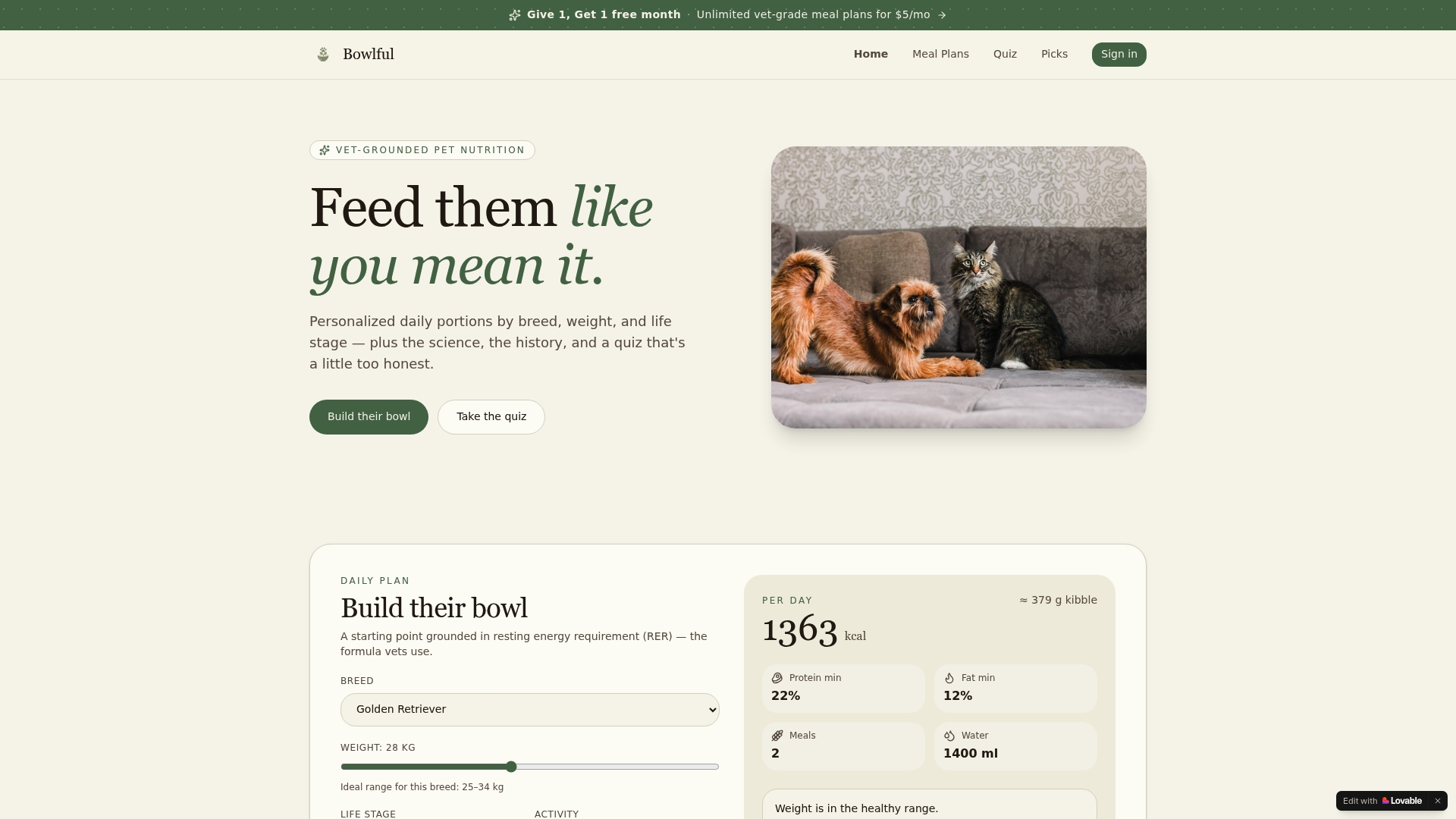
Knowing the right feeding frequency is only half the equation. The other half is knowing exactly how much to feed at each meal, and that's where most dog owners lose the thread. Bowlful builds personalized daily feeding plans using the same resting energy requirement formula veterinarians rely on, calibrated to your dog's breed, weight, age, and life stage. Whether your dog is a growing puppy on four meals a day or a healthy adult you're considering moving to once-daily feeding, Bowlful's nutrition plans give you precise portions for every schedule. No more guessing. No more relying on generic bag instructions that weren't written for your specific dog.
FAQ
How often should puppies eat each day?
Puppies under 6 months should eat 3 to 4 meals per day. After 6 months, most puppies can transition to two meals daily, with large breeds sometimes staying at three meals a bit longer.
Is once-daily feeding safe for adult dogs?
Research suggests once-daily feeding is associated with better health outcomes in adult dogs, but it's not appropriate for all dogs. Puppies, small breeds, and dogs with blood sugar issues should not be fed once daily without veterinary guidance.
What is the best feeding schedule for most adult dogs?
Most adult dogs do well on two meals per day, spaced 8 to 12 hours apart. This schedule supports steady energy, easier weight management, and consistent digestion.
Why is free feeding bad for dogs?
Free feeding makes portion control nearly impossible and is linked to obesity and bone development problems in large-breed puppies. Scheduled meals give you better visibility into how much your dog is actually eating.
How do I switch my dog to a new feeding frequency?
Transition gradually over one to two weeks by reducing one meal every five to seven days. Monitor your dog's energy, stool quality, and appetite throughout the process to confirm the new schedule is working.