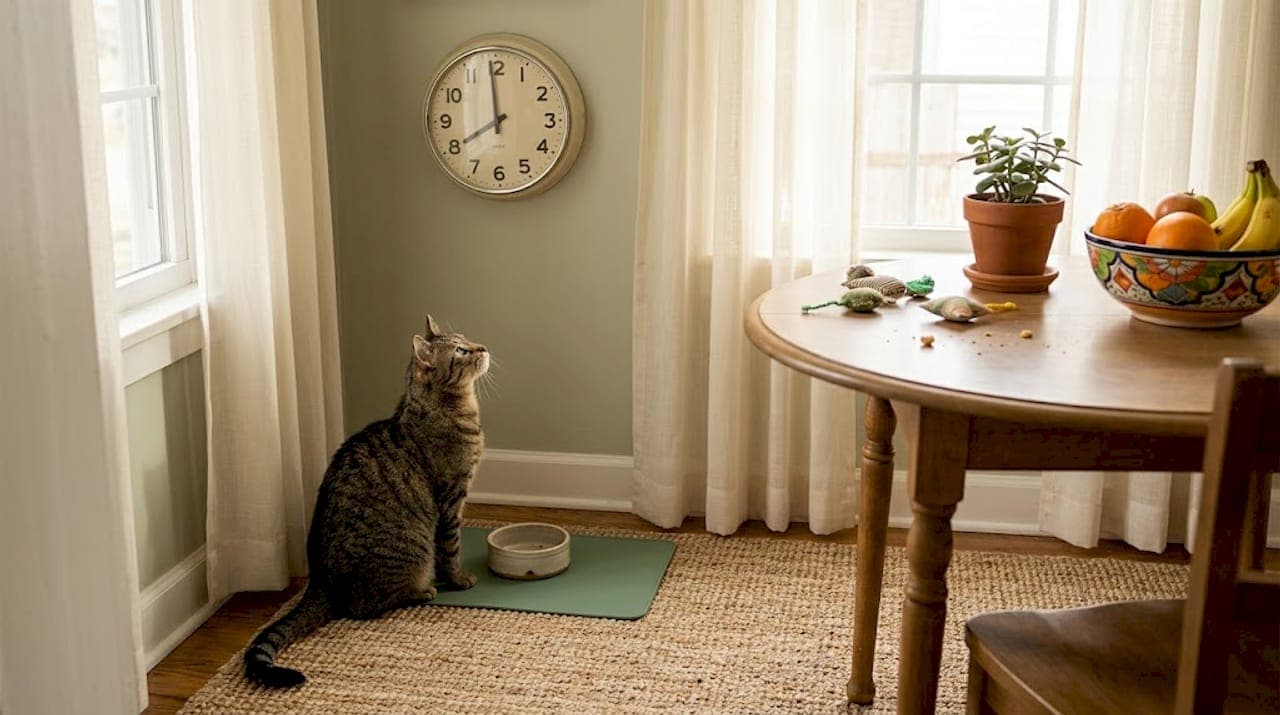
Most cat owners assume a full bowl available around the clock is generous and kind. It isn't. Understanding why feeding windows matter for cats is one of the most practical things you can do for your pet's long-term health, behavior, and weight. The difference between free feeding and structured meal times isn't just a matter of convenience. It affects how your cat feels, how your cat acts, and even how long your cat lives.
Table of Contents
- Key Takeaways
- Why feeding windows matter for cats, biologically and behaviorally
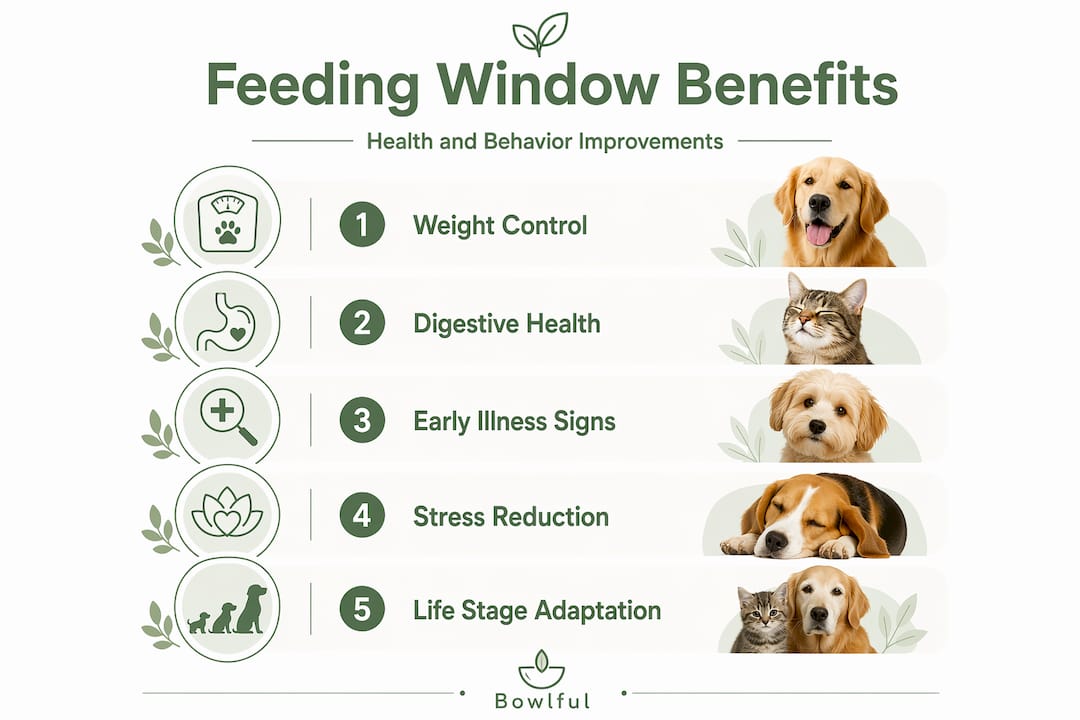
- Health benefits of structured cat feeding schedules
- How feeding windows improve behavior and reduce stress
- How to implement feeding windows effectively
- Common feeding window challenges and how to solve them
- What I've learned from structured feeding firsthand
- Give your cat's meals a plan worth trusting
- FAQ
Key Takeaways
| Point | Details |
|---|---|
| Feeding windows reduce anxiety | Cats memorize meal times quickly, and predictable schedules create calm, stable behavior indoors. |
| Structured meals prevent obesity | Over 60% of US cats are overweight; timed portions help control calorie intake far more effectively than free feeding. |
| Appetite monitoring detects illness | A missed scheduled meal is a clear signal something may be wrong, giving you an earlier window to act. |
| Two meals a day works for most adults | Most adult cats thrive on two measured meals spaced 10 to 12 hours apart, aligned with their digestive rhythm. |
| Transitions should be gradual | Shifting meal times in small increments prevents stress, digestive upset, and behavioral disruption. |
Why feeding windows matter for cats, biologically and behaviorally
Your cat may lounge on the couch for 16 hours a day, but biologically, she is still wired like a hunter. In the wild, cats eat multiple small meals spread throughout the day, each one earned through a stalk, pounce, and catch. That hardwiring doesn't disappear when you move her indoors. It just has nowhere to go.
The problem is that indoor life strips away the environmental cues that naturally regulate eating. There are no prey cycles, no physical effort before food, and no built-in rest period after a kill. A bowl that's always full removes every meaningful signal your cat's system relies on. What you get instead is a cat that grazes without hunger, eats out of boredom, and slowly gains weight without you noticing.
Feeding windows recreate some of that structure. They give your cat's body a rhythm to anchor to. According to research on indoor cat schedules, cats quickly memorize meal times and rely on those rhythms for calm, stable behavior. That predictability is not a luxury. It's a biological need dressed up in a domestic context.
Here's what scheduled feeding addresses on a behavioral level:
- Food-related anxiety: When a cat never knows if food is coming or going, low-grade stress becomes the baseline. A consistent schedule removes that uncertainty entirely.
- Excessive vocalization: The cat who screams at 5 a.m. is often responding to hunger uncertainty, not actual starvation. A reliable feeding window teaches her when to expect food, and the noise drops.
- Compulsive eating behavior: Cats that eat too fast or too much in one sitting are often compensating for the unpredictability of free feeding. Regular meals regulate pace.
Pro Tip: If your cat tends to wake you up before dawn demanding food, try shifting her last meal 20 minutes later each night over one to two weeks. You'll reset her internal clock without a battle.
Health benefits of structured cat feeding schedules
The importance of feeding windows goes well beyond behavior. The physical health case is even stronger.
The most direct benefit is weight management. Free feeding and obesity are closely linked in indoor cats because constant access to high-calorie dry food means a cat can eat far beyond her energy needs without any natural check. Scheduled feeding puts you back in control of exactly how many calories your cat consumes per day.
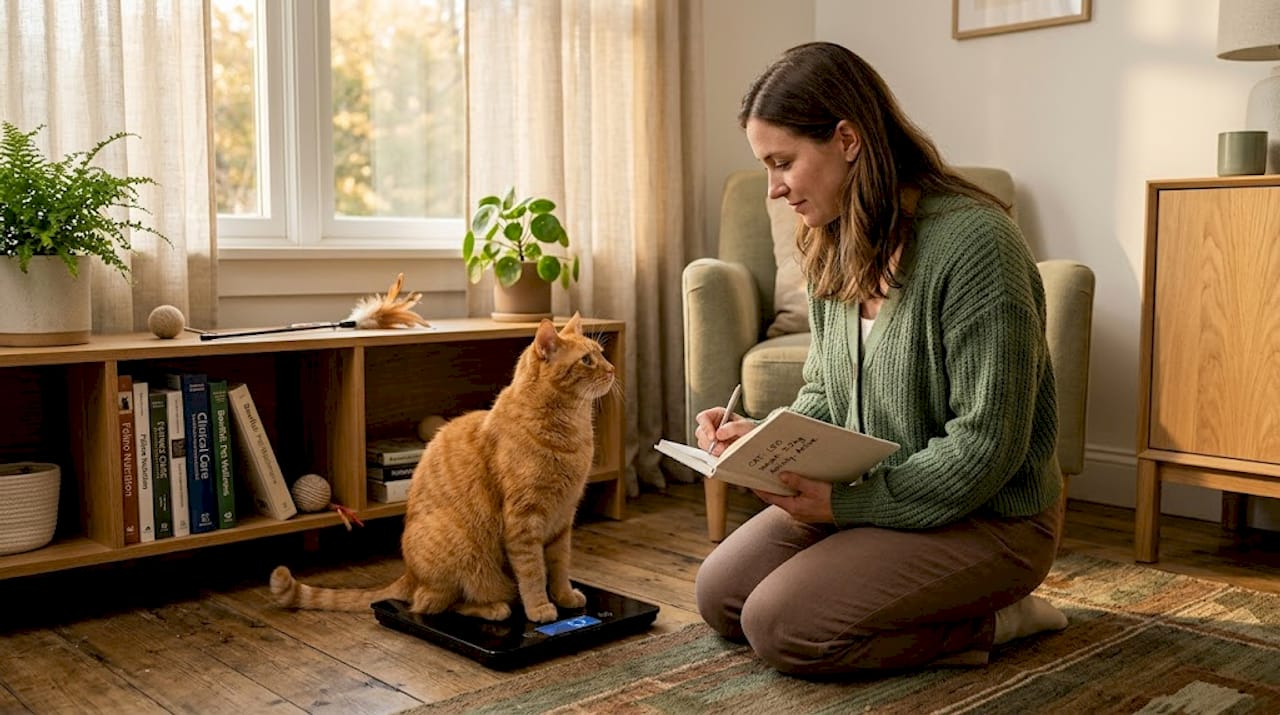
Structured meal times also support healthier digestion. When a cat eats at consistent times, her digestive system anticipates food and prepares accordingly. Cats who eat too fast, often a response to irregular access, are more prone to vomiting undigested food shortly after eating. Two measured meals spaced consistently through the day prevent overeating and give the stomach time to properly empty between meals.
One benefit that most owners overlook: scheduled feeding is your best early-warning system for illness. When you know your cat eats enthusiastically at 7 a.m. every single day, a morning where she walks away from her bowl tells you something is wrong. That kind of observation is nearly impossible with a free-feeding setup where you can't track what she actually ate versus what sat in the bowl all day.
Feeding needs also shift across life stages, and a structured schedule makes it much easier to adjust appropriately.
| Life stage | Recommended feeding frequency | Key considerations |
|---|---|---|
| Kittens (under 6 months) | 3 to 4 meals per day | High energy needs; small stomach capacity |
| Adults (1 to 7 years) | 2 meals, 10 to 12 hours apart | Calorie control; digestive alignment |
| Senior cats (7 years and older) | 2 to 3 smaller meals per day | Better hydration support; easier on digestion |
Senior cats specifically benefit from multiple small meals combined with wet food to support urinary health and maintain energy levels as their metabolism changes. A single large meal per day becomes harder for an older cat's body to process efficiently.
How feeding windows improve behavior and reduce stress
Predictable feeding times do something that surprises most cat owners. They improve the relationship between you and your cat. When you become the reliable source of a consistent, satisfying meal, your cat starts to associate you with something deeply positive. That association builds trust and calm.
The behavioral benefits of structured feeding are especially pronounced in multi-cat households. Free feeding creates conditions where dominant cats guard food resources and subordinate cats eat in a state of low-level stress. Scheduled feeding, with separate bowls and designated spots, removes the resource competition entirely.
Here's a practical approach to rolling out feeding windows in a way that holds:
- Establish two fixed times and stick to them. Morning and evening, approximately 10 to 12 hours apart, works for most adult cats. Pick times you can realistically maintain every day, including weekends.
- Put the bowl down and pick it up within 20 to 30 minutes. This teaches your cat that mealtime has a window, which accelerates schedule learning significantly.
- Separate cats in multi-cat households during meals. Different rooms or opposite ends of a large room removes competition and lets each cat eat at her own pace.
- Ignore begging between meals. Responding to begging with food, even once, resets the training. Consistency is the mechanism that makes the schedule work.
Pro Tip: If you have a cat who refuses to eat within the 30-minute window at first, don't panic and don't give in. Most cats adapt within 5 to 7 days once they realize the meal won't wait.
How to implement feeding windows effectively
Starting a feeding schedule is straightforward. The key is to move gradually rather than making an abrupt change that disrupts your cat's gastric rhythm and triggers stress responses.
Shifting meal times in increments of 5 to 10 minutes per day is the approach that works best. If your cat currently grazes all day and you want to move to two meals, start by offering food at two set times while leaving the bowl available for a short window. Shorten that window by a few minutes each day until you reach 20 to 30 minutes.
A few practical points for building a feeding window routine that holds:
- Measure every portion. Eyeballing food is where calorie control falls apart. Use a kitchen scale or at minimum a marked measuring cup to hit your cat's daily calorie target consistently.
- Use an automatic feeder if your schedule is unpredictable. Automatic feeders maintain precise timing even when you travel or work late, removing the inconsistency that undermines the whole schedule.
- Space meals to match digestion. Adult cats need roughly 10 to 12 hours between meals for proper gastric emptying. Kittens and seniors need more frequent feeding, as noted in the table above.
- Avoid sudden schedule changes. If you need to shift meal times, do it gradually. Abrupt changes can cause vomiting, stress vocalization, and appetite refusal.
The benefits of structured feeding show up faster than most people expect. Within one to two weeks, most cats settle into their new rhythm noticeably.
Common feeding window challenges and how to solve them
Even with the best intentions, some cats push back. Here's what to watch for and how to respond.
Signs that your current feeding schedule isn't working include persistent and escalating begging between meals, weight changes despite consistent portions, and signs of stress such as hiding or excessive grooming around mealtimes. Any of these warrants a closer look at portion size, meal timing, or both.
Specific issues and solutions:
- Cat wakes you up early: Push the morning meal 10 to 15 minutes later each day until you reach your target time. An automatic feeder set to the correct time removes you from the equation entirely and stops the behavior faster.
- Cat refuses to eat during the window: Rule out illness first with a vet visit if it persists more than two days. If she's healthy, stay consistent. Hunger will override stubbornness within a few days.
- Multi-cat household chaos: Feed in completely separate locations from day one. If one cat eats faster and moves to steal from another's bowl, pick up the finished bowl immediately and let the slower cat finish undisturbed.
- Weight isn't changing despite scheduled meals: Revisit your portion calculation. Many cat owners significantly overestimate how many calories an indoor, low-activity adult cat actually needs per day.
When in doubt, a conversation with your vet about feeding frequency for your cat's specific age, weight, and health status is always worth the time.
What I've learned from structured feeding firsthand
I used to think free feeding was the considerate choice. My cat always had food, so what was the problem? Then I noticed she was heavier than she should be, demanding attention at 4 a.m., and oddly anxious around her bowl even when it was full.
Switching to two scheduled meals changed things in about ten days. The early morning waking stopped. She started waiting calmly near the kitchen at her meal times instead of following me around the apartment. And when she skipped a meal one morning, I noticed immediately and caught a urinary issue early enough that it required only a short course of medication rather than a more serious intervention.
What I didn't expect was how much deeper the bond felt. She started greeting me in the mornings with a specific purpose, and I started paying closer attention to her appetite as a daily health check. That's not something you get from a bowl that's always full.
The hardest part is the first week. Ignore the begging. Trust the process. Your cat's internal clock is more adaptable than you think, and once she settles into the rhythm, you'll wonder why you waited.
— Robert
Give your cat's meals a plan worth trusting
If you're ready to move from guesswork to a schedule that actually works, Bowlful is built for exactly that. Bowlful uses the resting energy requirement formula that veterinarians rely on to calculate your cat's precise daily calorie needs based on her breed, weight, and life stage. That means your feeding windows are backed by real numbers, not guesses.
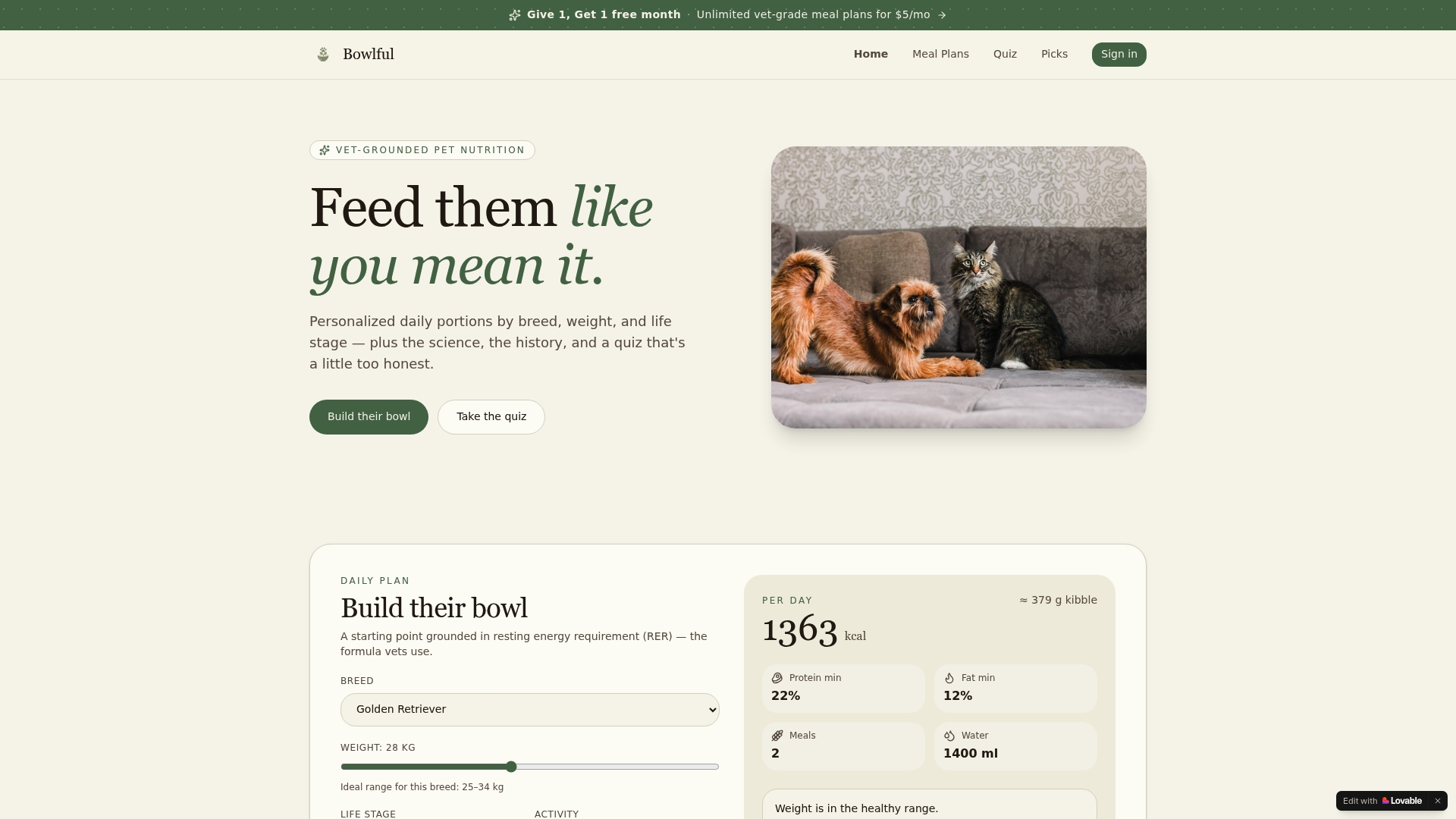
Once you know your cat's accurate daily calorie target, portioning each meal becomes simple and consistent. Every feeding window lands with the right amount of food, so you're not accidentally overfeeding a sedentary adult or underfeeding a growing kitten. Explore personalized cat nutrition at Bowlful and take the quiz to get a feeding plan tailored specifically to your cat. It's the clearest next step from everything covered in this article.
FAQ
Why do feeding windows matter more than free feeding?
Feeding windows control calorie intake, reduce food-related anxiety, and let you monitor appetite changes that signal illness. Free feeding makes all three of those things significantly harder.
How often should I feed my adult cat?
Most adult cats thrive on two measured meals per day, spaced 10 to 12 hours apart. This aligns with their digestive rhythm and prevents overeating.
How do I transition my cat to a feeding schedule?
Shift meal times in 5 to 10 minute increments each day rather than changing all at once. Most cats fully adapt within one to two weeks with consistent daily practice.
Can automatic feeders help with feeding windows?
Yes. Automatic feeders maintain consistent meal timing even when your schedule is irregular, and they remove the human variable that can accidentally reinforce begging behavior.
How do feeding needs change as my cat ages?
Kittens need 3 to 4 meals daily, adults do well on two, and senior cats benefit from two to three smaller meals that include wet food for better hydration and digestive support.