
Puppy food is puppy food, right? Not even close. Understanding why small breed puppies need special food could be one of the most consequential decisions you make for your new dog's long-term health. A Chihuahua, a Pomeranian, or a Yorkshire Terrier has a body that works completely differently from a Labrador puppy, and feeding them the same food is like giving a sports car the same fuel ratio as a semi-truck. The nutritional needs of small breed dogs are distinct in every measurable way, from calorie density to kibble size to meal frequency, and the stakes of getting it wrong are real.
Table of Contents
- Key takeaways
- Why small breed puppies need special food: the science
- What goes into a proper small breed puppy formula
- How generic and large breed food falls short
- How to feed small puppies: practical guidance for new owners
- My honest take after watching owners make these mistakes
- Get your small breed puppy's nutrition right from day one
- FAQ
Key takeaways
| Point | Details |
|---|---|
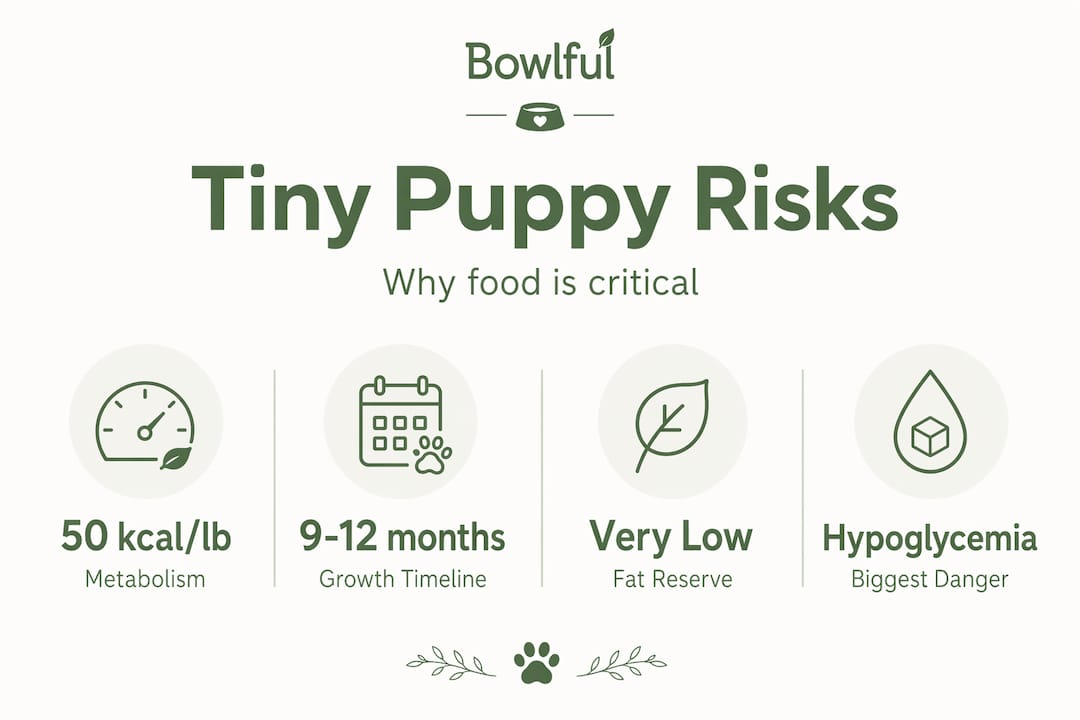
| Faster metabolism demands more calories | Small breed puppies need ~50 kcal/lb daily, nearly double what large breeds require. |
| Hypoglycemia is a real danger | Small breed puppies can crash without food every 4-5 hours due to minimal fat reserves. |
| Kibble size and texture matter | The right kibble diameter and hardness protect teeth and reduce choking risk for tiny mouths. |
| Wrong food causes lasting harm | Feeding large breed or generic formulas can lead to obesity, malnutrition, or digestive problems. |
| Transition timing is breed-specific | Small breeds reach maturity by 9-12 months, so adult food transition follows a shorter timeline. |
Why small breed puppies need special food: the science
Most new puppy owners assume "puppy food" covers all the bases. The reality is that the physiological differences between a 5-pound Toy Poodle puppy and a 50-pound German Shepherd puppy are so significant that feeding them the same formula is nutritional malpractice.
Small breed puppies run a much hotter metabolic engine. Small breed puppies need roughly 50 kcal per pound of body weight daily, compared to just 25 to 30 kcal per pound for large breeds like Labradors. That's not a small difference. That's double the fuel demand packed into a fraction of the stomach space.
Their growth timeline is also compressed. Small breed growth phases typically complete in 9 to 12 months, compared to 18 to 24 months for large breeds. That rapid development means every meal carries more nutritional responsibility. Miss the window with the right nutrients, and you can't go back.
There's another factor most owners never hear about: surface area to body weight ratio. Because small dogs have proportionally more surface area relative to their mass, they lose body heat faster than large breeds. Their bodies burn through calories just maintaining temperature, which is why high-density nutrition is not optional for these puppies.
The most serious risk, though, is hypoglycemia. Small breed puppies have very limited fat reserves, which means going more than 4 to 5 hours without food can cause dangerous drops in blood sugar. Weakness, trembling, disorientation, and in severe cases seizures are all on the table if feeding schedules are inconsistent.
Pro Tip: Set phone alarms for feeding times during the first three months. For small breed puppies, meal consistency is not just a good habit. It's a health protection strategy.
What goes into a proper small breed puppy formula
Now that you understand why the demand is different, it's worth understanding exactly what makes the best food for small puppies different from what's on a standard shelf.
The nutrient benchmarks are a good starting point. AAFCO requires a minimum of 22% protein and 8% fat for growth puppy formulas. Small breed formulas go beyond these minimums, with higher protein ratios to support muscle development and higher fat levels to fuel that elevated metabolism. Calorie density in quality small breed formulas runs at 380+ kcal per 100 grams, which allows a meaningful amount of nutrition to fit into the small volume a tiny stomach can hold.
Here's a direct comparison of what separates small breed formulas from the alternatives:
| Feature | Small breed formula | Large breed formula | Generic puppy food |
|---|---|---|---|
| Calorie density | 380+ kcal/100g | 280-320 kcal/100g | 300-350 kcal/100g |
| Protein content | 28-32% | 22-26% | 22-25% |
| Kibble size | 5-8 mm diameter | 10-15 mm diameter | 8-12 mm diameter |
| Calcium and phosphorus ratio | Calibrated for rapid bone growth | Calibrated for slower bone growth | Not breed-optimized |
| Meal frequency | 3-4 times daily | 2-3 times daily | Not specified by breed |
Kibble size is where many owners are genuinely surprised. Ideal kibble diameter for small breed puppies runs 5 to 8 mm, but hardness matters just as much as size. Too hard and you risk tooth damage. Too soft and you miss the mechanical cleaning effect on their tiny teeth. Quality small breed formulas engineer the texture specifically for small jaws.

Omega-3 and omega-6 fatty acids round out the picture. These support skin health, coat development, and immune function during the most vulnerable developmental window your puppy will ever go through.
Pro Tip: Check the AAFCO statement on the bag. Look for "formulated for growth" or "all life stages" and a specific mention of small or toy breed puppies. If those words aren't there, the formula is not designed for your dog.
How generic and large breed food falls short
Understanding small breed puppy diet essentials becomes clearer when you compare what happens when owners reach for the wrong bag.
Feeding regular or large breed puppy food to a small breed puppy can cause digestive issues and malnutrition because the calorie and nutrient densities simply do not match what small breeds need. A small puppy eating large breed food has to eat a much larger volume to hit its caloric requirements, but its stomach can't accommodate that volume. The result is either underfeeding or chronic digestive discomfort.
The flip side is also a problem. Giving a small puppy adult dog food or a low-density generic formula produces a different kind of damage over time.
- Obesity risk. Obesity affects 35 to 40% of adult small breed dogs in some regions, and overfeeding during puppyhood is a major contributing factor. Fat cells formed in puppyhood don't go away.
- Hypoglycemia risk. If calorie density is too low, small breed puppies simply won't get enough energy per meal to sustain their metabolic rate between feedings.
- Skeletal problems. The wrong calcium to phosphorus ratio during rapid bone development can cause structural issues that show up later in life.
- Choking and dental damage. Large kibble designed for bigger mouths creates real choking hazards and can chip or crack the small, fragile teeth of a puppy that's barely the size of your hand.
The importance of puppy food for tiny breeds is not a marketing message. Small breed puppy foods are precisely engineered formulas designed for metabolic and developmental needs that have nothing in common with larger breeds.
How to feed small puppies: practical guidance for new owners
Getting the right food is step one. Feeding it correctly is step two, and plenty of well-meaning owners get this part wrong.
-
Feed 3 to 4 meals per day under 4 months. Veterinary guidelines recommend this frequency to prevent dangerous blood sugar drops. Think of it less as a feeding schedule and more as a maintenance protocol for your puppy's energy system.
-
Measure every portion. Don't eyeball it. Small breed puppies have such a narrow margin between the right amount and too much that guessing consistently leads to overfeeding. Use the feeding guide on the package as a baseline, then adjust based on your puppy's body condition.
-
Know the signs of hypoglycemia. Shaking, unusual lethargy, glassy eyes, and stumbling are warning signs. If you see these, a small amount of honey rubbed on the gums can raise blood sugar temporarily, but a vet call should follow immediately. Consistency in feeding times is the most effective prevention.
-
Monitor weight and body condition weekly. You should feel your puppy's ribs without pressing hard, but not see them prominently. Keeping a simple weight log tells you whether you're on track before a problem becomes visible.
-
Plan the transition to adult food at 9 to 12 months. Small breed puppy formulas are calibrated for growth, not maintenance. Continuing puppy food past maturity increases obesity risk. Transition gradually over 10 to 14 days by mixing increasing amounts of adult small breed food into the current formula.
For small breed owners figuring out how to feed small puppies around a real schedule, resources like Sparky Steps offer practical guidance on meal frequency and consistency that connects nutrition to daily care routines.
Pro Tip: When transitioning foods, watch stool consistency closely. Loose stools that persist beyond three days usually signal the switch is moving too fast. Slow down and add more transition days.
My honest take after watching owners make these mistakes
In my experience working with pet nutrition, the most common mistake I see isn't buying the wrong food on purpose. It's that new small dog owners genuinely don't know the distinction exists until something goes wrong.
I've watched owners bring home Yorkies and Chihuahuas and reach for whatever puppy food had the best packaging or the most recognizable brand name. Many of those dogs ended up underweight at their first vet visit, not because their owners weren't trying, but because the food they chose wasn't designed to fuel a body that burns through energy at twice the rate of a larger puppy.
What I find most underestimated is the kibble piece. I've talked to dozens of new owners who never thought about whether their 3-pound Pomeranian could physically manage standard-sized kibble. They assumed chewing was just chewing. It's not. Kibble that's too large creates meal-time stress, reduces intake, and can cause real dental damage in tiny mouths.
The hypoglycemia risk surprises people the most. Most owners assume a puppy missing a meal is mildly inconvenient. For a small breed under 4 months, it can be a medical emergency. Setting strict feeding alarms isn't being paranoid. It's understanding what your dog's biology actually requires.
My strongest recommendation is to pair the right food with a strict feeding structure from day one. The food gets you 60% of the way there. The schedule and portion control get you the rest.
— Robert
Get your small breed puppy's nutrition right from day one
Choosing the right food is only as effective as the plan behind it. Bowlful takes the guesswork out of small breed puppy nutrition with tailored daily feeding plans built around your puppy's specific breed, current weight, and life stage.
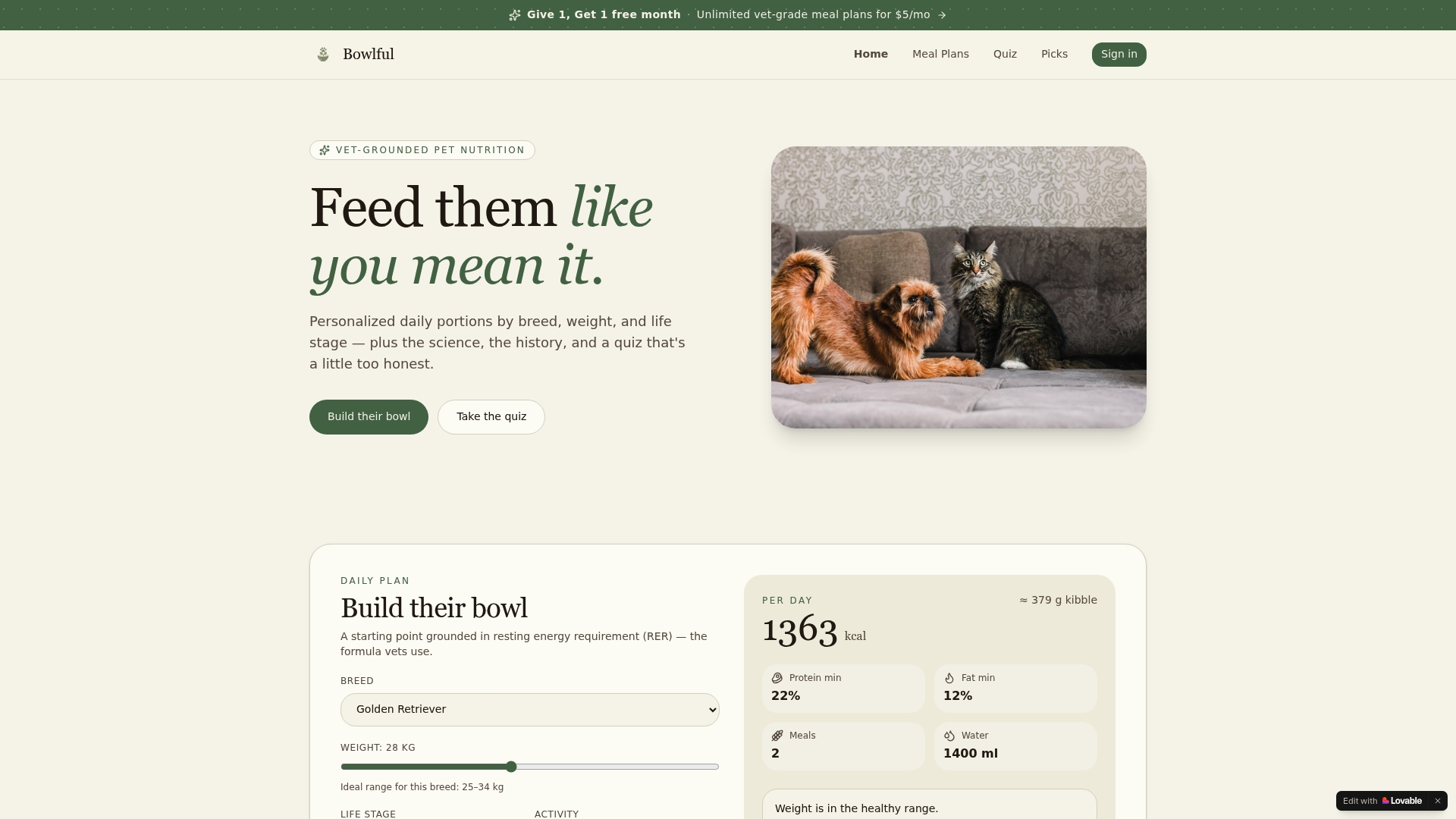
Bowlful uses the same RER formula veterinarians rely on to calculate precise caloric needs, so you're never overfeeding or leaving your puppy short on fuel. The personalized quiz identifies exactly what your small breed puppy needs right now, not a generic average for all puppies. For owners who take their dog's health seriously from day one, Bowlful's tailored nutrition plans offer a level of specificity that a bag of food off a shelf simply can't match. Small breed puppies grow fast and have a narrow window to build the foundation for a long, healthy life.
FAQ
Why can't small breed puppies eat regular puppy food?
Regular puppy food typically lacks the calorie density and small kibble size that small breed puppies need. Feeding it can lead to undernutrition, digestive issues, and choking risks.
How many times a day should I feed my small breed puppy?
Puppies under 4 months should eat 3 to 4 meals per day. This frequency maintains stable blood sugar and supports their fast metabolism.
What is hypoglycemia and why does it affect small puppies?
Hypoglycemia is a dangerous drop in blood sugar that can occur when small breed puppies go too long without eating. Their limited fat reserves make them far more vulnerable than larger breeds.
When should I switch my small breed puppy to adult food?
Most small breed puppies reach maturity between 9 and 12 months, which is when transitioning to adult food makes sense. A gradual 10 to 14 day mix-in transition reduces digestive upset.
Does kibble size really matter for small breed puppies?
Yes. Kibble sized at 5 to 8 mm with appropriate hardness supports safer chewing, better palatability, and dental health for small jaws, all of which affect how much nutrition your puppy actually absorbs.