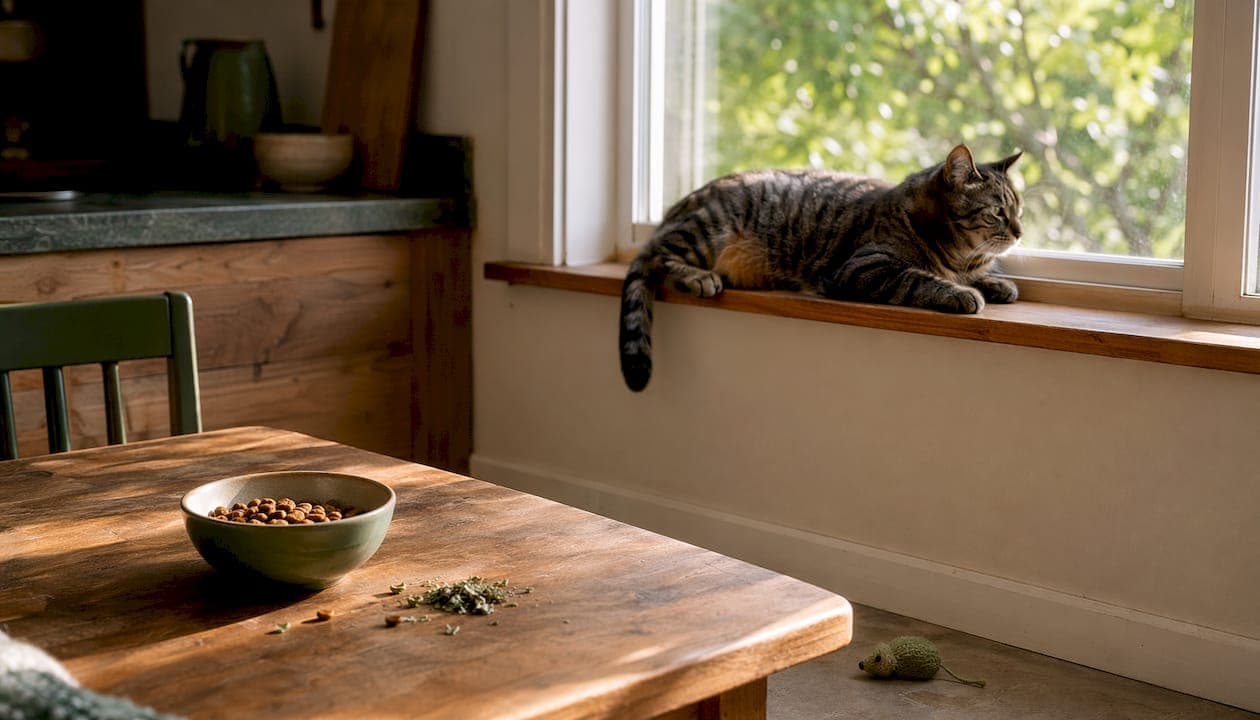
Cat boredom symptoms are observable behavioral and physical signs that your cat is under-stimulated and experiencing psychological stress. Veterinary behaviorists recognize these signs as a distinct pattern, separate from illness, that develops when a cat's natural instincts for hunting, exploring, and problem-solving go unmet. Cats are not low-maintenance animals by nature. They are wired to stalk, pounce, and investigate, and when an indoor environment fails to support those drives, the fallout shows up in their behavior. Recognizing cat boredom signs early gives you a real opportunity to improve your cat's mental and physical health before the symptoms become entrenched habits.
What are the most common cat boredom symptoms?
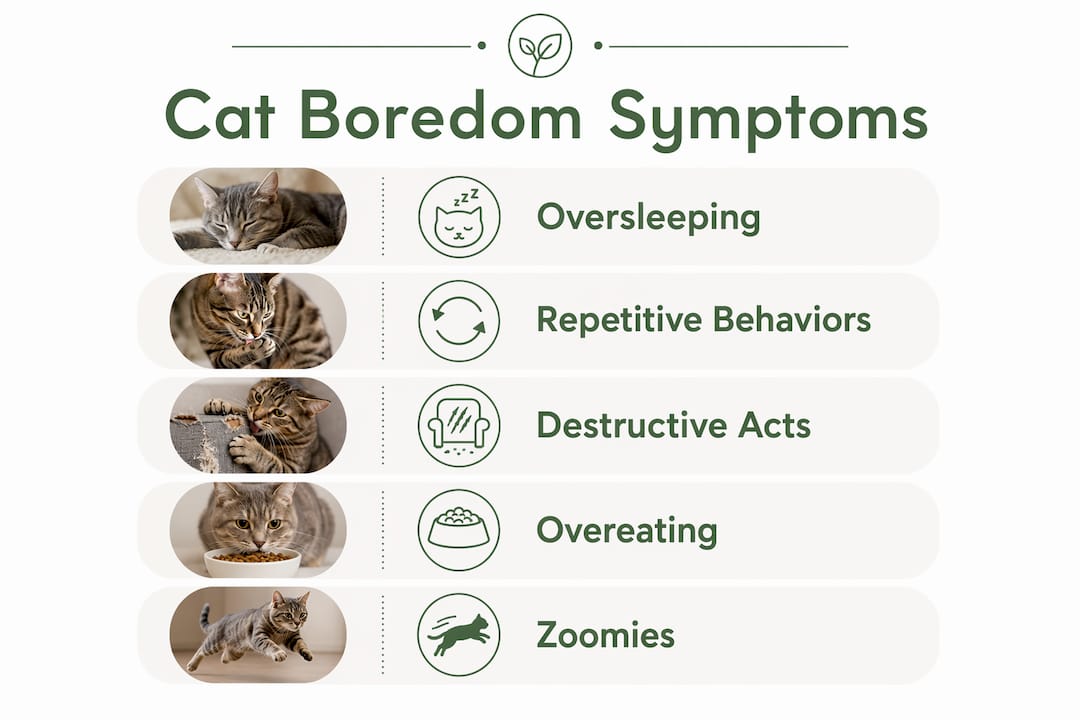
Cat boredom symptoms fall into three broad categories: changes in sleep and energy, repetitive or compulsive behaviors, and destructive or attention-seeking actions. Knowing which category a behavior fits helps you respond with the right solution.
Excessive sleeping and lethargy are the most overlooked signs. Healthy cats sleep 15–18 hours per day. Sleeping beyond 18 hours, or appearing sluggish and disinterested when awake, signals that something is off. Boredom produces a kind of low-grade apathy that looks like tiredness but is really a lack of motivation to engage.
Repetitive behaviors are a clearer red flag. Overgrooming, pacing, and incessant meowing are classified as stereotypic behaviors, meaning they are repetitive, invariant actions triggered by psychological stress and a lack of environmental variety. A cat that grooms one patch of fur until it is bald, or paces the same route along a windowsill, is showing you a coping mechanism, not a quirk.
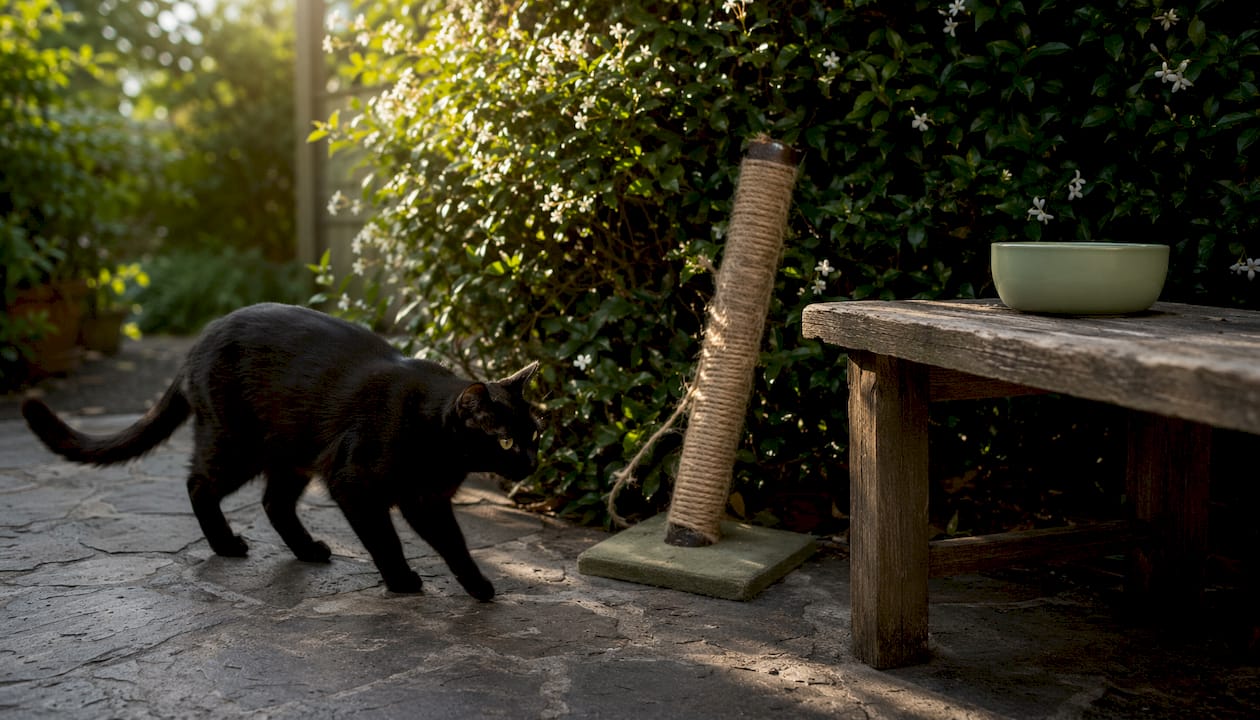
Destructive behavior follows the same logic. Cats need to practice natural hunting behaviors, including stalking, pouncing, and biting. When those outlets disappear, the behavior gets redirected onto furniture, cords, or your hands. Scratching a couch is not defiance. It is a cat using the only available outlet for a drive that has nowhere else to go.
Overeating is a less obvious but medically significant sign. About 60% of cats are classified as overweight or obese, and boredom-driven eating is a recognized contributor. A cat that grazes constantly or begs for food outside normal meal times may be seeking stimulation, not calories.
Frequent zoomies round out the picture. A single burst of energy after a nap is normal. Frequent zoomies indicate under-stimulation, meaning your cat has accumulated energy with no structured outlet and is releasing it in uncontrolled bursts.
How do you tell if it's boredom or a medical problem?
This is the most important question you can ask, and the answer requires a methodical approach. Many cat boredom signs overlap directly with symptoms of illness, which means jumping to behavioral explanations without a vet visit is a mistake.
Overgrooming can signal feline hyperesthesia syndrome, allergies, or pain. Lethargy is a primary symptom of hyperthyroidism, anemia, and urinary tract infections. Increased vocalization, especially in older cats, often points to cognitive dysfunction or hypertension rather than boredom. Behavioral changes should never be dismissed as boredom without ruling out medical conditions through a veterinary exam first.
The practical rule of thumb is this: boredom symptoms align with environmental patterns, while medical symptoms come with physical signs. A bored cat overgrooming will typically do so at predictable times, often when alone or under-engaged. A cat overgrooming due to pain or allergies will show other physical signs, such as changes in appetite, litter box habits, or weight.
Pro Tip: Keep a simple behavior log for one week before your vet appointment. Note the time, duration, and context of each concerning behavior. That pattern data helps your vet distinguish environmental causes from medical ones far faster than a single office observation.
Veterinarians stress the need to rule out physical causes before attributing any behavior change to boredom. Treat the vet visit as step one, not a last resort.
Why do cats get bored? The instinct problem
Boredom in cats is not a personality flaw. It is a structural mismatch between what a cat's brain is built to do and what an indoor environment actually offers.
"Boredom stems largely from restricting natural hunting and exploratory behaviors for cats confined indoors. The indoor environment, however safe and comfortable, rarely provides the sensory variety and physical challenge that a cat's nervous system expects."
Cats are crepuscular hunters, most active at dawn and dusk. Their brains are wired for a cycle of stalk, chase, catch, kill, eat, groom, and sleep. That sequence, repeated multiple times a day in the wild, provides constant cognitive and physical engagement. An indoor cat living on a couch with a full food bowl has the physical needs met but the behavioral sequence broken. The result is psychological stress that surfaces as the symptoms described above.
The problem compounds in single-cat households with long owner absences. Without another animal to interact with or a human to engage, the cat has no social or environmental triggers to activate its natural cycle. The environment becomes static, and a static environment produces a bored, frustrated cat.
Practical enrichment strategies to address signs of a bored cat
Enrichment is not about buying more toys. It is about recreating the conditions that activate your cat's natural behavioral sequence. The goal is to give your cat things to hunt, explore, and solve.
-
Rotate toys on a schedule. Too many choices overwhelm cats, causing them to disengage entirely. Offer two or three toys at a time, then swap them out every few days. Novelty drives engagement more reliably than quantity.
-
Use puzzle feeders at mealtimes. Puzzle feeders replace the "hunt" portion of the behavioral sequence. A cat that has to work for its food is mentally engaged for the duration of the meal, which reduces boredom and slows down eating. This also directly addresses boredom-driven overeating, which connects to long-term weight management. Pairing puzzle feeders with a structured feeding routine compounds the benefit.
-
Schedule play sessions at dawn and dusk. Structured play aligned with cats' crepuscular activity uses their energy at the times they are naturally primed to be active. A 10-minute wand toy session at 7:00 AM and another at 7:00 PM can dramatically reduce nighttime zoomies and daytime lethargy.
-
Add vertical space and window access. Cat trees, wall-mounted shelves, and window perches give cats territory to patrol and observe. Placing a bird feeder outside a window creates a live, unpredictable visual stimulus that holds attention far longer than any static toy.
-
Avoid laser pointers as a primary toy. Laser pointers increase frustration because cats never complete the hunting sequence. They stalk and chase but never catch. That incomplete loop can worsen anxiety and compulsive behaviors over time. If you use a laser, always end the session by directing the beam onto a physical toy your cat can catch and "kill."
Pro Tip: Introduce one new enrichment element per week rather than overhauling the environment all at once. Cats are sensitive to change, and gradual introduction lets you observe what actually engages your individual cat versus what gets ignored.
For indoor cats specifically, diet plays a supporting role in managing boredom-related weight gain. Exploring wet food options for indoor cats can add mealtime variety while supporting hydration and satiety.
Key Takeaways
Recognizing cat boredom symptoms early and responding with targeted enrichment is the most effective way to protect your cat's behavioral and physical health.
| Point | Details |
|---|---|
| Sleep beyond 18 hours signals a problem | Healthy cats sleep 15–18 hours; oversleeping or lethargy points to boredom or illness. |
| Rule out medical causes first | Overgrooming, lethargy, and vocalization can indicate illness. Always consult a vet before assuming boredom. |
| Boredom is an instinct mismatch | Indoor environments restrict natural hunting cycles, causing psychological stress and behavioral symptoms. |
| Toy rotation beats toy quantity | Offering two or three toys at a time and rotating them keeps novelty and engagement high. |
| Timed play sessions reduce symptoms | Scheduling play at dawn and dusk aligns with cats' natural activity peaks and reduces pent-up energy. |
What I've learned from watching owners misread their cats
Most cat owners I've spoken with make the same mistake: they see a bored cat and buy more stuff. A new toy, a second cat tree, a bag of treats. The problem is not a shortage of objects. It is a shortage of interaction and structure.
The cats that improve fastest are the ones whose owners commit to scheduled play, not just passive enrichment. A wand toy used for 10 minutes twice a day does more than a room full of ignored toys. I've also seen owners feel guilty about laser pointers after learning the frustration issue, then abandon interactive play entirely. That overcorrection is worse than the original problem. The fix is simple: end every laser session with a physical toy the cat can catch.
The other thing I'd push back on is the assumption that a quiet cat is a content cat. Cats that have given up on getting stimulation often go silent and still. That is not peace. That is resignation. If your cat used to greet you at the door and now barely lifts its head, that behavioral shift deserves attention, not relief.
Balancing behavioral management with medical awareness is the real skill here. Boredom and illness are not mutually exclusive. A cat can be both under-stimulated and physically unwell. Treat the vet visit and the enrichment plan as parallel tracks, not sequential ones.
— Robert
How Bowlful helps you support a healthier, more engaged cat
A bored cat that overeats is a cat on a path toward obesity-related illness. Bowlful addresses that connection directly.

Bowlful builds personalized feeding plans using the Resting Energy Requirement (RER) formula, the same calculation veterinarians use to determine a cat's true caloric needs. When boredom-driven overeating is part of the picture, a calibrated meal plan becomes part of the solution. Research shows that lean-fed cats may live 1.8 years longer than their overweight counterparts. Bowlful's interactive quiz takes your cat's breed, weight, and life stage into account to build a plan that supports both healthy weight and behavioral well-being. If your cat's boredom signs include food-seeking behavior, that is exactly where Bowlful's approach makes a measurable difference.
FAQ
What are the first signs of a bored cat?
The earliest signs of a bored cat are excessive sleeping beyond 18 hours, increased vocalization, and repetitive behaviors like overgrooming or pacing. These appear before more destructive behaviors like furniture scratching develop.
Can boredom make a cat sick?
Chronic boredom causes psychological stress, which can suppress immune function and contribute to obesity through overeating. About 60% of cats are already classified as overweight or obese, and boredom-driven eating is a recognized factor.
How many play sessions does a bored cat need per day?
Two structured play sessions per day, timed at dawn and dusk to align with a cat's natural crepuscular activity cycle, are the most effective schedule for reducing boredom symptoms.
How do I know if my cat's symptoms are boredom or illness?
Boredom symptoms follow environmental patterns and appear when stimulation is low. Medical symptoms come with physical changes like altered appetite, litter box habits, or weight loss. A veterinary exam is the only reliable way to distinguish between the two.
Does diet affect cat boredom?
Diet affects boredom indirectly. Puzzle feeders that make cats work for meals recreate the hunting sequence and reduce boredom. Overeating from boredom also contributes to obesity, which compounds health risks over time.