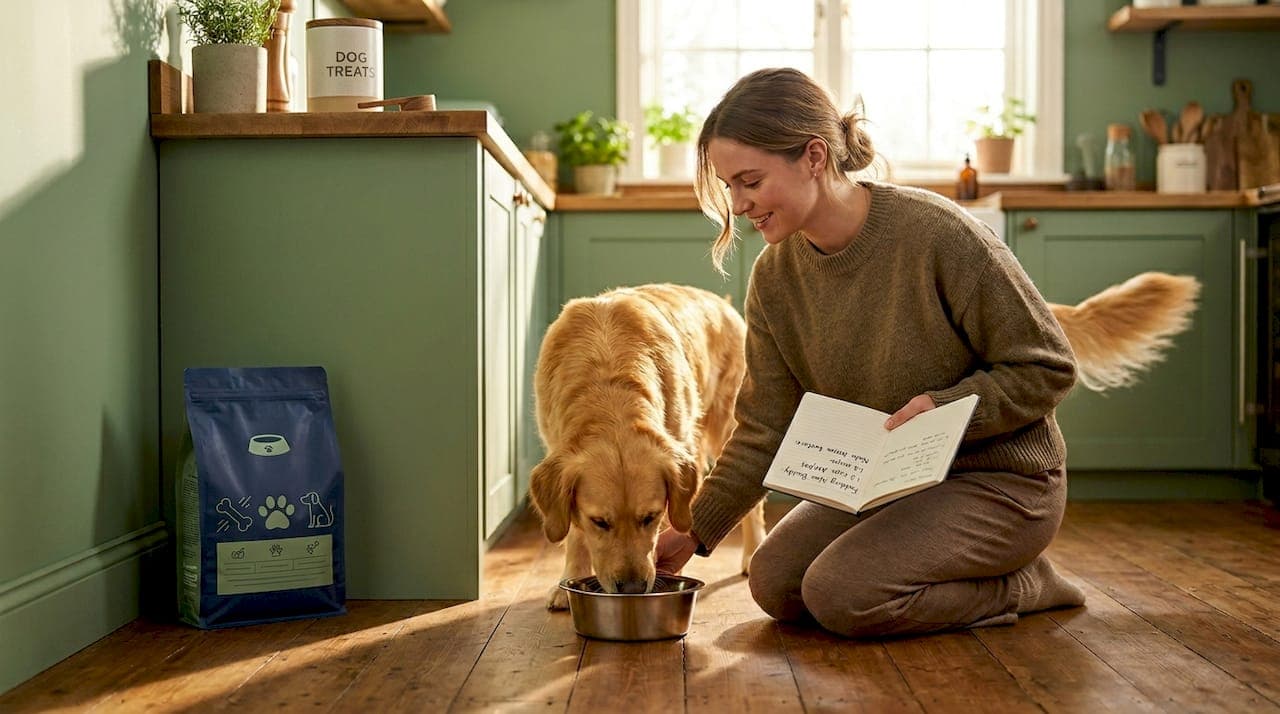
A first pet nutrition checklist is a step-by-step guide to providing your new pet with the essential nutrients and feeding practices required for optimal health and growth. The difference between a thriving pet and one that struggles often comes down to what goes in the bowl and how consistently you manage it. This guide covers everything from reading AAFCO nutritional adequacy statements to portion control, treat limits, and long-term diet monitoring. Whether you are raising a puppy, a kitten, or an adult rescue, the principles of species-specific, life-stage-appropriate nutrition apply from day one.
1. First pet nutrition checklist: start with a complete and balanced diet
A "complete and balanced" diet is the foundation of any pet nutrition guide, and the phrase has a specific legal meaning. The Association of American Feed Control Officials (AAFCO) requires pet food manufacturers to include a nutritional adequacy statement on every label that specifies which species and life stage the food supports. This is not marketing language. It is a regulatory checkpoint that tells you whether the food can serve as your pet's sole diet.
Two methods back up that claim. The first is formulation-based, meaning the recipe meets AAFCO nutrient profiles on paper. The second is more rigorous: AAFCO feeding trials involve multiple animals fed the tested food for extended periods, with health and blood metrics confirming nutritional adequacy. A food backed by feeding trials gives you more confidence than one that only meets formulation standards.
Life stage categories matter just as much as species. Puppy and kitten foods are formulated for rapid growth and carry higher protein and calcium levels than adult formulas. Senior diets often reduce phosphorus and calories to match slower metabolisms. Feeding a puppy an adult formula, or vice versa, creates nutritional gaps or excesses that compound over time.
- Look for the AAFCO statement on the label before anything else
- Match the food to your pet's species (dog vs. cat) and life stage (growth, adult, senior)
- Prefer foods substantiated by feeding trials over formulation-only claims
Pro Tip: The AAFCO statement is usually printed in small text near the bottom of the bag. Search for the phrase "formulated to meet" or "feeding tests substantiate" to find it quickly.
2. How to read a pet food label without getting confused
Reading a pet food label is a skill, and most first-time owners skip straight to the ingredient list while missing the information that actually matters. The label has four critical components: the ingredient list, the guaranteed analysis, the nutritional adequacy statement, and the feeding directions. Each one tells you something different.

The ingredient list is organized by weight before processing, so water-heavy ingredients like fresh chicken often rank higher than their actual dry contribution. Named protein sources such as "chicken," "salmon," or "beef" are preferable to vague terms like "meat meal" or "animal by-products." Ingredient splitting is a common tactic where manufacturers divide one ingredient into multiple forms (for example, "corn," "corn gluten," and "corn flour") to push it lower on the list. Recognizing this prevents you from overestimating protein content.
The guaranteed analysis shows minimum protein and fat percentages and maximum fiber and moisture levels. These numbers are useful for comparing foods on a dry-matter basis, which strips out moisture differences between wet and dry formulas. A wet food with 10% protein and 78% moisture actually contains more protein per dry ounce than it appears.
- Find the AAFCO nutritional adequacy statement first
- Check for a named protein source in the top three ingredients
- Watch for ingredient splitting across similar components
- Compare guaranteed analysis on a dry-matter basis when switching between wet and dry food
- Avoid artificial preservatives like BHA, BHT, and ethoxyquin in favor of mixed tocopherols
Pro Tip: Many owners focus on ingredient quality but overlook verifying nutritional adequacy statements, risking use of foods intended only as supplements or toppers. A premium ingredient list means nothing if the food is not formulated as a complete diet.
3. Best feeding practices and pitfalls to avoid
Proper feeding is not just about choosing the right food. How you deliver that food determines whether your pet maintains a healthy weight and avoids the chronic health problems that come with overfeeding. New pet owners should follow label feeding directions precisely and measure every portion with a kitchen scale or calibrated measuring cup rather than estimating by eye.
Obesity is the most preventable nutrition-related health problem in pets. Free-feeding, where food is left out all day, removes your ability to monitor intake and makes it nearly impossible to detect early appetite changes that signal illness. Scheduled meals, typically two to three times daily for adult dogs and cats, give you a clear picture of how much your pet is actually eating.
"Good nutrition is an everyday practice contributing significantly to pet health, so checklists should focus on sustainable habits beyond initial food choice." — AVMA National Pet Week 2026 Messaging
Raw diets carry real risks. Raw animal-source protein diets pose pathogen risks from bacteria like Salmonella and Listeria, and veterinary guidelines discourage raw feeding unless stringent safety steps are confirmed. If you choose a fresh or wet food, remove uneaten portions within 20 to 30 minutes in warm conditions to prevent spoilage and microbial growth.
- Measure every meal with a kitchen scale or measuring cup
- Feed on a schedule rather than free-feeding
- Avoid toxic human foods including grapes, raisins, onions, xylitol, and chocolate
- Refrigerate opened wet food and discard leftovers promptly
- Keep a simple food log noting what you fed, how much, and whether your pet finished the meal
4. How to monitor your pet's nutrition and adjust over time
A first pet nutrition checklist is not a one-time task. Pet nutrition needs evolve with age, size, and health status, which means the diet that worked perfectly at eight weeks may need significant adjustment by six months. Building a monitoring habit early prevents small problems from becoming serious ones.
Body condition scoring (BCS) is the most practical at-home tool for evaluating whether your pet is at a healthy weight. On a 9-point scale used by most veterinarians, a score of 4 to 5 represents ideal condition. You should be able to feel your pet's ribs without pressing hard, but not see them. Visible ribs indicate underfeeding; a thick fat layer over the ribs signals overfeeding.
Routine weight checks and food logs help detect nutrition-related health issues early and allow you to tailor feeding for optimal wellness. Weigh puppies and kittens weekly during their first few months. Adult pets benefit from monthly weigh-ins at home or during vet visits.
Signs that your pet's current diet may need adjustment include loose stools, excessive gas, a dull or flaky coat, low energy, or sudden weight changes. These are not always signs of illness. They often indicate a mismatch between the food and your pet's specific needs. A veterinary nutritionist can provide a formal dietary assessment when standard adjustments do not resolve the issue. For guidance on feeding amounts by age, Bowlful's resources break down portions clearly for growing pets.
5. Safe treat options and supplements in your pet's feeding plan
Treats are a legitimate part of pet care, but they carry a calorie cost that most owners underestimate. Treats should stay below 10% of your pet's daily caloric intake to avoid tipping the balance toward overfeeding. For a small dog eating 400 calories per day, that means no more than 40 calories from treats, roughly equivalent to two or three small commercial dog biscuits.
Healthy treat options include single-ingredient foods like plain cooked chicken, baby carrots, blueberries, or commercially produced treats with named protein sources and no artificial colors. For cats, small pieces of cooked fish or freeze-dried meat treats work well without adding unnecessary fillers. Avoid treats with propylene glycol, artificial dyes, or excessive salt.
Supplements are a different matter. A pet eating a complete and balanced diet does not need additional vitamins or minerals, and over-supplementing can cause toxicity. Calcium supplements given to puppies already eating a balanced growth formula, for example, can cause skeletal deformities. The cases where supplements are genuinely warranted include omega-3 fatty acids for skin conditions, joint supplements like glucosamine for large-breed dogs, and probiotics during antibiotic treatment. Always confirm supplement choices with your veterinarian before adding them to the routine.
- Choose treats with named protein sources and minimal additives
- Count treat calories as part of the daily total, not in addition to it
- Avoid supplements unless a veterinarian identifies a specific deficiency
- Watch for food sensitivities: repeated loose stools or skin reactions after a new treat signal a problem
Pro Tip: Use treats as training rewards rather than free snacks. This keeps quantities controlled and adds behavioral value to every calorie spent.
6. Understanding puppy nutrition essentials and kitten feeding differences
Puppies and kittens have nutritional needs that differ significantly from adult pets, and from each other. Kittens are obligate carnivores, meaning they require nutrients like taurine and arachidonic acid that are found only in animal tissue. A diet formulated for dogs will not meet a kitten's needs, even if the protein content looks similar on the label.
Puppies need higher levels of DHA (docosahexaenoic acid) for brain and eye development, along with carefully balanced calcium-to-phosphorus ratios to support bone growth. Large-breed puppies like Labrador Retrievers and German Shepherds require large-breed-specific growth formulas because standard puppy foods deliver too much calcium and energy, accelerating bone growth in ways that increase the risk of orthopedic problems. Bowlful's guide on puppy growth stage nutrition covers these breed-specific differences in detail.
Using standardized measurement tools and food logs is especially critical for puppies and kittens during sensitive growth phases, where feeding errors have the most lasting impact. Weigh your puppy or kitten weekly, compare against breed-specific growth charts, and adjust portions as your veterinarian recommends. For a deeper look at what growing dogs specifically need, Bowlful's article on essential nutrients for puppies is a practical reference.
Key takeaways
A complete and balanced diet, verified by an AAFCO nutritional adequacy statement and matched to your pet's species and life stage, is the single most important decision in any first pet nutrition checklist.
| Point | Details |
|---|---|
| Verify the AAFCO statement | Check every label for a nutritional adequacy statement before buying any pet food. |
| Match food to life stage | Puppy, kitten, adult, and senior formulas are not interchangeable; each meets different nutrient needs. |
| Measure every portion | Use a kitchen scale or measuring cup to prevent the overfeeding that leads to obesity. |
| Keep treats under 10% | Treat calories count toward the daily total and should stay below 10% of intake. |
| Monitor and adjust regularly | Body condition scoring and food logs catch nutrition problems before they become health problems. |
What I've learned about feeding a first pet right
When I think back on the most common mistakes new pet owners make, skipping the AAFCO statement tops the list every time. People spend twenty minutes reading ingredient lists and comparing protein percentages, then buy a food that is technically a topper or supplement, not a complete diet. The label tells you everything you need to know, but only if you know where to look.
The second pattern I see constantly is treating portion control as optional. Owners eyeball a scoop of kibble, toss in a handful of treats throughout the day, and then wonder why their six-month-old Labrador is already overweight. Obesity in pets is not a cosmetic issue. It shortens lifespan and increases the risk of diabetes, joint disease, and certain cancers. A kitchen scale costs less than a single vet visit and pays for itself in avoided health problems.
What actually works is building a simple routine from week one. Weigh the food. Log the meals. Check the body condition score monthly. Schedule a vet visit at the six-month mark specifically to review nutrition, not just vaccinations. The owners who do this consistently rarely face serious diet-related health crises. The ones who wing it often end up managing preventable conditions for years.
The honest truth is that pet nutrition is not complicated once you understand the framework. The industry makes it feel overwhelming with premium claims and exotic ingredients, but the fundamentals are straightforward. Find a food with an AAFCO feeding trial statement, match it to your pet's life stage, measure the portions, and monitor the results. That is the entire checklist.
— Robert
Get a personalized feeding plan from Bowlful
Starting your pet on the right nutritional path is easier with a plan built around their specific needs, not generic guidelines.
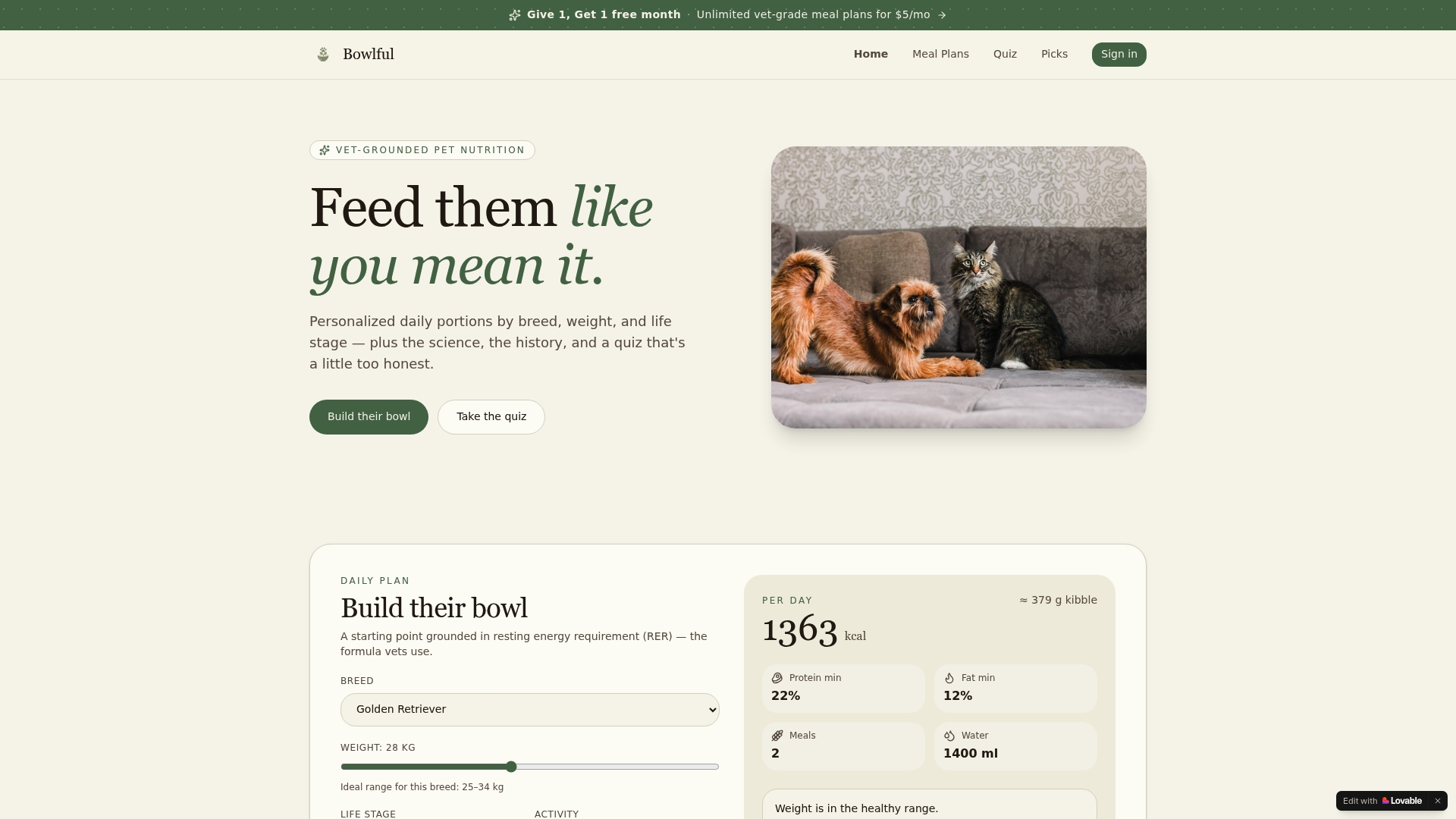
Bowlful uses the same Resting Energy Requirement (RER) formula that veterinarians rely on to calculate exactly how many calories your pet needs based on breed, weight, and life stage. A short quiz connects those numbers to a feeding plan that removes the guesswork from every meal. Whether you have a growing puppy, a new kitten, or an adult rescue, Bowlful's personalized nutrition tools give you a science-backed starting point and the resources to adjust as your pet grows. Stop estimating and start feeding with confidence.
FAQ
What is a first pet nutrition checklist?
A first pet nutrition checklist is a structured guide covering diet selection, label reading, portion control, treat management, and ongoing monitoring for new pet owners. It helps you build feeding habits that support your pet's health from the first day home.
How do I know if a pet food is complete and balanced?
Look for the AAFCO nutritional adequacy statement on the label, which confirms the food meets nutrient standards for your pet's species and life stage. Foods backed by AAFCO feeding trials offer stronger assurance than formulation-only claims.
How much should I feed my puppy or kitten?
Follow the feeding directions on the food label as a starting point, then adjust based on your pet's body condition score and weekly weight checks. Bowlful's feeding frequency guidelines provide age-specific breakdowns for growing pets.
Are treats safe for new pets?
Treats are safe when kept below 10% of your pet's daily caloric intake and chosen from options with named protein sources and no artificial additives. Count treat calories as part of the daily total to avoid unintentional overfeeding.
When should I consult a vet about my pet's diet?
Schedule a nutrition-focused vet visit within the first few months of ownership and again at any major life stage transition. Signs like persistent loose stools, coat changes, or unexpected weight shifts are reasons to consult sooner rather than later.