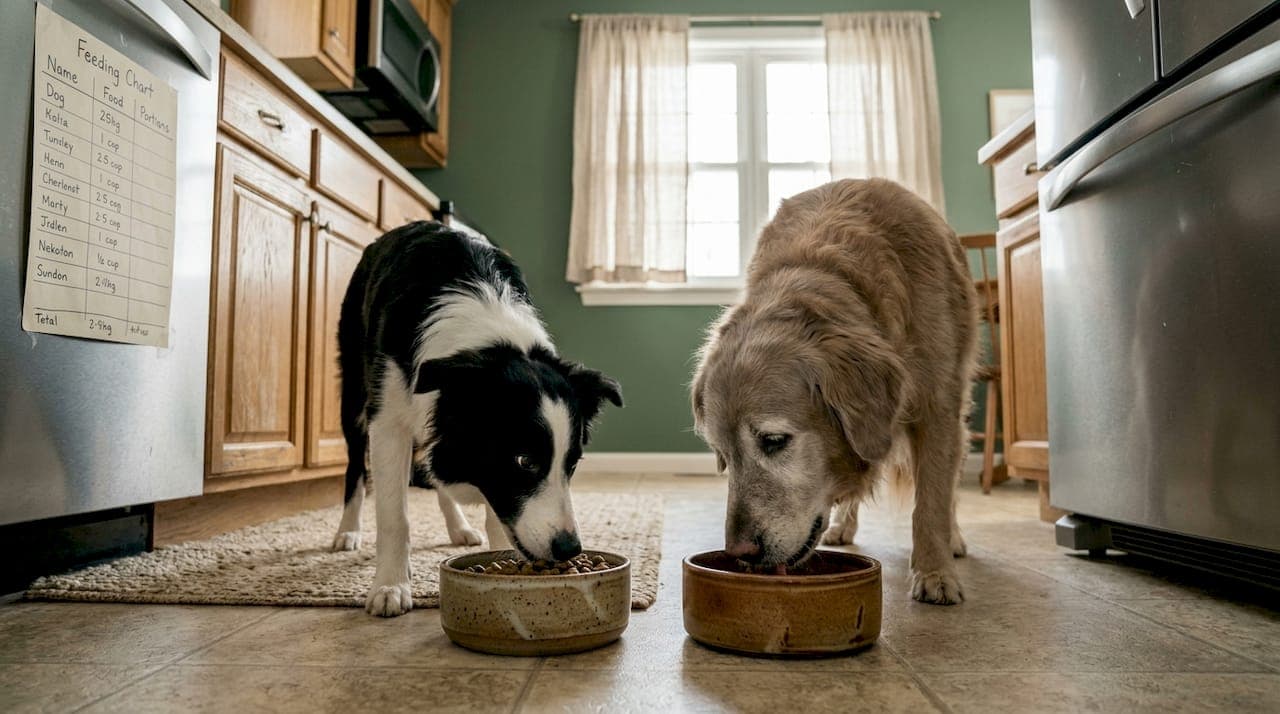
You follow the bag's feeding chart to the letter, but your dog is still gaining weight — or seems perpetually hungry. Sound familiar? Understanding why dogs need different food amounts isn't just reassuring. It's the first step toward feeding your dog in a way that actually fits their body, not the average dog the label was written for. Feeding charts are averages, and real needs depend on your individual dog's lifestyle and condition. This guide breaks down every major factor driving those differences, so you can stop guessing and start feeding with confidence.
Table of Contents
- Key takeaways
- Why dogs need different food amounts
- Size, age, and activity level
- How health and reproductive status affect feeding
- Reading and adjusting feeding charts
- Monitoring body condition and adjusting portions
- My take on the feeding chart habit
- Feed your dog smarter with Bowlful
- FAQ
Key takeaways
| Point | Details |
|---|---|
| Charts are starting points | Feeding guidelines on packaging reflect averages; your dog's actual needs require individual adjustment. |
| Age and size change everything | Puppies need more calories per pound for growth; senior dogs need fewer as metabolism slows. |
| Activity level shifts portions significantly | Two dogs of the same weight can have dramatically different calorie needs based on how active they are. |
| Health status alters requirements | Neutering, thyroid issues, and digestive conditions all affect how much your dog should eat. |
| Body condition beats the scale | Monitoring your dog's body shape over weeks is more reliable than tracking weight alone. |
Why dogs need different food amounts
Pull two dogs of identical weight off the street and put them side by side. One is a two-year-old Border Collie who runs five miles a day. The other is a nine-year-old Basset Hound who naps most of the afternoon. Feed them the same amount and you'll overfeed one and underfeed the other, possibly for years.
That's the core problem with a one-size-fits-all approach to dog food portion sizes. Calorie needs vary by body weight, age, activity level, and reproductive status. Veterinarians call this concept individualized energy requirements, and it's the same framework vets use when calculating a dog's resting energy requirement, or RER. The RER tells you how many calories a dog needs just to maintain basic body functions at rest. Everything else, including exercise, growth, and reproduction, gets layered on top.
Understanding this distinction matters because most people read the bag and call it done. But those numbers were written for a hypothetical average dog. Your dog is not average. They have a specific body, a specific lifestyle, and specific nutritional requirements that shift over time.
Size, age, and activity level
These three factors are responsible for the largest differences in dog food portion sizes. Get them right and you're already ahead of most owners.
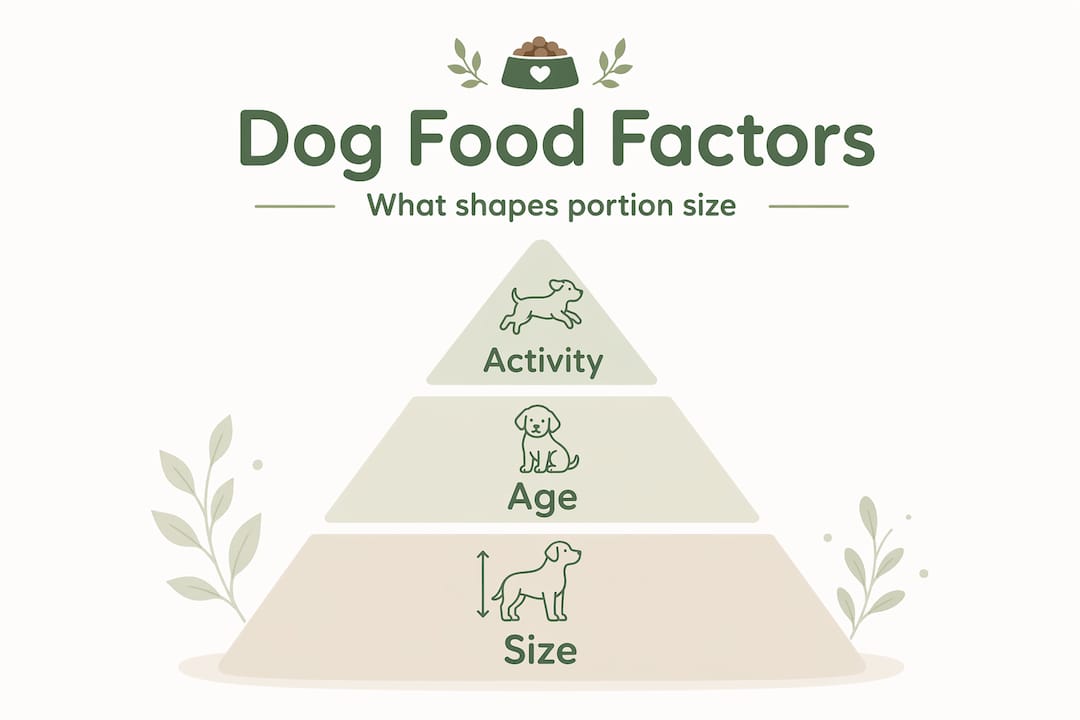
Size: bigger dog, bigger bowl (usually)
Larger dogs obviously eat more than smaller dogs in absolute terms. But it's not perfectly linear. Smaller dogs actually have faster metabolisms relative to their body size, which means they often need more calories per pound than a large breed. A five-pound Chihuahua needs proportionally more food per pound of body weight than a 90-pound Labrador Retriever.
This is why generic feeding charts broken down by weight brackets can still mislead you. Breed matters alongside weight.
Age: puppies eat to grow, seniors eat to maintain
Puppies need significantly more energy per pound than adult dogs because they're fueling bone development, muscle growth, and organ maturation all at once. A Labrador puppy at four months may eat almost twice what a healthy adult Lab of the same weight requires. Their nutritional needs by age shift rapidly, sometimes month to month.
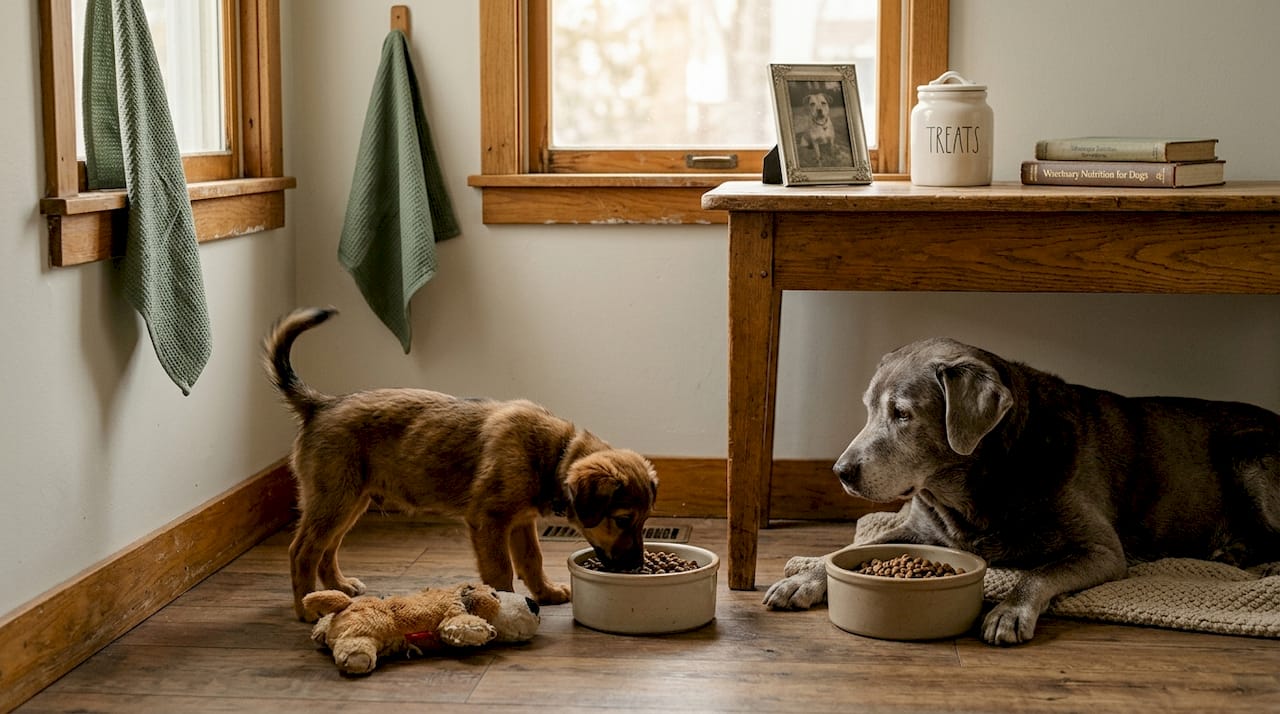
At the other end, senior dogs typically slow down both physically and metabolically. A dog that needed 1,400 calories per day at age three may only need 1,100 at age ten. Owners who don't adjust often watch their aging dog quietly gain weight over a year, then wonder what changed.
Activity level: the factor most owners underestimate
Exercise level directly affects calorie burn and therefore feeding amounts. A working dog, a dog who runs with their owner daily, or even a dog who plays intensely at the dog park several times a week burns meaningfully more than a dog who takes two short leash walks. Two dogs of the same weight may have widely different daily calorie needs based on nothing but how they spend their time.
Here's a quick comparison to put it in perspective:
| Dog profile | Approximate daily calorie need |
|---|---|
| 30 lb adult, sedentary | ~700 kcal |
| 30 lb adult, moderately active | ~900 kcal |
| 30 lb adult, highly active (working dog) | ~1,100+ kcal |
| 30 lb puppy (5 months) | ~1,200+ kcal |
| 30 lb senior, low activity | ~600 kcal |
These numbers are approximations, but they illustrate how dramatically why dog diets vary even within the same weight class.
- Weigh your dog monthly and track trends, not single readings
- Factor in seasonal changes. Dogs often move less in extreme heat or cold
- Consider your dog's job. A dog who herds livestock all day is not the same as one who watches TV with you
Pro Tip: The body condition score (BCS) system, used by vets, rates dogs on a 1-to-9 scale from severely underweight to obese. You can do a simplified version at home: if you can't feel your dog's ribs with light pressure, they're likely getting too much food.
How health and reproductive status affect feeding
Even if you've nailed size, age, and activity level, two more factors can throw your portions off: reproductive status and underlying health conditions.
Neutered dogs generally need fewer calories than their intact counterparts. The hormonal changes following spaying or neutering reduce metabolic rate and often increase appetite. That combination is exactly why so many dogs gain weight after the procedure. A dog that was eating the right amount before being neutered may need 10 to 20 percent less food afterward to stay at a healthy weight.
Health conditions add another layer of complexity:
- Hypothyroidism slows metabolism significantly, meaning dogs with this condition need fewer calories than their size and activity suggest
- Digestive issues like inflammatory bowel disease can reduce how well your dog absorbs nutrients, sometimes requiring more food to meet the same energy needs
- Diabetes and kidney disease often call for specific dietary formulations that your vet will guide you through
- Pregnancy and lactation dramatically increase calorie needs, sometimes doubling a dog's requirements during peak nursing
For dogs managing health conditions, consider checking what palliative nutrition looks like when illness is a factor in feeding decisions.
Treats are a health factor too, even if they don't look like one. Treats should account for no more than 10% of total daily calories, with the main meal adjusted down accordingly. A small dog getting several training treats daily could easily be receiving an extra 100 to 200 calories without their owner realizing it.
Pro Tip: After your dog is spayed or neutered, drop their portion by about 10 percent for the first month and monitor body condition weekly. It's much easier to prevent post-surgery weight gain than to lose it.
Reading and adjusting feeding charts
Feeding charts are a starting point, not a prescription. Here's how to use them without letting them mislead you.
The most common mistake people make is treating the label number as a fixed daily serving rather than a baseline to test and refine. Use the chart to establish a beginning amount, then watch your dog's body condition over two to four weeks before deciding whether to adjust.
Here's a practical step-by-step process:
- Find your dog's target weight (not current weight if they're over or under). Use their ideal weight, not what they weigh today.
- Check the label's kcal per cup, not just the cup measurement. Two different foods can have very different calorie counts per cup, and identical cup volumes can mean very different calorie intakes depending on formulation.
- Divide the daily amount into meals. Most adult dogs do well with two meals per day. Puppies typically need three. Dividing portions also prevents bloat in deep-chested breeds.
- Subtract treat calories from your daily total before measuring main meals. A dog food calorie calculator can make this math easier if you track multiple inputs.
- Adjust by 10 percent at a time based on body condition checks over two to four weeks. Small changes over time are safer than big swings.
When you switch foods, recalculate from scratch based on the new food's calorie density. A cup of one brand is not nutritionally equivalent to a cup of another, and many owners gain or lose weight on their dogs without ever noticing the root cause was a food switch.
| Common mistake | Smarter approach |
|---|---|
| Using cup volume without checking kcal | Always compare calories per cup across brands |
| Ignoring treats in daily total | Count all calories, including chews and toppers |
| Keeping portions the same as dog ages | Reassess every six months or with life stage changes |
| Feeding to appetite, not condition | Use BCS and weight trends as the guide |
Monitoring body condition and adjusting portions
Weighing your dog monthly is useful, but body condition score gives you a more complete picture. It accounts for body composition, not just mass.
Here's how to do a quick BCS check at home:
- Ribs: Run your hands along your dog's ribcage. You should feel the ribs with light pressure but not see them. If you can't feel them at all, your dog is likely overweight.
- Waist: Look down at your dog from above. There should be a visible narrowing behind the ribs. A straight or barrel-shaped silhouette usually signals excess weight.
- Abdomen: View your dog from the side. The belly should tuck up slightly behind the chest. A sagging belly line is a sign of extra weight.
Signs you're overfeeding include gradual weight gain, visible fat deposits at the base of the tail or over the spine, and low energy. Signs of underfeeding include visible ribs and hip bones, poor coat condition, and constant food-seeking behavior.
Adjusting based on long-term trends is more reliable than reacting to a single weigh-in or a hungry-seeming dog. Dogs are motivated eaters regardless of whether they need food. Hunger cues are not a reliable guide to portion size.
For multi-dog households, feeding multiple dogs requires treating each dog as an individual. A single household feeding chart cannot apply universally even to dogs of similar breeds. Separate feeding stations, supervised mealtimes, and individually portioned bowls are the practical answer.
Pro Tip: Take a monthly side-view photo of your dog in the same position and lighting. Visual comparison over time is often more telling than a number on a scale, especially for dogs with dense coats that hide weight changes.
When you're unsure or your dog has a medical condition that affects weight, a vet visit for a formal BCS assessment is worth the time. For dogs with obesity risk, resources on small breed obesity prevention can also give you a framework to apply at home.
My take on the feeding chart habit
I've watched this pattern more times than I can count. A dog owner does everything right on paper. They buy quality food, follow the label, and give their dog plenty of love. But they're feeding the same amount they've always fed, even as the dog turns eight, slows down, and starts looking a little rounder around the middle.
The problem isn't carelessness. It's momentum. We set a feeding routine that worked once and stick with it long past the point where it still applies. I had two dogs close in age and almost identical in size, and their needs diverged significantly as they got older. One stayed active and lean. The other mellowed out and started gaining weight on the exact same portion. I had to split their feeding entirely and monitor each one separately.
What shifted my thinking was paying attention to body shape rather than the number on the bag. Once I stopped trusting the chart and started doing regular BCS checks, I adjusted portions more often than I expected. Every major life change, a season of less exercise, a health issue, getting older, called for a recalibration.
Informed feeding isn't complicated. It just requires you to look at your dog, not the packaging, as the main source of information.
— Robert
Feed your dog smarter with Bowlful
If you've realized that generic feeding guidelines aren't enough for your dog's specific needs, Bowlful was built for exactly that situation.
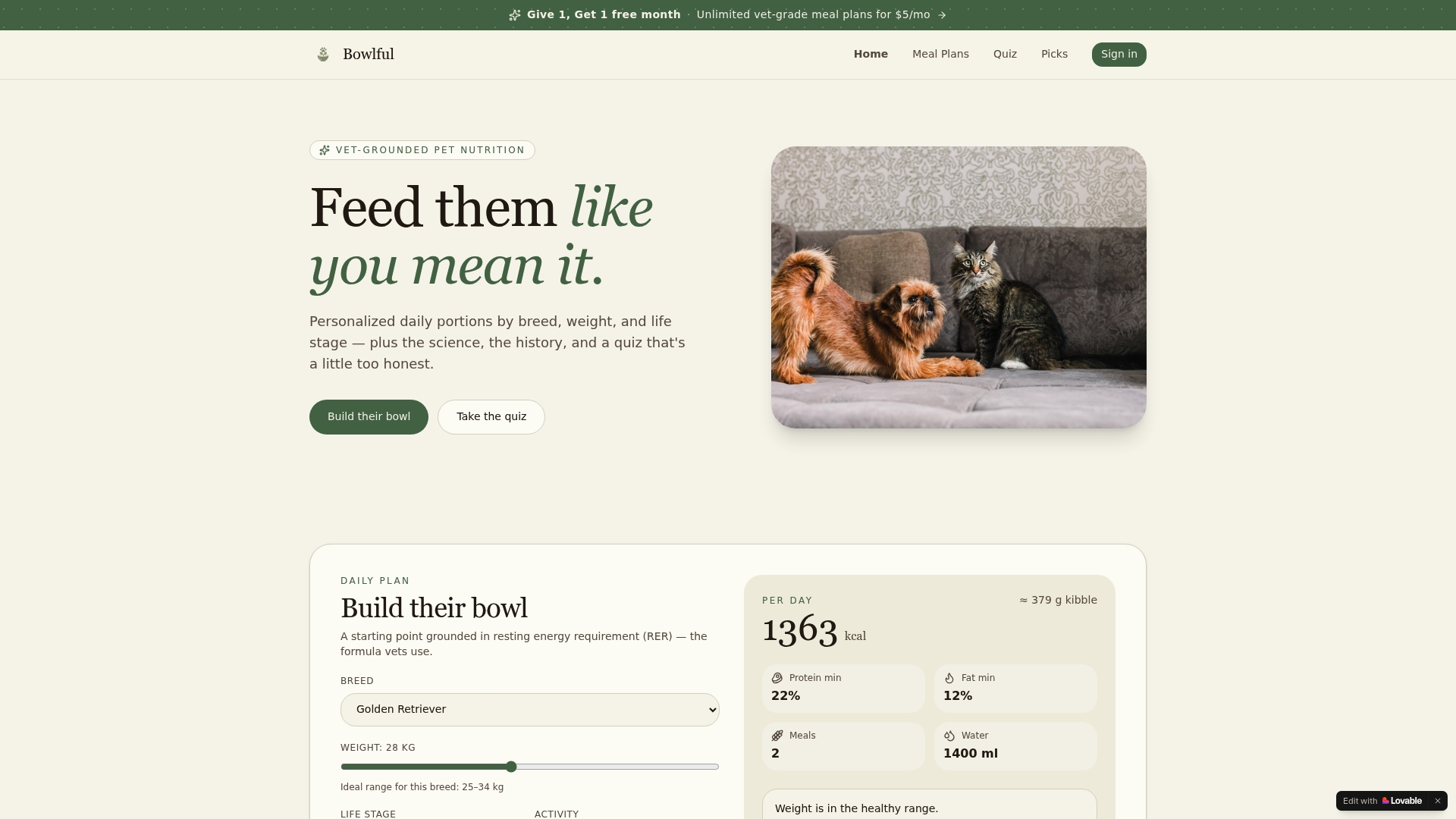
Bowlful uses the resting energy requirement (RER) formula that veterinarians rely on, combined with a quiz that factors in your dog's breed, weight, age, and life stage. The result is a personalized feeding plan grounded in the same science your vet uses. Whether you're managing a puppy's rapid growth, an older dog's slowing metabolism, or a dog with specific health needs, Bowlful translates those factors into tailored feeding guidance you can actually use. Stop guessing, start feeding with precision.
FAQ
Why does my dog need a different amount than the bag says?
Feeding labels are calculated for an average dog at a given weight. Your dog's actual calorie needs depend on their age, activity level, reproductive status, and health conditions, which the label cannot account for individually.
How often should I adjust my dog's food portions?
Reassess your dog's portions at least every six months, and immediately after major life changes such as aging into a new life stage, being neutered or spayed, or a significant shift in activity level.
What is a body condition score and why does it matter?
Body condition score is a 1-to-9 scale vets use to evaluate whether a dog is underweight, healthy, or overweight based on visible and tactile fat coverage. It gives a more accurate picture of feeding accuracy than body weight alone.
Do treats count toward my dog's daily food intake?
Yes. Treats should make up no more than 10 percent of your dog's total daily calories, and you should reduce their main meal portions accordingly to avoid overfeeding.
How do I feed multiple dogs with different needs?
Tailor each dog's portions individually based on their specific profile and feed them separately to prevent one dog from eating the other's food. A single feeding plan cannot apply to all dogs in a household, even if they're similar in size.