
A pet food expert is a credentialed nutrition professional who builds a personalized feeding plan for your dog or cat using veterinary-grade formulas, specifically RER/MER calculations, and recognized standards from bodies like the ACVN, WSAVA, and AAFCO/NRC. This is not a culinary specialist or a human food consultant. It is someone who calculates your pet's exact caloric needs, accounts for their health history, and delivers a written plan you can actually follow.
Before you book a consult or start a plan, gather these four things:
- Your pet's current weight and a recent body condition score (BCS)
- Bloodwork from the past 6–12 months (or schedule it)
- A clear picture of daily activity level and any medications
- A list of all current foods, treats, and supplements
Use Bowlful's first pet nutrition checklist to organize this information before your first consult.
Key Takeaways
A board-certified veterinary nutritionist (ACVN) using RER/MER formulas and AAFCO/NRC standards is the gold standard for personalized pet feeding plans, and even simpler cases benefit from calculated, monitored plans over bag-chart guessing.
| Point | Details |
|---|---|
| Define your expert | ACVN board certification is the top credential; verify it before trusting any nutrition plan. |
| Calculate RER first | Use RER = 70 × (weight kg)^0.75, then apply the correct MER multiplier for life stage and activity. |
| Expect a written plan | A real plan includes daily calories, per-meal portions, a treat budget under 10%, and a recheck schedule. |
| Home diets need formulation | Only ~5% of home-cooked recipes meet AAFCO/NRC standards; always have a professional review the recipe. |
| Use Bowlful to start | Bowlful's RER/MER-based Meal Plan Pro gives you a vet-standard starting plan you can bring to your vet. |
Table of Contents
- Who actually qualifies as a pet food expert?
- How do experts calculate your pet's caloric needs?
- What does a complete personalized feeding plan include?
- Commercial, home-prepared, or therapeutic: which diet is right?
- Safe weight management and the mistakes that derail it
- How to find and vet a pet food expert
- What to track after you start a plan
- Why generic feeding advice keeps pets stuck
- Bowlful gives you a vet-standard plan without the wait
- Sources
Who actually qualifies as a pet food expert?
Not everyone who calls themselves a pet nutritionist has the same training, and the gap between credentials matters enormously when your dog has kidney disease or your cat needs a weight-loss plan.
Board-certified veterinary nutritionists (ACVN) are veterinarians who completed a residency and passed a specialty board exam. They handle complex clinical cases: multi-disease management, critical illness, elimination diets, and therapeutic diet formulation. Cornell University Hospital for Animals' Nutrition Services is a strong institutional example, offering home diet formulation, in-hospital therapeutic feeding, and outpatient consults.
Animal nutritionists typically hold degrees in animal science or food science. Their strength is ingredient quality, formulation processing, and large-scale diet development. They are the right call for food quality questions and commercial recipe evaluation, less so for managing a pet with concurrent liver and cardiac disease.
Veterinary technicians with nutrition credentials (such as AVNT-certified techs) handle practical monitoring, meal-plan implementation, and owner coaching. They work best alongside a veterinarian or ACVN, not as a standalone resource for complex cases.
General veterinarians with a nutrition interest can manage routine weight management and life-stage transitions competently, especially when they follow WSAVA Global Nutrition Guidelines as their benchmark. For anything beyond routine, a referral to an ACVN is the right move.
The DVM360 breakdown of nutrition credentials makes the distinction clear: veterinary nutritionists focus on clinical disease management while animal nutritionists focus on formulation and ingredient science. The best outcomes come from integrating both perspectives.
Red flags to watch for: no verifiable credential, vague claims about "testing," pressure to buy a single proprietary product, or refusal to share the actual nutrient formulation.
How do experts calculate your pet's caloric needs?
The math behind a feeding plan is more precise than most owners expect, and the formula choice matters.
RER (Resting Energy Requirement) is the veterinary-preferred baseline: RER = 70 × (weight in kg)^0.75. The older linear formula, 30 × weight(kg) + 70, is only valid for pets between 2–45 kg. For a 1 kg cat or a 60 kg Great Dane, it can misestimate daily needs by more than 20 kcal, which compounds into meaningful over- or underfeeding over weeks.
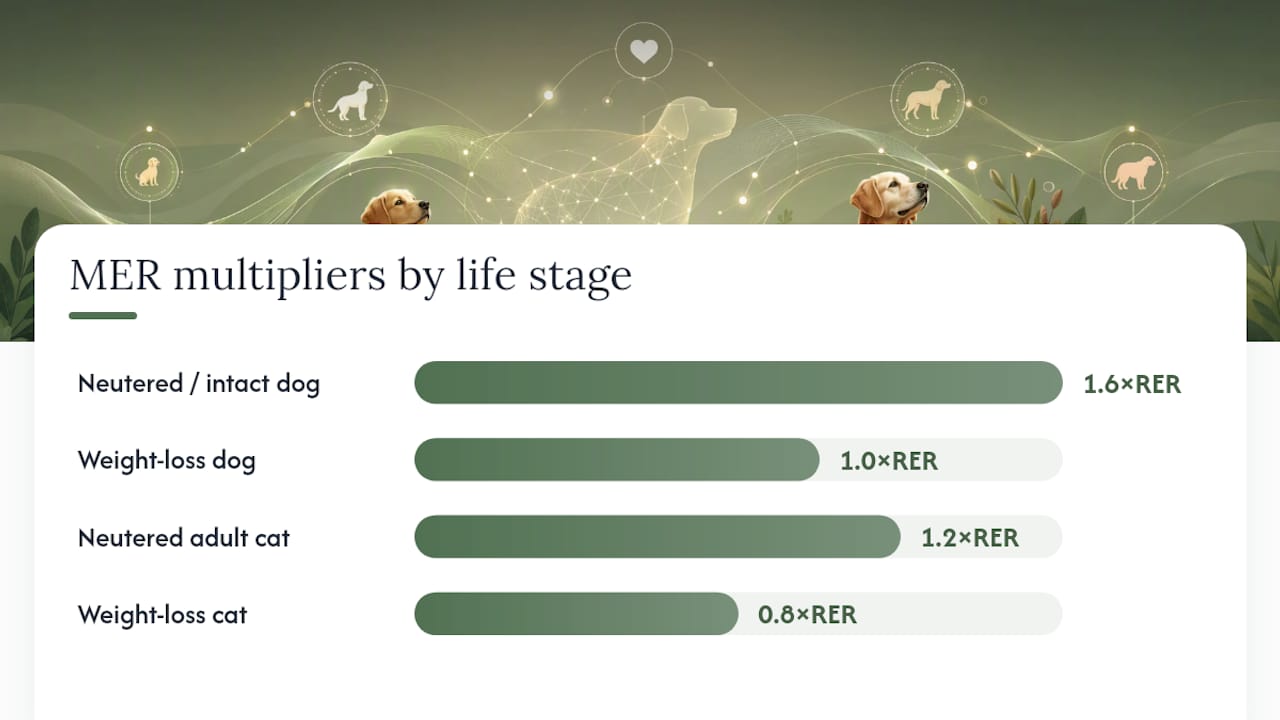
MER (Maintenance Energy Requirement) applies a multiplier to RER based on life stage and activity:
| Life Stage / Activity | MER Multiplier |
|---|---|
| Neutered adult dog | 1.6 × RER |
| Intact adult dog | 1.6 × RER |
| Weight loss (dog) | 1.0 × RER |
| Active / working dog | — |
| Neutered adult cat | 1.2 × RER |
| Weight loss (cat) | 0.8 × RER |
| Kitten (under 4 months) | — |
Sample calculation — 10 kg neutered adult dog: RER = 70 × (10)^0.75 = 70 × 5.62 = 394 kcal/day MER = 394 × 1.6 = 630 kcal/day
Sample calculation — 4 kg neutered adult cat: RER = 70 × (4)^0.75 = 70 × 2.83 = 198 kcal/day MER = 198 × 1.2 = 238 kcal/day
Individual metabolic variation can run up to approximately one-third from the calculated figure, which is why the Merck Veterinary Manual treats RER/MER as starting estimates, not fixed targets. Monthly BCS checks and weight trends are what tell you whether the number is right.
Use the Merck Calories Calculator to verify your starting figure, and check Bowlful's daily calories guide for dogs for breed-specific worked examples.
What does a complete personalized feeding plan include?
A real plan is more than a calorie number. Here is what a veterinary-grade assessment covers and the typical timeline from first consult to implemented plan:
Assessment inputs:
- Signalment (species, breed, age, sex, neuter status)
- Current and ideal body weight, BCS (target: 4–5/9)
- Activity level, medical history, current medications
- Recent bloodwork and stool/gut assessment
- Full treat and supplement inventory
Formulation outputs:
- Daily calorie target and per-meal portions
- Diet format recommendation (commercial, home-prepared, or therapeutic)
- Macronutrient targets and any required supplements
- Treat budget (capped at less than 10% of daily calories)
- Written monitoring checklist
Typical timeline:
| Stage | Timeframe |
|---|---|
| Initial consult and assessment | Day 1 |
| Plan delivery | Within 3–7 days |
| Diet transition | 7–10 days (gradual) |
| First recheck (weight + BCS) | 2–4 weeks post-start |
| Monthly adjustments | Months 1–3 |
| Long-term maintenance | Quarterly to biannual |
Personalized nutrition is now a priority for roughly 42% of pet owners, and the evidence supports the investment: tailored plans improve nutrient bioavailability, support weight management, and target gut health more effectively than generic bag-feeding guidelines. For a deeper look at how breed history shapes these inputs, Bowlful's breed nutrition guide is worth reading before your consult.
Commercial, home-prepared, or therapeutic: which diet is right?
Each format has a legitimate place, and the right choice depends on your pet's health status and your capacity to follow through.
Commercial complete diets are the practical baseline for most healthy pets. Look for an AAFCO nutritional adequacy statement on the label. Evaluate foods on a caloric basis (nutrients per 1,000 kcal) rather than as-fed percentages for an honest comparison. Bowlful's guide to nutritional adequacy statements explains exactly what those label claims mean.

Home-prepared diets carry real risk. A UC Davis evaluation found a very small percentage of home-cooked recipes met complete and balanced nutrient standards. The Merck Veterinary Manual is equally direct: home diets frequently lack required nutrients unless a credentialed professional formulates them against AAFCO/NRC profiles. Raw diets add pathogen and antinutritional risks on top of that.
Therapeutic (prescription) diets are formulated for specific disease states: kidney disease, urinary crystals, food allergies, hepatic conditions. These require a veterinary diagnosis and, for complex multi-disease cases, an ACVN consult.
When to insist on a board-certified nutritionist: multiple comorbidities, critical illness, complex elimination protocols, or any home-cooked recipe you plan to feed long-term.
Pro Tip: Always request nutrient guarantees expressed per 1,000 kcal (calorie basis) or on a dry matter basis when comparing foods. As-fed percentages are distorted by moisture content and can make a lower-quality food look nutritionally equivalent to a better one.
Safe weight management and the mistakes that derail it
Weight loss done wrong causes muscle loss, nutrient deficiency, and a frustrated owner who gives up. Done right, it is straightforward.
- Calculate ideal weight using BCS: a pet at BCS 7/9 is roughly 20% over ideal. Estimate ideal weight accordingly.
- Set a calorie target at 1.0 × RER for dogs on a weight-loss program, 0.8 × RER for cats.
- Choose a nutrient-dense food with adequate protein to preserve lean mass during loss.
- Measure every meal by weight, not volume. Cup scooping varies by 20–30% depending on kibble density.
- Cap treats at less than 10% of daily calories and count them in the total.
- Weigh weekly and target 1–2% of body weight loss per week. Faster than that risks lean tissue loss.
Pro Tip: Take a weekly side-profile photo of your pet in the same position and lighting. Visual BCS tracking between weigh-ins catches plateau trends faster than the scale alone.
How to find and vet a pet food expert
The right service format depends on your pet's complexity and your budget.
Questions to ask any nutrition professional:
- What credential do you hold, and is it verifiable (ACVN, AVNT)?
- Who writes the actual recipe or formulation?
- Does the plan meet AAFCO or NRC standards?
- What is the recheck schedule, and what triggers a plan revision?
- What is your policy if the plan needs adjustment?
Red flags:
- Guarantees of rapid weight loss (more than 2% per week)
- Refusal to share the nutrient breakdown
- No written plan, no monitoring schedule
- Pressure to purchase a single branded product as the only solution
Service formats and typical pricing:
- In-clinic ACVN consult: $200–$500 for initial formulation, more for complex cases with diagnostics
- Telehealth nutrition consult (veterinarian-led): $75–$200 per session
- Veterinary technician follow-up visits: $30–$75 per check
- Vet-standard digital meal plan services: freemium to $10–$30/month for subscription plans
Complexity drives cost: a healthy adult dog needing a maintenance plan costs far less than formulating a home-cooked elimination diet for a cat with concurrent IBD and hyperthyroidism.
What to track after you start a plan
A plan without monitoring is just a document. These are the metrics that tell you whether it is working:
- Body weight: weigh weekly on the same scale, same time of day
- BCS: reassess every 2–4 weeks; target 4–5 out of 9
- Stool quality: firm, well-formed stools indicate good digestibility
- Coat condition: dull or flaky coat can signal a fatty acid or protein gap
- Energy level and appetite: sudden changes warrant a call to your vet
Recommended cadence: check in at 1–2 weeks after starting, schedule a clinical recheck with weight and BCS at 4–6 weeks, then monthly for the first 3–6 months. After that, quarterly to biannual maintenance checks are appropriate for stable pets.
Escalate to an ACVN or in-clinic diagnostics if you see unexpected weight loss or gain despite following the plan, persistent GI signs, or if your pet has multiple conditions that are shifting simultaneously.
Why generic feeding advice keeps pets stuck
Most owners who come to me frustrated with their pet's weight or digestion have one thing in common: they followed the bag. Bag feeding charts are designed for the average pet at average activity, and your dog or cat is almost certainly not average. A sedentary 8-year-old spayed Labrador and an active 3-year-old intact Border Collie both weigh 25 kg. Their caloric needs are not remotely the same.
The other thing I see consistently is owners treating RER/MER as a fixed answer rather than a starting point. The formula gets you close. Monthly BCS checks and honest weight tracking are what get you there.
Veterinary-grade personalization is not about complexity for its own sake. It is about having a number that is actually calibrated to your specific animal, a plan that accounts for their medical history, and a recheck schedule that catches problems before they become expensive. Pets on well-formulated, monitored plans tend to maintain healthier weights, show better coat condition, and have fewer chronic GI issues. That is not a marketing claim. It is what happens when feeding is treated as a clinical discipline rather than a guessing game.
Bowlful gives you a vet-standard plan without the wait
Most pet owners know they should be feeding more precisely. The barrier is usually time, cost, or not knowing where to start. Bowlful closes that gap with personalized meal plans built on the same RER/MER formulas veterinarians use, calibrated to your pet's breed, age, weight, and activity level.
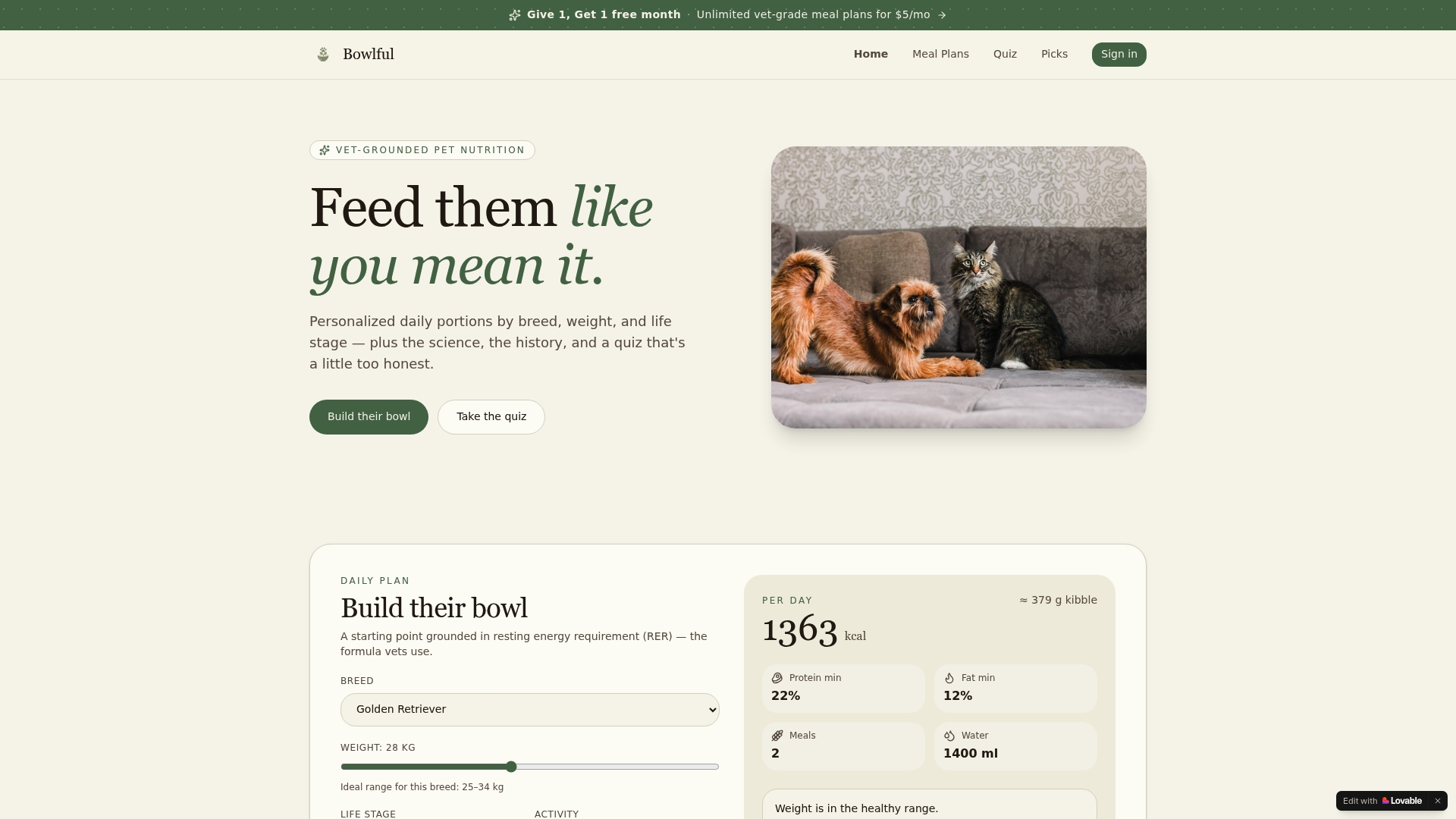
A Bowlful Meal Plan Pro subscription gives you a downloadable PDF plan with daily calorie targets, per-meal portions, a treat budget, and a monitoring checklist. The free quiz takes under five minutes and produces an immediate starting estimate. For straightforward cases, that is often enough to get moving. For pets with complex medical histories, Bowlful's plan works best as a complement to an ACVN or veterinary consult, not a replacement.
Pricing is freemium: the calculator and quiz are free, and the full downloadable Meal Plan Pro runs on a monthly or annual subscription. Get your personalized plan at Bowlful and bring the output to your next vet visit.
Sources
- Nutrition Math 101: Important Calculations for Dogs and Cats
- Nutritional Requirements of Small Animals - Merck Veterinary Manual
- Nutrition — Cornell University Hospital for Animals
Bring any calculator output or downloaded plan to your veterinarian. Calculated values are starting points; your vet's clinical assessment is what confirms whether the numbers are right for your specific pet.
This article is general information, not a substitute for advice from a qualified doctor. Consult a qualified healthcare professional about your own circumstances before acting on anything here.