
If your dog has been diagnosed with liver disease, the question of what to feed them feels urgent and confusing at the same time. Understanding what a liver disease diet for dogs actually involves can make the difference between supporting recovery and accidentally making things worse. The good news is that veterinary nutrition science has come a long way, and the answer is not simply "feed less protein." The right diet depends on the type of liver disease, its severity, and your dog's individual condition.
Table of Contents
- Key takeaways
- What is liver disease diet for dogs, and why does it matter
- Core nutrients in a canine hepatic diet
- Choosing the right food for a dog with liver problems
- Managing special conditions: encephalopathy, copper disease, and energy needs
- My honest take on liver diets for dogs
- Bowlful supports dogs with special dietary needs
- FAQ
Key takeaways
| Point | Details |
|---|---|
| Protein isn't always restricted | Most dogs with liver disease need adequate protein; restriction applies mainly to hepatic encephalopathy cases. |
| Copper limits matter for some breeds | Dogs with copper-associated liver disease need diets with under 1.2 mg copper per 1,000 kcal. |
| Meal frequency affects recovery | Spreading food across multiple small meals reduces ammonia spikes and liver workload. |
| Homemade diets need vet oversight | Home-cooked food can work well but must be carefully formulated to avoid nutrient gaps. |
| Antioxidants support healing | Vitamin E and taurine help protect liver cells from ongoing oxidative damage. |
What is liver disease diet for dogs, and why does it matter
The liver does an enormous amount of work. It processes proteins, filters toxins from the blood, produces bile for fat digestion, stores glycogen for energy, and synthesizes clotting factors. When liver function is compromised, every one of those jobs gets disrupted, and food choices directly affect how hard the organ has to work.
Canine liver disease is not a single condition. It covers a range of diagnoses including chronic hepatitis, cirrhosis, portosystemic shunts, copper-associated hepatopathy, and toxic liver injury. Each one changes how the body handles nutrients in slightly different ways.
Here is what liver impairment typically does to your dog's metabolism:
- Protein processing slows down. The liver converts ammonia (a byproduct of protein metabolism) into urea for excretion. When that process fails, ammonia builds up in the bloodstream.
- Fat digestion becomes unreliable. Bile production may drop, making high-fat meals harder to tolerate, particularly when bile ducts are blocked.
- Energy management shifts. A damaged liver struggles to store and release glucose properly, making consistent calorie intake more important than usual.
- Nutrient storage falters. Fat-soluble vitamins and minerals like zinc may become depleted even if the dog appears to be eating normally.
Pro Tip: Ask your vet to specify which type of liver disease your dog has been diagnosed with before adjusting their diet. The nutritional approach for a portosystemic shunt differs significantly from the approach for copper storage disease.
Core nutrients in a canine hepatic diet
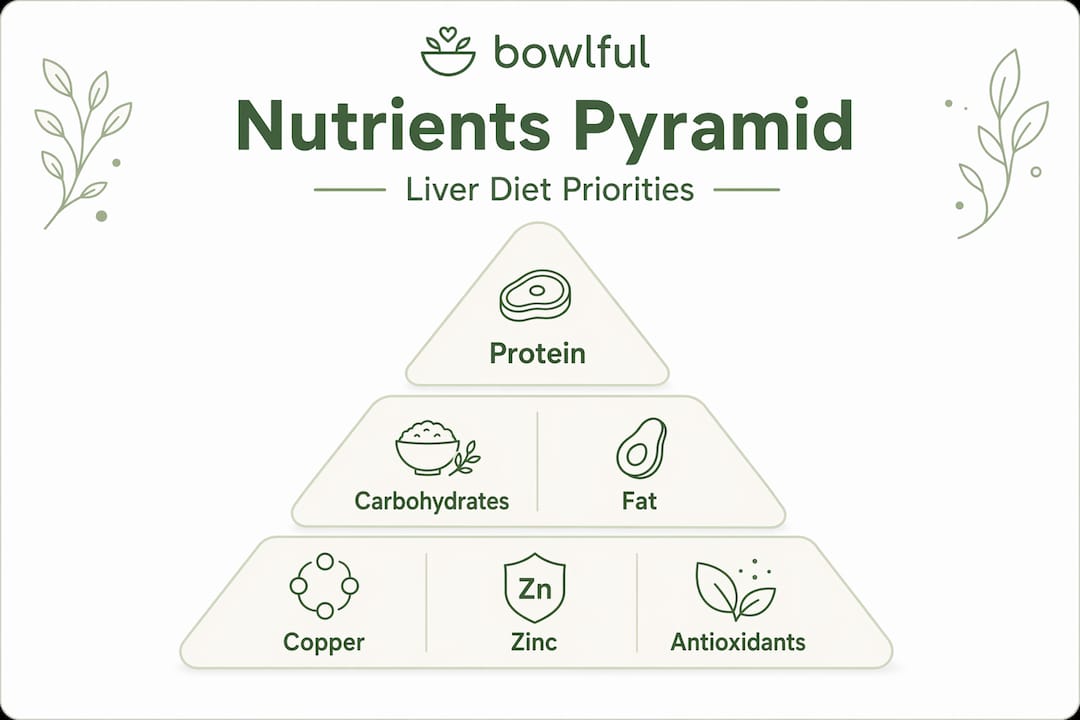
This is where most pet owners get tripped up, so let's go through each key nutrient clearly.
Protein: the most misunderstood piece
The old assumption was that dogs with liver disease should always eat low-protein food. That is not accurate. Protein restriction is reserved specifically for dogs developing hepatic encephalopathy, a neurological complication caused by ammonia accumulation. For most other liver conditions, cutting protein too aggressively causes muscle wasting and slows healing.
Most veterinary nutritionists now target 20 to 25% protein on a dry matter basis for dogs with liver disease, with an emphasis on highly digestible sources. Cooked eggs, white fish, and lean poultry generate less ammonia during digestion than red meats, making them better choices when the liver's detox capacity is reduced.
Carbohydrates and fat
Complex carbohydrates like starches, cooked legumes, and whole grains serve a specific purpose here. They supply energy without requiring protein to be broken down for fuel, which keeps ammonia production lower. Think of them as fuel that bypasses the liver's busiest processing lane.
Fat does not need to be drastically reduced in most cases. The exception is when bile obstruction is present, which impairs fat digestion and absorption. Unless your vet confirms bile duct involvement, a moderate fat level is appropriate and helps maintain calorie density.

Copper and zinc
For dogs with copper-associated hepatopathy (common in Bedlington Terriers, Labrador Retrievers, and Dalmatians), dietary copper below 1.2 mg per 1,000 kcal is a firm target. Organ meats, especially beef liver and kidney, contain very high copper levels and should be avoided in these dogs.
Zinc supplementation can reduce copper absorption from the gut, but it works slowly and cannot replace dietary copper restriction. Think of zinc as a supporting tool, not the main strategy.
Antioxidants
Vitamin E and taurine are two antioxidants consistently recommended in liver disease diets. They help protect liver cells from the oxidative damage that accompanies inflammation and metabolic stress. Some prescription diets include these already; if you are using an over-the-counter food, check with your vet about supplementing.
Here is a quick comparison of how prescription hepatic diets and over-the-counter options typically differ:
| Feature | Prescription hepatic diet | Over-the-counter option |
|---|---|---|
| Protein level | Controlled and measured precisely | Variable; may be too high or low |
| Copper content | Specifically limited | Rarely specified |
| Antioxidant addition | Formulated in | May not be present |
| Sodium control | Often reduced for ascites | Not typically managed |
| Vet oversight required | Yes | Recommended but not mandatory |
Pro Tip: Reading nutrient labels on dog food requires converting percentages to dry matter basis, since moisture content skews the numbers. Ask your vet or a veterinary nutritionist to help you interpret the label before committing to a food.
Choosing the right food for a dog with liver problems
There are three main paths dog owners take: prescription diets, over-the-counter foods, and homemade meals. Each has real advantages and real limitations.
Prescription hepatic diets from veterinary brands are formulated specifically for liver disease management. They control protein quality, limit copper, moderate sodium (relevant when fluid retention is a concern), and include antioxidant support. Your vet will typically recommend these for moderate to severe cases or when a specific nutrient target needs to be hit precisely.
For milder liver conditions or dogs in early recovery, some over-the-counter foods with appropriate nutrient profiles may be suitable. The key criteria to evaluate:
- Protein from digestible animal sources (chicken, turkey, eggs, white fish)
- Moderate fat without relying on high-fat red meats
- No added organ meats high in copper
- Sodium on the lower end if fluid retention is a concern
Homemade diets for liver disease are appealing to many owners because they offer full control over ingredients. The challenge is balance. Home-cooked recipes that work well typically include lean proteins like egg whites, poached chicken, or white fish, paired with cooked rice or sweet potato and dog-safe vegetables. However, meeting every micronutrient requirement without professional formulation is genuinely difficult, and gaps can cause new problems over time.
Pro Tip: If you want to cook for your dog, ask your vet for a referral to a board-certified veterinary nutritionist who can create a complete and balanced recipe specific to your dog's diagnosis. Generic online recipes are rarely formulated to the level of precision a liver patient needs.
Feeding frequency matters more than most owners realize. Multiple small meals throughout the day keep ammonia levels more stable than one or two large meals. Three to four small portions spread across the day is a practical target for most liver disease patients. For updated guidance on meal timing, the 2026 feeding frequency guidelines offer a useful framework.
Managing special conditions: encephalopathy, copper disease, and energy needs
The nuance in a liver health diet for dogs comes down to which complication your dog is dealing with.
Here are the three most common scenarios and how the dietary approach shifts for each:
-
Hepatic encephalopathy requires the most careful protein management. Ammonia buildup from protein digestion drives the neurological symptoms: confusion, circling, seizures. For these dogs, protein levels may need to drop below the standard 20 to 25% range, and plant-based or dairy proteins (which produce less ammonia than meat) may be temporarily incorporated. This is the one scenario where a genuinely low-protein approach has clear clinical justification.
-
Copper-associated hepatopathy demands strict ingredient control. Dietary copper restriction is the primary management tool, and the challenge is that high-protein foods often carry higher copper loads. This means protein supplementation must stay under careful thresholds, typically no more than 10% of daily calories from added protein sources. Venison, salmon, and egg whites are among the lower-copper protein options worth discussing with your vet.
-
General liver disease without neurological signs calls for adequate protein to prevent muscle wasting and support tissue repair. Starving the body of protein in these cases backfires. The body starts breaking down muscle for energy, which paradoxically increases ammonia production and places more strain on the liver.
| Condition | Protein approach | Key dietary focus |
|---|---|---|
| Hepatic encephalopathy | Reduced; plant/dairy proteins preferred | Minimize ammonia production |
| Copper hepatopathy | Adequate but low-copper sources only | Strict copper limits below 1.2 mg/1,000 kcal |
| General liver disease | Normal range (20-25% dry matter) | Quality protein, antioxidants, energy balance |
Energy balance deserves more attention than it usually gets. A dog that is not eating enough will catabolize muscle tissue for fuel, and that muscle breakdown generates ammonia just like dietary protein does. Keeping calorie intake up, even through more frequent small meals or adding palatable safe ingredients, is a real clinical priority. For dogs on palliative care paths, nutritional support strategies that maintain quality of life while managing the condition are worth exploring.
Pro Tip: Weigh your dog weekly during diet transitions. Unexpected weight loss often signals inadequate calorie intake, which requires adjusting meal frequency or calorie density before muscle wasting becomes a bigger problem.
My honest take on liver diets for dogs
I've spent years watching pet owners make the same well-intentioned mistake with liver disease: they hear "liver disease" and immediately cut protein. They switch to rice and vegetables and think they are doing the right thing. In most cases, they are not.
What I've learned is that the old blanket low-protein recommendation came from valid science applied too broadly. It makes sense for hepatic encephalopathy. It does not make sense for a dog with early copper hepatopathy or mild chronic hepatitis who has no neurological signs. Cutting protein in those cases actively works against recovery.
The other thing I've seen trip people up is label reading. Most dog food labels list nutrients as-fed, meaning moisture is included in the percentage. A wet food that says 8% protein sounds low, but converted to dry matter basis, it might be 35%. That matters enormously when you are trying to hit a specific protein target.
My practical advice: treat the diet like a prescription, not a personal project. Work with your vet, get specific numbers to aim for, and check in monthly to see if the approach is working. The dogs I've seen do best are the ones whose owners stayed closely involved, tracked weight and appetite, and adjusted without waiting for the next annual checkup.
— Robert
Bowlful supports dogs with special dietary needs
If your dog has been diagnosed with liver disease, getting nutrition right from the start matters more than most people realize.
Bowlful builds personalized feeding plans using the same RER formula that veterinarians use, with nutrient targets adjusted for your dog's specific breed, weight, and health status. For dogs that need controlled protein, antioxidant support, or careful calorie management, Bowlful's approach gives you a structured plan rather than guesswork. Pair it with your vet's guidance, and you have a solid foundation for supporting recovery. Visit Bowlful to explore nutrition plans designed with your dog's health challenges in mind.
FAQ
What should I feed a dog with liver disease?
Focus on highly digestible protein sources like cooked eggs, white fish, and lean poultry, paired with complex carbohydrates like rice or sweet potato. Always confirm the specific approach with your vet, since the right diet depends on the type and stage of liver disease.
Do all dogs with liver disease need a low-protein diet?
No. Low-protein diets are recommended specifically for dogs with hepatic encephalopathy. Most dogs with liver disease actually need adequate protein to prevent muscle wasting and support healing.
How much copper should a dog with liver disease eat?
For dogs with copper-associated hepatopathy, dietary copper should stay below 1.2 mg per 1,000 kcal. Avoid organ meats like beef liver or kidney, which are very high in copper.
Can I make homemade dog food for liver disease?
Yes, but it requires careful planning. Generic recipes online rarely meet the precision required for a liver patient. Work with a veterinary nutritionist to create a complete and balanced recipe tailored to your dog's specific diagnosis.
How often should I feed a dog with liver disease?
Multiple small meals spread throughout the day, ideally three to four, are better than one or two large meals. This approach keeps ammonia levels more stable and reduces the workload on the liver.