
Large-breed dog owners should buy pet insurance before their dog's first orthopedic risk window opens — and the single most important thing to do right now is compare orthopedic waiting periods across carriers before you get a quote on price.
Three things to act on immediately:
- Enroll young. Early enrollment prevents orthopedic conditions from becoming pre-existing exclusions before coverage starts.
- Ask about orthopedic waits. These range from 14 days to 12 months across policies. A short wait or a waiver option is worth more than a lower premium.
- Confirm vet direct-pay. Having the insurer pay the clinic directly can dramatically cut what you owe at the counter during emergency surgery.
Table of Contents
- Why large-breed dogs need different insurance coverage
- What policy features matter most for large breeds
- How much does pet insurance cost for large breeds?
- Comparing top U.S. pet insurers for large-breed dogs
- When should you enroll, and what happens if you wait?
- How vet direct pay and claims reimbursement actually work
- How nutrition and weight management lower your long-term insurance risk
- Key Takeaways
- The case for prevention alongside your policy
- Bowlful's nutrition plans work alongside your insurance coverage
- Useful sources for verifying policy terms
Why large-breed dogs need different insurance coverage
Size changes the math on almost every vet bill. A 90-pound Labrador Retriever needs larger anesthesia doses, bigger surgical implants, and longer recovery stays than a 20-pound dog with the same diagnosis. That translates directly into higher claim amounts, which is why large-breed premiums run higher than the national average and why the policy terms that matter most are different too.
The conditions driving those costs are predictable by breed group:
- Orthopedic: Hip dysplasia, elbow dysplasia, and cruciate (CCL/ACL) tears are disproportionately common in breeds like German Shepherds, Golden Retrievers, Rottweilers, and Bernese Mountain Dogs.
- Gastrointestinal: Bloat (GDV) is a life-threatening emergency in deep-chested giants like Great Danes and Standard Poodles. Emergency surgery can run $3,000–$7,000.
- Cancer and cardiac: Certain large breeds, including Golden Retrievers and Boxers, carry elevated cancer rates. Giant breeds like Dobermans face higher rates of dilated cardiomyopathy.
A single orthopedic surgery, including imaging, the procedure, hospitalization, and rehabilitation, can easily exceed $5,000. If your dog develops hip dysplasia and a CCL tear in the same year, you are looking at a bill that a $5,000 annual limit will not fully cover. That is the core argument for choosing higher annual limits of $10,000 or unlimited when insuring a large or giant breed.
What policy features matter most for large breeds
Not all pet insurance policies are built for a 100-pound dog with a family history of joint problems. Here is what to check before you sign:
- Orthopedic waiting periods and waivers. Waits range from 14 days to 12 months depending on the carrier and state. Some plans allow a vet orthopedic exam to shorten or waive the wait entirely.
- Hereditary and congenital coverage. Hip dysplasia, elbow dysplasia, and breed-specific cardiac conditions must be explicitly covered, not excluded as "pre-existing by breed."
- Bilateral-condition rules. Ask whether a claim on the left hip creates an exclusion for the right. Some carriers treat bilateral conditions as a single pre-existing condition once one side is diagnosed.
- Annual vs. lifetime limits. For giant breeds, $10,000+ or unlimited annual limits are worth the higher premium. A $5,000 cap covers many single emergencies but not a multi-stage treatment year.
- Deductible model. A per-condition deductible means you pay the deductible once per condition for the life of the policy — a real advantage for chronic orthopedic issues that recur year after year.
- Exam fees and dental illness. These are excluded by default on many plans. Add them if the option exists.
- Gastropexy coverage. Prophylactic gastropexy is typically excluded as elective, even for high-risk breeds. Only a specific wellness rider will cover it — never assume.
- Age limits and enrollment caps. Some carriers cap enrollment at age 6 or 8. Healthy Paws, for example, requires enrollment before age 6 for hip dysplasia coverage to apply.
- Vet direct-pay availability. Confirm the exact workflow with both the insurer and your clinic before an emergency happens.
Exact questions to ask any insurer:
- "What is your orthopedic waiting period for hip dysplasia in my state? Can it be waived with a vet exam?"
- "How do you handle bilateral conditions — if my dog tears one CCL, does the other become excluded?"
- "Does your vet direct-pay work at my specific clinic, and is it real-time adjudication or post-approval routing?"
Pro Tip: Bilateral-condition clauses are one of the most overlooked traps in large-breed policies. Ask for the exact policy language in writing before you enroll — not just a verbal answer from a sales rep.
How much does pet insurance cost for large breeds?

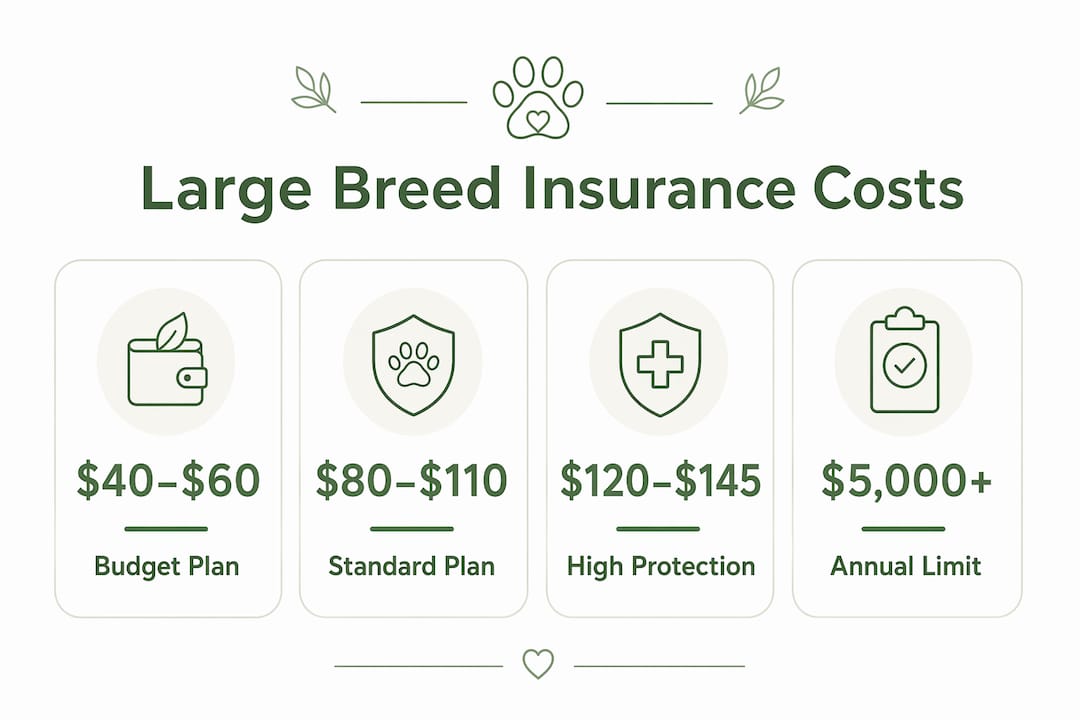
One mid-tier benchmark: roughly $73 per month for a large-breed plan with a $500 deductible, $5,000 annual limit, and 80% reimbursement. That is a starting point, not a ceiling. Several variables move the number significantly.
What drives your premium up or down:
- Age at enrollment. Insuring a 1-year-old costs far less than insuring a 5-year-old of the same breed.
- Annual limit. Moving from a $5,000 to an unlimited annual limit can add a moderate increase to the monthly premium depending on the carrier.
- Reimbursement rate. Choosing a higher reimbursement rate raises the premium but reduces your share of the cost for expensive surgeries.
- Deductible amount. Lower deductibles tend to cost more per month than higher deductibles.
- Geography. Veterinary costs in New York City or San Francisco run higher than in rural areas, and premiums follow.
- Breed. Great Danes and Saint Bernards typically cost more to insure than Labrador Retrievers.
| Scenario | Monthly Premium (est.) | Annual Limit | Deductible | Reimbursement |
|---|---|---|---|---|
| Budget plan | ~$55 | $5,000 | $500 | 80% |
| Mid-tier plan | ~$73 | $5,000 | $500 | 80% |
| High-protection plan | ~$95 | Unlimited | — | 90% |
The high-protection plan costs roughly $264–$444 more per year. If your dog needs CCL surgery plus rehab, the difference in your out-of-pocket share at 90% vs. 80% reimbursement on a $6,000 bill is $600. The math favors higher coverage for breeds with known orthopedic risk.
Comparing top U.S. pet insurers for large-breed dogs
How we compared: Carriers were evaluated on orthopedic waiting periods, hereditary condition coverage, annual limit options, deductible flexibility, vet direct-pay availability, and claims speed. The five carriers below represent the range of options most relevant to large and giant breeds.
| Provider | Best For | Hereditary/Orthopedic Coverage | Orthopedic Wait | Age Limit | Reimbursement | Annual Limit | Deductible Options | Est. Monthly (Large Breed) | Vet Direct Pay | Claims Speed |
|---|---|---|---|---|---|---|---|---|---|---|
| Trupanion | Per-condition deductible; direct-pay | Yes | — | No upper limit listed | 90% (fixed) | Unlimited | Per-condition only | ~$80 | Yes (participating clinics) | Fast at enrolled clinics |
| Healthy Paws | Unlimited coverage; simplicity | Yes (enroll before age 6 for hip dysplasia) | 12 months | Enroll before age 6 for hip dysplasia | 90% | Unlimited | Annual | ~$95 | No | 2–3 business days |
| Embrace | Flexible deductibles; exam fees | Yes | 6 months (waivable with exam) | Up to age 14 | 90% | — | Annual | ~$90 | No | 2–7 business days |
| Nationwide | Broad coverage including wellness | Yes | 12 months | Varies by plan | lower reimbursement rates | Unlimited (Whole Pet) | Annual | ~$73 | No | 5–7 business days |
| Figo | High reimbursement; cloud records | Yes | 6 months | Up to age 14 | 80% or 90% | Up to $10,000 or unlimited | Annual | ~$95 | Yes (Figo Vet Direct) | 3–5 business days |
Quick notes by carrier:
- Trupanion is the strongest fit for dogs with a single chronic condition like hip dysplasia, because the per-condition deductible never resets. The 90% fixed reimbursement is also unusually high.
- Healthy Paws keeps things simple with unlimited payouts and no per-condition caps, but the 12-month orthopedic wait is a real drawback for breeds where joint problems can surface early.
- Embrace offers a waivable 6-month orthopedic wait, which is worth pursuing if your vet can provide a clean orthopedic exam at enrollment.
- Nationwide's Whole Pet plan covers the widest range of conditions including wellness, but reimbursement rates are lower than competitors.
- Figo stands out for its 100% reimbursement option and cloud-based records system, which can speed up claims when vet records are already digitized.
When should you enroll, and what happens if you wait?
The right time to enroll a large-breed dog is before any orthopedic symptoms appear, ideally in the first year of life. Once a vet notes limping, reduced range of motion, or joint stiffness in the records, that condition can be classified as pre-existing and excluded permanently.
- Enroll before 12–14 months for most large breeds. Giant breeds like Great Danes and Mastiffs mature more slowly but face orthopedic risks earlier in relative terms.
- Request a waiver exam at enrollment. Some carriers shorten orthopedic waiting periods after a clean vet orthopedic exam. Schedule this within the first few weeks of your policy.
- Check the age cap before you apply. Healthy Paws requires enrollment before age 6 for hip dysplasia coverage. Other carriers cap new enrollment at 8 or 10.
- Adopting an older large-breed dog? Gather all prior vet records before applying. Conditions already documented become pre-existing, but undocumented conditions may still be coverable. A fresh orthopedic exam at enrollment creates a clean baseline.
Pro Tip: If you are adopting an adult large-breed dog with no prior records, schedule a full orthopedic workup before submitting your insurance application. A clean exam is your best tool for negotiating shorter waits and avoiding future exclusion disputes.
How vet direct pay and claims reimbursement actually work
Vet direct-pay means the insurer pays the clinic directly, so you only owe your deductible and your share of the reimbursement at checkout. Standard reimbursement means you pay the full bill upfront and wait for a check. For a $7,000 emergency surgery, that difference is the difference between paying $700 and paying $7,000 out of pocket on the spot.
Steps to reduce out-of-pocket costs during an emergency:
- Call your insurer's emergency line before or during the ER visit to confirm direct-pay eligibility at that clinic.
- Bring your policy number, your dog's enrollment date, and any prior vet records.
- Ask the clinic to contact the insurer for pre-authorization or real-time adjudication.
- If direct-pay is not available at that clinic, request an itemized invoice and submit it with your claim the same day.
Certain carriers report average payout times of 2–7 business days for clean claims. The main cause of delays is incomplete vet records, not insurer processing speed. Make sure your vet submits full SOAP notes, not just a summary invoice. Vet direct-pay workflows vary between real-time adjudication at participating clinics and post-approval routing, so confirm the exact process with both your insurer and your clinic before you need it.
How nutrition and weight management lower your long-term insurance risk
Insurance covers what goes wrong. Nutrition is what you do to reduce how often things go wrong. For large-breed dogs, the connection between body condition and orthopedic health is direct: excess weight increases mechanical load on hips, elbows, and cruciate ligaments, which accelerates the very conditions that generate the most expensive claims.
- Lean body condition reduces orthopedic strain. Studies on lean-fed dogs suggest meaningful longevity benefits, with some research indicating lean-fed pets may live up to 1.8 years longer. Fewer surgeries and slower joint degeneration follow from maintaining a healthy weight throughout life.
- Breed-appropriate feeding from puppyhood matters. Large-breed puppies need controlled calcium and phosphorus ratios to support healthy bone development. Overfeeding accelerates growth and increases the risk of developmental orthopedic disease. Bowlful's breed-specific nutrition guidance explains how breed history shapes these needs.
- Document preventive care for insurance purposes. Regular weight checks, orthopedic screenings, and vet notes showing a healthy body condition score create a paper trail that supports waiver requests and strengthens your position if a condition is ever disputed as pre-existing.
- Prophylactic gastropexy discussion with your vet. For high-risk breeds like Great Danes, ask your vet about timing and whether a wellness rider on your policy covers it. Most standard plans exclude it as elective, so this conversation needs to happen before you finalize your policy.
- Pair insurance with acupuncture or conservative care. For dogs already showing early joint stiffness, acupuncture for hip dysplasia is a documented conservative option that some plans cover under alternative therapy riders.
Pro Tip: Use Bowlful's interactive quiz to build an RER-based feeding plan calibrated to your dog's breed, weight, and life stage. A dog that stays lean from year one is a dog that reaches year ten with fewer joint problems and lower lifetime vet costs.
Key Takeaways
Large-breed dog owners who enroll early, choose high annual limits, and pair insurance with a breed-appropriate nutrition plan get the most durable protection against the conditions that matter most.
| Point | Details |
|---|---|
| Enroll before symptoms appear | Early enrollment prevents orthopedic conditions from becoming pre-existing exclusions that follow your dog permanently. |
| Prioritize orthopedic waiting periods | Waits range from 14 days to 12 months; a waivable 6-month wait beats a locked 12-month wait for most large breeds. |
| Choose $10k+ or unlimited limits | A $5,000 annual limit covers one emergency; a multi-stage orthopedic year can exceed it in a single policy period. |
| Confirm vet direct-pay before emergencies | Direct-pay cuts your upfront cost from the full bill to just your deductible share at the clinic. |
| Bowlful nutrition reduces claim risk | Bowlful's RER-based feeding plans help maintain lean body condition, lowering orthopedic strain and long-term vet costs. |
The case for prevention alongside your policy
Most pet insurance articles stop at the comparison table. Here is what they miss: the best policy you can buy is still reactive. It pays after something goes wrong. For large-breed dogs, where the conditions most likely to generate five-figure bills are also the most preventable through weight management and early screening, treating insurance as your only tool is leaving money on the table.
The owners I see make the smartest decisions are the ones who treat insurance and nutrition as two sides of the same plan. They enroll early, choose a policy with real orthopedic protection, and then actively work to reduce the likelihood of ever needing it. A dog that stays at a healthy body weight from puppyhood through middle age is statistically less likely to need CCL surgery or bilateral hip replacement. That is not a guarantee, but it is a meaningful shift in the odds.
The one thing I would push back on in conventional pet insurance advice: stop optimizing for the lowest monthly premium. For a 90-pound dog with a 10-year life expectancy, the difference between a $55/month budget plan and a $95/month high-protection plan is about $480 per year. One avoided surgery more than covers that gap. Choose the policy that protects against the worst-case year, not the one that looks cheapest on a comparison site.
Bowlful's nutrition plans work alongside your insurance coverage
If you are already comparing policies for a large-breed dog, you are thinking about the right things. Bowlful is not an insurer, but it addresses the other half of the equation: reducing the frequency and severity of the claims you are insuring against.
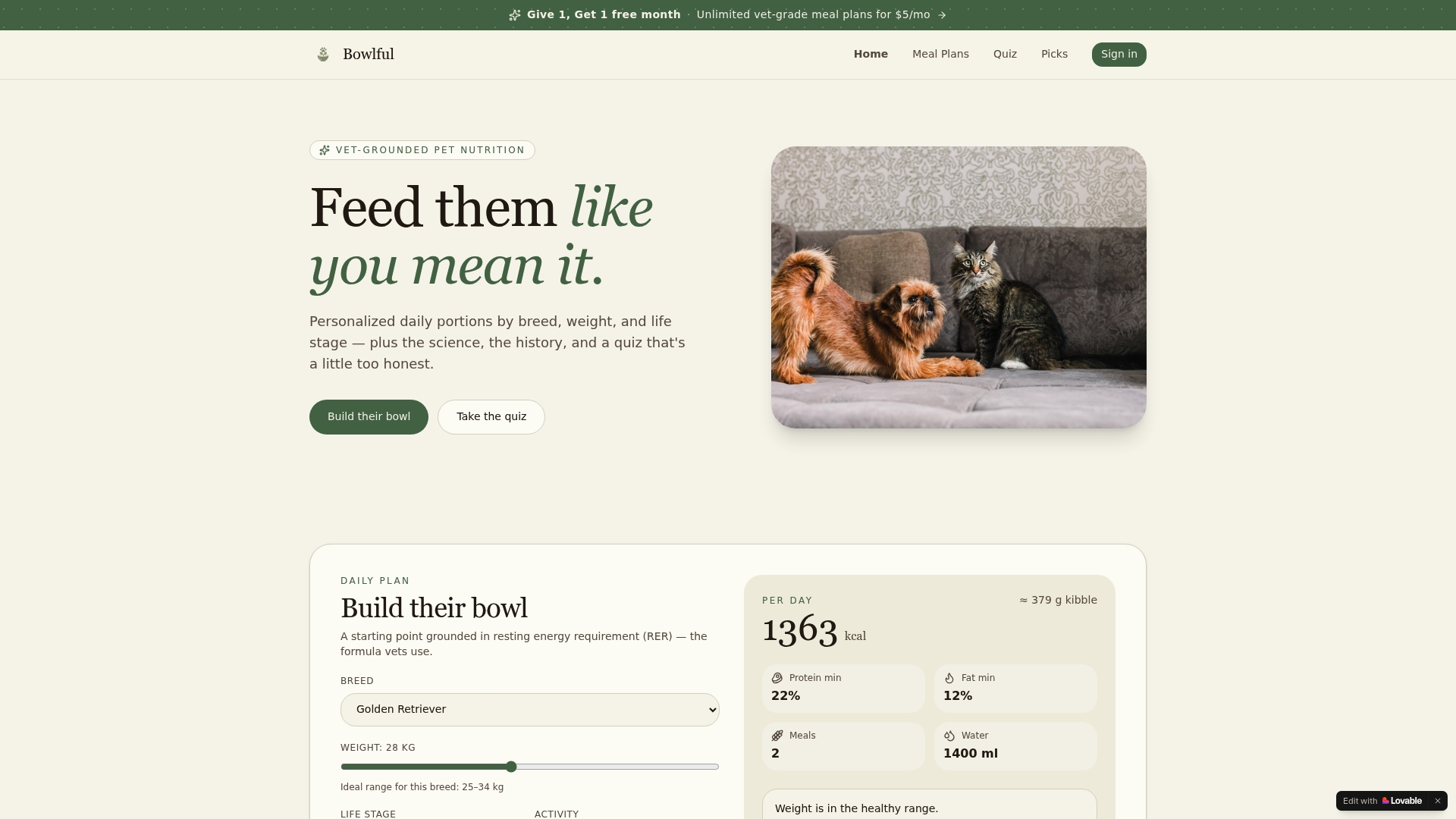
Bowlful builds personalized feeding plans using the same Resting Energy Requirement (RER) formula veterinarians use to calculate caloric needs by breed, weight, and life stage. For large-breed owners, that means a plan calibrated to prevent the overfeeding that accelerates joint degeneration and shortens healthy years. Research suggests lean-fed dogs may live up to 1.8 years longer, and a dog that reaches age eight at a healthy weight is a very different insurance risk than one that has been overweight since year two.
Take Bowlful's personalized nutrition quiz to get a feeding plan built for your dog's specific breed and size. Pair it with the right policy, and you are covering both sides of your dog's long-term health.
Useful sources for verifying policy terms
Before you sign any pet insurance policy, read the actual policy form, not just the marketing summary. Here is where to look:
- Provider policy forms. Request the full policy document (not the brochure) from any carrier you are considering. Look specifically for the orthopedic waiting period clause, bilateral-condition language, and the definition of "pre-existing condition."
- State insurance filings. Pet insurance is regulated at the state level. Your state's Department of Insurance website lists filed policy forms and any consumer complaints against carriers.
- AM Best financial ratings. Check the financial strength rating of any carrier before you commit. A carrier that cannot pay claims is worse than no carrier at all.
- Veterinary guidance pages. Your vet's practice can often recommend carriers they have had positive direct-pay experiences with. That firsthand knowledge is worth asking for.
- TPLO recovery resources. If your large-breed dog is already showing cruciate symptoms, review TPLO recovery timelines so you understand what a post-surgical care year actually involves before you choose your annual limit.
- Bowlful's breed nutrition guides. For breed-specific health risk context that informs both your insurance priorities and your feeding plan, Bowlful's puppy growth and feeding resources are a practical starting point.
This article is general information, not professional insurance or veterinary advice. Confirm current policy terms, waiting periods, and exclusions directly with your insurer and a licensed veterinarian before purchasing coverage.