
A dog's breed history is the single strongest predictor of its nutritional needs, shaping everything from how it digests starch to how fast its bones grow. The concept veterinary nutritionists call "breed-based nutrition" recognizes that selective breeding over thousands of years created distinct genetic profiles, each with its own metabolic fingerprint. Understanding how breed history affects nutrition is not an academic exercise. It is the difference between a diet that supports your pet's health and one that quietly works against it. Generic feeding guidelines ignore these differences entirely.
How breed history affects nutrition at the genetic level
Breed history shapes digestion through a gene called AMY2B, which controls the production of amylase, the enzyme that breaks down starch. Agricultural-origin breeds carry an average of 10.9 copies of AMY2B, compared to just 7.4 copies in breeds with low-starch ancestral diets. That gap is statistically significant and biologically meaningful. It means a Labrador Retriever, bred alongside grain-farming communities, processes carbohydrates far more efficiently than a Siberian Husky, whose ancestors ate almost exclusively protein and fat.
Arctic breeds like the Alaskan Malamute and Siberian Husky carry as few as 2 AMY2B copies, a number close to wolves. Feeding these breeds high-starch kibble does not just reduce digestive efficiency. It disrupts the gut microbiome, promoting bacterial imbalances that can cause chronic loose stools, gas, and poor nutrient absorption. The gut microbiome of an Arctic breed fed a grain-heavy diet looks measurably different from one fed a protein-rich, low-carbohydrate diet.

Beyond amylase, breeds also differ in maltase activity and glucose transporter expression in the small intestine. These differences affect how quickly glucose enters the bloodstream after a meal. Breeds with lower transporter activity absorb carbohydrates more slowly, which has real implications for blood sugar management and obesity risk.
Pro Tip: If your dog is an Arctic or northern breed, check the first three ingredients on any kibble bag. If two of the three are grains or starches, the formula is likely a poor genetic match for your dog's digestion.
| Breed group | AMY2B copies | Best carbohydrate load | Primary protein range |
|---|---|---|---|
| Agricultural breeds (e.g., Labrador) | ~10.9 | Moderate to high | 22–26% |
| Northern/Arctic breeds (e.g., Husky) | ~2–7 | Low | 28–35% |
| Mixed or medium-starch ancestry | ~7.4 | Moderate | 24–30% |
How does breed size drive calorie and metabolic needs?
Body size is the most visible product of selective breeding, and it creates the sharpest nutritional divides. Small-breed dogs need 85–100 kcal per kg of body weight daily, while large-breed dogs need only 50–60 kcal per kg. That is not a minor adjustment. It reflects a fundamental difference in surface-area-to-weight ratio, which governs how fast a body loses heat and burns energy.
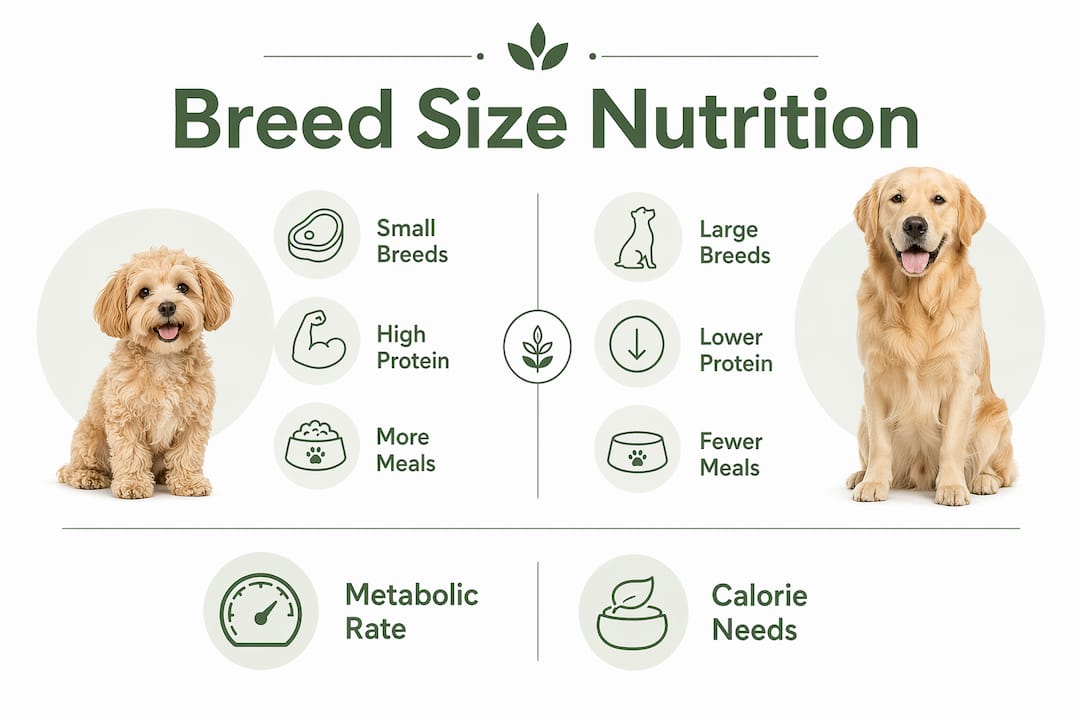
The effects of breed evolution on growth timelines are equally dramatic. Small breeds reach adult size in 8–10 months and need dietary protein in the range of 25–32% during that window. Large breeds grow for 18–24 months and thrive on 22–26% protein, with tightly controlled calcium levels. Excess calcium in a large-breed puppy does not just cause minor imbalances. It accelerates bone growth faster than cartilage can keep up, increasing the risk of hip dysplasia and osteochondrosis.
Calcium limits illustrate this perfectly. Large breeds require calcium in the range of 0.8–1.2% of dry matter, while small breeds actually need more calcium during their rapid early growth phase. Applying a single calcium standard across all breeds is not just imprecise. It can cause measurable skeletal harm in large-breed puppies.
- Small breeds (under 10 kg): 85–100 kcal/kg daily, 3–4 meals as puppies, protein-dense kibble with small kibble size
- Medium breeds (10–25 kg): 65–75 kcal/kg daily, 2 meals, balanced macronutrient ratios
- Large breeds (over 25 kg): 50–60 kcal/kg daily, controlled calcium, joint-support nutrients like glucosamine
The science of feeding dogs properly accounts for these size-driven differences at every life stage, not just during puppyhood.
What breed-specific health risks change dietary needs?
Inherited health predispositions are the third pillar of breed-based nutrition, and they are often the most overlooked. Breed-linked nutritional vulnerabilities include zinc deficiency in northern breeds like Siberian Huskies and Alaskan Malamutes, uric acid metabolism problems in Dalmatians, obesity risk in Golden Retrievers, and exocrine pancreatic insufficiency in German Shepherds. Each of these conditions responds to diet, but not in the same way.
Dalmatians lack the enzyme uricase in a functional form, which means they cannot convert uric acid into allantoin for excretion. High-purine diets, including those heavy in organ meats, push uric acid levels high enough to cause urinary stones. The fix is not a supplement. It is a low-purine protein source like chicken or egg, combined with high water intake. This is a macronutrient restructuring, not a simple add-on.
German Shepherds with pancreatic insufficiency cannot produce enough digestive enzymes to absorb fat and protein normally. These dogs need highly digestible protein sources, reduced fat, and sometimes enzyme supplementation added directly to meals. A standard adult formula will not meet their needs, regardless of how high-quality the ingredients are.
Pro Tip: Before buying a breed-specific formula, research the three most common health conditions in your breed. Then check whether the food's macronutrient profile and mineral levels actually address those risks, rather than just featuring the breed's name on the bag.
Genetics drive these breed-linked problems at the cellular level. Diet adjustments must target macronutrient ratios and mineral balance, not just add supplements on top of an unsuitable base diet. A zinc supplement given alongside a high-starch diet will not fully correct zinc deficiency in a northern breed whose gut microbiome is already compromised by poor carbohydrate tolerance.
How can pet owners apply breed history to feeding decisions?
Translating breed history into daily feeding practice requires three steps: matching the diet to your breed's digestion capacity, adjusting feeding frequency to metabolic rate, and reading ingredient labels with breed traits in mind.
-
Identify your breed's ancestral diet. Research whether your breed originated in an agricultural setting, a cold-climate working role, or a hunting context. Agricultural breeds tolerate moderate carbohydrate loads. Arctic and hunting breeds need higher protein and fat with minimal starch. This single step narrows your food choices significantly.
-
Match feeding frequency to metabolic rate. Small-breed puppies need 3–4 meals daily to prevent hypoglycemia. Their rapid metabolism and low glycogen reserves make them vulnerable to dangerous blood sugar drops between meals. Adult small breeds still benefit from twice-daily feeding rather than once-daily. Large breeds do well on two meals per day throughout their lives.
-
Read the ingredient list for breed suitability. For Arctic breeds, the first ingredient should be a named animal protein, and grains should appear no earlier than the fourth or fifth position. For large-breed puppies, look for a calcium-to-phosphorus ratio explicitly formulated for large breeds. For Dalmatians, avoid foods listing liver, kidney, or other organ meats as primary protein sources.
-
Adjust for life stage within breed size. A puppy feeding calculator by breed accounts for the fact that a 10-week-old Chihuahua and a 10-week-old Great Dane are at completely different developmental stages, even though both are "puppies." Nutritional timing matters as much as nutritional content.
-
Monitor body condition, not just weight. Breed history affects where dogs store fat and how muscle mass develops. A Greyhound at a healthy weight looks dramatically different from a Labrador at a healthy weight. Use a body condition score chart calibrated for your breed's typical build, and adjust portions based on what you see, not just the feeding guide on the bag.
The nutrition variations by breed that matter most are not always visible on a food label. They live in the gap between what a generic formula provides and what your specific dog's genetics actually require.
Key Takeaways
Breed history determines nutritional needs through genetics, metabolism, and inherited health risks, making one-size-fits-all feeding the least effective approach for any dog owner who wants real results.
| Point | Details |
|---|---|
| AMY2B gene drives starch digestion | Arctic breeds carry far fewer AMY2B copies, making high-starch diets a poor genetic fit. |
| Calorie needs differ sharply by size | Small breeds need up to 100 kcal/kg daily; large breeds need only 50–60 kcal/kg. |
| Growth timelines change mineral needs | Large-breed puppies need controlled calcium to prevent skeletal disorders during slow growth. |
| Inherited conditions require diet restructuring | Conditions like Dalmatian uric acid issues need macronutrient changes, not just supplements. |
| Feeding frequency protects small breeds | Small-breed puppies need 3–4 meals daily to prevent hypoglycemia during rapid growth. |
Why I think breed-neutral feeding advice is holding pets back
Veterinary practice is shifting. Breed-focused nutrition is no longer a niche idea. It is increasingly the standard in clinical settings where practitioners see the consequences of mismatched diets every week. What I find striking is how slowly this has reached the average pet owner.
Most people pick a food based on life stage, large breed or small breed at best, and call it done. But the difference between a Siberian Husky and a Labrador is not just size. It is thousands of years of divergent selection pressure written into their DNA. Feeding them from the same nutritional playbook is like prescribing the same medication to two patients with different metabolisms.
The owners who get this right are the ones who treat breed history as a foundation, not an afterthought. They ask what their dog was bred to do, what environment it came from, and what health conditions run in the line. Those three questions lead to better food choices than any marketing claim on a bag ever will.
— Robert
Bowlful builds your dog's diet around its breed, not a generic formula
Every dog has a unique nutritional profile shaped by its breed, weight, and life stage. Bowlful uses the veterinarian-trusted Resting Energy Requirement formula to calculate exactly how much your dog needs, then builds a feeding plan around those numbers.
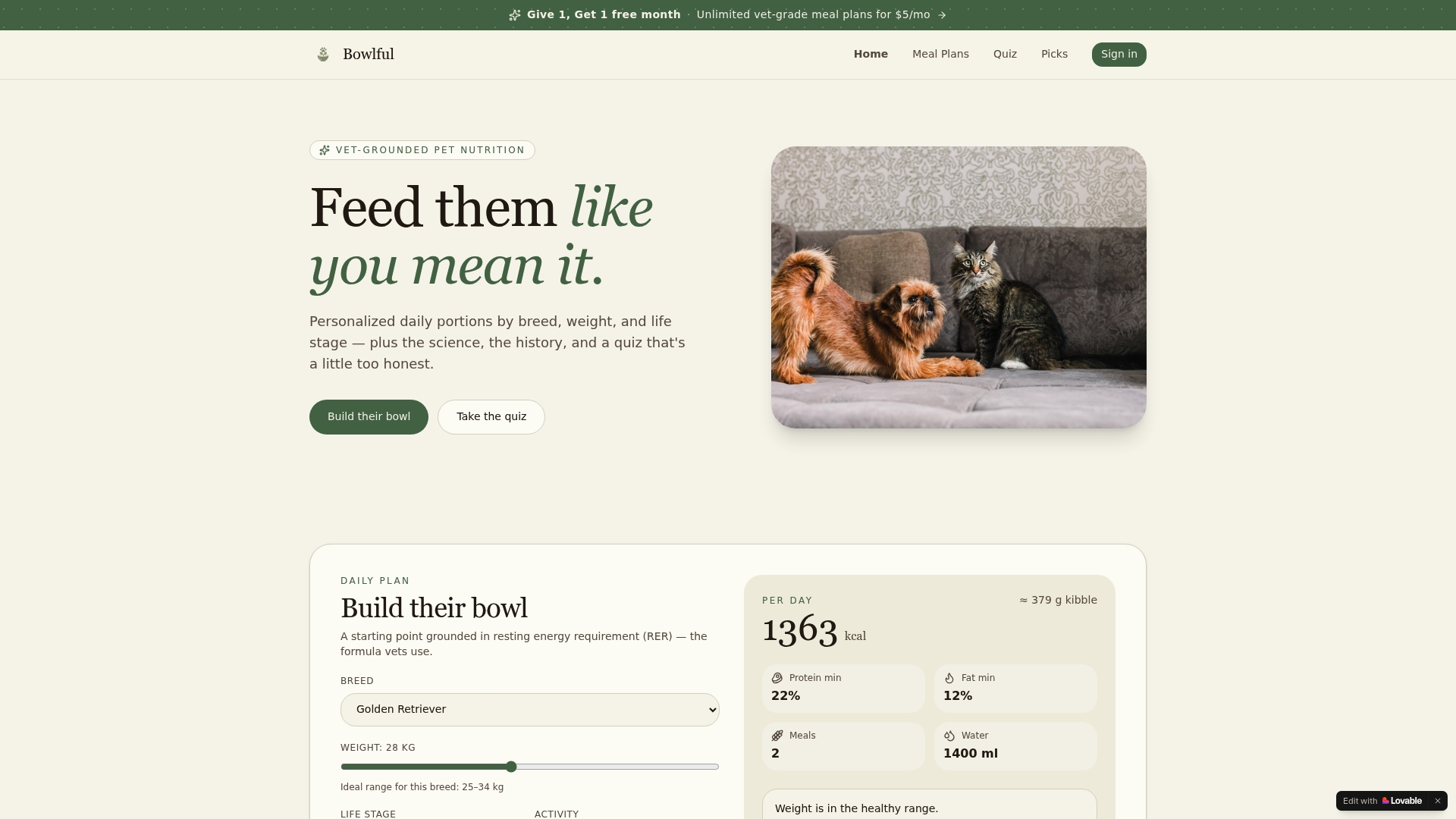
Research shows that lean-fed pets live up to 1.8 years longer than those fed to excess. Bowlful's interactive quiz takes your dog's breed into account from the first question, so the plan you receive reflects the genetic and metabolic realities of your specific dog, not a statistical average. Start with the quiz at Bowlful and get a feeding plan that actually fits.
FAQ
How does breed history affect a dog's digestion?
Breed history shapes digestion through the AMY2B gene, which controls starch-digesting amylase. Agricultural breeds carry more AMY2B copies and digest carbohydrates efficiently, while Arctic breeds carry far fewer and thrive on low-starch, high-protein diets.
Do small and large breeds need different amounts of protein?
Small breeds need 25–32% protein during their 8–10 month growth phase, while large breeds need 22–26% protein over a slower 18–24 month growth period. These differences reflect the distinct developmental timelines created by selective breeding.
Can breed genetics cause specific nutritional deficiencies?
Genetics drive breed-linked deficiencies like zinc malabsorption in northern breeds and uric acid metabolism problems in Dalmatians. Addressing these requires adjusting macronutrient and mineral ratios, not just adding supplements to a standard diet.
How often should small-breed puppies eat?
Small-breed puppies need 3–4 meals daily because their rapid metabolism and low glycogen reserves make them vulnerable to hypoglycemia between meals. Larger breeds typically do well on 1–2 meals per day from an early age.
Is breed-specific dog food worth buying?
Breed-specific formulas are worth evaluating when they address your dog's actual genetic and physiological needs, such as appropriate calcium levels for large breeds or low-starch content for Arctic breeds. Check the macronutrient profile and mineral ratios rather than relying on the breed name on the packaging.