
A pet nutrition assessment is a structured, veterinary-led process that evaluates a pet’s diet, body composition, and feeding environment to determine whether nutritional goals are being met and to deliver tailored feeding recommendations. Recognized by organizations including the Purina Institute, AAHA, and WSAVA as a clinical standard, this iterative evaluation process covers everything from body weight and muscle condition to treat calories and multi-pet feeding dynamics. Most pet owners assume nutrition is simply about choosing the right brand. The reality is far more specific, and far more consequential for your pet’s long-term health.
What is pet nutrition assessment and what does it involve?
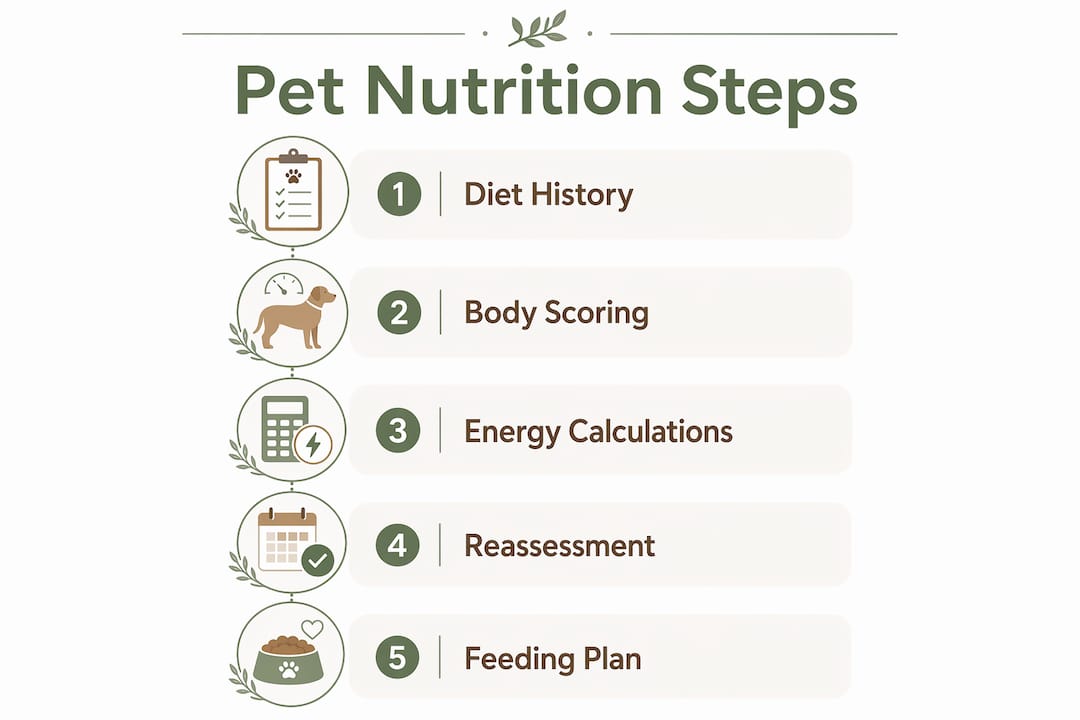
A pet nutrition assessment is divided into two tiers: a screening evaluation and, when needed, an extended evaluation. The screening happens at every veterinary visit and takes only a few minutes. The extended evaluation goes deeper when the screening flags a concern.
Screening evaluation components include:
-
Body weight: Tracked over time to detect gain or loss trends
-
Body condition score (BCS): A 9-point scale assessing fat stores by feel and visual observation
-
Muscle condition score (MCS): A separate scoring system evaluating lean muscle mass, independent of fat
-
Complete diet history: Main food, treats, table scraps, supplements, feeding frequency, and portion sizes
-
Feeding environment: Whether the pet eats alone, competes with other animals, or has access to another pet’s bowl
-
Physical exam findings: Any abnormalities such as poor coat quality, dental disease, or weight changes that may signal nutritional issues
The diet history components are more detailed than most owners expect. Your veterinarian needs to know not just what brand you buy, but how much you serve, how often, and what else your pet consumes throughout the day. A dog that eats a balanced kibble but receives multiple high-calorie treats daily may still be nutritionally compromised.
Pro Tip: Before your next vet visit, spend one week writing down everything your pet eats, including the size of each treat and any table food. This single habit transforms the accuracy of your pet’s nutritional evaluation.
When the screening reveals concerns, such as unexplained weight loss, obesity, or a chronic condition like kidney disease or diabetes, the extended evaluation begins. This deeper review includes laboratory diagnostics, a more thorough feeding history analysis, and calculation of the pet’s actual energy needs using formulas like the maintenance energy requirement (MER) and resting energy requirement (RER).
Why pet nutrition assessment matters for long-term health
Nutrition assessment catches problems that a standard physical exam misses. A pet can appear healthy at a glance while quietly losing muscle mass or developing a nutrient deficiency. The importance of BCS and MCS together is one of the most underappreciated aspects of veterinary nutrition practice.
Here is why each element of the assessment directly affects your pet’s wellbeing:
-
Detecting muscle loss early. BCS measures fat. MCS measures lean mass. A pet can score normal on BCS while losing significant muscle, a condition called sarcopenic obesity. Muscle loss impairs immune function, slows recovery from illness, and reduces quality of life. Catching it early through MCS allows dietary intervention before the damage compounds.
-
Managing chronic disease. Pets with diabetes, kidney disease, or heart conditions require diet adjustments that go far beyond generic feeding guidelines. For example, senior dogs with heart disease need specific sodium and protein management that only a full nutritional assessment can define accurately.
-
Preventing obesity-related harm. Obesity shortens lifespan and increases risk for joint disease, diabetes, and respiratory problems. Regular assessment catches weight creep before it becomes a clinical problem.
-
Identifying nutrient deficiencies. A diet that looks complete on the label may not deliver adequate bioavailable nutrients for a specific pet’s age, breed, or health status. Assessment connects the dots between what is fed and what is actually absorbed and utilized.
“Nutrition is the fifth vital assessment in veterinary medicine, alongside temperature, pulse, respiration, and pain. Treating it as optional is a clinical oversight.” — Country Vet Mom, Dr. Gaffud
The iterative nature of this process matters as much as the initial evaluation. A puppy’s nutritional needs differ from an adult dog’s, and both differ from a senior pet managing a chronic condition. Reassessment throughout a pet’s life is what keeps feeding plans accurate rather than outdated.
What tools and calculations do veterinarians use?
The technical backbone of a pet nutrition assessment relies on two core calculations and a set of standardized scoring tools.

| Tool or Method | What It Measures | Why It Matters |
|---|---|---|
| Resting energy requirement (RER) | Calories needed at rest | Baseline for all feeding calculations |
| Maintenance energy requirement (MER) | Total daily calorie need | Accounts for activity level and life stage |
| Body condition score (BCS) | Fat stores on a 9-point scale | Identifies underweight, ideal, or overweight status |
| Muscle condition score (MCS) | Lean muscle mass | Detects sarcopenia independent of fat |
| Diet history analysis | Actual food, treats, and supplements consumed | Reveals real calorie and nutrient intake |
The RER and MER calculations use the pet’s body weight in kilograms to estimate calorie needs, then apply a life-stage multiplier. A neutered adult dog has a different MER multiplier than a lactating female or a growing puppy. These numbers drive the specific gram-per-day feeding recommendation, which is far more precise than the ranges printed on pet food bags.
AAFCO (the Association of American Feed Control Officials) sets the minimum nutritional standards that pet foods must meet to be labeled “complete and balanced.” However, meeting AAFCO minimums does not guarantee a diet is appropriate for every individual pet. A food can be AAFCO-compliant and still be the wrong choice for a pet with a specific health condition or unusual energy demand.
Treat calories receive specific attention during assessment. A 2025 peer-reviewed study found that treats should generally not exceed 10% of a pet’s daily calorie intake, but this threshold requires individual evaluation. For less active cats, certain treat types can cause protein or fat shortfalls even when the 10% ceiling is respected. Healthy treat calorie management is not a one-size-fits-all rule.
Pro Tip: Check the calorie content (kcal per treat) on your pet’s treat packaging and calculate what percentage of their daily calorie budget those treats consume. Most owners are surprised to find treats account for 20% or more of total intake.
How to prepare for your pet’s nutrition assessment
Your veterinarian can only work with the information you provide. The accuracy of a pet diet evaluation depends directly on the completeness of the diet history you bring to the appointment.
What to record before the visit:
-
The exact name, brand, and variety of your pet’s main food (dry, wet, raw, or home-cooked)
-
The amount fed per meal and the number of meals per day
-
Every treat given, including dental chews, training treats, and flavored medications
-
Any table food or human food scraps shared with your pet
-
All supplements, including fish oil, joint supplements, or vitamins
-
How food is offered (free-choice, timed meals, puzzle feeders)
-
Whether other pets in the home have access to your pet’s food
In multi-pet households, feeding competition and food access are genuine nutritional variables. A cat that is being pushed away from her bowl by a more dominant housemate may be chronically undereating despite a technically adequate feeding plan.
Your veterinarian will also ask about recent weight changes, stool quality, energy levels, and any symptoms that might indicate a nutritional gap. Observing your pet’s body at home, specifically whether you can feel their ribs easily or whether their waist is visible from above, gives you useful baseline data before the appointment.
Following through on reassessment appointments is where most owners fall short. A feeding plan created in January for a 4-year-old dog needs revisiting when that dog turns 7, gains weight, or develops a health condition. Puppy feeding plans change every few months as growth rates shift. Treating the first assessment as a permanent answer is one of the most common mistakes in pet nutrition management.
Key takeaways
A complete pet nutrition assessment combines body condition scoring, muscle evaluation, diet history, and energy calculations to build a feeding plan that actually fits your individual pet.
| Point | Details |
|---|---|
| Assessment is iterative | Nutrition evaluation is not a one-time event. Reassess at every life stage and when health changes occur. |
| BCS and MCS are both required | BCS measures fat; MCS measures muscle. Using only one misses half the picture and can delay critical interventions. |
| Diet history beats brand names | Knowing the brand is not enough. Amounts, treats, supplements, and feeding environment all determine nutritional accuracy. |
| Treat calories count | Treats exceeding 10% of daily calories can disrupt nutrient balance, especially for less active or senior cats. |
| Energy formulas drive precision | RER and MER calculations produce specific daily calorie targets that generic bag guidelines cannot match. |
Why I think most pet owners are solving the wrong problem
Most of the pet owners I encounter are genuinely trying to do right by their animals. They research food brands, read ingredient lists, and spend real money on premium products. But the question they are asking, “Is this a good food?” is the wrong starting point.
The right question is: “Is this the right amount of the right food for this specific animal at this specific life stage?” Those are two entirely different investigations. A high-quality food fed in the wrong quantity to a sedentary indoor cat is still a path to obesity. A budget food fed in precisely calibrated amounts to an active young dog may outperform an expensive formula fed carelessly.
What strikes me most about the clinical framework behind pet nutrition assessment is how much weight it places on muscle condition. BCS gets all the attention because it is visible. You can see a fat dog. You cannot easily see a dog losing muscle under a normal fat layer. MCS is the metric that catches the slow, quiet deterioration that precedes serious illness, and most pet owners have never heard of it.
The other thing I find consistently underestimated is the treat problem. Owners who would never dream of overfeeding at mealtime routinely hand out treats without any accounting. A medium-sized dog receiving three standard biscuits, a dental chew, and a few training treats per day can easily be consuming 30% of their daily calories outside of their main meal. No feeding plan survives that math.
My honest recommendation: treat your pet’s nutrition the way you would treat a recurring health condition. Schedule reassessments, track changes, and bring complete records to every appointment. The obesity and longevity connection in pets is well-documented. The difference between a pet that thrives at 14 and one that struggles at 10 is often built in the food bowl, one meal at a time.
— Robert
How Bowlful builds on the assessment framework
Understanding what a pet nutrition assessment involves is the first step. Translating that knowledge into a daily feeding plan is where most owners need support.

Bowlful applies the same veterinary-grade principles, including RER calculations and life-stage adjustments, to create personalized feeding plans for dogs and cats. Rather than offering generic portion guidelines, Bowlful uses your pet’s breed, weight, and life stage to calculate precise daily calorie targets and food recommendations. The process mirrors what a veterinary nutritionist would do, delivered in a format that fits your routine. If you are ready to move from guessing to knowing, Bowlful is built for exactly that.
FAQ
What is a pet nutrition assessment?
A pet nutrition assessment is a structured veterinary process that evaluates a pet’s diet, body condition, muscle mass, and feeding environment to determine whether nutritional needs are being met. It produces tailored feeding recommendations and is repeated throughout the pet’s life as needs change.
What is the difference between BCS and MCS?
Body condition score (BCS) measures fat stores on a 9-point scale, while muscle condition score (MCS) evaluates lean muscle mass independently. A pet can have a normal BCS while losing significant muscle, which is why both scores are required for a complete nutritional picture.
How often should a pet nutrition assessment be done?
Nutrition assessment should occur at every routine veterinary visit and whenever a pet’s health status, weight, or life stage changes significantly. Puppies and kittens may need reassessment every few months, while healthy adults typically benefit from annual evaluations.
How many calories should treats make up in a pet’s diet?
Treats should generally not exceed 10% of a pet’s total daily calorie intake, according to a 2025 peer-reviewed study. However, this threshold requires individual adjustment based on the pet’s activity level, age, and the specific nutrient profile of the treats used.
Can I do a pet nutrition assessment at home?
Pet owners can observe body condition, track food amounts, and record diet history at home, all of which are valuable inputs. However, a complete assessment requires veterinary tools including BCS and MCS scoring, physical examination, and energy requirement calculations that go beyond what home observation can provide.