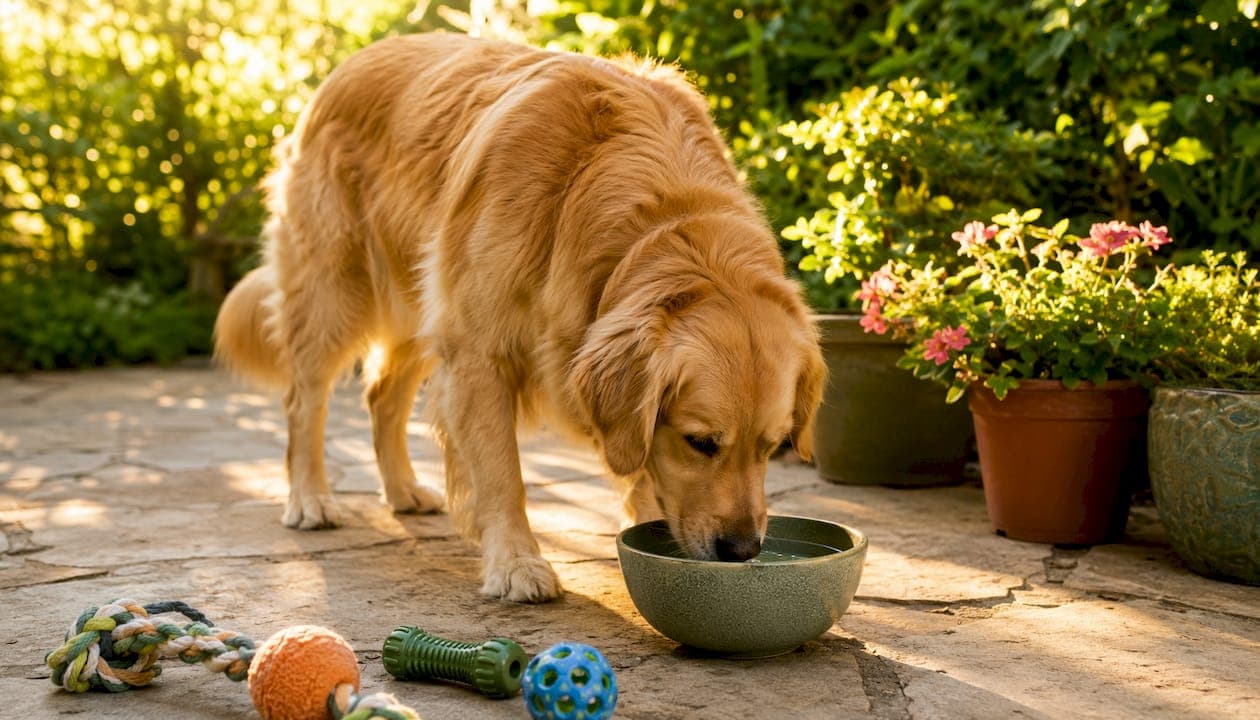
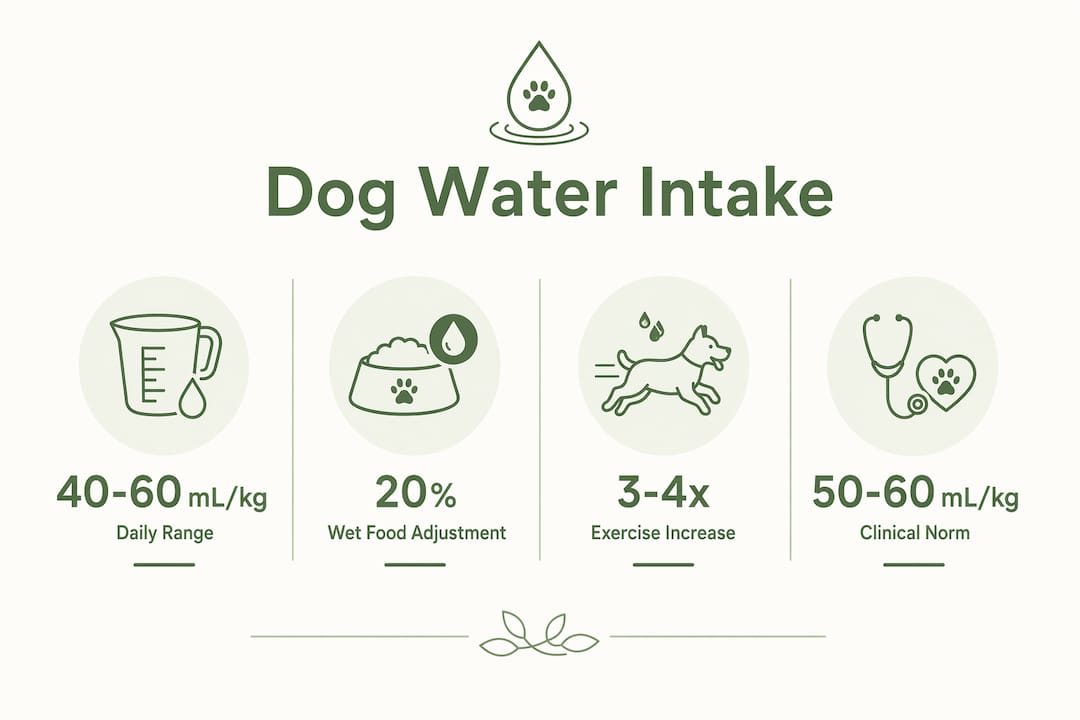
Most dogs need between 40–60 mL of water per kilogram of body weight every day. A low-activity dog gets the lower end of that range; an active one needs the full 60 mL/kg. For a quick estimate, multiply your dog's weight in kilograms by the appropriate factor: 40 for mostly sedentary, 50 for regular daily walks, and 60 for active or working dogs. A 10 kg dog on daily walks needs roughly 500 mL (about 2 cups) per day. That number shifts with diet, weather, and health, so treat it as a starting point, not a prescription.
Pro Tip: If your dog eats mostly wet food, subtract roughly 20% from the bowl-drinking estimate. Wet food is typically 70–80% moisture by weight, which counts toward total daily intake.
A dog water intake calculator applies this formula automatically, but the output is an estimate. It cannot account for illness, fever, or medications. When your dog's drinking habits change noticeably, a veterinarian visit is the right next step.
Table of Contents
- How much water does a dog need each day?
- How to spot dehydration in your dog at home
- Why is your dog drinking so much water?
- Practical ways to keep your dog drinking enough
- The science behind daily water intake calculations
- Key Takeaways
How much water does a dog need each day?
The veterinary baseline daily water intake is commonly expressed as a moderate range per kilogram of body weight for healthy adult dogs under normal conditions. Factors like activity level, diet moisture, and ambient temperature influence this amount significantly.
Activity adjustments:
- Low activity (mostly resting): a lower moderate amount per kg per day
- Regular activity (daily walks): an intermediate moderate amount per kg per day
- High activity (running, fetch, sporting work): a higher moderate amount per kg per day
Water requirements can increase three to four times with intense activity or temperature extremes. A working dog on a hot summer day may need two to three times its resting amount. Cold-weather activity is often underestimated; hunting dogs studied in Norwegian winter conditions showed water needs similar to those in hot weather.
Diet matters just as much as exercise. Dogs on dry kibble need significantly more water from the bowl than dogs eating wet or raw food. And dogs don't sweat through their skin the way humans do. They lose moisture primarily through panting, which makes hot, humid days especially demanding on their hydration.
| Dog weight | Low activity | Regular | Active |
|---|---|---|---|
| 5 kg | 250–300 mL | 250–300 mL | 300 mL |
| 10 kg | 500–600 mL | 500–600 mL | 600 mL |
| 20 kg | 1000–1200 mL | 1000–1200 mL | 1200 mL |
| — | 50 mL/kg | 50 mL/kg | 60 mL/kg |
| — | 50 mL/kg | 50 mL/kg | 60 mL/kg |
Understanding how diet affects hydration helps you read these numbers more accurately for your specific dog.
How to spot dehydration in your dog at home
Dehydration shows up in a few reliable ways before it becomes a crisis. Catching it early gives you time to act before a vet visit becomes urgent.
- Check the gums. Healthy gums are moist and pink. Dry, tacky, or pale gums are a warning sign.
- Look at the eyes. Sunken or dull eyes suggest fluid loss, especially when combined with other signs.
- Watch for lethargy. A dog that seems unusually tired or slow to respond may be dehydrated.
- Perform the skin tent test. Gently pinch the skin at the back of the neck or between the shoulder blades, then release. For a detailed guide on how to effectively monitor your pet's hydration and detect vitamin deficiencies early, see Cómo detectar deficiencia vitamínica en mascotas. In a well-hydrated dog, the skin snaps back within one to two seconds. Slow return or skin that stays "tented" indicates dehydration.
Home hydration checks are decision-support tools, not diagnoses. They tell you when to call the vet, not what the underlying problem is.
Severe dehydration is a medical emergency. If your dog shows sunken eyes, extremely dry gums, collapse, or skin that stays tented for several seconds, do not wait. Get to a veterinarian immediately. Attempting to rehydrate a severely dehydrated dog too quickly at home can cause cerebral edema.
Why is your dog drinking so much water?
Occasional extra drinking after exercise or on a hot day is completely normal. Persistent, heavy drinking at rest is a different story.
Polydipsia is clinically defined as fluid intake exceeding 100 mL/kg/day. That is roughly double the normal upper limit, and it signals that something beyond thirst is driving the behavior.
Common causes of excessive drinking:
- Diabetes mellitus
- Cushing's syndrome (hyperadrenocorticism)
- Kidney disease or failure
- Liver disease
- Pyometra (in intact females)
- Certain medications, including steroids
- High-sodium diet or salty treats
- Psychogenic polydipsia (behavioral, less common)
Polydipsia almost always comes paired with polyuria, meaning large volumes of dilute urine. If your dog is drinking heavily and urinating frequently in large amounts, that combination warrants veterinary bloodwork and urinalysis rather than a wait-and-see approach.
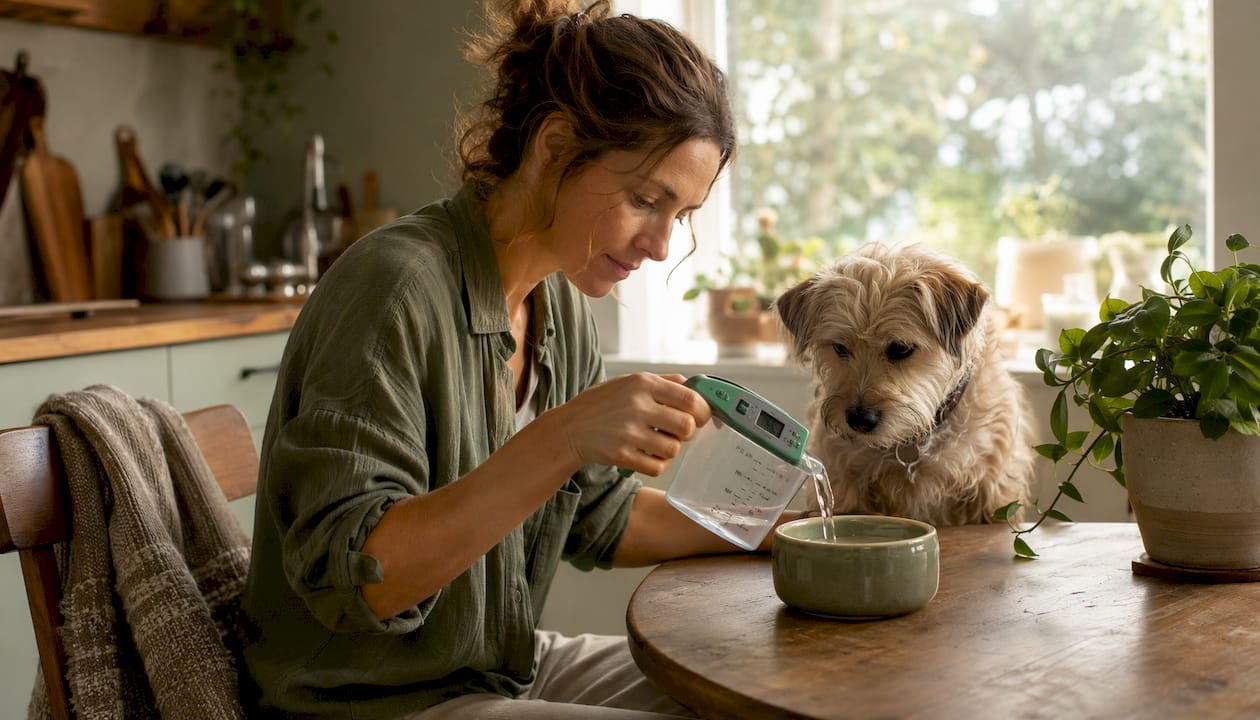
Track before the appointment. Measure how much water you add to the bowl and how much remains at the end of each day. Bring that number to your vet. It dramatically improves diagnostic accuracy and can shorten the path to a correct diagnosis.
Practical ways to keep your dog drinking enough
Fresh, clean water available at all times is the baseline. Beyond that, a few specific habits make a real difference, especially for picky drinkers or dogs in hot climates.
- Refresh the bowl at least twice daily. Bacteria counts rise significantly within 6–12 hours in warm environments, and dogs often refuse stale water.
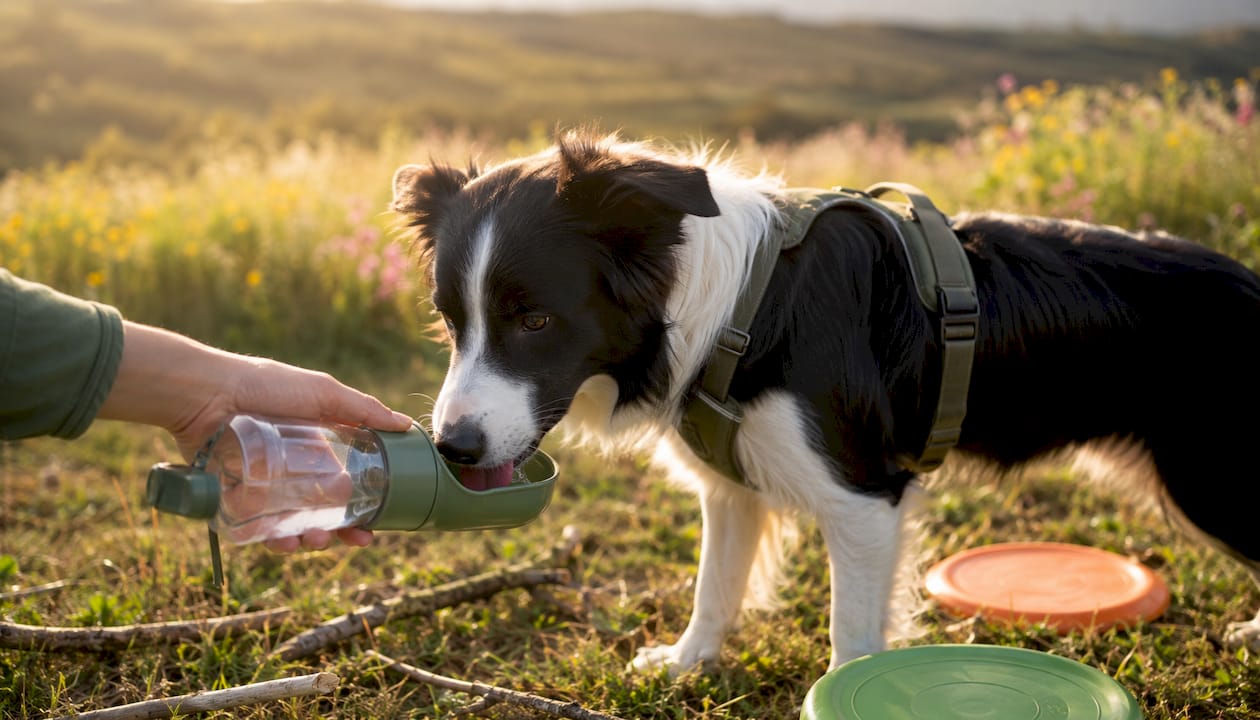
- Carry water on every outing. Dog-specific collapsible bowls and insulated bottles make this easy on hikes, beach trips, and long walks.
- Try a pet fountain. Many dogs prefer moving water. A fountain keeps water cooler and more oxygenated, which encourages drinking.
- Add low-sodium broth. A small amount of chicken or beef broth in the water bowl can entice reluctant drinkers without adding harmful sodium.
- Use ice cubes as a treat. Dogs that ignore their bowl often go for ice cubes, especially in summer. Plain water frozen into cubes counts toward daily intake.
- Wet the kibble. Adding warm water to dry food increases moisture intake at mealtime without changing the diet.
Pro Tip: Never restrict your dog's water intake without direct veterinary guidance. Measurement is for diagnostic purposes only. The goal is always unlimited access to fresh, clean water.
Brachycephalic breeds like bulldogs and boxers face extra risk in heat because inefficient panting means they work harder to cool down and lose more moisture in the process. Keep these dogs in cool environments and monitor their water bowl closely on warm days.
The science behind daily water intake calculations
The 50–60 mL/kg/day standard comes from veterinary clinical practice, not guesswork. Resting dogs require approximately this range to maintain fluid balance, accounting for water lost through urination, defecation, and evaporation from panting. Dogs lose very little through perspiration because they only sweat from their paw pads.
Veterinarians use measurable thresholds to define abnormal intake. Polyuria is defined as daily urine output exceeding 50 mL/kg/day, while polydipsia crosses the 100 mL/kg/day mark. These clinical cutoffs allow for clearer diagnosis rather than relying on subjective observation alone.
Total water intake is not the same as bowl drinking. Food moisture contributes significantly to daily hydration. A dog eating wet food may drink far less from the bowl and still be perfectly hydrated. When tracking intake for medical purposes, measure bowl water added and remaining, plus any water mixed into meals.
When a vet suspects a hydration disorder, they combine intake measurements with urine specific gravity to assess kidney function and ADH response. Urine specific gravity in a normal dog ranges from 1.001 to 1.050 depending on conditions. Tracking water at home for a few days before a vet appointment gives the clinician far more useful data than a single office visit can provide.
| Clinical threshold | Definition | Action |
|---|---|---|
| Normal intake | 50–60 mL/kg/day | Monitor; ensure fresh water access |
| Polydipsia | More than 100 mL/kg/day | Schedule vet visit with urine sample |
| Polyuria | More than 50 mL/kg/day urine output | Combine with intake tracking for diagnosis |
A personalized feeding plan that accounts for your dog's weight, breed, and life stage ties directly into hydration needs. Bowlful builds those plans using the same veterinary formulas that underpin water intake calculations, so nutrition and hydration work together rather than in isolation.
Key Takeaways
A dog's daily water need is a moderate range per kilogram of body weight, adjusted for activity level, diet moisture, and ambient temperature.
| Point | Details |
|---|---|
| Baseline formula | Multiply body weight in kg by 50 or 60 mL depending on activity level. |
| Diet moisture counts | Wet food is 70–80% water by weight, reducing how much a dog needs from the bowl. |
| Dehydration check | The skin tent test and gum moisture are reliable at-home indicators of fluid loss. |
| Polydipsia threshold | Drinking more than 100 mL/kg/day warrants a vet visit with a urine sample. |
| Track for diagnosis | Measuring bowl water added and remaining improves diagnostic accuracy significantly. |