
Determining how much to feed your dog is not a matter of guessing or following the back of a bag. The correct daily food amount depends on your dog's weight, age, activity level, and health status, calculated using the Resting Energy Requirement (RER) formula that veterinarians use every day. Generic bag guidelines lead to overfeeding by 20–30% when not adjusted for your dog's individual metabolism and body condition. Getting this right is one of the most direct things you can do for your dog's long-term health.
How much should I feed my dog each day?
The answer starts with a formula, not a scoop. Veterinarians calculate daily calorie needs using the RER formula: RER = 70 × (body weight in kg)^0.75. This gives you your dog's baseline calorie burn at rest. From there, you multiply by an activity factor to get the Metabolic Energy Requirement (MER), which is the real daily calorie target.
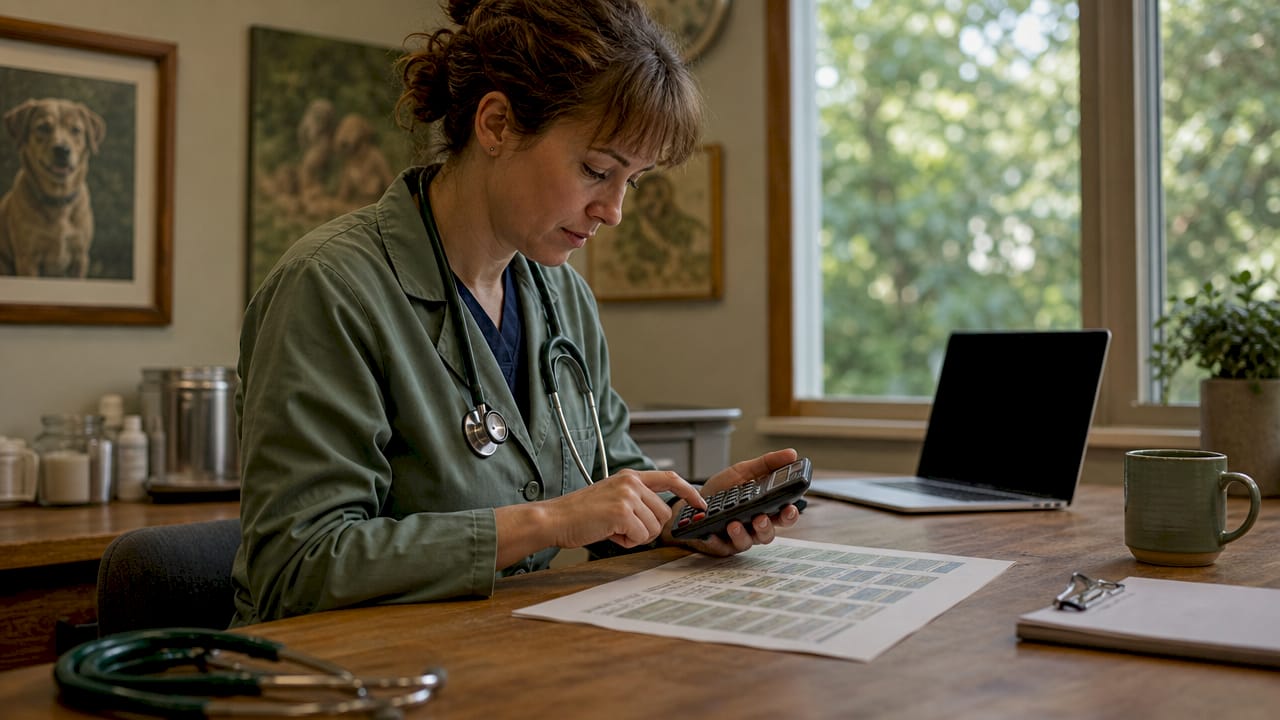
Step-by-step calorie calculation
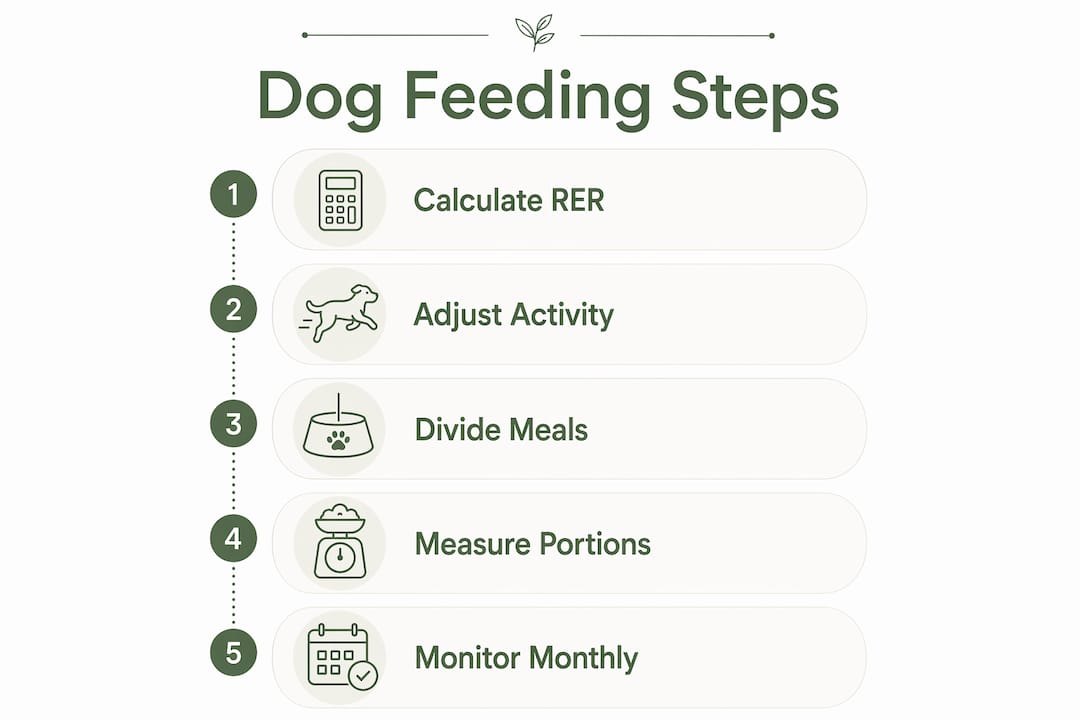
Follow these steps to find your dog's daily calorie target:
- Convert weight to kilograms. Divide your dog's weight in pounds by 2.205. A 44 lb dog weighs 20 kg.
- Calculate RER. Raise 20 to the power of 0.75 (approximately 9.46), then multiply by 70. That gives you roughly 662 calories per day at rest.
- Apply the activity multiplier. Multiply RER by the factor that matches your dog's lifestyle.
- Convert calories to food volume. Check the calorie density on your food's label (usually listed as kcal per cup) and divide your target by that number.
| Activity level | Multiplier | Example (20 kg dog) |
|---|---|---|
| Sedentary or obese-prone | 1.2x | 794 kcal/day |
| Neutered adult | 1.6x | 1,059 kcal/day |
| Active adult | 2.0x | 1,324 kcal/day |
| Young puppy (under 4 months) | 3.0x | 1,986 kcal/day |
Pro Tip: Most dog food labels list calories per cup. Divide your dog's daily calorie target by that number to get the exact cup amount. Never rely on the "recommended serving" range printed on the bag without cross-checking it against your dog's RER.
A specialized dog feeding calculator can run these numbers for you automatically. Still, understanding the formula helps you catch errors and make confident adjustments when your dog's life changes.
How often should I feed my dog by age and breed size?
Calorie totals matter, but so does how you split them across the day. Feeding frequency affects digestion, blood sugar stability, and behavior. The right schedule depends on your dog's life stage and breed size.
Puppies under 12 weeks need 4 meals daily, puppies aged 3–6 months need 3 meals, and most adults do well on 2 meals per day. Small breed puppies are a special case. Their fast metabolism and tiny body mass make them prone to hypoglycemia, so they often need more frequent meals well past the 6-month mark.
| Life stage | Breed size | Meals per day |
|---|---|---|
| Under 12 weeks | All sizes | 4 |
| 3–6 months | All sizes | 3 |
| 6–12 months | Small breeds | 3 |
| 6–12 months | Medium/large breeds | 2–3 |
| Adult (1+ years) | All sizes | 2 |
| Senior | All sizes | 2 (smaller portions) |
Large breed puppies carry an additional layer of complexity. Similar weights can demand different calories depending on growth trajectory, and large breeds require specialized formulas to prevent orthopedic problems caused by nutrient imbalance. The calcium-to-phosphorus ratio in a large breed puppy's diet directly affects bone development and must stay within a specific range until physical maturity.
- Senior dogs generally need fewer calories due to slower metabolism and reduced activity.
- Splitting daily portions into two meals reduces the risk of bloat, especially in deep-chested breeds.
- Consistency in meal timing helps regulate digestion and reduces begging behavior.
Pro Tip: For puppies, check out the puppy feeding guide by age to match portion sizes to each growth phase. Growth rates vary significantly between breeds, and a one-size approach misses the mark.
How to measure dog meal portions accurately
Knowing the right calorie target means nothing if your measuring method is off. Using kitchen scoops or mugs instead of a standardized measuring cup leads to 25–50% overfeeding and calorie errors of 50–100 calories per meal. That adds up to meaningful weight gain over weeks and months.
The fix is simple: use a leveled standard 8 oz measuring cup every time. Do not pack the kibble, and do not eyeball it. For dogs on a precise weight management plan, a kitchen scale is even more reliable than a cup.
Beyond the measuring tool, you need a monthly check-in system. Body Condition Score (BCS) is more reliable than weight alone for evaluating whether your dog is eating the right amount. BCS uses a 9-point scale where 4–5 is ideal. You should be able to feel your dog's ribs without pressing hard, and there should be a visible waist when viewed from above.
"Adjust portions by 10–15% based on monthly BCS assessments. If your dog scores above 5, reduce food by 10%. If below 4, increase by 10%. Recheck in four weeks before making another change."
Treats are the most overlooked source of excess calories. Treats should never exceed 10% of your dog's total daily caloric intake. If your dog's daily target is 800 calories, treats cap at 80 calories. Subtract treat calories from the meal total, not from a separate mental budget.
- Use a leveled standard 8 oz measuring cup, not a coffee mug or random scoop.
- Weigh food on a kitchen scale for dogs on strict calorie targets.
- Log treat calories and subtract them from the day's meal portions.
- Reassess BCS monthly and adjust portions by 10–15% as needed.
How life changes affect your dog's feeding needs
A dog's calorie needs are not fixed. They shift with surgery, seasons, age, and activity level. Missing these shifts is one of the most common reasons dogs gain weight gradually over time.
Spay and neuter surgery lowers metabolism. Post-surgery, reduce calories accordingly to avoid weight gain in the weeks that follow. Many owners keep feeding the same amount out of habit, and the dog gains several pounds before anyone notices. The adjustment is usually a reduction of 10–20% in daily calories, confirmed by BCS monitoring.
Seasonal changes matter too. A dog that runs outside daily in summer may spend most of winter on the couch. Adjust feeding portions when activity levels change to match the new metabolic reality. The same logic applies to dogs recovering from injury or illness.
For weight loss, set a calorie target below maintenance MER, typically using the RER of the dog's target weight rather than current weight. For weight gain in underweight dogs, increase above maintenance gradually. Rapid changes in either direction stress the body and make it harder to sustain results.
Dogs also change as they age. A 2-year-old Border Collie and a 10-year-old Border Collie have very different energy needs even at the same weight. Recalculate your dog's calorie target at least once a year, and any time a major life event occurs. For more detail on adjusting after life events, the reasons behind these shifts are worth understanding fully.
Key Takeaways
Accurate dog feeding starts with the RER formula and requires monthly BCS monitoring, precise measuring tools, and adjustments for every life stage and lifestyle change.
| Point | Details |
|---|---|
| Use the RER formula | Calculate daily calories as 70 × (weight in kg)^0.75, then multiply by an activity factor. |
| Match frequency to life stage | Puppies need 3–4 meals daily; most adult dogs thrive on 2 meals per day. |
| Measure with a standard cup | Use a leveled 8 oz measuring cup to avoid 25–50% overfeeding from inaccurate tools. |
| Monitor BCS monthly | Adjust portions by 10–15% based on Body Condition Score, not weight alone. |
| Account for treat calories | Cap treats at 10% of daily calories and subtract them from meal portions. |
What I've learned from watching owners feed their dogs wrong
The most common mistake I see is not malice. It's confidence in the wrong tool. Owners trust the bag. The bag says "2–3 cups for a 40 lb dog," and they pour 3 cups because their dog seems hungry. That's it. That's how a healthy dog becomes overweight in 18 months.
The second mistake is treating treats as free calories. A medium biscuit can run 40–50 calories. Three of those a day is 120–150 extra calories, which is roughly 15–20% of a small dog's daily budget. Nobody tracks it. The dog just quietly gains weight, and the owner wonders why the vet keeps raising concerns.
What actually works is boring but effective: a standard measuring cup, a monthly rib-check, and a willingness to reduce portions by 10% when the dog starts feeling padded. You do not need expensive tools or complex apps. You need consistency and honesty about what your dog is actually eating, including the treats, the table scraps, and the "just this once" extras.
The RER formula sounds intimidating, but you only need to run it once or twice a year. After that, BCS monitoring tells you whether your current portions are working. If you can feel the ribs easily and see a waist, you're in the right range. If you have to press hard to feel anything, it's time to cut back.
One more thing: consult your vet before making large changes, especially for dogs with health conditions, seniors, or puppies of large breeds. A 15-minute conversation can save months of guesswork and prevent real harm.
— Robert
Personalized feeding support from Bowlful
Getting the numbers right matters, and Bowlful makes that process straightforward. Bowlful builds personalized feeding plans using the same RER formula veterinarians rely on, adjusted for your dog's breed, weight, age, and activity level.
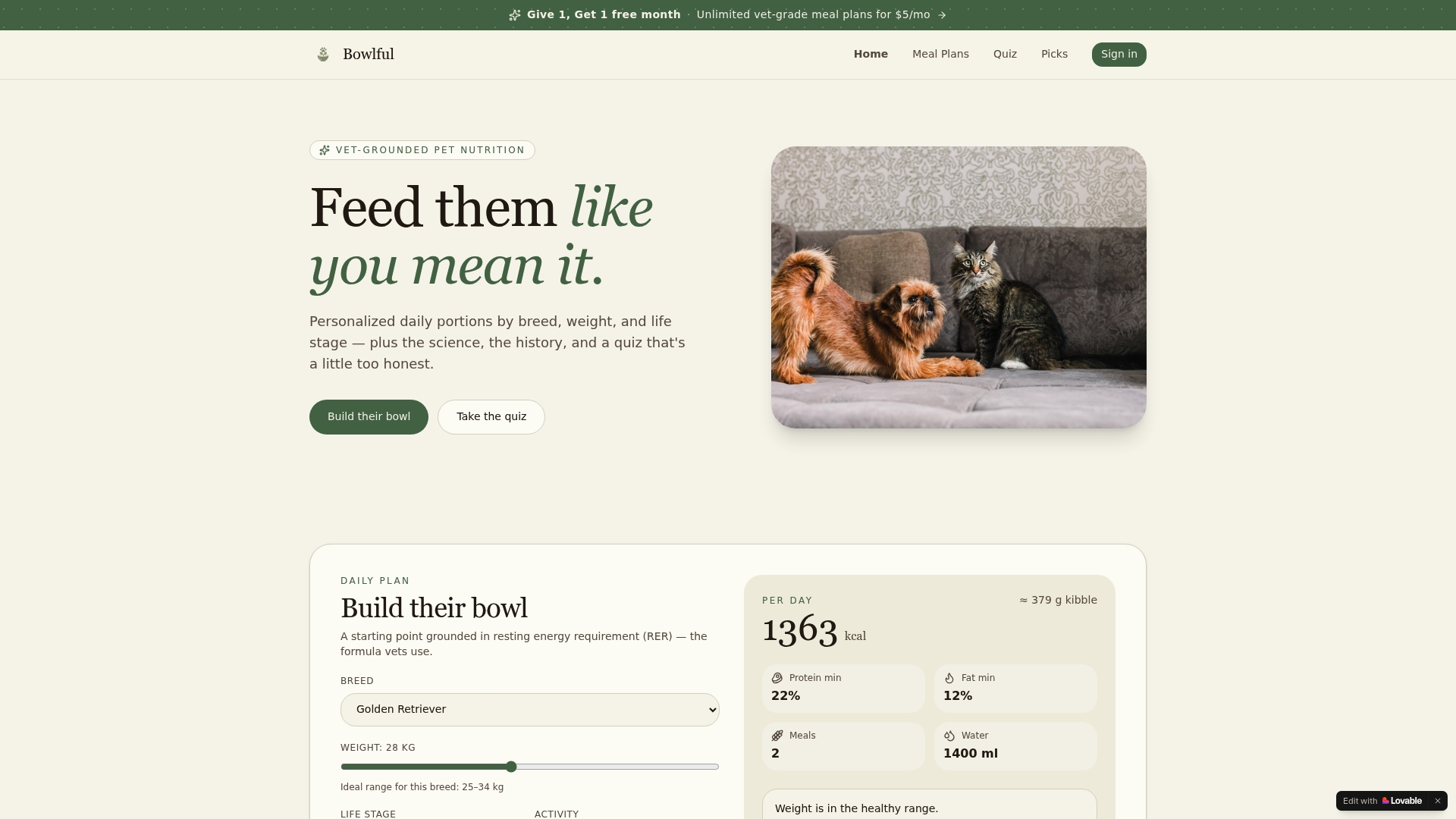
Every plan accounts for life stage, body condition, and the kind of individual factors that generic bag guidelines ignore entirely. Research shows that lean-fed dogs may live 1.8 years longer than their overweight counterparts. That is a meaningful difference, and it starts with getting daily portions right. Visit Bowlful to take the interactive quiz and get a feeding plan built specifically for your dog.
FAQ
How much should I feed my dog by weight?
Use the RER formula: 70 × (weight in kg)^0.75, then multiply by an activity factor between 1.2 and 2.0 for most adult dogs. Divide the resulting calorie target by your food's calorie density per cup to get the daily portion.
How often should I feed my dog each day?
Most adult dogs do well on 2 meals per day. Puppies under 12 weeks need 4 meals daily, and puppies aged 3–6 months need 3 meals, with small breeds often requiring more frequent feeding to prevent hypoglycemia.
Can I use the feeding guide on the dog food bag?
Bag guidelines are a starting point, but they frequently lead to overfeeding by 20–30% when not adjusted for your dog's individual metabolism and body condition. Always cross-check bag recommendations against your dog's calculated calorie needs.
How do treats affect my dog's daily food portions?
Treats should stay at or below 10% of your dog's total daily calorie intake. Subtract treat calories directly from meal portions to keep the daily total accurate and prevent gradual weight gain.
When should I adjust my dog's food amount?
Adjust portions after spay or neuter surgery, seasonal activity changes, significant weight gain or loss, or any time your dog's BCS moves outside the ideal range of 4–5 on the 9-point scale.