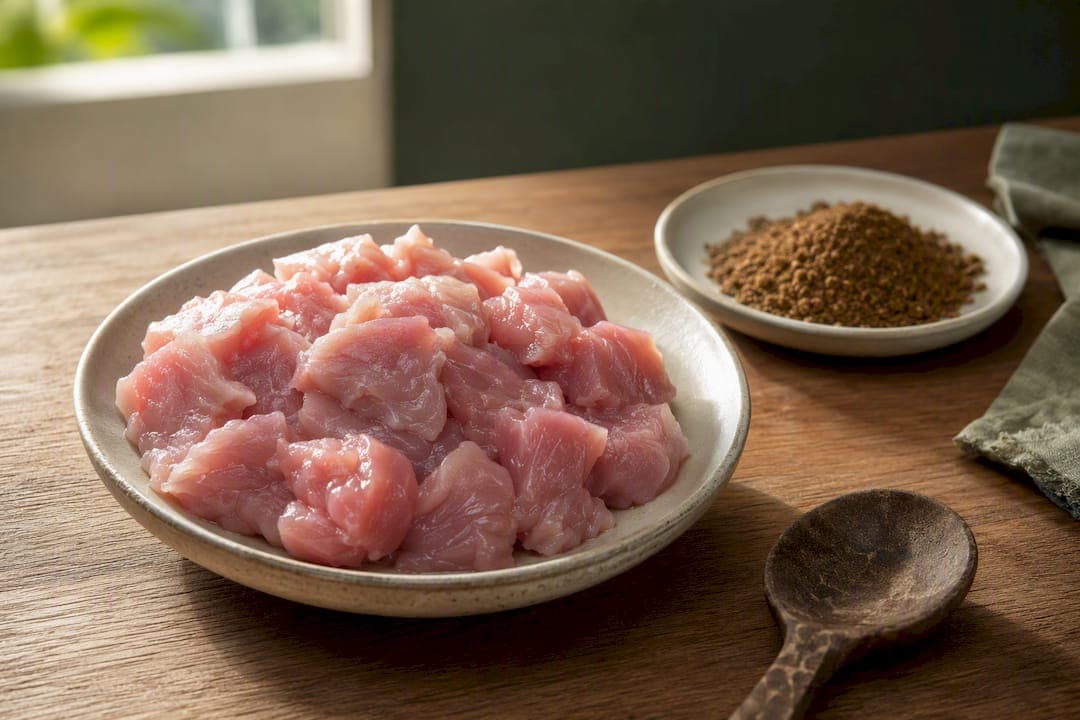
Neither ingredient wins across the board. Meat meal delivers concentrated, weight-efficient protein that makes it the backbone of most dry kibble, while fresh meat brings palatability and moisture that meal can't match, making it better suited to toppers and wet food. Instead of trusting "fresh meat first" on a bag, check the guaranteed analysis and look for species-specific ingredient names.
TL;DR:
- Meat meal provides concentrated, high-protein content, requiring three to four times less weight than fresh meat to meet the same protein levels.
- The quality of meat meal varies significantly depending on source and bone content, and high rendering temperatures can degrade sensitive nutrients.
- Fresh meat's water content inflates its ingredient list position but does not indicate higher protein contribution once cooked, making ingredients' order misleading.
- Animal-specific meal labels, such as chicken meal, offer more transparency and traceability than generic "meat meal" terms.
- Relying solely on guaranteed analysis and species-specific labels offers a more accurate assessment of a food's nutritional value than marketing claims like "fresh meat first."
Table of Contents
- Meat Meal vs Fresh Meat: What the Labels Actually Mean
- How Rendering Changes Protein and Moisture
- Why "Fresh Meat First" Can Be Misleading
- Meat Meal vs Meat Dog Food: Weighing the Trade-Offs
- How to Choose a Pet Food Based on Facts, Not Buzzwords
- Building a Feeding Plan Around Both Ingredients
- Why I Trust Guaranteed Analysis Over Ingredient Marketing
- Get a Personalized Feeding Plan From Bowlful
- Where These Numbers Come From
- Sources
Meat Meal vs Fresh Meat: What the Labels Actually Mean
"Fresh meat" on a pet food label means deboned muscle meat that hasn't been dried or rendered. It still carries its natural water content, roughly 70% moisture, which is why it usually sits near the top of an ingredient list by raw weight before any cooking happens.
"Meat meal" is a different animal entirely. It's meat that's been rendered, a process that cooks off water and fat, leaving a dry, protein-dense powder. The best meals name a single species, like "chicken meal" or "lamb meal." A generic "meat meal" or "animal meal" doesn't tell you what animal it came from, which is a legitimate reason for skepticism.
The American Association of Feed Control Officials (AAFCO) sets the definitions that govern these terms and requires ingredients to be listed by weight before cooking. That single rule explains most of the confusion around ingredient lists.
- Fresh meat: undried, ~70% water, listed by pre-cook weight
- Species-specific meal: named animal, rendered, low moisture, high protein
- Generic meal: unnamed animal source, lower transparency, worth questioning
How Rendering Changes Protein and Moisture
Rendering doesn't add protein. It removes water, which concentrates everything that's left, including protein.
Chicken meal, after rendering, drops to roughly 10% moisture while protein climbs to 60 to 65%. That gap is the whole story behind why kibble recipes lean so heavily on meal: a manufacturer would need somewhere between 3 and 4 pounds of fresh chicken to match the protein contribution of a single pound of chicken meal.
By the numbers: One pound of chicken meal can supply roughly the same protein as 3 to 4 pounds of fresh chicken, because rendering strips out the water weight that fresh meat still carries.
High rendering temperatures concentrate protein and minerals but can degrade some heat-sensitive vitamins along the way, and the quality of meat meal varies by supplier and by how much bone gets included in the batch.
- Crude protein percentage tells you quantity, not quality
- Digestibility depends on amino acid profile and processing consistency, not just the number on the bag
- Bone content raises ash and mineral levels, which isn't automatically bad but does shift the nutrient balance
A food with 32% crude protein from a poorly sourced meal isn't automatically better than one with 28% from a well-formulated blend. Digestibility is what actually reaches your dog's bloodstream.
Why "Fresh Meat First" Can Be Misleading
Ingredients are listed by pre-cook weight, and fresh meat's water content inflates its position on the list. A food can advertise "chicken first" while contributing less actual protein than the chicken meal listed fourth or fifth, once that water cooks away during kibble processing.
Here's how to read past the marketing:
- Check for the same species listed twice. "Chicken" followed later by "chicken meal" tells you the recipe genuinely relies on that protein source, a pattern industry ingredient guides consistently point to as a reliability signal.
- Read the guaranteed analysis, not just the ingredient list. Protein percentage on a dry-matter basis matters more than ingredient order.
- Treat "fresh meat first" as marketing, not proof. It describes weight order, not nutritional contribution.
- Watch for vague terms like "meat by-product meal" or "animal digest" without a named species.
A hypothetical label reading "chicken, chicken meal, brown rice, chicken fat" is a strong sign the formula actually leans on chicken protein twice over, not once for show.
Meat Meal vs Meat Dog Food: Weighing the Trade-Offs
Every ingredient choice comes with a trade-off, and the right one depends on the format of food you're feeding.
Meat meal's advantages show up mostly in dry kibble. It's protein-dense, shelf-stable, and cost-efficient to manufacture, which is exactly why it's the default protein source in most commercial dry food. The downside is variability: quality swings by supplier, bone-heavy meals carry more ash, and some heat-sensitive nutrients don't survive rendering intact.
Fresh meat's advantages are palatability and, in some cases, better nutrient bioavailability, along with the moisture that makes wet food and toppers appealing to picky eaters.
- Meat meal pros: protein density, stability, lower cost per pound of protein
- Meat meal cons: quality variability, potential ash content, some nutrient loss from heat
- Fresh meat pros: palatability, moisture, useful as a topper or wet-food base
- Fresh meat cons: diluted protein by weight, higher cost, more handling care needed
Pro Tip: If your dog eats dry kibble as a base, don't judge the food by whether "chicken" or "chicken meal" comes first. Judge it by the guaranteed analysis and whether a named species shows up more than once.
How to Choose a Pet Food Based on Facts, Not Buzzwords
Skip the marketing copy and work through a short checklist instead.
- Read the guaranteed analysis first. Compare protein percentage against moisture percentage, since a canned food showing "10% protein" isn't automatically worse than kibble at "28%," once you account for water content.
- Look for species-specific meal declarations. "Chicken meal" is traceable. "Meat meal" isn't.
- Confirm the AAFCO statement on the bag matches your dog's life stage, whether that's growth, maintenance, or "all life stages."
- Ask about sourcing transparency. Brands willing to name their suppliers and rendering standards are giving you more to verify.
Bring three questions to your next vet visit: does your dog have any known allergy history that rules out a protein source, what calorie and protein targets fit their RER/MER numbers, and would a fresh-meat topper or a full fresh-meat diet actually suit their situation, or is kibble with a quality meal doing the job fine already.
Red flags worth avoiding: generic "meat meal," "animal fat" with no species named, and any bag that leads with "fresh meat first" as its entire nutritional pitch.
Building a Feeding Plan Around Both Ingredients
Bowlful builds feeding recommendations around RER and MER formulas, the same calorie math veterinarians use, layered with AAFCO's nutrient guidelines for each life stage. That's the framework that decides whether meat meal or fresh meat should carry more weight in a given plan.
For dogs on dry kibble, meat meal usually does the heavy lifting on protein targets, since it's simply more efficient by weight. For picky eaters, dogs on wet food, or owners adding a topper, fresh meat earns its place through palatability and moisture rather than raw protein math.
A practical middle ground: a kibble formulated around a named meat meal, topped a few times a week with a small portion of fresh meat. That combination gets you stable base nutrition plus the appeal factor fresh ingredients bring.
- Dry-kibble-only dogs: meat meal should be doing most of the protein work
- Wet food or mixed feeders: fresh meat contributes more to overall diet quality
- Picky eaters: a fresh-meat topper often solves palatability issues without an ingredient overhaul
Bowlful's feeding quiz turns these variables into a specific calorie and protein target for your dog's breed, age, and activity level.
Why I Trust Guaranteed Analysis Over Ingredient Marketing
I've spent enough time cross-referencing pet food labels against AAFCO's own definitions to know that "fresh meat first" is one of the more effective pieces of marketing shorthand in the industry, and one of the least informative. It tells you almost nothing about whether a dog is actually getting adequate protein. Guaranteed analysis numbers, species-specific ingredient names, and AAFCO life-stage statements are testable claims. Marketing language isn't.
None of this replaces a conversation with your veterinarian, especially if your dog has allergies, a chronic condition, or unusual calorie needs. But you'll have a far better conversation if you walk in already knowing what the guaranteed analysis says, rather than what the front of the bag promises.
— Robert
Get a Personalized Feeding Plan From Bowlful
Reading labels gets you most of the way there, but matching protein sources to your specific dog's calorie needs, life stage, and activity level takes more than a checklist.
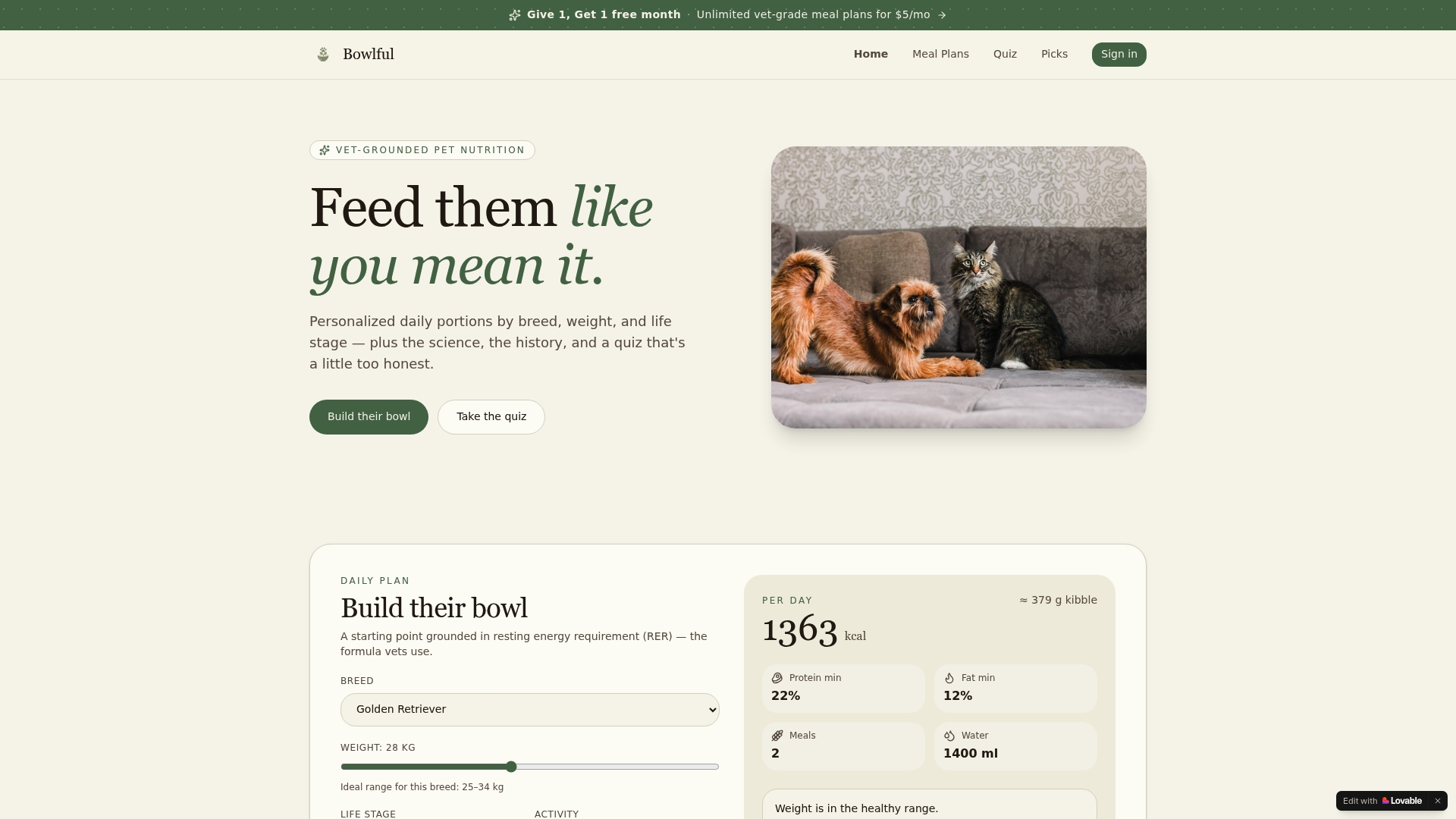
Bowlful's free quiz translates everything covered here, moisture-to-protein math, species-specific meal quality, and guaranteed analysis literacy, into a calorie and protein target built on the same RER/MER formulas veterinarians use. You'll get sample meal plans and a downloadable PDF you can bring to your next vet visit or use to compare against whatever bag is currently in your pantry. If you're weighing whether your dog needs a kibble built around a quality meat meal, a fresh-meat topper, or a full switch to wet food, take the quiz at Bowlful and get a plan built around your dog's actual numbers instead of a label's marketing copy.
Where These Numbers Come From
- AAFCO's ingredient labeling guidance explains the label rules referenced throughout this piece.
- Watts' fresh vs. meal breakdown supplies the moisture and protein percentages.
- Whole Dog Journal's meat meal analysis covers rendering effects and quality variability.
- Purina's chicken meal explainer and JustFoodForDogs' formulation notes explain why meal is standard in dry kibble.
Sources
- AAFCO — What's in the ingredients list?
- Chicken in Pet Food: Fresh vs Meal & Quality Guide | Watts
- Meat and Meat Meal: Sorting Through Animal Protein Sources | Whole Dog Journal
- What is chicken meal in pet food? | JustFoodForDogs
- What is Chicken Meal in Dog Food? | Purina