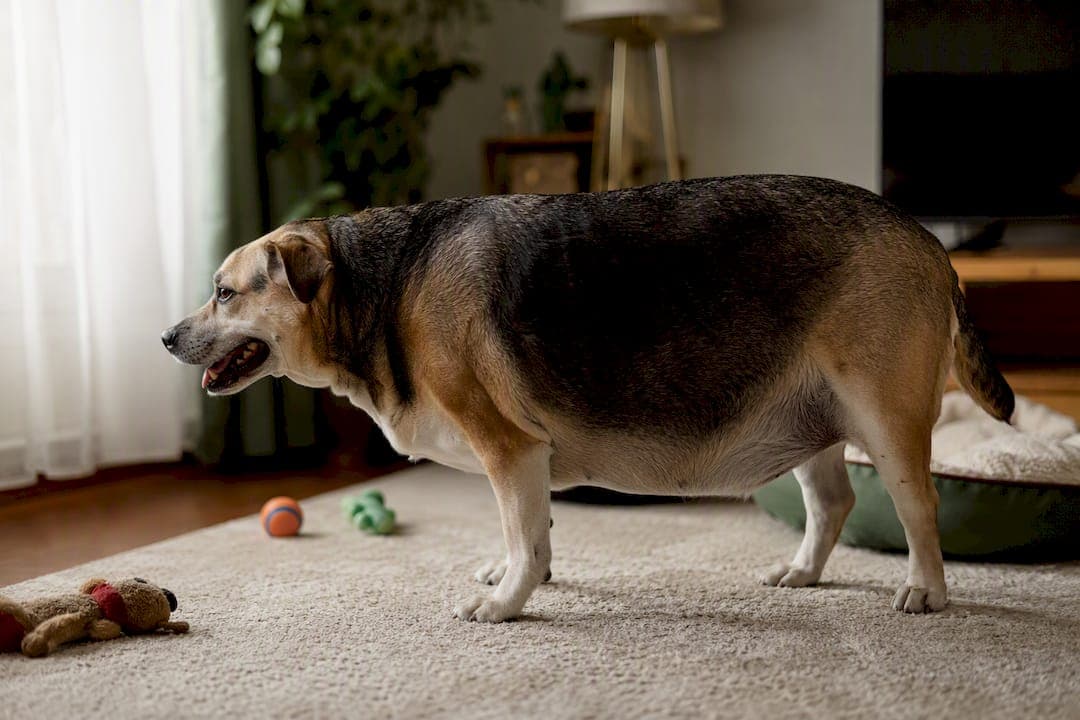
Yes, you can usually tell if your dog is overweight without a vet visit. Look from above for a waist that tucks in behind the ribs, check the side profile for an upward belly slope, and press your palms flat against the rib cage. If you can't feel individual ribs without pressing hard, or if the belly sags or runs flat from chest to hind legs, your dog is carrying extra weight.
This isn't a small issue. A 2022 survey found that about 59% of dogs in North America are overweight, meaning the shape most owners picture as "normal" for a dog is often already past healthy. Veterinarians use a 1 to 9 Body Condition Score (BCS) to standardize this instead of relying on gut instinct.
The three signals that matter most, right now:
- Ribs are hard to feel under a layer of soft tissue, even with firm pressure
- No visible waist when you look down at your dog's back
- Belly hangs flat or sags rather than tucking up from chest to hips
Pro Tip: Do the rib check with flat palms, not fingertips. Fingertips find bone too easily and give you a false sense that your dog is leaner than they are.
For a full breakdown of body condition and feeding adjustments by breed and life stage, Bowlful's guides walk through the math vets actually use.
Key Takeaways
An overweight dog shows a missing waist from above, a flat or sagging belly from the side, and ribs that are hard to feel under firm pressure, and roughly 59% of dogs in North America fit this description.
| Point | Details |
|---|---|
| Use touch, not just sight | Coats and breed builds can hide fat, so a rib check with flat palms is more reliable than a visual scan. |
| Know the BCS thresholds | A score of 6 to 7 on the 9-point scale means overweight; 8 to 9 means obese. |
| Watch for behavior changes | Reduced stamina, heavy panting at rest, and a tighter collar often show up before shape changes are obvious. |
| Track monthly, not yearly | Fat builds gradually at the tail base and hips, so monthly photo and weight logs catch it early. |
| Get a tailored plan | Bowlful calculates breed- and life-stage-specific calorie targets to guide safe, gradual weight loss. |
Table of Contents
- What Does an Overweight Dog Look Like From the Side and Above?
- How Do You Check Ribs and Read a Body Condition Score?
- What Are the Functional Signs of an Overweight Dog?
- What Causes Weight Gain and Which Dogs Are at Higher Risk?
- What Should You Do If Your Dog Is Overweight?
- When Should You Take Your Dog to the Vet?
- Six-Question Checklist to Confirm Overweight Status
- Sources
What Does an Overweight Dog Look Like From the Side and Above?
Stand your dog on a flat surface in a natural standing position. Not sitting, not mid-stretch, not twisted to look at you. The shape you're checking for disappears the moment a dog shifts its weight.
From above, look down at your dog's back between the ribs and hips. A healthy dog has an hourglass shape: a visible narrowing at the waist just behind the ribs. An overweight dog looks more like a barrel or a loaf of bread, with sides that run straight from shoulder to hip with no inward curve at all.
From the side, trace the line from the bottom of the rib cage back to the hind legs. In a fit dog, that line rises, tucking upward toward the pelvis, similar to how a greyhound's stomach curves up sharply. In an overweight dog, that line stays flat or even sags downward before it reaches the hind legs.
Coat texture throws this off constantly. Thick or long-haired breeds like Samoyeds, Newfoundlands, and Chow Chows can hide a rounded waist under fur, and barrel-chested breeds such as Bulldogs or Basset Hounds never show much of a waist even at ideal weight. Sighthounds like Greyhounds and Whippets run the opposite direction, showing visible ribs even when perfectly healthy. Comparing your dog to breed-typical condition matters more than comparing them to a generic silhouette.
Pro Tip: If your dog has a thick coat, wet the fur down during a bath and look at the wet outline. It reveals the actual body shape underneath far better than dry fur ever will.
How Do You Check Ribs and Read a Body Condition Score?
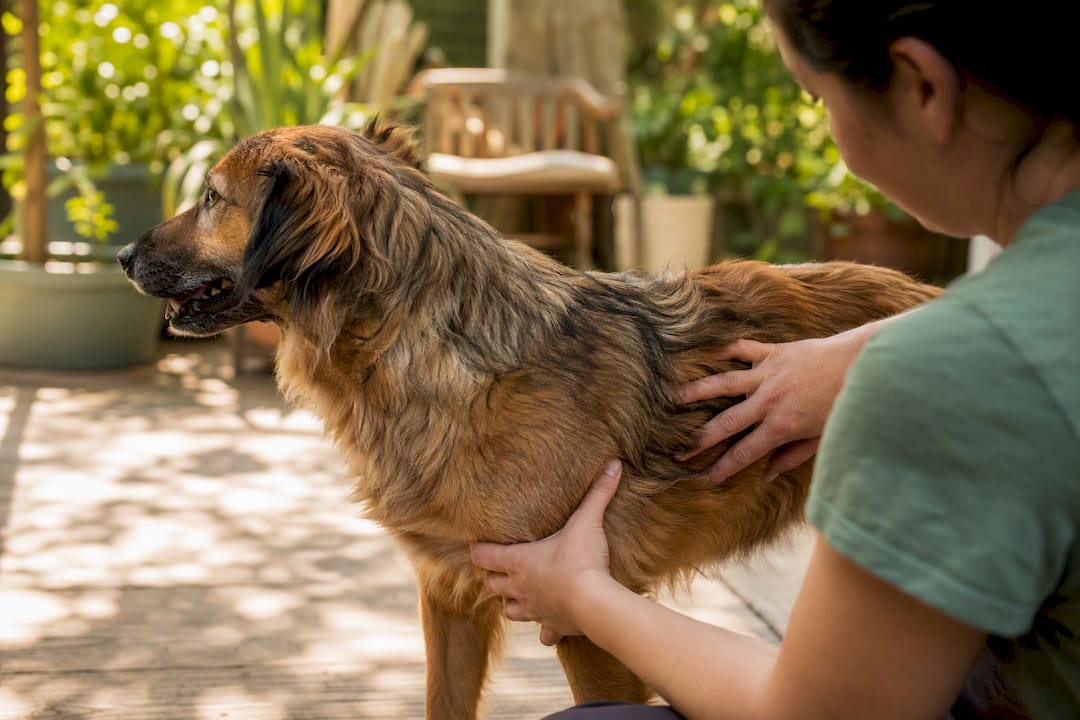
Run your flat palms gently along your dog's sides, right over the rib cage, using about the same pressure you'd use to check a peach for ripeness. You should feel a gentle bump, bump, bump as your fingers pass over each rib, similar to running a hand across the back of your own knuckles. If you have to press hard to find them, or if the area feels more like the fleshy part of your palm, there's excess fat sitting over the bone.
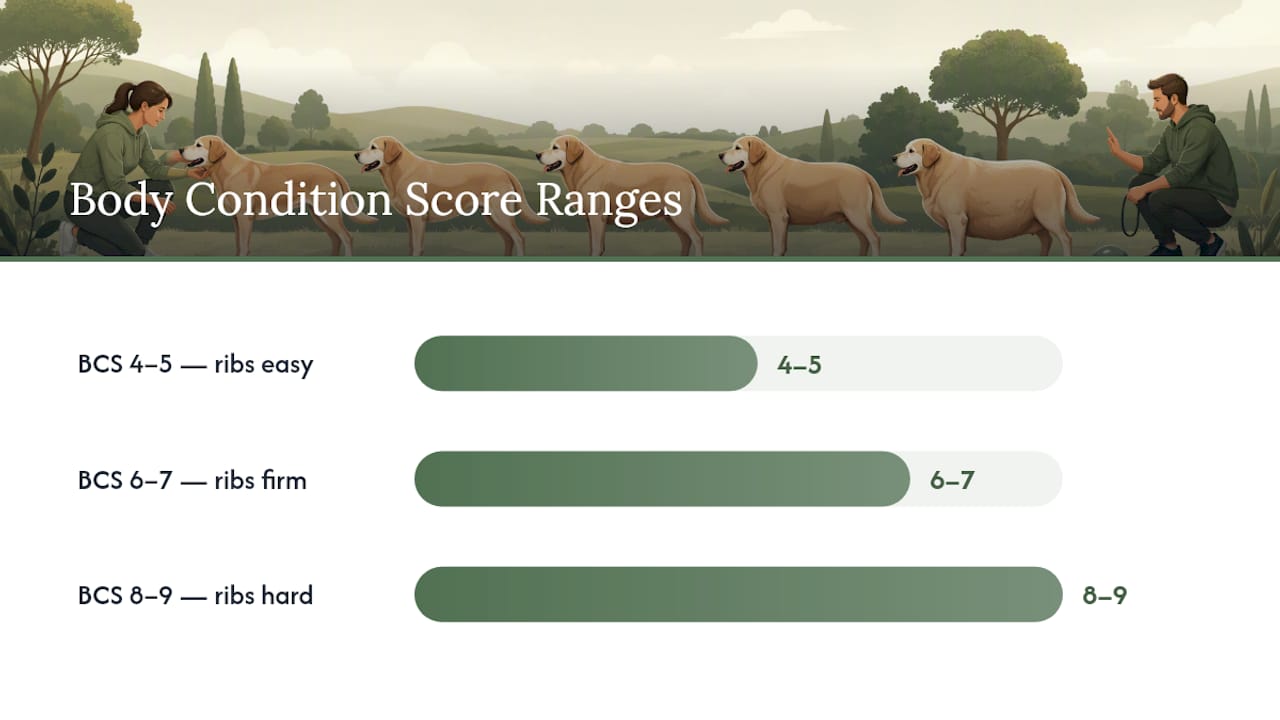
That palpation feeds directly into the Body Condition Score, the 1 to 9 scale vets use instead of a bathroom scale number. Pet Obesity Prevention's BCS chart breaks it down clearly: scores of 4 to 5 are ideal, 6 to 7 mean overweight, and 8 to 9 mean obese.
| BCS Range | Ribs | Waist | Abdominal Tuck |
|---|---|---|---|
| 4 to 5 (ideal) | Easily felt with light pressure | Visible from above | Clear upward tuck from side |
| 6 to 7 (overweight) | Felt only with firm pressure | Slight or no waist | Minimal or flat tuck |
| 8 to 9 (obese) | Very hard to feel, thick fat layer | No waist, rounded sides | No tuck, sagging belly |
These aren't arbitrary cutoffs. VCA Animal Hospitals classifies dogs as overweight once they're 10% to 20% above ideal body weight, and obese once they cross 20% above ideal. A 30 pound target-weight dog carrying 36 pounds is already in the overweight range.
That's the core test the Whole Dog Journal's rib-check guidance centers on, and it's the single most reliable home assessment you have.
Pro Tip: Do the rib check monthly, ideally during grooming or a couch cuddle session, since fat often builds up at the base of the tail and hips before the waist visibly disappears.
What Are the Functional Signs of an Overweight Dog?
Sometimes the shape is ambiguous but the behavior isn't. Extra weight shows up in how a dog moves and breathes well before it's obvious to the eye.
Watch for a dog that used to bound onto the couch or into the car now hesitating or needing a boost. Panting at rest, not just after exercise, is another common tell, along with a collar or harness that's suddenly snug in the same hole that used to fit loosely. General enthusiasm for walks or fetch dropping off is easy to write off as "getting older" when it's actually extra pounds making movement harder.
- Winded or slow to recover after a walk that used to be easy
- Reluctant or unable to jump onto furniture or into vehicles
- Panting heavily even when resting indoors
- Collar or harness noticeably tighter than a few months ago
A simple timed walk test helps. Walk the same route weekly and note pace, panting, and recovery time. Dogster's list of obesity indicators treats these functional changes as just as meaningful as visual ones, and they often show up first.
Pro Tip: Track walk times in your phone's notes app. A ten-minute route that quietly stretches to fifteen minutes over two months is a weight signal, not just a mood.
What Causes Weight Gain and Which Dogs Are at Higher Risk?
Most weight gain comes down to a handful of repeat offenders: overfeeding relative to activity, too many treats, free-feeding instead of scheduled meals, and a metabolism that slows after spaying or neutering. Age plays a role too. A senior dog eating the same portion as they did at age three is almost always taking in more calories than they burn.
Some dogs face higher odds. Middle-aged and senior dogs, small breeds fed adult formulas built for larger dogs, and any dog on a free-feeding schedule where food sits out all day are the ones Bowlful sees gain weight fastest. Breeds like Labradors, Beagles, and Dachshunds also carry a well-documented genetic tendency toward weight gain.
- Free-feeding, where food is always available rather than portioned into meals
- Treats and table scraps that go uncounted in daily calorie totals
- Reduced activity paired with unchanged portion sizes
- Age-related metabolic slowdown, especially past age seven
The gains are usually gradual, a few ounces a month, which is exactly why they slip past owners. A monthly hands-on check catches the trend before the waist fully disappears. Bowlful's breakdown of why modern dogs gain weight covers the environmental side of this in more detail.
What Should You Do If Your Dog Is Overweight?
Start with the basics: do the rib and waist check, get an actual weight using a home scale or your vet's scale, and start a simple log. Photograph your dog from above and the side every two weeks, and jot down the number alongside it.
On the food side, measure every meal by cup or by weight rather than eyeballing it, and cut treats down to a small fraction of daily calories. If your dog free-feeds, switching to scheduled meals alone often stops the slow creep. Any real diet change should start with a conversation with your vet, especially for senior dogs or dogs with existing health conditions.
- Weigh your dog every two weeks and log it alongside a quick photo
- Measure meals with a kitchen scale or measuring cup, not a "handful" estimate
- Add five extra minutes to daily walks weekly rather than jumping into intense exercise
- Ask your vet for a specific target weight and a safe weekly loss rate
Pro Tip: Increase exercise gradually. An overweight dog thrown into a long run risks joint strain, so build up walk time in small increments over several weeks instead.
Your vet can also confirm calorie targets using formulas like RER and MER, which Bowlful's feeding guides explain in plain terms.
When Should You Take Your Dog to the Vet?
Book a visit if your rib and waist checks land in the overweight or obese BCS range, if weight gain happened quickly rather than gradually, or if you're seeing labored breathing or trouble standing up. A collar causing visible skin irritation from tightness is also a same-week appointment, not a wait-and-see situation.
At the visit, expect a full physical exam, an official BCS score, and possibly bloodwork to rule out conditions like hypothyroidism that mimic simple overfeeding. PetMD notes that obesity itself is classified as a disease, one that raises the risk of osteoarthritis, pancreatitis, and heart problems, so catching it early changes the long-term outlook.
- BCS lands at 6 or higher on the 9-point scale
- Weight gain happened over weeks rather than months
- New breathing difficulty, reluctance to move, or joint stiffness
- Collar or harness causing red or irritated skin
Pro Tip: Bring your photo and weight log to the appointment. It gives your vet a timeline instead of a single snapshot, which makes the exam faster and the plan more precise.
If your dog is a senior, a wellness exam built for older dogs covers additional screening that a routine checkup might skip.
Six-Question Checklist to Confirm Overweight Status
Run through these before your next vet visit or grooming session:
- Can you feel ribs with only light finger pressure?
- Is there a visible waist when viewed from directly above?
- Does the belly tuck upward from chest to hips when viewed from the side?
- Has your dog's stamina on walks noticeably dropped?
- Is a collar or harness tighter than it was a few months ago?
- Has the overall body shape changed in the last two to three months?
Any two or more "no" or "yes" answers pointing toward extra weight is worth a vet conversation.
Why Bowlful Starts With the Hands-On Check
Photos lie, coats hide fat, and scale numbers mean nothing without breed context. A rib check paired with an accurate feeding plan catches problems months before a collar stops fitting.
A Feeding Plan Built Around Your Dog's Real Numbers
Guesswork with portion sizes is how gradual weight gain happens in the first place. Bowlful builds personalized calorie targets using the same RER and MER formulas vets rely on, adjusted for your dog's breed, age, and activity level, then turns that into a printable meal plan you can follow without a spreadsheet.
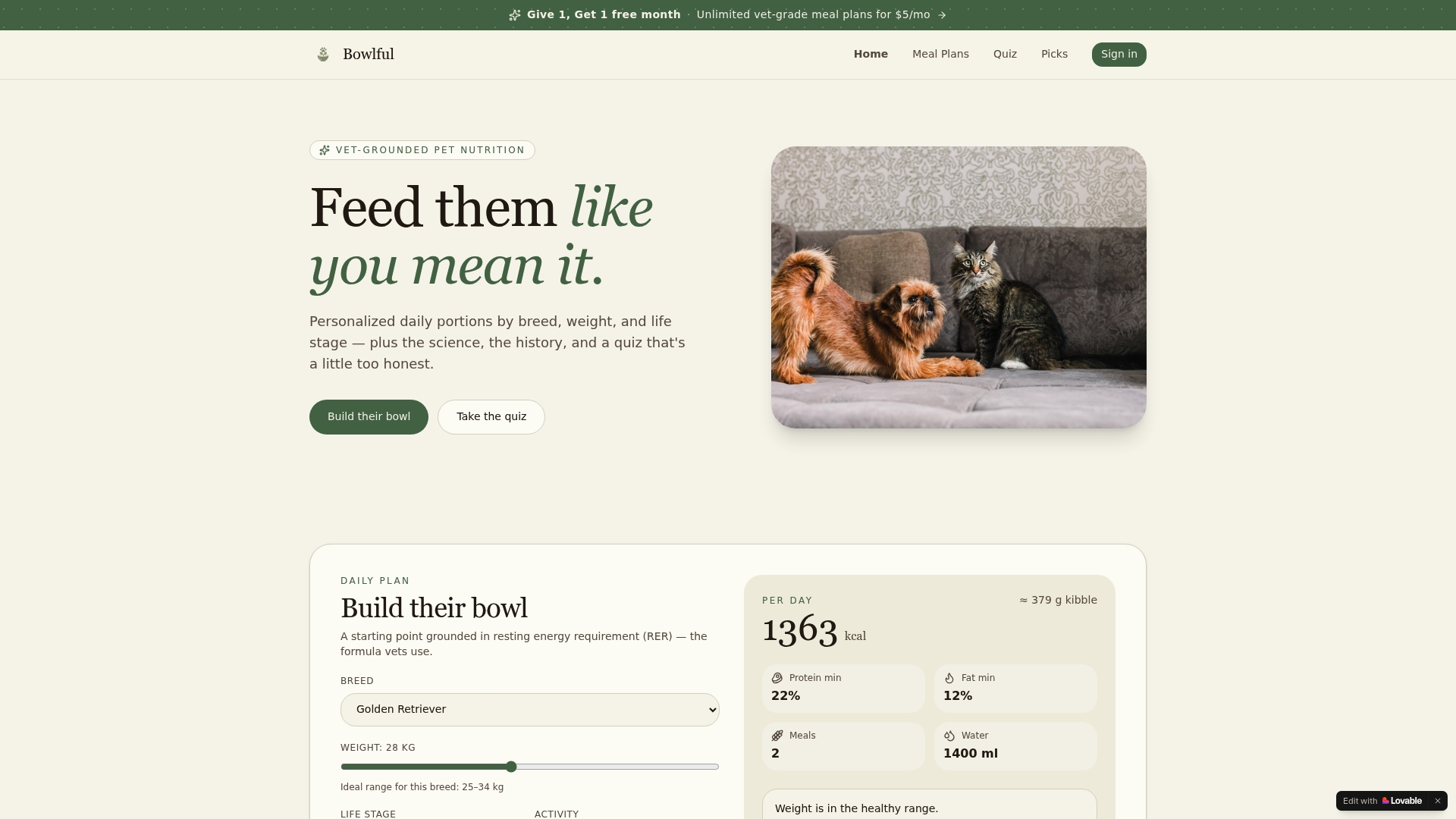
If your rib check or BCS score came back on the higher end, the next useful step isn't a new brand of kibble picked at random. It's a plan sized to your dog's actual body, not the bag's generic feeding chart. Head to Bowlful's personalized feeding plans to get exact portions and a downloadable meal plan tailored to your dog's target weight.
Sources
- Obesity in Dogs | VCA Animal Hospitals
- Is My Dog Overweight? - Whole Dog Journal
- Signs your dog is obese | Dogster
This article is general information, not a substitute for advice from a qualified doctor. Consult a qualified healthcare professional about your own circumstances before acting on anything here.