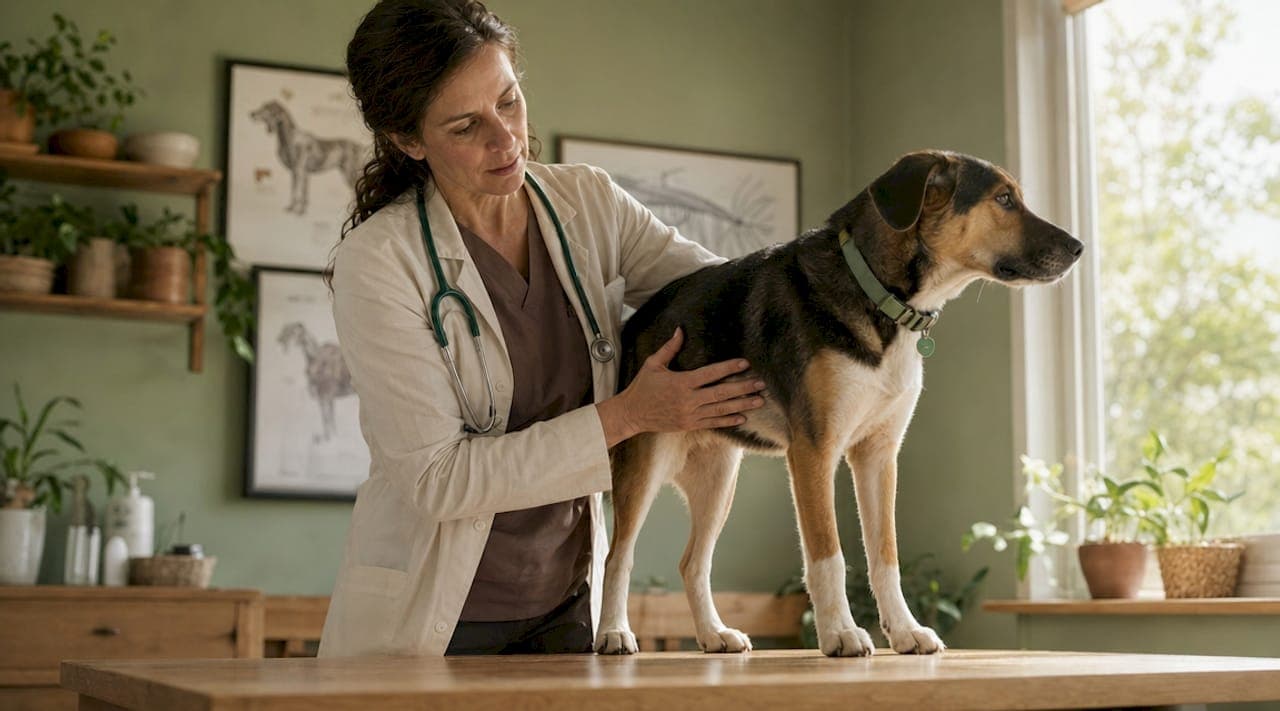
A healthy dog weight range is best defined by a Body Condition Score (BCS) of 4 or 5 on a 9-point veterinary scale, not by a single number on a scale. Most pet owners focus entirely on pounds or kilograms, but veterinarians use BCS as the gold standard because it accounts for fat distribution, muscle mass, and body frame. Breed-specific weight charts from sources like Purina and Dogster provide a useful starting point, but they only tell part of the story. The most accurate picture of your dog's health comes from combining those numbers with a hands-on physical assessment.
What is a healthy dog weight range for your breed?
Healthy weight ranges vary dramatically by breed, from as little as 3 to 7 pounds for a Chihuahua to 90 to 150 pounds for a Mastiff. These ranges exist because "average weight for breeds" is not a single universal number. A healthy dog weight chart groups dogs by size category, but even within a breed, two dogs of the same sex can have legitimately different ideal weights based on frame size and muscle development.
Age and sex also shift the target. Male dogs typically weigh 10 to 20 percent more than females of the same breed. Senior dogs often lose muscle mass, which can make them appear lean even when body fat is creeping up. Puppies follow growth curves that look nothing like adult weight guidelines, so applying adult dog weight guidelines to a six-month-old will give you a misleading result.

This is exactly where the 9-point Body Condition Score system fills the gap. A BCS of 4 or 5 indicates ideal weight, with scores of 1 to 3 indicating underweight, 6 to 7 overweight, and 8 to 9 obese. At a score of 4 or 5, your dog has a visible waist when viewed from above, a slight abdominal tuck from the side, and ribs that are easy to feel but not visually prominent. That combination of features tells you far more than a number on a scale.
Pro Tip: Print a BCS chart from Purina or Dogster and keep it on your fridge. Checking your dog against it monthly takes less than two minutes and catches weight drift before it becomes a problem.
| Breed size | Typical healthy weight range |
|---|---|
| Toy (Chihuahua, Pomeranian) | 3 to 7 lbs |
| Small (Beagle, French Bulldog) | 20 to 30 lbs |
| Medium (Border Collie, Cocker Spaniel) | 30 to 50 lbs |
| Large (Labrador Retriever, German Shepherd) | 55 to 80 lbs |
| Giant (Mastiff, Great Dane) | 90 to 150 lbs |
How to tell if your dog is at a healthy weight at home
The most reliable home method is the rib palpation test. Ribs should be felt easily with a thin fat layer covering them. If you have to press firmly to find the ribs, your dog is carrying excess fat. If the ribs are visible without touching, your dog is likely underweight. This single check gives you more useful information than stepping on a scale.
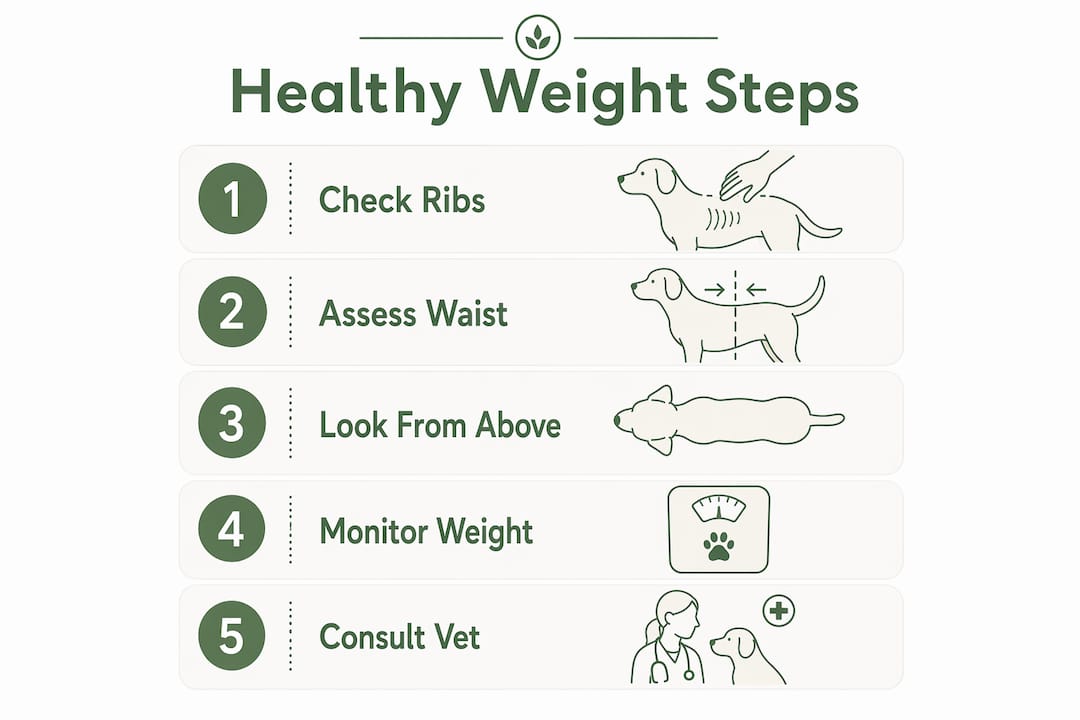
Here is a practical three-step physical assessment you can do at home:
- Rib check. Place both thumbs on your dog's spine and spread your fingers across the rib cage. You should feel each rib with light pressure, similar to how your knuckles feel when you make a fist.
- Waist check. Look down at your dog from directly above. There should be a visible narrowing behind the rib cage. A dog with no visible waist is almost certainly overweight.
- Abdominal tuck check. View your dog from the side. The belly should rise upward from the chest toward the hind legs. A belly that hangs level or sags downward signals excess weight.
One critical mistake owners make is confusing muscle mass with fat. Scale weight does not distinguish fat from muscle, so a working breed like a Border Collie or a Belgian Malinois can weigh more than a breed weight chart suggests and still be in perfect condition. Fat distribution and body proportions are the real indicators, not the number on the scale. A muscular dog with a visible waist and palpable ribs is healthy, even if the chart says otherwise.
Pro Tip: Do the rib check on yourself first to calibrate your sense of pressure. Your own ribs with a normal fat layer feel similar to what you are looking for on your dog.
What health risks come with the wrong weight?
Over 55% of dogs in the U.S. are overweight or obese, making excess weight the most common preventable health problem in American pets. A dog is considered overweight at 10 to 20 percent above its ideal weight, and obese at more than 20 percent above ideal. Those thresholds matter because the disease risk climbs steeply once a dog crosses them.
Excess weight leads to serious conditions including arthritis, type 2 diabetes, heart disease, high blood pressure, and certain cancers. For a dog already predisposed to hip dysplasia, like a German Shepherd or a Golden Retriever, carrying extra weight accelerates joint damage significantly. The pain and reduced mobility that follow are not just quality-of-life issues. They are expensive to treat and difficult to reverse.
Being underweight carries its own serious risks. Malnutrition weakens the immune system, causes muscle wasting, and can signal underlying conditions like parasites, kidney disease, or cancer. A thin dog is not automatically a healthy dog, and weight loss without a dietary explanation always warrants a vet visit.
Early identification of weight problems prevents costly, painful chronic diseases. A dog caught at a BCS of 6 is far easier to help than one that has reached a BCS of 8 over two years of gradual gain.
- Arthritis and joint degeneration
- Type 2 diabetes
- Heart disease and hypertension
- Reduced lifespan and quality of life
- Increased surgical and anesthetic risk
- Immune suppression and slower healing
Practical steps to maintain or reach your dog's ideal weight
The first step before any weight loss plan is a veterinary exam. Weight gain can signal endocrine or metabolic disorders like hypothyroidism or Cushing's disease, and putting a dog on a calorie-restricted diet without ruling those out can mask a serious condition. A vet visit also gives you a confirmed baseline weight and BCS to measure progress against.
Once medical causes are ruled out, the practical approach is straightforward:
- Feed to ideal weight, not current weight. Caloric intake should be based on your dog's ideal weight, not what it currently weighs. Feeding a 70-pound dog the portion for a 55-pound dog, if 55 pounds is the target, is the correct starting point.
- Measure every meal. Eyeballing portions is the single most common reason weight loss plans fail. Use a kitchen scale or a calibrated measuring cup, not the scoop that came with the bag.
- Limit treats to 10 percent of daily calories. Treats are often the hidden calorie source that undermines an otherwise solid plan. Switch to low-calorie options like baby carrots or green beans for dogs that need frequent rewards.
- Match exercise to the dog's breed and age. A young Labrador needs 60 to 90 minutes of vigorous activity daily. A senior Basset Hound needs gentle, consistent movement. Breed-specific feeding and activity needs vary more than most owners realize.
- Track progress monthly. Weigh your dog and reassess BCS every four weeks. Adjust portions based on results, not on how the dog looks on any given day.
Safe weight loss runs at 3 to 5 percent of body weight per month under veterinary supervision. For a 60-pound dog, that means losing roughly 1.8 to 3 pounds per month. Faster loss risks nutrient deficiencies and muscle breakdown, which makes the dog look thinner but actually worsens body composition.
Pro Tip: Take a photo of your dog from above and from the side every month. Visual comparison over time is often more motivating than scale numbers, and it helps your vet assess progress at annual checkups.
Key takeaways
A dog's healthy weight is defined by a BCS of 4 or 5 on a 9-point scale, confirmed through physical assessment, not by breed charts alone.
| Point | Details |
|---|---|
| BCS is the gold standard | A score of 4 or 5 on a 9-point scale defines ideal weight for any breed or size. |
| Breed charts are a starting point | Weight ranges from toy to giant breeds vary widely; frame and muscle mass require individual assessment. |
| Home checks work | Rib palpation, waist check, and abdominal tuck give accurate condition data without a scale. |
| Overweight is the top health risk | Over 55% of U.S. dogs are overweight or obese, driving arthritis, diabetes, and heart disease. |
| Safe loss is slow and vet-guided | Target 3 to 5 percent body weight loss per month; always rule out medical causes first. |
Why weight charts alone will mislead you
I have spent years reviewing how pet owners approach their dog's weight, and the pattern is almost always the same. Someone looks up a breed weight chart, sees their dog is within the listed range, and concludes everything is fine. Then the vet finds a BCS of 7 at the annual exam. The chart said the dog was healthy. The dog was not.
Weight charts do not account for frame size, muscle development, or the difference between a working-line dog and a show-line dog of the same breed. A working-line German Shepherd and a show-line German Shepherd can have legitimately different ideal weights by 10 to 15 pounds, yet both fall within the same published range. The chart cannot tell you which one applies to your dog.
What I consistently recommend is treating the breed chart as a rough filter, not a verdict. If your dog is within range but fails the rib check or has no visible waist, trust the physical assessment. If your dog is slightly outside the range but has a clear waist, palpable ribs, and a BCS of 4, the chart is the outlier, not your dog.
The emotional side of this matters too. Dogs at a healthy weight are more playful, more mobile, and visibly more comfortable. Owners who commit to regular BCS checks and honest portion control consistently tell me their dogs seem younger. That is not coincidence. It is the direct result of reducing the physical burden that excess weight places on joints, organs, and energy systems every single day.
— Robert
How Bowlful helps you manage your dog's weight
Getting your dog's weight right starts with feeding the right amount, and that is harder than it sounds without a personalized plan.
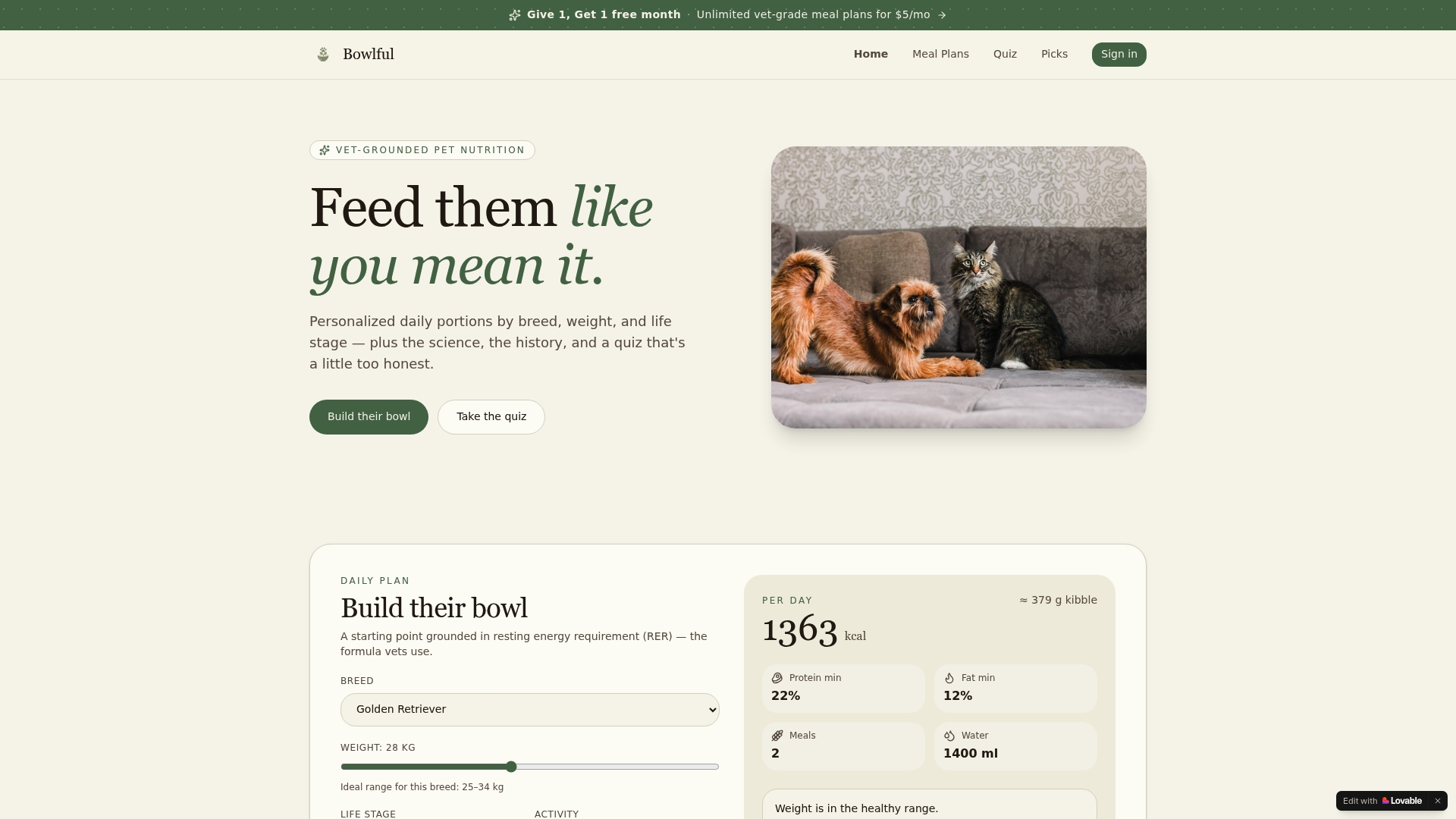
Bowlful builds feeding plans using the Resting Energy Requirement (RER) formula, the same calculation veterinarians use to determine a dog's true caloric needs based on breed, weight, age, and life stage. Instead of guessing portions or following generic bag guidelines, you get a plan calibrated to your specific dog. For owners managing weight loss, Bowlful calculates portions based on ideal weight rather than current weight, which is the clinically correct approach. Explore personalized dog nutrition at Bowlful and take the quiz to get your dog's tailored feeding plan today.
FAQ
What is a healthy weight range for dogs?
A healthy dog weight range is defined by a Body Condition Score of 4 or 5 on a 9-point scale, combined with breed-specific guidelines. Physical signs include easily palpable ribs, a visible waist from above, and an abdominal tuck from the side.
How do I know if my dog is overweight?
A dog is overweight when it is 10 to 20 percent above its ideal weight, or scores 6 to 7 on the BCS scale. Practical signs include difficulty feeling the ribs, no visible waist, and a flat or sagging abdomen.
How much should my dog weigh by breed?
Healthy weight varies from 3 to 7 pounds for toy breeds like Chihuahuas to 90 to 150 pounds for giant breeds like Mastiffs. Use a breed weight chart as a starting point, then confirm with a BCS assessment.
Can a muscular dog be mistakenly labeled overweight?
Yes. Scale weight does not separate fat from muscle, so a highly muscular breed can exceed chart ranges while maintaining a healthy BCS of 4 or 5. Always assess body condition physically, not by weight alone.
How fast should a dog lose weight safely?
The safe rate is 3 to 5 percent of body weight per month under veterinary supervision. For a 60-pound dog, that equals roughly 1.8 to 3 pounds per month. Faster loss risks muscle breakdown and nutritional deficiencies.