
Proper dog nutrition is defined as providing a diet that is complete, balanced, and calibrated to a dog's individual physiological needs based on evidence-backed standards. The science of feeding dogs properly centers on meeting nearly 40 essential nutrients daily, a threshold set by regulatory bodies like the Association of American Feed Control Officials (AAFCO). Falling short of even one nutrient can trigger bone fractures, immune dysfunction, or organ failure over time. Generic feeding advice printed on a bag does not account for breed size, life stage, or metabolic rate. This guide explains what the research actually says, so you can make decisions grounded in veterinary nutrition science rather than marketing copy.
What are the essential nutrients dogs need?
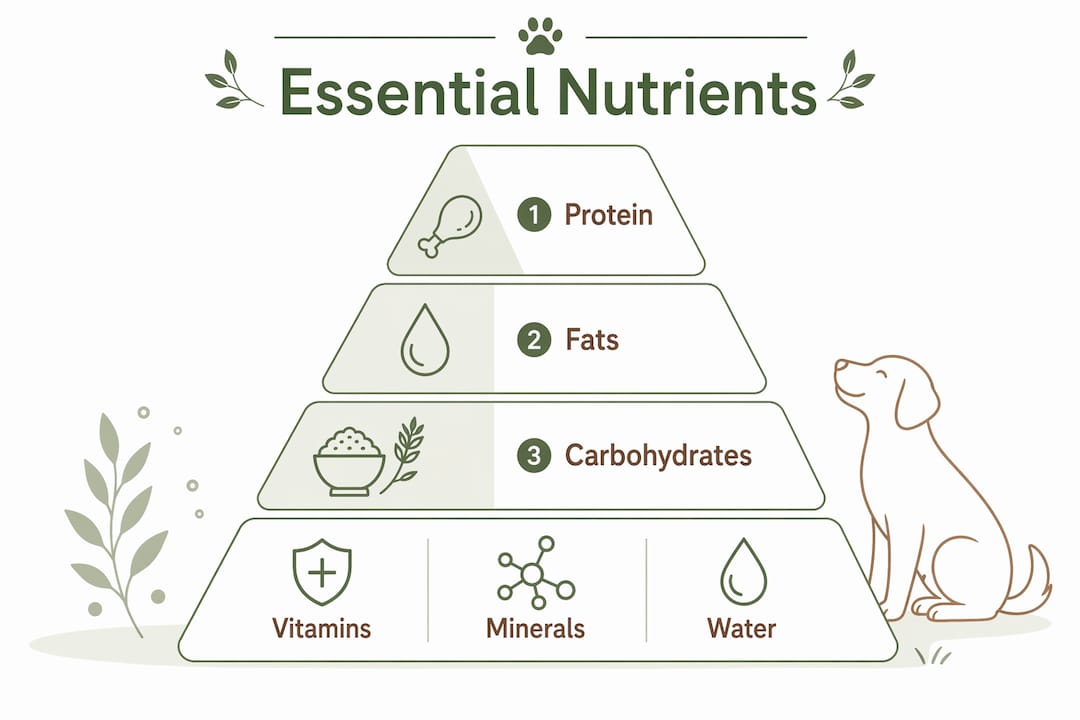
Dogs require six nutrient categories to function: protein, fat, carbohydrates, vitamins, minerals, and water. Each category plays a distinct biological role, and no single one can substitute for another.

Protein supplies amino acids that build muscle, repair tissue, and support immune function. Animal-sourced proteins, such as chicken, beef, and fish, deliver a more complete amino acid profile than plant proteins alone. Fat provides the most concentrated energy source and carries fat-soluble vitamins A, D, E, and K into cells. Carbohydrates fuel the brain and gut microbiome, and domestic dogs have evolved digestive adaptations that allow them to process starch more efficiently than their wolf ancestors.
Micronutrients carry outsized importance relative to their tiny quantities. Key minerals include:
- Calcium and phosphorus: critical for bone density and must be kept in a specific ratio, especially in growing puppies
- Zinc: supports skin integrity, wound healing, and immune response
- Iodine: regulates thyroid function and metabolic rate
- Iron: enables red blood cell production and oxygen transport
Vitamins B12, D, and E are among the most commonly deficient in poorly formulated diets. A shortfall in any of these does not produce immediate symptoms, which makes deficiencies easy to miss until serious damage has occurred.
Water is the most overlooked nutrient in dog feeding guides. Water needs roughly equal 1 milliliter per kilocalorie consumed, adjusted for activity level, ambient temperature, and life stage. A dog eating 1,000 kilocalories per day needs approximately 1 liter of water. Dry kibble delivers very little moisture, so dogs on kibble-only diets need consistent access to fresh water throughout the day.
Pro Tip: Add a small amount of low-sodium broth to your dog's water bowl if they consistently drink less than expected. Increased palatability often closes the hydration gap without changing the diet itself.
How do scientific feeding trials and regulatory standards ensure nutritional adequacy?
The AAFCO feeding trial is the gold standard for verifying that a dog food actually sustains health in real animals. A passing adult maintenance trial requires a minimum of 26 weeks of consistent feeding with monitored health markers. That is not a formality. It is the difference between a food that looks nutritionally complete on paper and one that has been proven to work inside a living dog.
Two paths exist for labeling a food "complete and balanced":
- Nutrient profile formulation: The manufacturer calculates nutrient levels against AAFCO minimums using ingredient data. No dogs are fed. No health outcomes are measured.
- Feeding trial validation: Dogs are fed the food for at least 26 weeks. Blood chemistry, body weight, coat condition, and other health markers are tracked throughout.
The distinction matters enormously. Feeding trials capture bioavailability and palatability, two factors that calculations alone cannot predict. A mathematically perfect formula can still fail in a real dog if ingredient interactions reduce absorption or if processing destroys heat-sensitive nutrients.
"AAFCO standards are minimums. Protein bioavailability and manufacturing rigor determine true diet quality beyond what the label guarantees."
The World Small Animal Veterinary Association (WSAVA) goes further than AAFCO. WSAVA recommends selecting brands that employ board-certified veterinary nutritionists, conduct internal and external quality testing, and publish peer-reviewed research. A brand that meets WSAVA criteria has cleared a significantly higher bar than the regulatory minimum.
Pro Tip: Look for the phrase "animal feeding tests using AAFCO procedures" on the label, not just "formulated to meet AAFCO nutrient profiles." The first phrase signals a real feeding trial was conducted.
What impact does diet composition and processing have on dog health?
Diet format changes how nutrients reach the bloodstream. Minimally processed diets produce statistically significant improvements in fecal consistency and lower post-meal blood glucose response compared to extruded (kibble) diets. Better glycemic control reduces the metabolic stress that contributes to obesity and insulin resistance over time.
| Diet format | Glycemic response | Fecal quality | Processing impact |
|---|---|---|---|
| Minimally processed (raw, gently cooked) | Lower post-meal glucose spike | Firmer, more consistent | Retains heat-sensitive nutrients |
| Extruded (kibble) | Higher post-meal glucose spike | More variable | High-heat processing reduces some nutrient availability |
Carbohydrates deserve a nuanced read. Dogs tolerate starch better than cats, but excessive carbohydrate intake increases obesity and insulin resistance risk. Carbohydrates are not inherently harmful. The problem is energy loading: when carbohydrate-dense foods push total caloric intake above a dog's actual energy requirement, fat accumulates. The fix is not eliminating carbs. It is calibrating total energy intake to the dog's specific metabolic needs.
Protein quality and sourcing also shape health outcomes in ways the guaranteed analysis panel does not reveal. A food listing "chicken meal" as the first ingredient may deliver excellent amino acid bioavailability. A food listing "poultry by-product meal" from an unspecified source may not. Quality control at every manufacturing stage is what keeps nutrient profiles consistent from batch to batch. Unexplained reformulations, which happen more often than owners realize, can quietly compromise a diet that was previously working well.
How should feeding frequency, portion size, and life stage be managed?
Portion control is the single most direct lever for obesity prevention. The nutritional needs for dogs vary significantly by breed size, activity level, age, and reproductive status. A 10-pound Chihuahua and a 90-pound Labrador Retriever eating the same caloric density per cup of food will have completely different health outcomes.
Key feeding adjustments by life stage:
- Puppies (small and medium breeds): require higher protein and fat density to support rapid tissue growth; feed 3 times daily until 6 months, then twice daily
- Large breed puppies: need controlled calcium-phosphorus ratios and moderate caloric density to prevent developmental orthopedic disease linked to rapid growth; never supplement calcium beyond what a complete large-breed puppy food already provides
- Adult dogs: twice-daily feeding supports stable blood glucose and reduces begging behavior compared to once-daily feeding
- Senior dogs: metabolic rate declines with age; caloric needs drop while protein needs often stay the same or increase to preserve muscle mass
Body condition score (BCS) is the most reliable field tool for portion adjustment. A dog at ideal BCS has ribs that are easily felt but not visibly prominent, a visible waist from above, and an abdominal tuck from the side. If ribs are hard to feel, reduce portions by 10% and recheck in two weeks. A pet nutrition assessment done every 3–6 months catches weight drift before it becomes a clinical problem.
| Life stage | Feeding frequency | Key nutrient focus |
|---|---|---|
| Puppy (under 6 months) | 3x daily | High protein, DHA, controlled calcium |
| Puppy (large breed) | 2–3x daily | Controlled calcium-phosphorus ratio |
| Adult | 2x daily | Energy balance, lean body mass |
| Senior | 2x daily | High protein, joint support nutrients |
Pro Tip: Weigh your dog monthly and log the number. A 5% weight gain over 60 days is a clear signal to reduce portions before the trend becomes obesity.
Key takeaways
Feeding dogs properly requires meeting nearly 40 essential nutrients daily, validating food quality through AAFCO feeding trials, and adjusting portions to each dog's breed, age, and metabolic rate.
| Point | Details |
|---|---|
| Nearly 40 nutrients required | Missing even one can cause bone, immune, or organ damage over time. |
| AAFCO feeding trials are the standard | Look for "animal feeding tests" on the label, not just "formulated to meet" language. |
| Diet processing affects health outcomes | Minimally processed diets produce lower glycemic response and better stool quality than extruded kibble. |
| Life stage drives portion needs | Large breed puppies, seniors, and active adults each require different caloric density and nutrient ratios. |
| Body condition score guides adjustments | Check BCS every 3–6 months and adjust portions by 10% increments based on what you find. |
What most dog owners get wrong about feeding science
I have spent years reviewing feeding plans and talking with dog owners who are genuinely trying to do right by their pets. The most common mistake is not feeding the wrong food. It is feeding the right food in the wrong amount and then never checking whether it is working.
Labels give you a starting point, not a prescription. The feeding guidelines printed on a bag are calculated for an average dog at average activity. Your dog is not average. A neutered, indoor Beagle with a slow metabolism needs meaningfully fewer calories than the bag suggests. An intact, working Border Collie needs more. The label cannot know that. You have to observe, measure, and adjust.
Homemade diets are the other area where I see well-intentioned owners cause real harm. The time lag between nutrient deficiency and clinical signs can stretch months or years. A dog eating a calcium-deficient homemade diet may look perfectly healthy for 18 months before a stress fracture reveals the problem. By then, the damage is done. If you want to feed homemade, work with a board-certified veterinary nutritionist who can formulate a recipe specific to your dog's weight, breed, and life stage.
Hydration is the most underestimated variable in dog nutrition. Owners focus on protein percentages and ingredient lists while ignoring whether their dog is actually drinking enough water. Chronic mild dehydration impairs kidney function, digestion, and nutrient absorption quietly over time. Check the water bowl. Refill it twice a day. It costs nothing and matters more than most premium ingredient upgrades.
— Robert
How Bowlful brings feeding science to your dog's bowl

Bowlful was built on the same scientific principles covered in this article. The platform uses the Resting Energy Requirement (RER) formula, the same calculation veterinarians use, to generate feeding plans calibrated to your dog's specific breed, weight, and life stage. Research shows that lean-fed dogs may live 1.8 years longer than their overweight counterparts. Bowlful translates that finding into a practical, personalized plan rather than a generic portion suggestion. Dog owners who want science-backed guidance without a veterinary nutrition consultation can build a feeding plan through Bowlful's interactive quiz and get a starting point grounded in real data.
FAQ
What does "complete and balanced" mean on a dog food label?
"Complete and balanced" means the food meets AAFCO minimum nutrient standards for the stated life stage. It does not guarantee optimal health or high ingredient quality.
How many essential nutrients do dogs need daily?
Dogs require nearly 40 essential nutrients daily, including amino acids, fatty acids, vitamins, minerals, and water. Missing any one of them can cause health problems over time.
Are feeding trials better than nutrient profile formulation?
Feeding trials are more reliable because they measure real health outcomes in live dogs over at least 26 weeks. Formulation alone cannot account for bioavailability or ingredient interactions.
How do I know if my dog is at a healthy weight?
Use the body condition score scale. A dog at ideal weight has easily felt but not visible ribs, a visible waist from above, and a clear abdominal tuck from the side.
Is homemade dog food safe?
Homemade dog food can be safe when formulated by a board-certified veterinary nutritionist. Without expert formulation, homemade diets frequently miss critical micronutrients, with deficiencies that may not appear clinically for months or years.