
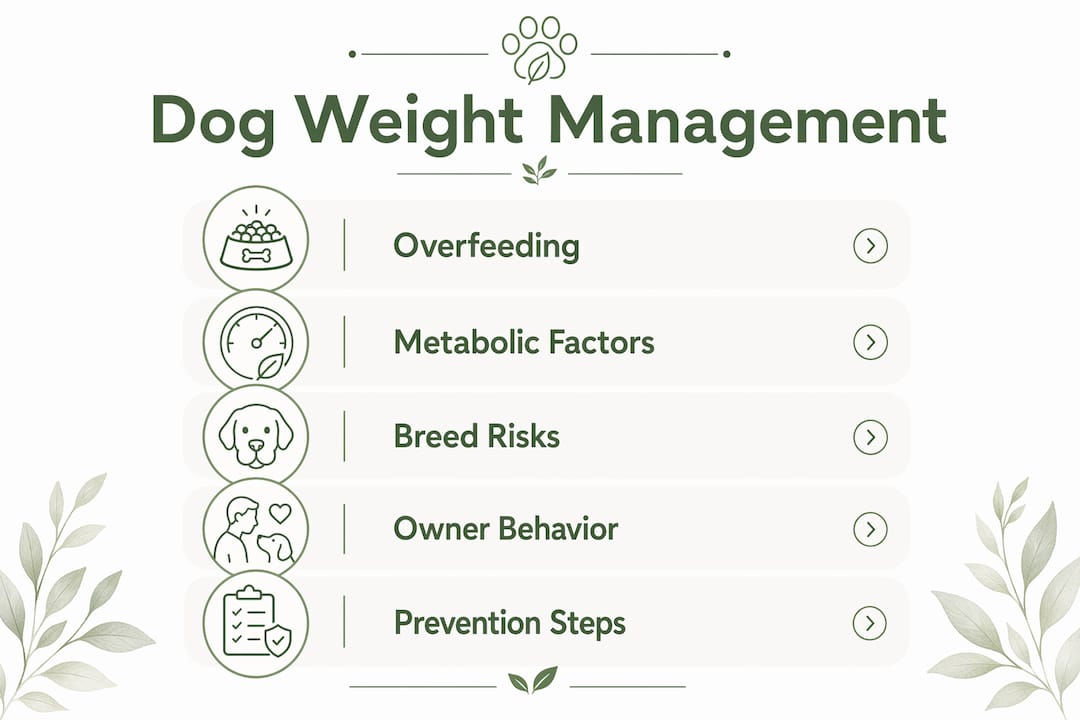
Overfeeding is the primary cause of weight gain in modern dogs, but the full picture is far more complex. Approximately 50% of the global dog and cat population is now classified as overweight or obese. That number reflects a crisis shaped by metabolic biology, owner behavior, breed genetics, and indoor lifestyles. The Association for Pet Obesity Prevention (APOP) and the Global Pet Obesity Initiative both track this trend, and neither points to a single fix. Understanding why modern dogs gain weight means looking past the food bowl.
Why modern dogs gain weight: the overfeeding problem
Overfeeding is the primary driver of dog obesity, outweighing lack of physical activity as a cause. Dr. Gene Pavlovsky, a veterinary expert, states that diet plays the most critical role in canine weight gain. That finding matters because many dog owners focus on walks and play while leaving portion sizes unchecked.
The most common feeding mistakes are not dramatic. They are small, daily errors that compound over months.
- Measuring food with a coffee mug or heaping cup instead of a kitchen scale
- Adding table scraps "just this once" multiple times per week
- Giving treats from multiple family members without tracking the total
- Feeding a second meal because the dog appears hungry after the first
- Choosing calorie-dense commercial foods without checking the kilocalorie count per cup
Calorie-dense commercial dog foods are a silent contributor. A single cup of some premium dry foods contains over 500 kilocalories. A medium-sized dog may only need 700–900 kilocalories per day. One generous scoop at breakfast and another at dinner can push a dog well past its daily limit without the owner realizing it.
A phenomenon called "weight blindness" makes this worse. Gradual weight gain of 1–2 pounds per year becomes the new normal for owners, making it nearly impossible to recognize obesity until it is significant. The dog looks the same as it did last year. The year before that, too.

Pro Tip: Switch from measuring cups to a kitchen scale. Cups vary by how tightly food is packed. A scale gives you the same amount every single time, which is the only way to control calories accurately.
What metabolic factors make dog weight gain harder to reverse?
Biology works against dieting dogs in ways most owners never expect. Fat tissue is an active endocrine organ that secretes leptin, a hormone that drives systemic inflammation. That inflammation damages joints independently of the mechanical pressure of carrying extra weight. An overweight dog's joints hurt not just because of the load, but because fat is chemically attacking them.
| Physiological factor | How it works | Impact on weight management |
|---|---|---|
| Leptin secretion from fat | Fat tissue releases leptin, triggering inflammation | Joint pain worsens even with modest excess weight |
| Ghrelin response to restriction | Calorie cuts raise hunger hormone levels | Dogs beg more, owners cave more often |
| POMC gene mutation (Labradors) | Impairs satiety signaling in the brain | Dog never feels full, requires strict portion control |
| Metabolic adaptation | Body slows calorie burn in response to restriction | Weight loss plateaus faster than expected |
Calorie restriction triggers a hormonal counterattack. Cutting calories raises ghrelin, the hunger hormone, which intensifies food-seeking behavior. The dog begs harder. The owner feels guilty. The diet collapses. This gut-brain feedback loop is one of the most documented reasons weight-loss plans fail.
Certain breeds carry genetic disadvantages. Labradors with the POMC gene mutation cannot accurately sense when they are full. Their brain never receives a clear "stop eating" signal. For these dogs, strict portion control is not optional. It is the only tool that works.
Pro Tip: Exercise supports health, but it rarely reverses obesity on its own. A 30-minute walk burns roughly 100–150 kilocalories. One dog biscuit can replace all of that. Address the calories first.
How owner behavior drives dog obesity
Weight-loss plans frequently fail because they focus only on food changes and ignore the behavioral relationship between owners and their dogs. The human side of the equation is just as important as the canine side.
Here are the four most common behavioral barriers, and what actually works against each one.
-
Owner guilt after restricting food. When a dog begs intensely after a diet starts, owners interpret it as suffering. The fix is to split the daily food allowance into three or four small meals instead of two. The dog eats the same total calories but feels fed more often.
-
Family members feeding independently. One person follows the plan. Another gives a treat at lunch. A third slips scraps at dinner. The solution is a single household rule: all food, including treats, comes from one designated daily allowance tracked by one person.
-
Emotional feeding as bonding. Many owners use food to express love. Replacing treat-giving with a five-minute play session or a grooming routine satisfies the bonding need without adding calories.
-
Weight blindness blocking early action. Owners who fail to recognize gradual weight gain miss the window for easy intervention. Monthly weigh-ins at the vet, or at home using a bathroom scale and body weight comparison, catch the problem early.
Puzzle feeders and food-based enrichment also help. Spreading kibble across a snuffle mat or hiding it in a Kong toy slows eating, engages the dog's brain, and mimics the natural hunting behavior dogs evolved for. The dog works for its food instead of inhaling it in 30 seconds. That change alone reduces the sense of deprivation that drives begging.
How breed, activity level, and lifestyle shape obesity risk
Certain breeds carry a higher genetic predisposition to obesity than others. Labradors, Cocker Spaniels, Beagles, and Basset Hounds appear consistently on veterinary obesity risk lists. Brachycephalic breeds like Bulldogs and Pugs face a compounding problem: their breathing difficulties limit exercise capacity, making calorie burn harder to achieve.
| Risk category | Breed examples | Key vulnerability |
|---|---|---|
| Genetic satiety impairment | Labrador Retriever | POMC mutation, never feels full |
| Exercise-limited breeds | Bulldog, Pug | Breathing issues reduce activity tolerance |
| High food motivation | Beagle, Cocker Spaniel | Strong scavenging drive, prone to overeating |
| Senior dogs (any breed) | All breeds over 7 years | Slower metabolism, reduced activity |
Sedentary indoor lifestyles reduce energy expenditure significantly compared to the activity patterns dogs evolved with. A dog that once roamed several miles daily now spends most of its time on a couch. Calorie intake has not dropped to match that reduced output.
The relationship between joint pain and inactivity creates a vicious cycle. An overweight dog's joints hurt. Pain reduces the desire to move. Less movement means fewer calories burned. Weight increases. Joint pain worsens. Breaking this cycle requires addressing both weight and joint comfort at the same time, often with veterinary guidance on low-impact exercise like water walking or swimming.
Managing the environment matters as much as managing the diet. A dog that cannot access the kitchen counter, the trash, or unsupervised family meals has fewer opportunities to consume extra calories. Physical barriers are a legitimate weight management tool.
How to prevent and manage weight gain in your dog
A 10–15% reduction in body weight produces measurable improvements in joint pain and mobility. That is not a dramatic transformation. It is a realistic, achievable target that makes a real difference in a dog's daily comfort.
The most effective approach combines several strategies at once.
- Measure every meal by weight, not volume, using a kitchen scale
- Eliminate table scraps entirely, without exceptions
- Replace high-calorie treats with low-calorie alternatives like carrot slices or plain cooked chicken
- Split daily food into three or four small meals to reduce hunger between feedings
- Use puzzle feeders or scatter feeding to slow consumption and increase mental engagement
- Incorporate low-impact exercise appropriate to the dog's joint health, such as leash walks on soft ground or water-based activity
- Schedule a veterinary check to rule out medical causes like hypothyroidism or Cushing's syndrome before starting a diet
A personalized feeding plan based on the dog's current weight, target weight, and life stage removes the guesswork from portion sizing. Generic feeding guides on food packaging are calculated for average dogs. Your dog may need significantly less.
Pro Tip: Ask your vet to calculate your dog's Resting Energy Requirement (RER). This formula, used by veterinarians, gives a precise daily calorie target based on your dog's body weight. It is far more accurate than any bag label.
Excess weight shortens a dog's lifespan by up to 2.5 years and raises the risk of diabetes, heart disease, and cancer. Sustainable weight loss requires gradual changes, owner support, and consistent follow-through, not a crash diet that collapses in two weeks.
Key Takeaways
Dog obesity is a multifactorial condition driven by overfeeding, metabolic biology, breed genetics, and owner behavior, and reversing it requires addressing all four simultaneously.
| Point | Details |
|---|---|
| Overfeeding is the core cause | Excess calorie intake outweighs inactivity as the primary driver of dog weight gain. |
| Metabolism fights back | Calorie restriction raises ghrelin, intensifying begging and making diet plans harder to sustain. |
| Breed genetics matter | Labradors with the POMC mutation never feel full, requiring strict, measured portion control. |
| Owner behavior shapes outcomes | Guilt-driven treating and weight blindness are the most common reasons weight-loss plans fail. |
| Modest weight loss delivers results | A 10–15% body weight reduction measurably improves joint pain, mobility, and overall health. |
What I've learned from watching owners struggle with dog weight
The hardest part of managing a dog's weight is not the dog. It is the owner. I have watched well-intentioned people follow a precise feeding plan for three weeks, then abandon it the moment their dog looked at them with those eyes during dinner. That moment is not a failure of willpower. It is a hormonal feedback loop playing out in real time, with ghrelin driving the dog's behavior and guilt driving the owner's response.
What I have found is that owners who succeed long-term do not rely on discipline alone. They redesign the environment. They put the treat jar out of sight. They brief every family member. They swap the food bowl for a puzzle feeder. They make the right choice the easy choice, not the hard one.
The metabolic and genetic factors are real, and they deserve more attention than they get. A Labrador with a POMC mutation is not being greedy. Its brain is genuinely not receiving the signal that it is full. Knowing that changes how you respond to the begging. You stop feeling manipulated and start managing a medical reality.
The research on lean-fed pets living longer is not abstract. It translates to more years of morning walks, more years of companionship, more years of a healthy dog beside you. That is worth the effort of measuring a cup of kibble on a scale.
— Robert
Bowlful's approach to dog weight and nutrition
Dog weight management works best when it starts with the right numbers, not guesswork. Bowlful builds personalized feeding plans using the Resting Energy Requirement (RER) formula, the same calculation veterinarians use to determine precise daily calorie targets.
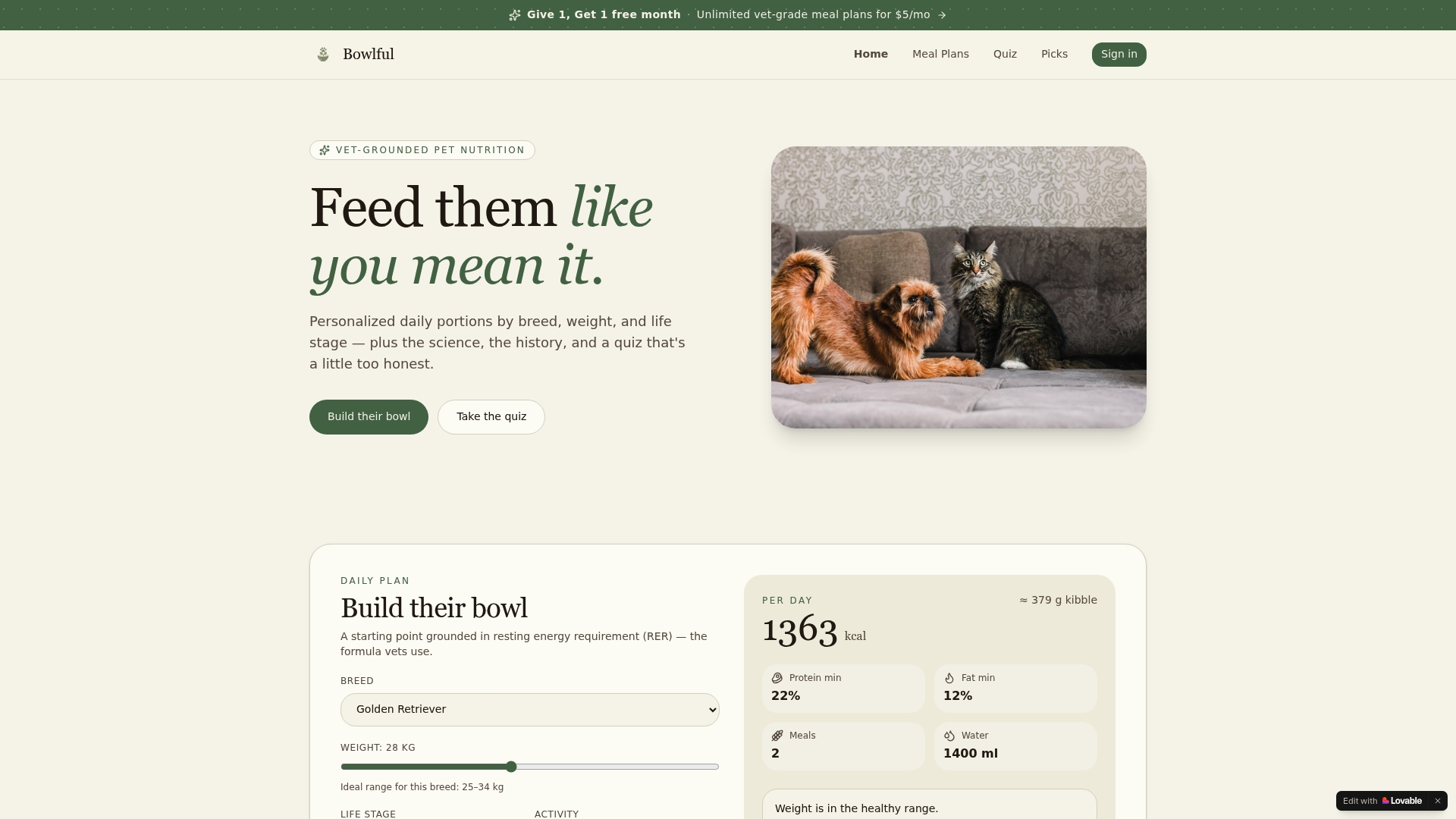
Every plan at Bowlful is tailored to your dog's breed, current weight, and life stage. The process starts with a short quiz that takes less than two minutes. The result is a feeding plan built for your specific dog, not an average one. For dog owners who want nutrition guidance grounded in science, Bowlful offers a clear, practical starting point.
FAQ
What is the main cause of weight gain in dogs?
Overfeeding is the primary cause of dog obesity, outweighing lack of exercise as a driver. Calorie-dense commercial foods and inaccurate portion measurement are the most common contributing factors.
Why do dogs keep gaining weight even on a diet?
Calorie restriction raises ghrelin, a hunger hormone that intensifies begging and food-seeking behavior. This hormonal response often leads owners to give extra treats, undermining the diet plan.
Which dog breeds are most prone to obesity?
Labradors, Beagles, Cocker Spaniels, and brachycephalic breeds like Bulldogs carry the highest obesity risk. Labradors with the POMC gene mutation are especially vulnerable because their brains do not register fullness accurately.
How much weight loss actually helps a dog's joints?
A body weight reduction of 10–15% produces measurable improvements in joint pain and mobility. Fat tissue also secretes leptin, which drives inflammation, so even modest weight loss reduces chemical damage to joints.
How do I know if my dog is overweight?
Monthly weigh-ins and a body condition score assessment from your veterinarian are the most reliable methods. Weight blindness, where gradual gain goes unnoticed, makes owner observation alone an unreliable measure.