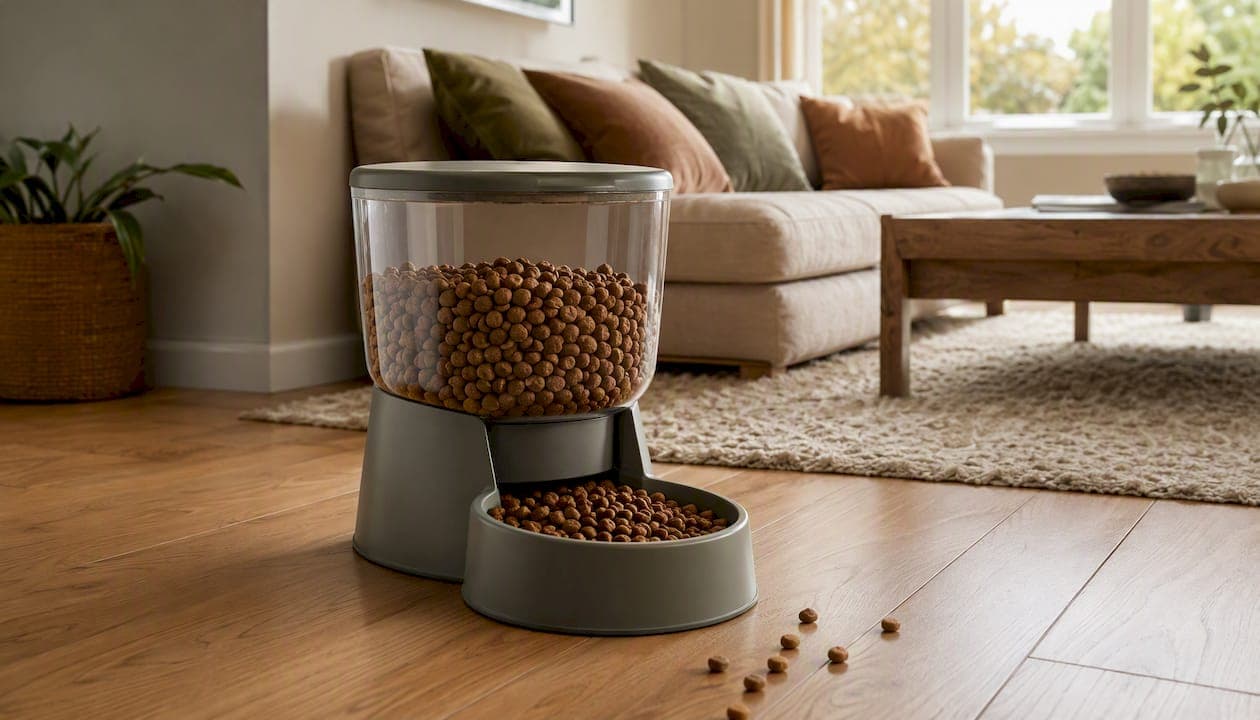
Free-feeding causes dog obesity because it removes the one tool that keeps caloric intake in check: portion control. When food sits available all day, most dogs eat past their energy needs, and the excess accumulates as fat, quietly, meal after meal. The fix starts today: measure exactly how much food is currently in your dog's bowl, stop topping it up, and write down what your dog actually consumes in 24 hours. That single act of measurement is the foundation of every effective weight-management plan.
Three steps to take right now:
- Measure your dog's current daily food intake using a kitchen scale (grams, not cups).
- Stop refilling the bowl between scheduled mealtimes.
- Set two fixed feeding windows, morning and evening, and remove the bowl after 20 minutes.
Key Takeaways
Free-feeding is the most common, most preventable cause of dog obesity, and switching to measured, scheduled meals is the single highest-impact change most owners can make.
| Point | Details |
|---|---|
| Free-feeding removes portion control | Without measured meals, daily caloric surplus accumulates silently and drives steady weight gain. |
| Obesity is inflammatory, not just mechanical | Excess fat tissue produces inflammatory mediators that raise risk for arthritis, diabetes, and cardiac disease. |
| BCS lets you assess weight at home | Feel for ribs, check for a visible waist from above, and look for an abdominal tuck from the side. |
| Safe weight loss is gradual | Target roughly 1–2% of body weight per week; faster restriction risks muscle loss and requires vet supervision. |
| Bowlful provides vet-formula meal plans | Personalized RER/MER-based plans with exact gram portions replace guesswork with precision. |
Table of Contents
- What does free-feeding actually look like at home?
- Why free-feeding causes dog obesity: the mechanisms behind the weight gain
- How obesity harms your dog beyond the extra weight
- How to tell if your dog is already overweight
- How to stop free-feeding: practical alternatives that work in real households
- When should you involve a veterinarian?
- Quick dos and don'ts for healthier feeding habits
- Bowlful gives you a personalized plan, not a generic portion guide
- Sources
What does free-feeding actually look like at home?
Free-feeding, also called ad libitum feeding, means food is available to your dog at all times. The bowl is never empty. In practice, it shows up in several ways most owners don't immediately recognize as a problem.
The most common pattern is a gravity feeder left full on the kitchen floor, refilled whenever it runs low. Another is a family member topping up the bowl "just a little" after work, not realizing someone already fed the dog that morning. Pet sitters often default to free-feeding because it feels safer than leaving a dog hungry. In multi-dog homes, a bowl that one dog ignores gets eaten by another, so owners keep adding more to make sure everyone gets enough.
Owners choose it for understandable reasons: it's convenient, it sidesteps mealtime battles with picky eaters, and it feels kinder to let a dog eat whenever they want. The problem is that convenience for the owner translates directly into uncontrolled caloric intake for the dog.
Why free-feeding causes dog obesity: the mechanisms behind the weight gain
The connection between always-available food and excess weight isn't just about quantity. It's behavioral, physiological, and diagnostic all at once.
Behavioral drivers that push dogs to overeat:
- Boredom eating: dogs graze when under-stimulated, the same way people snack in front of a screen.
- Learned habit: a dog who associates the presence of food with eating will return to the bowl repeatedly, regardless of hunger.
- Social competition: in multi-dog households, dogs eat faster and more than they need when another dog is nearby.
- Conditioned response: the smell and sight of available kibble triggers eating even when the dog is not physiologically hungry.
On the physiological side, many dogs simply lack strong satiety signaling. Unlike wolves, who evolved to gorge after a kill and then fast, domestic dogs have been selectively bred around human food environments, and some breeds, Labrador Retrievers being the most studied example, have genetic variants that blunt the "I'm full" signal. Add the high palatability and energy density of modern commercial kibble, and small daily surpluses become inevitable. Research published in NCBI PMC confirms that feeding-pattern changes, specifically moving from measured meals to free-choice access, are a consistently identified, modifiable cause of obesity in otherwise healthy dogs.
There's also a diagnostic problem. Cornell University's College of Veterinary Medicine notes that free-feeding masks appetite changes, one of the earliest and most reliable health signals a dog gives. If the bowl is always full, you won't notice when your dog stops eating with their usual enthusiasm, which can be the first sign of illness, pain, or dental disease.
Pro Tip: To find out whether your dog self-regulates or grazes, weigh a precise portion for one day and note how much remains after 24 hours. A dog who leaves food consistently is a self-regulator. A dog who finishes everything within an hour and returns to check the bowl repeatedly is a grazer who will almost certainly overeat with free access.
How obesity harms your dog beyond the extra weight
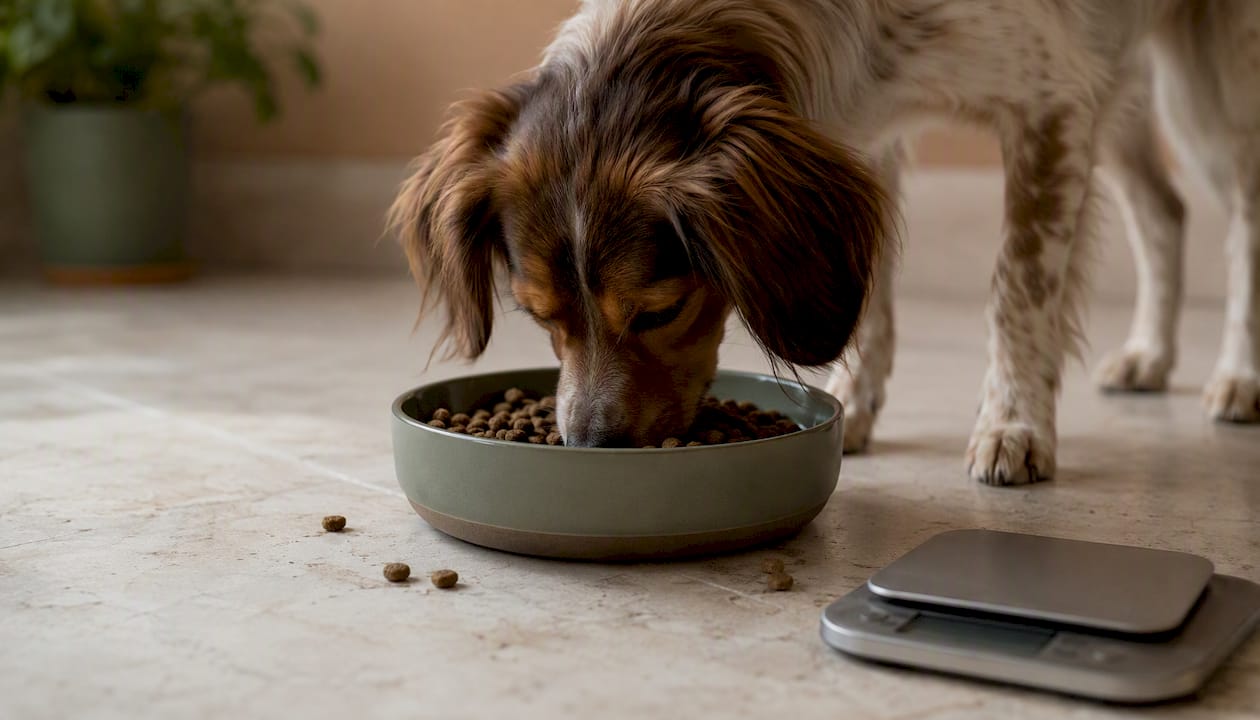
Extra body fat is not a cosmetic issue. VCA Animal Hospitals describes obesity as a chronic, low-grade inflammatory condition, and that framing matters. Adipose tissue isn't inert storage; it actively produces inflammatory mediators that circulate through the body and amplify disease risk far beyond what the mechanical load of extra weight alone would cause.
The major comorbidities are well-documented: osteoarthritis, type 2 diabetes mellitus, cardiovascular strain, increased anesthetic risk, and a higher incidence of certain cancers. A dog carrying excess weight needs more anesthetic agent per kilogram, has reduced respiratory reserve, and takes longer to recover from surgery. For a dog already dealing with joint pain, the inflammatory output from fat tissue makes the pain worse independent of the weight pressing on the joint.
| Condition | Risk increase in obese dogs | Source |
|---|---|---|
| Osteoarthritis | Significantly elevated; fat tissue worsens joint inflammation | VCA Animal Hospitals |
| Type 2 diabetes | Markedly higher risk; excess fat impairs insulin sensitivity | PetMD |
| Anesthetic complications | Higher drug requirements, reduced respiratory reserve | VCA Animal Hospitals |
| Reduced life expectancy | Up to nearly two years shorter in some studies | PetMD |
PetMD reports that depending on the study cohort and definition used, 20–65% of dogs are overweight or obese, and that obesity can shorten a dog's life expectancy by up to nearly two years. That range reflects real variation across populations, but even the low end of that prevalence figure means roughly one in five dogs is carrying dangerous excess weight.
How to tell if your dog is already overweight
You don't need a vet visit to get a first read. The Body Condition Score (BCS), a 9-point scale used by veterinarians, can be approximated at home with your hands and eyes.
Quick BCS self-check:
- Ribs: Run your fingers along your dog's ribcage with light pressure. You should feel each rib without pressing hard. If you have to push firmly to feel them, your dog is likely overweight.
- Waist: Look down at your dog from directly above. There should be a visible narrowing behind the ribs. No visible waist means excess fat.
- Abdominal tuck: View your dog from the side. The belly should rise toward the hind legs, not hang level or sag downward.
- Base of tail: Feel the area around the tail base. Excess fat deposits here are a reliable indicator of overall obesity.
For weighing at home, use a bathroom scale: weigh yourself, then weigh yourself holding your dog, and subtract. Track weekly rather than daily, since normal hydration fluctuations can mask real trends over shorter periods.
Behavioral signs often appear before owners notice the weight visually: reluctance to climb stairs, heavy panting after short walks, lagging behind on routes your dog used to handle easily. By the time these signs are obvious, the dog has usually been overweight for months. A pet nutrition assessment can help you establish a baseline and track changes systematically.
How to stop free-feeding: practical alternatives that work in real households
Switching from free-feeding to scheduled, measured meals is the single most effective step for preventing dog obesity. The transition doesn't need to be stressful if you move through it in stages.
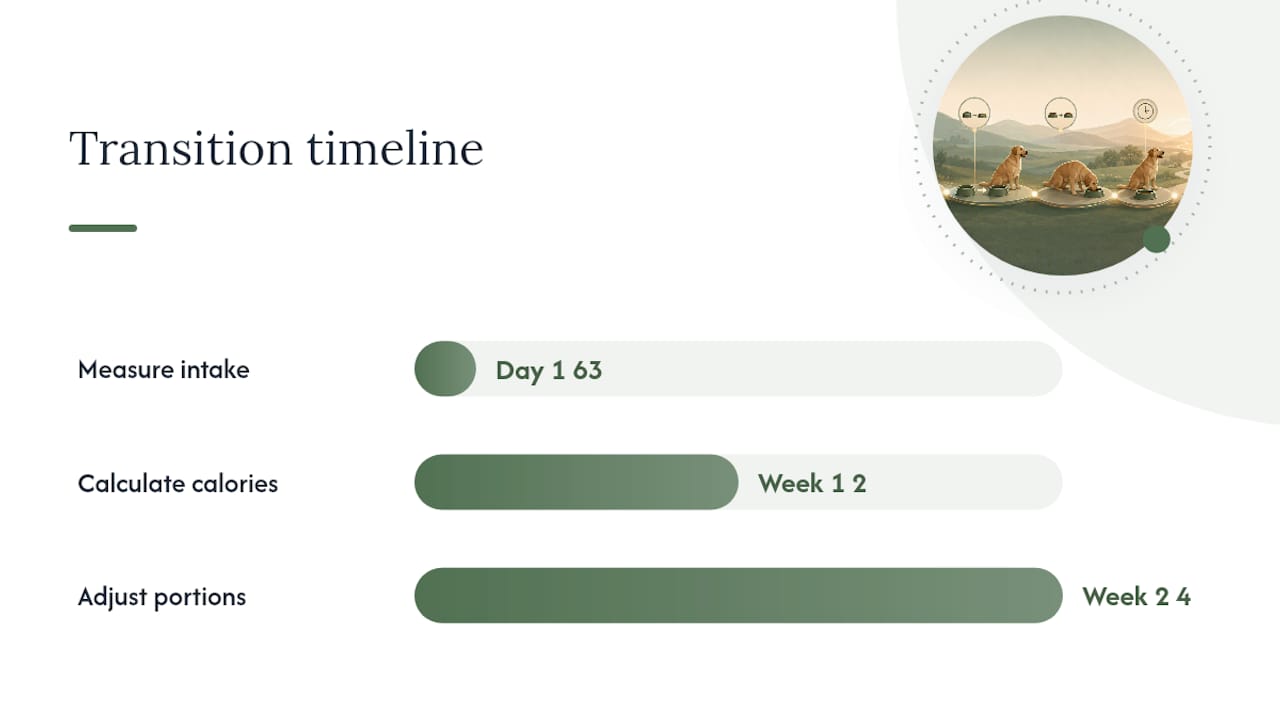
Transition timeline:
- Day 1–3: Measure the current daily amount your dog eats (weigh it). Set two feeding windows, 12 hours apart. Put the bowl down, leave it for 20 minutes, then pick it up regardless of how much was eaten.
- Week 1–2: Calculate your dog's target daily calories using RER (Resting Energy Requirement) as a baseline: RER = 70 × (body weight in kg)^0.75. Multiply by an activity factor (MER) appropriate for your dog's life stage and lifestyle. Your vet or a tool like Bowlful can do this calculation for you.
- Week 2–4: Adjust portions based on weekly weigh-ins. If your dog is losing weight too fast or gaining, recalibrate by 10% increments.
Tools that make this easier:
- A digital kitchen scale (grams are more accurate than cup measures, which vary by kibble shape and density).
- Automatic timed feeders, not gravity feeders, that dispense a set amount at set times.
- Puzzle feeders to slow eating and add mental stimulation, which reduces boredom-driven grazing.
- A treat log: treats should account for no more than 10% of your dog's total daily calories. Count them in, not on top.
For multi-dog households, supervised feeding at separate stations is the most reliable approach. Microchip-activated feeders are worth considering when one dog is on a restricted diet and another is not.
Pro Tip: Before switching food formulas, try controlling portions with your dog's current food for two to four weeks. Many dogs lose weight on the same kibble once portions are accurate. A formula switch makes sense when your vet recommends a higher-fiber, lower-calorie therapeutic diet, not as a first reflex.
Vet-verified guidance from Dogster confirms that scheduled feeding gives owners meaningful control over portions and preserves appetite as a daily health signal, two things free-feeding eliminates entirely.
When should you involve a veterinarian?
Some situations require professional oversight before you change anything about your dog's diet.
Seek prompt veterinary evaluation if your dog shows:
- Rapid, unexplained weight gain over a few weeks.
- Increased appetite (polyphagia) combined with weight gain.
- Excessive thirst or urination alongside weight changes.
- Lethargy, hair loss, or skin changes that accompany the weight gain.
These signs can indicate hypothyroidism, Cushing's disease, or other endocrine conditions that cause weight gain regardless of how carefully you manage food. Free-feeding makes these conditions harder to catch because appetite changes go unnoticed. Once a medical cause is ruled out, your vet will typically set a calorie target based on your dog's ideal body weight, not current weight, using RER and MER calculations, then schedule monthly rechecks to track BCS and adjust the plan.
Safe weight loss in dogs is gradual: roughly 1–2% of body weight per week. Faster restriction risks muscle loss and nutritional deficiencies. Very low-calorie diets should only be used under direct veterinary supervision with regular bloodwork.
Cornell Vet's guidance also points to household behavior as a frequent saboteur: unaccounted treats, table scraps, and multiple family members feeding the dog independently can undo a carefully structured plan. A unanimous household rule is not optional; it's the difference between a plan that works and one that doesn't.
Quick dos and don'ts for healthier feeding habits
Do:
- Weigh food on a kitchen scale at every meal.
- Feed twice daily at consistent times (or follow your vet's recommended schedule).
- Count every treat, training reward, and food topper into the daily calorie total.
- Pick up the bowl after 20 minutes whether or not it's empty.
- Track your dog's weight weekly and log it.
Don't:
- Top up the bowl when it looks low.
- Free-pour kibble by eye or use a coffee mug as a measuring cup.
- Use table scraps as routine rewards; they're calorie-dense and nutritionally unbalanced.
- Let multiple family members feed the dog independently without a shared log.
Pro Tip: Assign one person in the household as the "feeding captain" for the week, rotating if needed, and keep a simple paper log on the fridge showing what was fed and when. This single habit eliminates the most common cause of accidental overfeeding in multi-person homes.
A note on why scheduled feeding and vet formulas matter
At Bowlful, every feeding recommendation is built on the same RER and MER formulas veterinarians use in clinical practice. That's not a marketing claim; it's the reason the numbers actually work. Writing evidence-backed pet nutrition guides has made one thing clear: most dogs don't overeat because their owners don't care. They overeat because no one ever gave their owners a precise, breed- and life-stage-specific calorie target to work from. Scheduled feeding paired with accurate portioning closes that gap, and it's the foundation of everything Bowlful produces.
Bowlful gives you a personalized plan, not a generic portion guide
Most feeding guides hand you a chart from the back of a kibble bag, which is calibrated for the average dog, not yours. Bowlful builds a personalized meal plan using the same RER/MER calorie formulas your vet uses, adjusted for your dog's breed, age, current weight, and activity level.
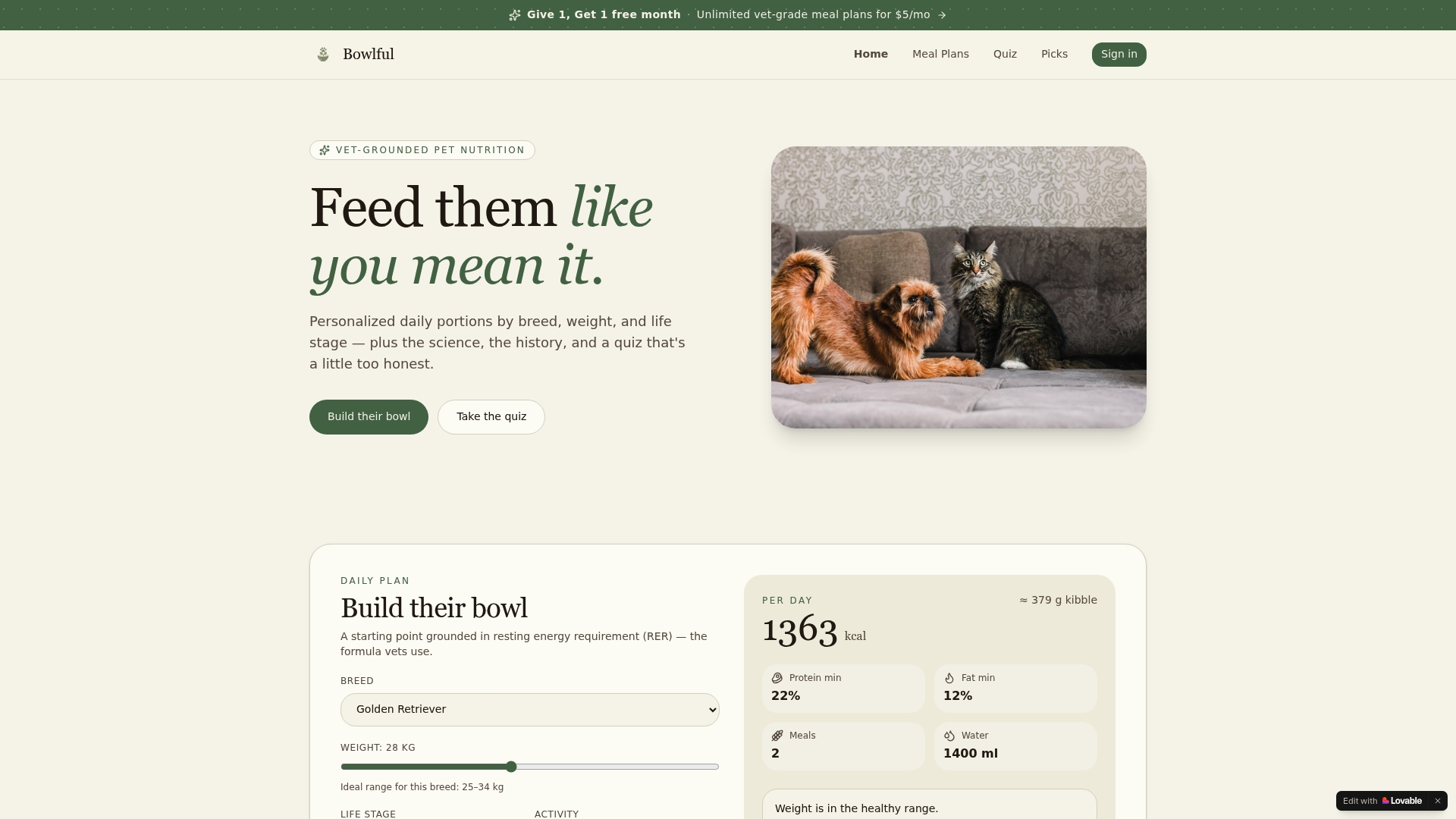
The result is a downloadable meal-plan PDF with exact gram amounts per meal, a feeding schedule, and treat allowances already calculated in. No guesswork, no vague "one to two cups" ranges. If you want to see how it works before committing, start with the free calorie calculator at Bowlful and get your dog's daily calorie target in under two minutes.
Sources
- Obesity and weight loss in dogs | Cornell University College of Veterinary Medicine
- Clinical nutrition / obesity review (PMC6067794) | NCBI PMC
- Scheduled vs free feeding dogs: Vet-verified comparison — Dogster