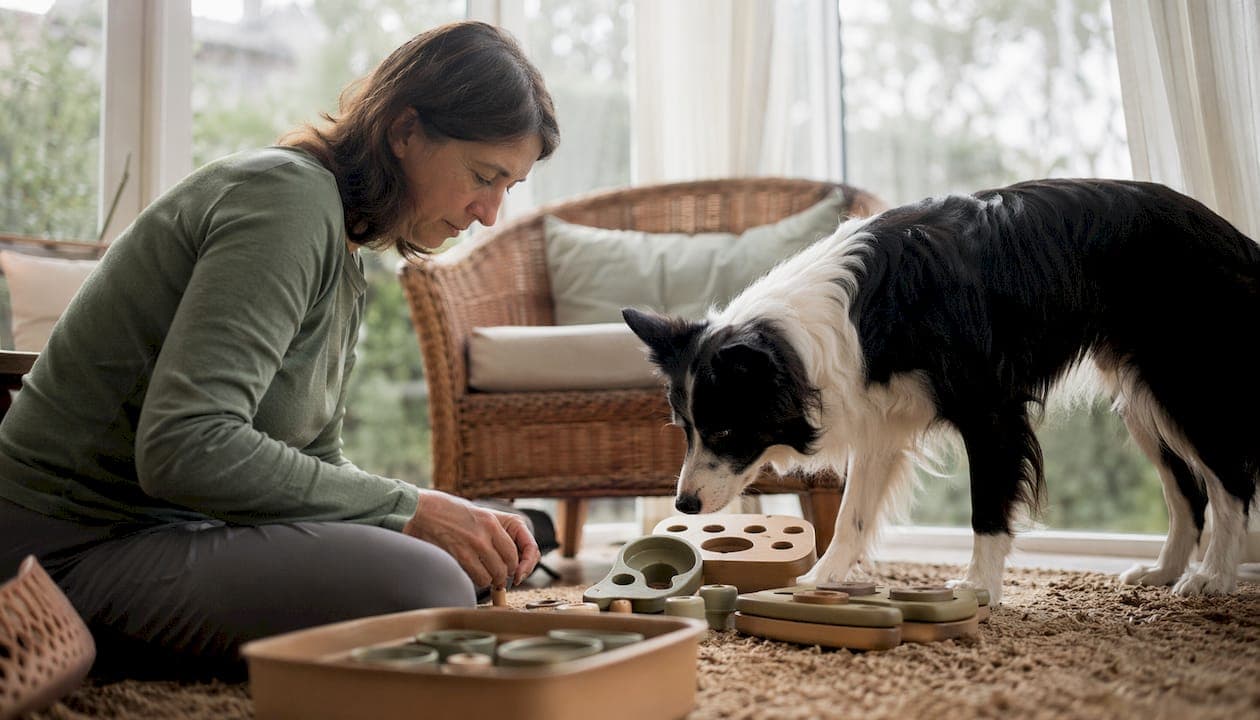
Working breed behavior indoors is defined by deep genetic drives for task completion, problem-solving, and purposeful work that do not switch off when the front door closes. Breeds like German Shepherds, Belgian Malinois, Border Collies, and Siberian Huskies were developed over generations to perform specific jobs. That genetic programming does not disappear in a living room. Without structured outlets, those drives express themselves as barking, destructive chewing, pacing, and hyper-fixation on household objects. The good news is that understanding the root cause makes the solution clear.
What characterizes working breed behavior indoors?
Working drive is a primary motivational system requiring specific behavioral expression, not just a surplus of physical energy. This distinction matters because owners who treat indoor restlessness as a simple exercise deficit often exhaust themselves with longer walks while the dog remains unsatisfied. The dog is not tired. The dog is unfulfilled.
The most common signs of unmet needs in working breeds indoors include:
- Pacing and circling along walls or between rooms, signaling a dog searching for a task
- Destructive chewing targeting furniture, baseboards, or personal items, which mimics the grip and carry work many breeds were bred for
- Excessive barking at sounds, shadows, or nothing at all, reflecting a guarding or alerting drive with no approved target
- Hyper-focus on a specific person, object, or location, which mirrors herding or tracking instincts turned inward
- Demand behaviors like pawing, nudging, or barking at owners, which signal a dog trying to initiate work
Working-line and show-line dogs differ significantly in how intense these behaviors appear. Working-line breeds are genetically programmed for high drive and require structured mental work throughout their lives. Show-line dogs from the same breed may be calmer indoors but still need more engagement than the average pet dog. Knowing your dog's lineage helps you calibrate expectations accurately.
Impulse control is the foundation of good indoor behavior for these dogs. A working breed that cannot hold a sit-stay while you open the front door is a working breed whose drive has no governor. Structured obedience built around impulse control gives that drive a channel.
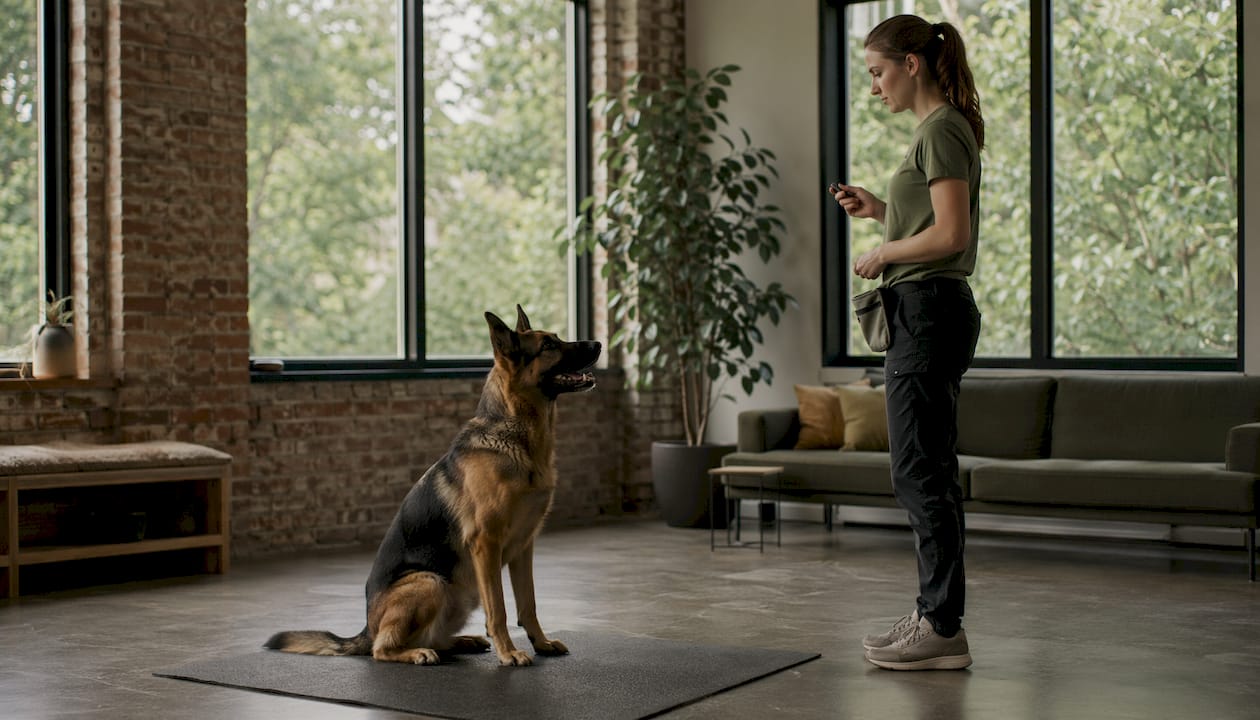
Pro Tip: Before diagnosing your dog's indoor behavior as a training problem, ask whether the dog has had a goal-oriented task that day. A German Shepherd that spent 10 minutes doing scent work is a different animal than one that only went for a walk.
How can owners effectively mentally stimulate working breeds indoors?
Mental fatigue is the most efficient tool for managing high-drive indoor behavior. 10 minutes of structured nose work produces mental fatigue equivalent to a 30-minute walk. That ratio changes everything about how you plan your dog's day.
The most effective mental enrichment methods for working breeds indoors, ranked by cognitive demand:
- Structured scent work. Hide treats or scented objects in progressively harder locations. Start with three boxes on the floor, then move to furniture, then rooms. The dog uses its nose as a tool, which satisfies the scenting and problem-solving drive simultaneously.
- Task chaining. Link two or three behaviors into a sequence: sit, then go to place, then wait for release. This mimics the sequential nature of real working tasks and demands sustained focus.
- Impulse control micro-sessions. Professional K9 handlers recommend 3–5 daily sessions of 2–5 minutes each. Short sessions prevent mental burnout while maintaining motivation across the day.
- Interactive puzzle feeders. Snuffle mats, Kong-style toys, and multi-step puzzle boards require the dog to work for food, turning a passive event into a cognitive challenge.
- Novel object exploration. Introduce a new item, a cardboard box, a crinkled paper bag, or a plastic bottle, and let the dog investigate and interact with it under supervision.
| Method | Time Required | Cognitive Demand |
|---|---|---|
| Structured nose work | 10–15 minutes | Very high |
| Task chaining | 5–10 minutes | High |
| Impulse control drills | 2–5 minutes per session | High |
| Puzzle feeders | 10–20 minutes | Moderate |
| Novel object exploration | 5–10 minutes | Moderate |
Indoor enrichment transforms a living space into a mental workplace where dogs satisfy genetic needs through goal-oriented tasks. Treat your home as the dog's office, not just its resting space.
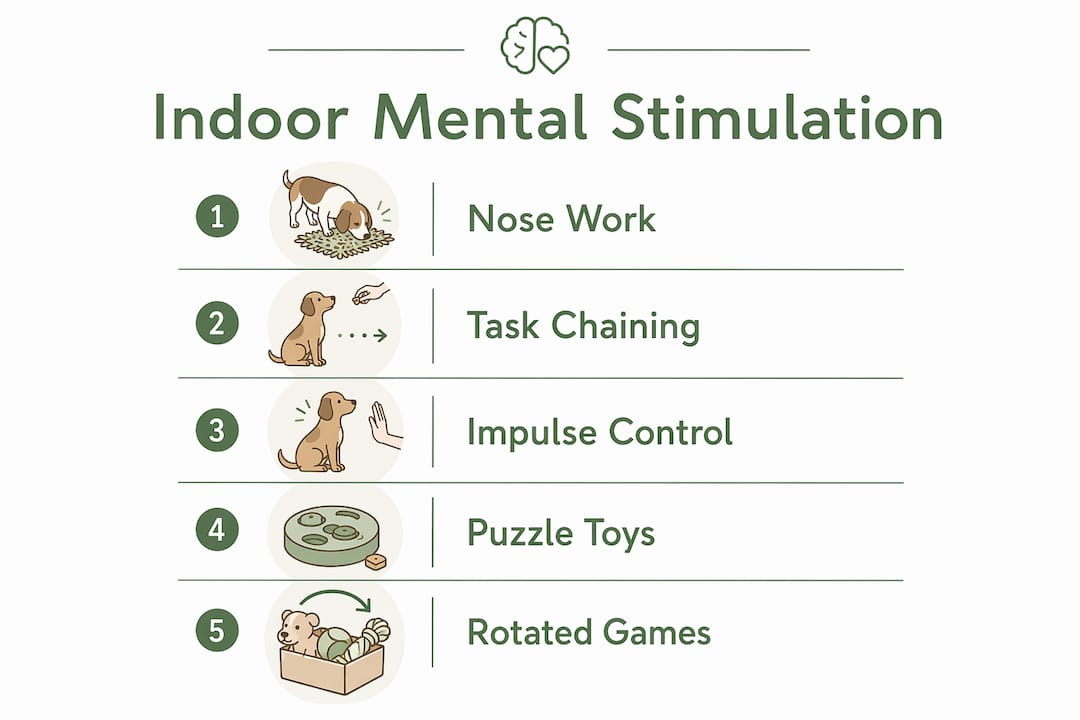
Pro Tip: Rotate puzzle toys every few days. A working breed solves a puzzle once and remembers the solution. Novelty is what keeps the cognitive demand high.
What physical activities and controlled play support indoor working breed behavior?
Physical activity indoors works best when it includes rules. Unstructured play can actually increase arousal in high-drive dogs rather than reduce it. The goal is controlled movement that reinforces calm behavior as the default state.
Effective indoor physical activities include:
- Structured fetch with a release cue. The dog must sit and wait before you throw the toy. This turns fetch into an impulse control exercise, not just a cardio drill.
- Indoor agility and obedience drills. Use furniture, cushions, and hallways to create simple obstacle sequences. A dog that weaves around chair legs on command is practicing body awareness and focus at the same time.
- Tug with rules. Tug is a natural outlet for grip-drive breeds. The rule is that the dog drops on command every time. This keeps the game from escalating into resource guarding.
- Safe chew toys. Durable rubber chews, bully sticks, and antlers satisfy the oral fixation that many working breeds carry. Chewing also lowers cortisol, which means a dog that chews appropriately is a calmer dog.
Place training is the single most underused tool for managing working breed energy indoors. Teaching a dog to go to a specific mat or bed on cue and remain there until released builds the settle behavior that owners want. Predictable routines help dogs know when to work and when to relax, which is the core of indoor harmony.
Pro Tip: Practice place training during low-arousal moments first, not when the dog is already wound up. Build the behavior when it is easy, then apply it when it matters.
How to recognize and manage common indoor behavioral challenges of working breeds?
Behavioral deterioration follows a predictable pattern when working breeds do not get sufficient mental and physical engagement. Working dogs typically show signs of behavioral breakdown, including excessive barking, destructive chewing, and pacing, within 4 weeks of unmet enrichment needs. Four weeks is not a long time. Many owners attribute the change to adolescence or stubbornness when the real cause is a job deficit.
The most common indoor behavioral challenges and their root causes:
- Destructive chewing traces back to grip, carry, and retrieve drives with no approved outlet
- Demand barking reflects an alerting or herding drive that has found a target: you
- Separation anxiety in working breeds often stems from over-attachment formed when the dog has no independent task to focus on
- Obsessive behaviors like shadow chasing or light fixation signal a dog whose prey drive has latched onto the only moving stimulus available
The correct response to these behaviors is redirection, not punishment. Redirecting instinctual drives into authorized work produces mental satisfaction and voluntary rest. Punishing the behavior without providing an alternative leaves the drive intact and the dog more frustrated.
Allowing a working breed to self-direct its energy without structure does not satisfy the drive. It trains the dog to invent its own jobs, and those jobs are rarely ones you approve of. Structure is not restriction. It is the framework that lets the dog succeed.
Clear boundaries, consistent daily routines, and calm-down cues like "settle" or "place" give the dog a map for how to behave indoors. Consistency reduces anxiety by signaling to the dog when it is time to be active and when it is time to rest.
How does feeding routine and schedule influence indoor behavior in working breeds?
Feeding is one of the most underused tools for managing indoor behavior in working breeds. Feeding as mental enrichment, using puzzle feeders, layered box challenges, and novel food games, channels natural problem-solving and prevents boredom between training sessions.
Practical feeding enrichment methods include:
- Snuffle mats and scatter feeding. Spread kibble across a snuffle mat or grass patch and let the dog forage. This activates scent-driven problem-solving for 10–20 minutes per meal.
- Towel roll challenges. Roll kibble into a towel and tie loose knots. The dog must unroll and untie the towel to access food.
- Layered box challenges. Place food inside a small box, inside a larger box, with crumpled paper as filler. The dog works through layers to find the reward.
- Kong-style frozen feeders. Stuff a rubber toy with wet food or peanut butter and freeze it. A frozen feeder can occupy a high-drive dog for 20–30 minutes.
Consistency in feeding times also supports mental rhythm. A dog that eats at the same time each day builds an internal schedule that reduces anxiety and makes training sessions more effective. A reliable feeding routine is not just about nutrition. It is a behavioral anchor for the entire day.
For working breeds with high activity levels, caloric needs vary significantly from sedentary dogs. A feeding schedule built for working dogs accounts for energy output, life stage, and breed-specific metabolism, which directly affects how settled and focused the dog is indoors.
Key Takeaways
Working breed behavior indoors is driven by genetic task-seeking drives that require structured mental enrichment, impulse control training, and consistent routines to channel productively and maintain household harmony.
| Point | Details |
|---|---|
| Mental work beats physical exercise | 10 minutes of nose work produces the same mental fatigue as a 30-minute walk. |
| Short training sessions work best | Use 3–5 daily micro-sessions of 2–5 minutes to build focus without burnout. |
| Redirection beats punishment | Channel instinctual drives into approved tasks to reduce misbehavior and increase rest. |
| Feeding is enrichment | Puzzle feeders and scatter feeding turn meals into cognitive challenges that satisfy problem-solving drives. |
| Routine reduces anxiety | Predictable schedules signal to working breeds when to be active and when to settle. |
What I've learned from watching working breeds struggle indoors
Most owners come to me after the chewing has started. The couch is destroyed, the baseboards are scratched, and the dog is pacing at 10 PM. The instinct is to add more exercise. More walks, longer runs, a bigger yard. I understand the logic. It does not work.
What I have observed consistently is that working breeds build stamina from prolonged physical exercise rather than fatigue. A Border Collie that runs five miles does not come home tired. It comes home warmed up. The owners who crack the code are the ones who shift their thinking from "how do I exhaust this dog" to "how do I give this dog a job."
The other mistake I see regularly is treating all working breeds the same. A show-line Labrador and a working-line Belgian Malinois are not the same animal in a living room. The Malinois needs structured work as a biological requirement, not a lifestyle preference. Ignoring that distinction leads to years of frustration for both the owner and the dog.
The owners who succeed long-term are the ones who build a daily structure that includes scent work, impulse control drills, enrichment feeding, and a clear settle cue. They treat the home as the dog's workplace. The dog knows when it is on the clock and when it is off. That clarity is what produces a calm, well-behaved working breed indoors. Not more miles on the leash.
— Robert
Bowlful's resources for working breed owners
Managing a working breed indoors takes more than training. Nutrition and feeding structure play a direct role in how focused, calm, and satisfied your dog is throughout the day.
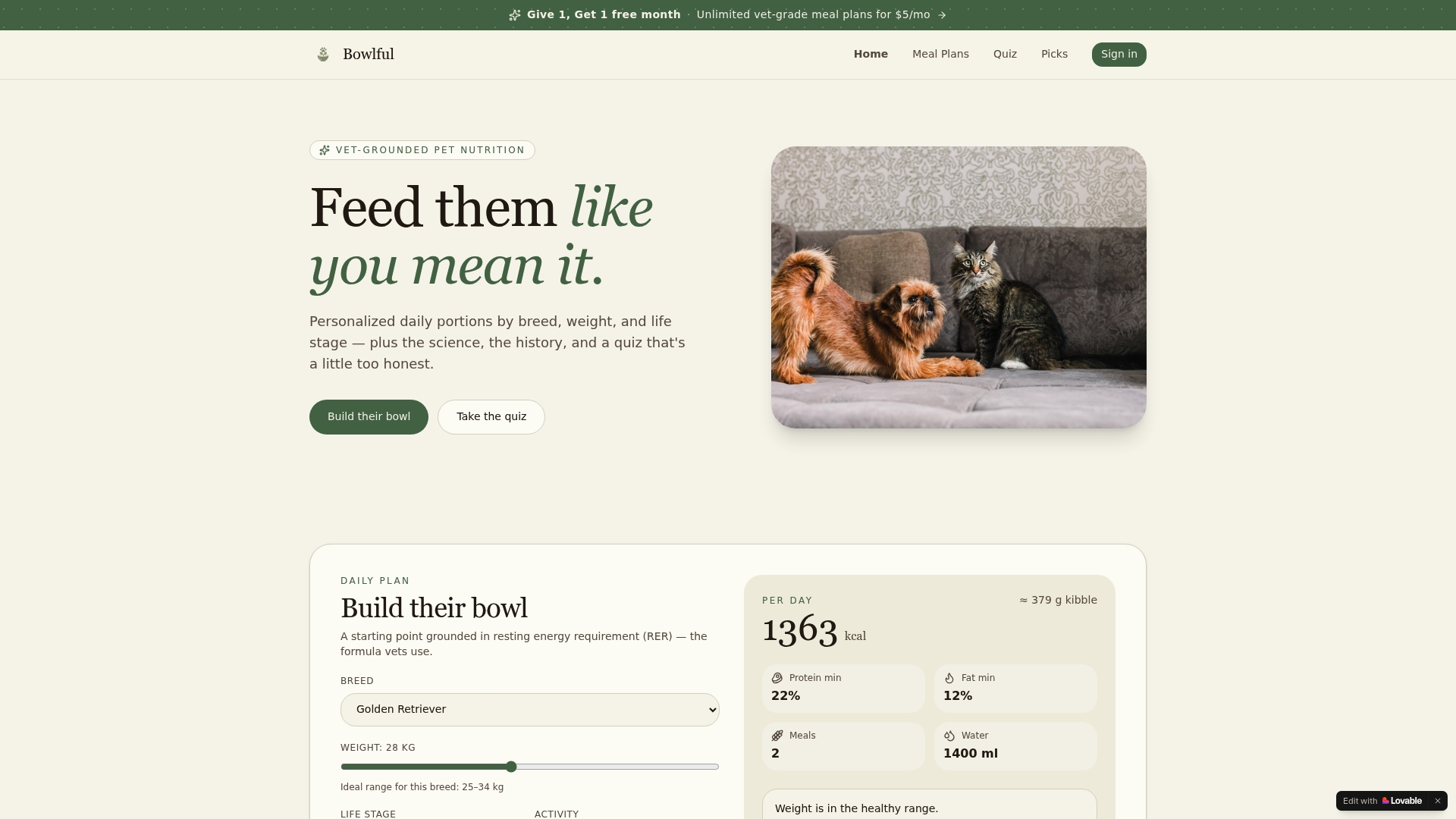
Bowlful builds personalized feeding plans using the veterinary Resting Energy Requirement formula, calibrated to your dog's breed, weight, and activity level. A working-line dog burning cognitive and physical energy indoors has different nutritional needs than a sedentary pet. Getting that right supports better behavior, steadier energy, and longer-term health. Research shows that lean-fed dogs may live up to 1.8 years longer. Explore Bowlful's personalized nutrition plans and find out what your working breed actually needs to thrive at home.
FAQ
What is working breed behavior indoors?
Working breed behavior indoors refers to the expression of genetic drives for task completion, problem-solving, and purposeful work within a home environment. Without structured outlets, these drives produce barking, chewing, pacing, and hyper-focus.
How do I mentally stimulate a working breed inside?
Structured nose work, task chaining, impulse control drills, and interactive puzzle feeders are the most effective methods. Ten minutes of nose work produces mental fatigue equal to a 30-minute walk.
How long before unmet needs cause behavioral problems?
Working dogs typically show signs of behavioral deterioration, including destructive chewing and excessive barking, within 4 weeks of insufficient indoor enrichment.
Does feeding routine affect indoor behavior in working breeds?
Yes. Consistent feeding times create a daily mental rhythm that reduces anxiety and supports focus. Enrichment feeding methods like puzzle feeders and scatter feeding also satisfy problem-solving drives between training sessions.
What is the difference between working-line and show-line behavior indoors?
Working-line dogs carry a stronger genetic drive for structured work and require lifelong mental engagement indoors. Show-line dogs from the same breed are generally calmer but still need more stimulation than average pet breeds.