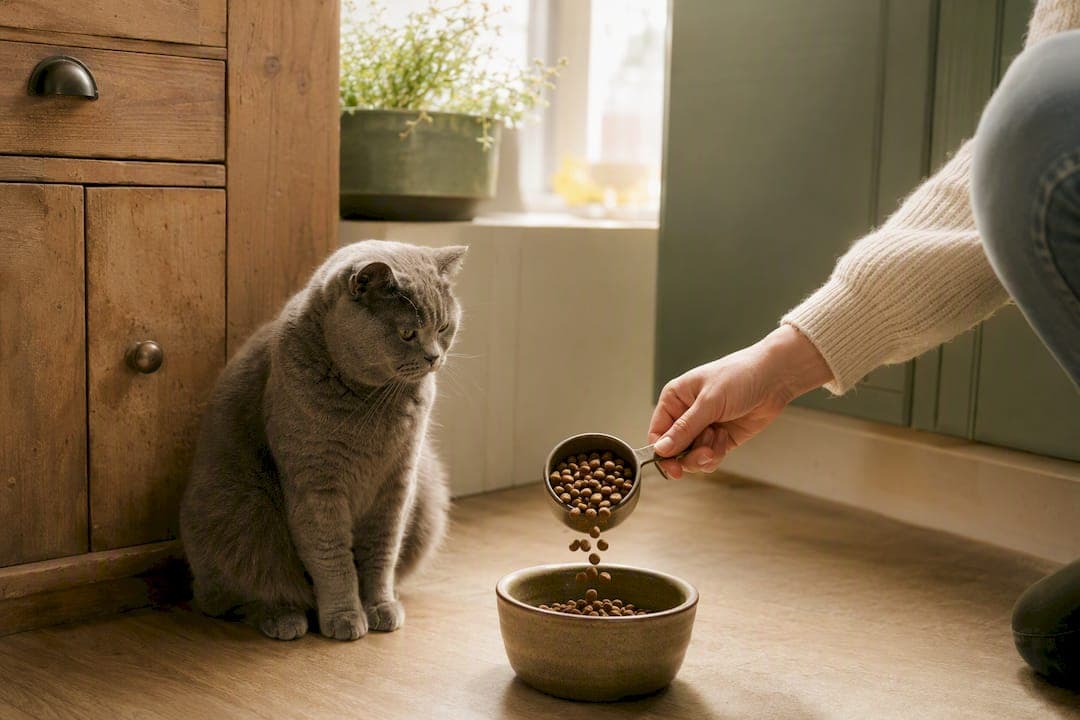
Feed a healthy adult British Shorthair a moderate daily calorie amount, split into two or three measured meals, and put the free-feeding bowl away for good. That single change, from grazing to measured meals, prevents more weight gain in this breed than any food swap you could make. Here's what to do today:
- Weigh your food. A kitchen scale beats a measuring cup every time, since kibble density varies by brand.
- Check the label's kcal/cup or kcal/can figure, then divide your daily target by that number to get grams per meal.
- Split the total into two or three sittings instead of leaving food out all day.
Say your food lists 350 kcal per 100 grams and your cat's target is 240 kcal a day. That's about 68 grams total, roughly 34 grams per meal if you're feeding twice. Bowlful's personalized feeding plan tool does this math automatically once you enter your cat's weight and activity level.
Key Takeaways
Preventing obesity in a British Shorthair comes down to replacing free-feeding with measured, weighed meals set to a calorie target that's recalculated as weight, age, and neuter status change.
| Point | Details |
|---|---|
| Set the right calorie target | Adults typically need 200 to 280 kcal daily, adjusted for neuter status and activity level. |
| Stop free-feeding | Switch to two or three measured meals using a kitchen scale, not a scoop or cup. |
| Prioritize hydration | Aim for 50 to 70 ml of water per kg daily through wet food, fountains, and multiple water stations. |
| Monitor body condition monthly | Check ribs and waist definition regularly rather than waiting for an annual vet visit. |
| Use vet-standard formulas | Bowlful's RER/MER-based personalized plans translate these ranges into exact daily grams for your specific cat. |
Table of Contents
- Nutritional Needs of British Shorthairs: Protein, Fat, and Key Nutrients
- How Many Calories Does a British Shorthair Need by Age?
- Meal Feeding vs. Free-Feeding: Which Portion Method Works?
- Wet, Dry, Raw, or Homemade: What Should You Actually Feed?
- How Much Water Does a British Shorthair Need Each Day?
- Weight Management: Spotting and Preventing Obesity Early
- How Do You Switch a British Shorthair to a New Food Safely?
- Treats, Supplements, and Dental Care for British Shorthairs
- Sample Meal Plans Using RER and MER Formulas
- What Owners Consistently Get Wrong About Feeding This Breed
- Get a Feeding Plan Built Around Your Cat, Not a Breed Average
- Sources
Nutritional Needs of British Shorthairs: Protein, Fat, and Key Nutrients
British Shorthairs need a diet built around animal protein first, not grain or plant filler dressed up with meat flavoring. Look for a named animal protein, chicken, turkey, or fish, listed as the first ingredient, and aim for a diet where protein makes up roughly 30 to 45% of calories on a dry-matter basis. That range covers muscle maintenance without overloading a breed that already burns calories slowly.
Fat matters too, but in moderation. Around 15 to 20% of calories from fat is typical for an adult BSH, with omega-3 fatty acids (EPA and DHA, usually from fish oil) supporting coat quality and helping manage the low-grade inflammation that comes with joint stress in a heavier-bodied breed.
Statistic Callout: Nutrition authorities including the WSAVA Global Nutrition Committee recommend prioritizing animal-based protein sources and confirming any commercial diet meets AAFCO or NRC completeness standards, not just "complete and balanced" marketing language on the bag.
Carbohydrates are where a lot of BSH diets go wrong. This breed's body type and low activity level mean excess starch from corn, wheat, or too much rice filler converts to stored fat fast. Taurine, an amino acid cats can't synthesize on their own, is non-negotiable, and a deficiency can lead to heart problems over time. A few label habits will serve you well:
- Confirm taurine is listed and the diet states AAFCO or NRC compliance.
- Choose a named protein source ("chicken meal," not "meat by-product") in the first two ingredients.
- Add at least one wet meal daily for moisture, since dry kibble alone rarely covers hydration needs.
For a deeper look at how these targets fit into a complete diet, see Bowlful's guide to balanced pet nutrition.
How Many Calories Does a British Shorthair Need by Age?
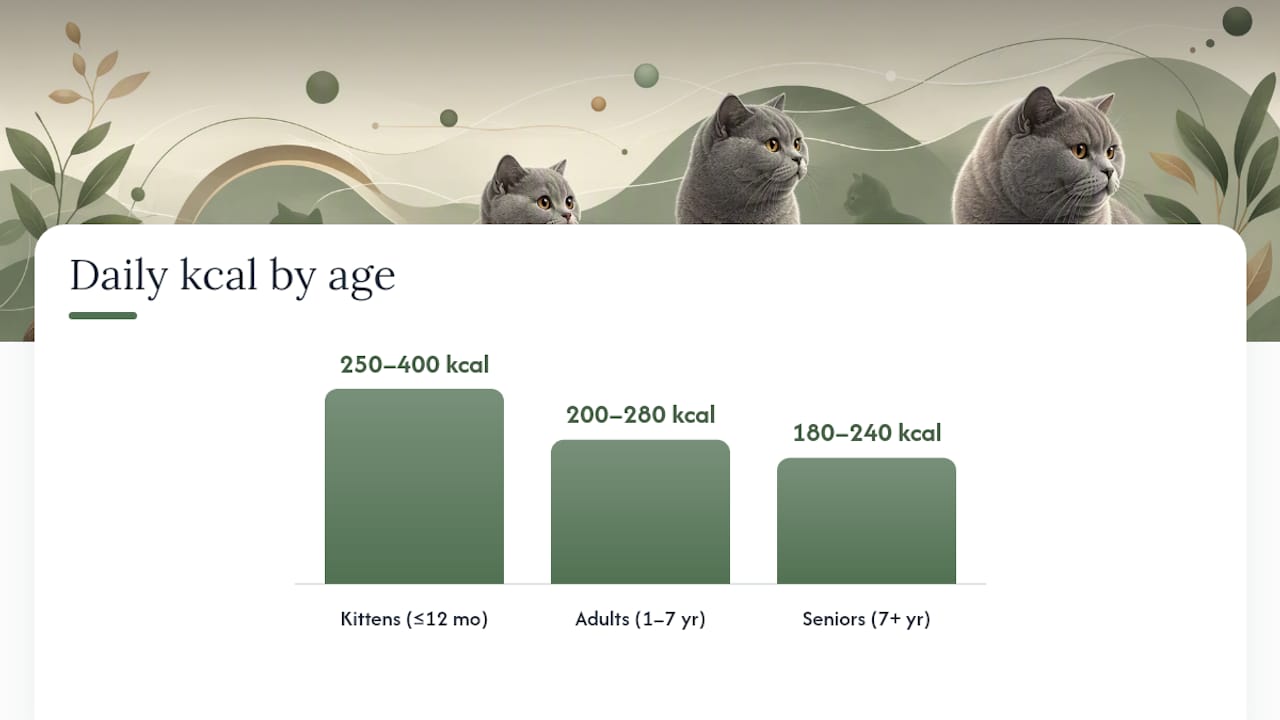
Calorie needs shift substantially across a British Shorthair's life, and getting the number right matters more for this breed than most, given how easily they gain weight. Almonte Cats' breed nutrition guide puts typical adult BSH needs at roughly 200 to 280 kcal per day, depending on body size, activity, and whether the cat is neutered.
- Kittens (up to 12 months): Need considerably more energy per kilogram of body weight, often 250 to 400 kcal a day depending on growth stage, fed three to four times daily to support development without overwhelming a small stomach.
- Adults (1 to 7 years): Settle into the 200 to 280 kcal range, typically fed twice daily. Neutered cats burn roughly 20 to 30% fewer calories than intact cats of the same size, so recalculate immediately after surgery.
- Seniors (7+ years): Often need slightly fewer calories, closer to 180 to 240 kcal, unless a health condition like hyperthyroidism increases requirements. Three smaller meals can ease digestion in older cats.
A practical example: if your food provides 90 kcal per 3-ounce wet can and your adult BSH's target is 240 kcal, that's about two and two-thirds cans daily. For dry food at 380 kcal per cup, the same 240 kcal target works out to roughly two-thirds of a cup, split across meals.
Pro Tip: Reassess your cat's daily calorie target every time you check body condition score, not just at annual vet visits. A gradual weight gain of even half a pound is significant on a breed this size, and catching it early makes correction far easier.
Meal Feeding vs. Free-Feeding: Which Portion Method Works?
Meal feeding beats free-feeding for British Shorthairs, full stop. Leaving a bowl out all day invites grazing, and this breed's low activity level means grazing calories turn into stored fat quickly. Breed-specific care guides consistently point to measured meal feeding as the standard recommendation for preventing obesity in this body type.
A digital kitchen scale is the single best portion-control tool you can buy. Measuring cups vary wildly between brands and even between bags of the same food, while a scale gives you the same gram amount every time.
- Weigh food at each meal rather than eyeballing a scoop.
- Use a puzzle feeder or slow-feed bowl to stretch out fast eaters and add mental stimulation.
- If considering an automatic feeder, prioritize portion accuracy (gram-level dispensing) over convenience features like app notifications.
- Reserve feeding windows, food available for a set two- to three-hour stretch, for cats who self-regulate well; use strict timed meals for cats prone to overeating as explained in this pet feeding schedule documentation.
Pro Tip: Puzzle feeders do double duty for British Shorthairs: they slow down eating, which helps digestion, and they burn a few extra calories through problem-solving, which this breed rarely gets from spontaneous play. For more on how meal timing affects metabolism, see Bowlful's piece on why feeding windows matter.
Wet, Dry, Raw, or Homemade: What Should You Actually Feed?
A mixed feeding plan, wet food for at least one meal, dry food for the rest, works best for most British Shorthairs, and here's why each format has a real tradeoff.
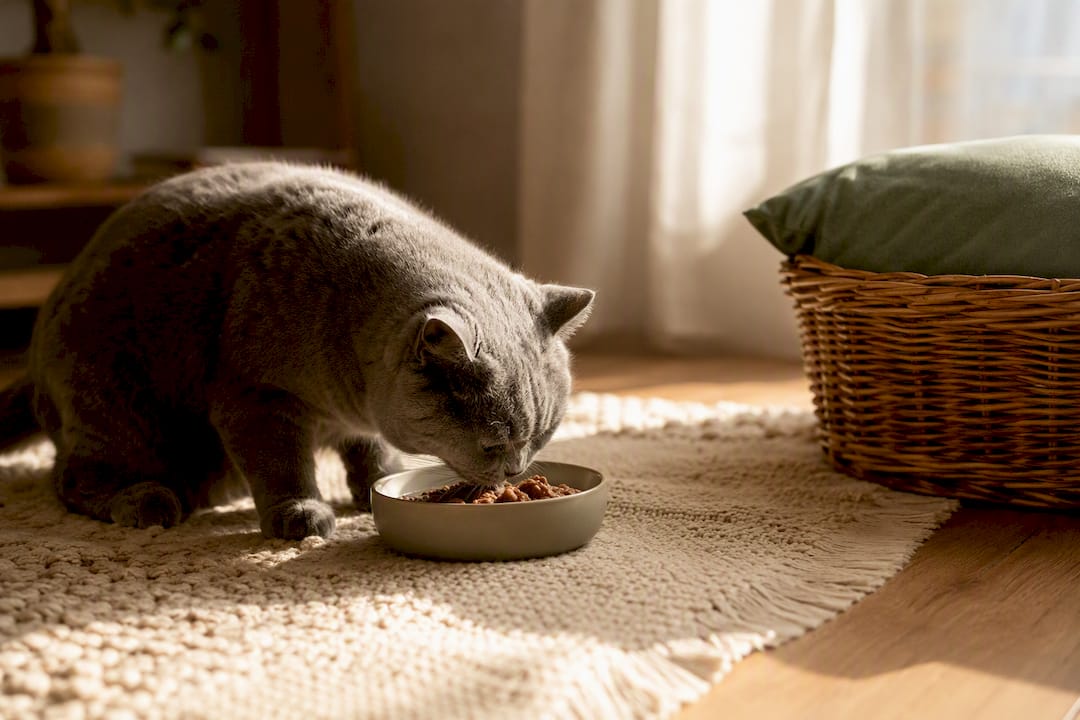
Wet food runs 70 to 80% moisture, which supports hydration and tends to leave cats feeling more satisfied per calorie than dry kibble. Dry food is more convenient, shelf-stable, and can help slow tartar buildup slightly through the mechanical action of chewing, though it's not a substitute for dental care. A practical mixed plan might look like one wet meal in the morning (around 90 to 100 kcal) and a measured dry portion in the evening, adjusted so the daily total still lands in your cat's target range. Bowlful's comparison of dry versus wet options walks through how to structure that split.
Raw and homemade diets carry real risk if they aren't formulated correctly. Cats need precise calcium-to-phosphorus ratios and taurine levels that are easy to miss without professional guidance, and improperly balanced raw diets have been linked to nutritional deficiencies and bacterial contamination concerns. If you want to go this route, work with a veterinary nutritionist to build a complete formula rather than following a generic online recipe.
Before buying any bag or can, run through this quick label check:
- A named animal protein appears in the first ingredient.
- None of the first three ingredients are corn, wheat, or soy fillers.
- The label states AAFCO or NRC nutritional adequacy.
- Taurine is listed explicitly, not just implied by "meat" content.
How Much Water Does a British Shorthair Need Each Day?
British Shorthairs need a moderate amount of daily water relative to their body weight, counting both what they drink and what's in their food. That's a meaningful number because dry kibble alone (around 10% moisture) forces a cat to drink far more from a bowl to hit that target, and many cats simply don't drink enough on their own.
Moisture matters directly for urinary health. Concentrated urine from chronic under hydration is a known contributor to feline lower urinary tract disease, and the Cornell Feline Health Center identifies adequate water intake as one of the simplest, most effective prevention tools available to owners.
A few tactics reliably increase intake:
- Add a pet water fountain; moving water draws more interest than a static bowl.
- Place multiple water stations around the house, not just one near the food.
- Mix in low-sodium bone broth or add water directly to wet food.
- Feed at least one wet meal daily rather than relying entirely on dry kibble.
Contact your vet promptly if you notice straining to urinate, blood in urine, or frequent litter box visits with little output. Those are urgent signs, not wait-and-see ones.
Weight Management: Spotting and Preventing Obesity Early
British Shorthairs carry a stocky, cobby build that makes early weight gain easy to miss and easy to underestimate. WebMD's breed profile flags this breed's predisposition to obesity, low activity levels combined with a naturally dense frame, as a leading cause of joint strain, cardiac stress, and diabetes risk later in life.
- Run a body condition score check monthly. You should feel ribs with light pressure but not see them, and your cat should have a visible waist when viewed from above.
- Weigh your cat on the same schedule. A home scale or monthly vet visit both work; a half-pound gain over a few weeks on a cat this size is worth acting on immediately.
- Cut calories gradually if needed, aiming for roughly a 1 to 2% body weight loss per week rather than a sudden drop, which stresses the liver.
- Escalate to your vet if weight loss efforts stall after a month or your cat shows lethargy alongside weight changes.
Pro Tip: Wand toys and food puzzles burn more calories than a laser pointer ever will, because they mimic a real hunting sequence with a payoff at the end. Ten minutes twice a day beats an hour of halfhearted chasing. Bowlful's safe weight-loss guide for cats breaks down the calorie-deficit math in more detail.
How Do You Switch a British Shorthair to a New Food Safely?
Sudden food changes upset a British Shorthair's digestion more often than owners expect, so a slow transition protects against diarrhea and vomiting.
- Days 1 to 3: Mix 75% old food with 25% new food.
- Days 4 to 6: Move to a 50/50 blend.
- Days 7 to 8: Shift to 25% old food, 75% new food.
- Days 9 to 10: Feed 100% new food and watch stool quality for another few days.
If diarrhea, vomiting, or appetite loss persists beyond 48 hours at any stage, pause the transition and go back to the last tolerated ratio. Persistent symptoms, or any sign of blood in stool, warrant a same-week vet visit rather than waiting it out. If you suspect a food intolerance rather than a simple adjustment issue, ask your vet about a hypoallergenic elimination diet trial, typically eight to twelve weeks on a single novel protein, done under veterinary supervision so the results are reliable.
Treats, Supplements, and Dental Care for British Shorthairs
Treats should never exceed 10% of daily calories, meaning a cat on a 240 kcal daily plan has about 24 kcal of treat budget, roughly two to three small commercial treats or a teaspoon of plain cooked chicken. Count treats against the day's total rather than adding them on top of a full meal plan.
Most healthy British Shorthairs don't need supplements beyond a complete diet, but a few situations change that:
- Omega-3 supplements can help cats with dry skin or early joint stiffness, though a quality diet often already includes adequate levels.
- Joint supplements (glucosamine, chondroitin) are worth discussing with your vet for cats over seven, given this breed's frame.
- Probiotics may help during diet transitions or after antibiotic treatment, not as a daily default.
Dental chews can slow tartar buildup between cleanings, but they don't replace professional cleaning when plaque has hardened. For hairballs, a diet with added fiber or a dedicated hairball-control formula reduces frequency more reliably than any single treat.
Sample Meal Plans Using RER and MER Formulas
Bowlful builds its feeding recommendations on Resting Energy Requirement (RER) and Maintenance Energy Requirement (MER), the same NRC and AAFCO-based formulas veterinarians use in clinical practice. RER estimates the calories your cat burns at rest; MER multiplies that by an activity and life-stage factor to get a real daily target. It's math, not guesswork, and it's why the ranges throughout this guide hold up under scrutiny.
Here's how that translates into an actual day of feeding for two common scenarios:
| Plan Type | Daily Target | Sample Meal Structure |
|---|---|---|
| Adult maintenance (10 lb, neutered) | 240 kcal | 1 wet meal (~90 kcal) + 2 dry meals (~70 kcal each, roughly 45g total) |
| Weight-loss plan (12 lb, target 10 lb) | 180 to 240 kcal | 2 wet meals (~90 to 100 kcal each) + 1 small dry meal |
| Kitten (6 months, growing) | 280 kcal | 3 to 4 small meals mixing wet and dry, adjusted weekly with weight gain |
- Weigh your cat and note neuter status and rough activity level.
- Match your cat's profile to the closest row above as a starting point.
- Adjust in two-week increments based on body condition score, not the calendar.
Pro Tip: These tables are a starting point, not a prescription. Every cat's metabolism varies enough that Bowlful's personalized nutrition plan tool recalculates these numbers using your cat's exact weight, age, and activity data instead of a breed average.
What Owners Consistently Get Wrong About Feeding This Breed
Most feeding advice for British Shorthairs treats them like a generic cat instead of a breed with a specific, well-documented obesity risk baked into its body type. That's the gap that costs owners the most: they follow bag-label feeding guidelines meant for an average-activity cat, not a breed that was practically built to conserve energy. A stocky, cobby frame plus a laid-back temperament is a metabolic setup for weight gain, and no amount of "just feed what the bag says" advice accounts for that.
The other mistake worth calling out is treating free-feeding as harmless because "the cat will self-regulate." Some cats do. Most British Shorthairs don't, and by the time an owner notices the extra weight, it's already been building for months. Measured meals aren't a punishment, they're the single highest-leverage habit in this entire guide, and it's the one most owners skip because it feels like more work than it actually is. A kitchen scale and two scheduled meals a day is a five-minute daily habit that prevents a lifetime of joint and cardiac strain.
— Robert
Get a Feeding Plan Built Around Your Cat, Not a Breed Average
Every range in this guide is a starting point built for the average British Shorthair. Your cat isn't average. Bowlful's personalized nutrition plan tool uses the same RER/MER formulas referenced throughout this guide, applied to your cat's actual weight, age, neuter status, and activity level, so the calorie target and gram measurements you get are calculated for that specific cat, not a breed-wide average.
The plans come as downloadable PDFs with exact portion sizes for the food you already feed, wet, dry, or a mixed split, so there's no guessing at conversions. Owners managing a cat that's already carrying extra weight can generate a safe, gradual weight-loss version of the same plan rather than following a generic calorie cut.
Start by taking Bowlful's Bowlful to get your cat's personalized calorie target and a sample meal structure built from it.
Sources
- Cornell Feline Health Center
- WSAVA Global Nutrition Committee
- British Shorthair Diet & Nutrition Guide: Portions, Feeding & Health - Almonte Cats