
Rottweiler joint nutrition is defined as the targeted use of specific nutrients, supplements, and dietary strategies to protect cartilage, reduce inflammation, and preserve mobility throughout a Rottweiler's life. This breed carries a significant genetic burden: hip dysplasia affects roughly 20% of evaluated Rottweilers, while elbow dysplasia strikes over 36% of screened dogs. Those numbers make proactive joint care non-negotiable, not optional. The good news is that the right combination of glucosamine, omega-3 fatty acids, controlled diet, and smart exercise can meaningfully reduce your dog's risk and keep them moving well into old age.
1. Rottweiler joint nutrition: when to start supplementing
The single biggest mistake Rottweiler owners make is waiting for a limp before acting. By the time limping appears, cartilage damage is already well underway. Cartilage has no blood supply, so it cannot repair itself the way muscle or skin can. That makes prevention the only real strategy.
Veterinarians recommend starting joint supplements at 12–18 months of age, after growth plates have closed. Starting earlier risks interfering with normal skeletal development. Starting later means cartilage breakdown has already begun without any nutritional support in place.
Once you begin supplementing, patience is required. Consistent daily use over 4–8 weeks is typically needed before visible improvements in mobility and comfort appear. That timeline surprises many owners who expect fast results. Think of it like taking a daily vitamin: the benefit builds over time, not overnight.
- Start supplements at 12–18 months, after growth plate closure
- Expect a 4–8 week window before noticing changes in movement
- Use supplements daily without skipping doses
- Do not switch brands frequently; consistency with well-dosed formulas is what drives results
- Track subtle changes like how quickly your dog rises from rest or navigates stairs
Pro Tip: Keep a short mobility journal. Note each week whether your Rottweiler rises easily, hesitates on stairs, or slows on walks. Small improvements are easy to miss day to day but become clear over a month.
2. Key nutrients that support Rottweiler joint health
The most effective joint supplements for Rottweilers address cartilage structure, inflammation, and lubrication at the same time. Single-ingredient products rarely deliver the full picture. Research-backed formulas combine several nutrients that each target a different part of joint function.

Glucosamine and chondroitin are the foundation. Glucosamine stimulates cartilage cell production, while chondroitin blocks enzymes that break cartilage down. Together they slow the degradation cycle that dysplasia accelerates. MSM (methylsulfonylmethane) supports soft tissue repair and helps manage the inflammatory response around damaged joints.
Omega-3 fatty acids, specifically EPA and DHA from fish oil, reduce joint inflammation at the cellular level. This matters because chronic low-grade inflammation is what converts mild joint wear into painful arthritis. Hyaluronic acid thickens synovial fluid, the lubricant inside every joint, reducing friction during movement. Collagen peptides reinforce the connective tissue that holds joints together.
Two additional ingredients deserve attention. Turmeric (curcumin) and green-lipped mussel both provide antioxidant and anti-inflammatory support with a solid scientific basis for large, active breeds. Green-lipped mussel in particular contains a unique combination of omega-3s not found in standard fish oil.
Large breed dogs like Rottweilers require weight-based dosing in joint supplements. Under-dosing reduces efficacy and may fail to provide meaningful cartilage support. Always check that the product's recommended dose matches your dog's actual body weight.
| Nutrient | Primary role |
|---|---|
| Glucosamine | Stimulates cartilage cell production |
| Chondroitin | Blocks cartilage-degrading enzymes |
| MSM | Reduces soft tissue inflammation |
| Omega-3 (EPA/DHA) | Lowers systemic joint inflammation |
| Hyaluronic acid | Lubricates synovial fluid |
| Green-lipped mussel | Provides anti-inflammatory omega-3s |
For a broader look at how supplements fit into aging dog care, the vet-backed supplement guide at Bowlful covers the full picture across life stages.
3. Dietary considerations for preventing joint issues
Diet shapes joint health from the first weeks of a Rottweiler puppy's life. The most damaging mistake at this stage is overfeeding calcium. Calcium intake should stay at or below 1.5% dry matter during growth phases. Excess calcium accelerates growth plate closure prematurely, which directly raises the risk of hip and elbow dysplasia. Rapid weight gain compounds the problem by loading immature joints before they are ready.
Whole protein sources matter too. High-quality animal proteins supply the amino acids needed to build collagen and maintain muscle mass around joints. Muscle acts as a natural shock absorber. A dog with weak muscle tone puts far more stress on cartilage with every step.
The calcium-to-phosphorus ratio in food also requires attention. Large breed puppy formulas are specifically designed to keep this ratio balanced. Generic puppy foods often miss this target. Choosing a food labeled for large breed puppies is not a marketing preference; it is a structural health decision.
- Choose large breed puppy formulas with controlled calcium (max 1.5% dry matter)
- Prioritize whole animal protein as the first ingredient
- Maintain a balanced calcium-to-phosphorus ratio
- Add bone broth as a natural source of collagen and glycine
- Avoid free-feeding; measure every meal to prevent rapid weight gain
Maintaining a lean body weight is the single most impactful factor for reducing joint stress and arthritis risk. Every extra pound of body weight multiplies the load on hip and elbow joints with each stride. Understanding your dog's healthy weight range is a practical first step toward managing this risk.
Pro Tip: Use a body condition score chart at home every two weeks. You should feel your Rottweiler's ribs easily without pressing hard, and see a visible waist from above. If you cannot, reduce portions before the scale confirms a problem.
| Life stage | Key dietary priority |
|---|---|
| Puppy (under 18 months) | Controlled calcium, large breed formula |
| Adult (18 months to 7 years) | Lean protein, weight management |
| Senior (7 years and older) | Joint-supportive nutrients, lower calories |
4. Exercise and lifestyle habits that complement joint nutrition
Exercise and nutrition work together. Neither alone is enough to protect Rottweiler joints over a lifetime. The goal is controlled, consistent movement that builds muscle without hammering cartilage.
For puppies, the 5-minute rule is the standard guideline: five minutes of structured exercise per month of age, twice daily. A four-month-old puppy gets 20 minutes per session. This prevents the repetitive impact that damages growth plates before they close.
- Follow the 5-minute rule for puppies until growth plates close at 12–18 months
- Avoid jumping from heights, running on hard concrete, or sudden direction changes
- Prioritize swimming and leash walking as low-impact alternatives
- Use orthopedic memory foam bedding to reduce joint pressure during rest
- Schedule a vet orthopedic evaluation at 12 months for early dysplasia screening
Adult Rottweilers benefit from daily leash walks and swimming sessions. Both build the muscle mass that protects joints without the concussive force of fetch on pavement. Lean body weight, maintained through diet and exercise together, reduces joint load more than any supplement alone.
Joint supplements work best as part of a multimodal approach that includes diet, exercise, and weight management. Treating supplementation as a standalone fix misses the point entirely.
5. Signs of joint issues and how nutrition helps manage them
Rottweilers rarely vocalize pain. Joint problems show up as behavioral changes long before any obvious limping. Catching these early signs gives nutrition and supplements the best chance to slow progression.
Common early signs include:
- Stiffness after rest, especially in the morning
- Reluctance to climb stairs or jump into a vehicle
- Slower rising from a lying position
- Reduced enthusiasm for walks or play
- Subtle lameness that shifts between legs
Owners often mistake limb-specific limping as a single joint issue. Rottweilers frequently have both hip and elbow dysplasia simultaneously. A full orthopedic evaluation by a veterinarian is the only way to get an accurate picture. Treating one joint while ignoring another leads to incomplete care.
Supplements do not reverse existing cartilage damage. That is a critical point to understand. What they do is slow further degradation, reduce inflammation, and improve comfort and mobility. A Rottweiler on a consistent joint nutrition plan can maintain a good quality of life even with a confirmed dysplasia diagnosis. Nutritional support works alongside veterinary treatment, not instead of it.
Gut health also plays a role that most owners overlook. Systemic inflammation, including joint inflammation, is influenced by gut microbiome balance. Some advanced joint formulas now incorporate probiotics and prebiotics alongside structural nutrients to address this connection directly.
Key takeaways
Rottweiler joint nutrition requires early supplementation, controlled diet, and consistent exercise working together to prevent cartilage breakdown and reduce dysplasia risk.
| Point | Details |
|---|---|
| Start supplements early | Begin at 12–18 months after growth plate closure, before symptoms appear. |
| Use multi-nutrient formulas | Combine glucosamine, chondroitin, MSM, and omega-3s for full joint coverage. |
| Control calcium in puppies | Keep dietary calcium at or below 1.5% dry matter to prevent abnormal bone growth. |
| Maintain lean body weight | Excess weight multiplies joint load; weight management reduces arthritis risk more than any single supplement. |
| Treat joint care as multimodal | Diet, exercise, supplements, and vet evaluations all contribute; none works well in isolation. |
What I've learned after years of watching owners get this wrong
Most Rottweiler owners I talk to fall into one of two camps. The first group waits until their dog is limping at age five, then scrambles for a fix. The second group buys a joint supplement at eight weeks old, convinced they are being proactive. Both approaches miss the mark.
The timing window of 12–18 months exists for a real reason. Before growth plates close, the skeletal system is still forming. Intervening too early with high-dose supplements can disrupt that process. Waiting too long means cartilage breakdown has a head start. The window is narrow, and most owners do not know it exists.
The other pattern I see constantly is brand-hopping. An owner tries a supplement for three weeks, sees no change, and switches to something new. That 4–8 week timeline is not a marketing claim. It reflects how long cartilage metabolism actually takes to respond. Patience with a quality formula beats chasing the newest trend every time.
Weight management is the piece most owners underestimate. A Rottweiler carrying even a few extra pounds is loading every joint with compounded force on every step. No supplement compensates for that. Getting the diet right, using a tool like Bowlful's RER-based feeding plan, and keeping your dog genuinely lean is the highest-return investment you can make for their joints.
— Robert
Bowlful's approach to Rottweiler joint and weight health
Keeping a Rottweiler at the right weight is one of the most direct ways to protect their joints for life. Bowlful builds personalized feeding plans using the Resting Energy Requirement (RER) formula that veterinarians use, calibrated to your dog's breed, weight, and life stage.
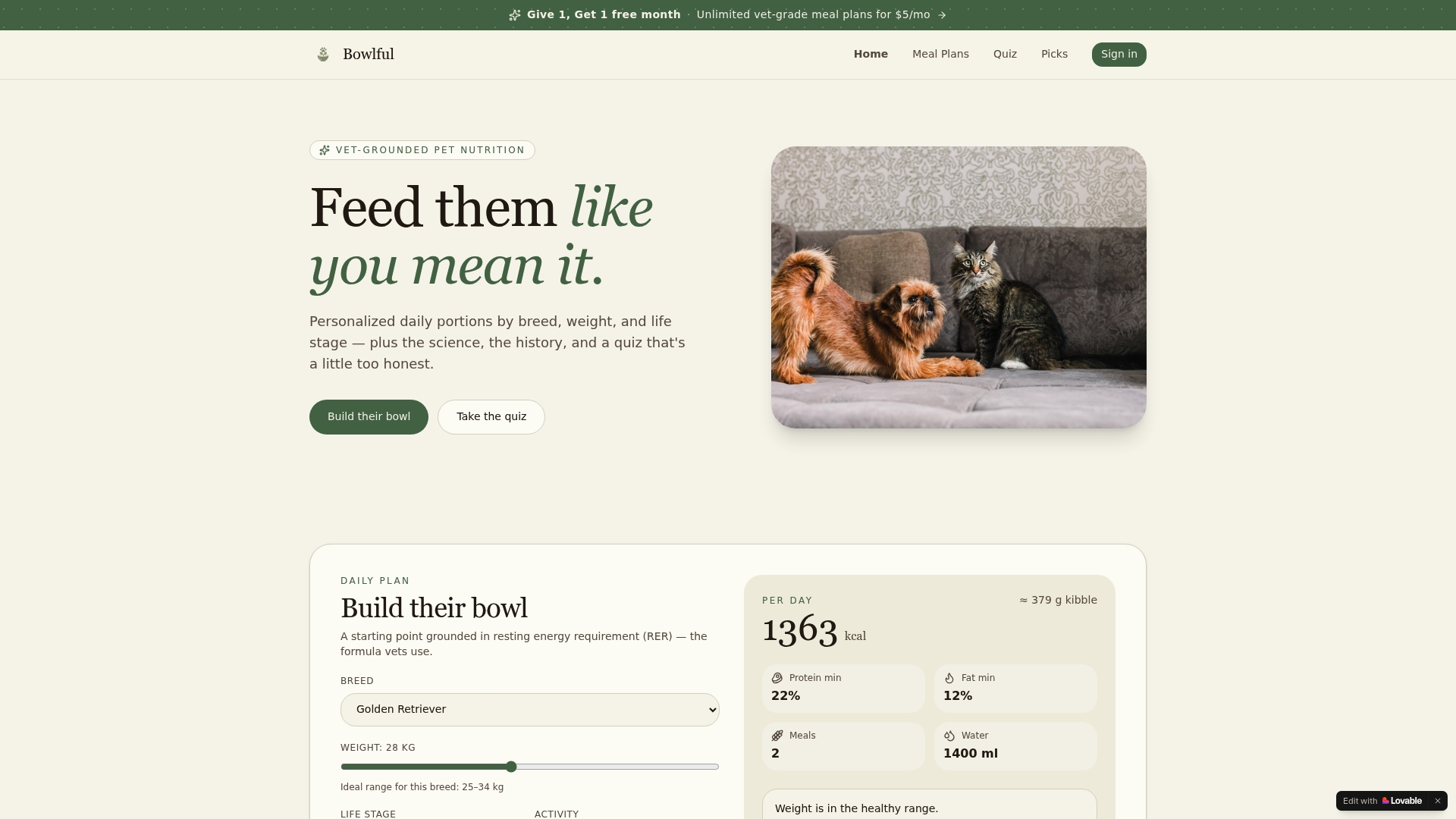
Lean-fed dogs live measurably longer and carry less joint stress throughout their lives. Bowlful's personalized meal plans take the calculation out of your hands and replace guesswork with a plan built around your Rottweiler's actual needs. For owners who want to go deeper on the science behind feeding large breeds correctly, the science of feeding dogs guide at Bowlful is a strong next read.
FAQ
When should I start joint supplements for my Rottweiler?
Start joint supplements at 12–18 months of age, after growth plates have closed. Beginning earlier risks interfering with normal skeletal development.
How long before joint supplements show results?
Consistent daily supplementation typically requires 4–8 weeks before visible improvements in mobility and comfort appear. Skipping doses or switching products resets this timeline.
What are the best joint supplements for Rottweilers?
The most effective formulas combine glucosamine, chondroitin, MSM, and omega-3 fatty acids (EPA/DHA). Green-lipped mussel and turmeric provide additional anti-inflammatory support for large breeds.
Does diet really affect Rottweiler joint health?
Diet is foundational. Controlling calcium to a maximum of 1.5% dry matter during puppyhood prevents abnormal bone development, and maintaining a lean adult weight reduces joint load and arthritis risk significantly.
Can nutrition reverse hip or elbow dysplasia in Rottweilers?
Nutrition and supplements cannot reverse existing cartilage damage. They slow further degradation, reduce inflammation, and improve comfort, working best alongside veterinary treatment and a full orthopedic evaluation.