
Prioritize protein quality over quantity, adjust calories to your dog's actual body condition rather than a bag's feeding chart, and ask your veterinarian about omega-3s before old age turns into arthritis and cognitive decline. There's no universal "senior formula" that fits every aging dog. AAFCO and NRC nutrient standards set the floor, but your dog's bloodwork, muscle tone, and mobility should set the real target, ideally with help from a tool like Bowlful's calorie calculator and a vet who knows your dog's history.
TL;DR:
- Elderly dogs require more high-quality protein to maintain muscle, with protein levels well above minimum recommendations unless they have diagnosed kidney disease.
- Adjust calorie intake downward based on reduced activity and slower metabolism, using breed-specific energy needs rather than generic feeding charts.
- Incorporate omega-3 fatty acids, antioxidants, and MCTs to support joint, cognitive, and immune health, with dosage tailored to individual needs.
- Monitor body condition regularly through weight and tactile muscle assessments, and re-evaluate diet based on signs of muscle wasting, weight changes, or mobility issues.
- Transition to softer, more aromatic foods gradually and consider supplements or prescription diets only after veterinarian consultation for targeted health conditions.
Table of Contents
- When Is a Dog Considered Senior, and How Do You Assess Their Needs?
- Protein, Fat, Fiber, and the Other Nutrients That Matter Most
- How Many Calories Should a Senior Dog Actually Eat?
- Getting Picky or Toothless Seniors to Actually Eat
- Supplements and Prescription Diets: What Actually Helps
- Everyday Feeding Habits That Actually Move the Needle
- Bowlful's Vet-Backed Tools for Getting This Right
- A Note From Robert on Feeding Aging Dogs Well
- Get a Feeding Plan Built for Your Dog's Actual Numbers
- Sources
When Is a Dog Considered Senior, and How Do You Assess Their Needs?
Age alone is a poor guide. A 7-year-old Great Dane and a 7-year-old Chihuahua are at wildly different life stages, since giant breeds age faster and typically enter their senior years by 6 to 7, while small breeds may not show it until 10 or later. What matters more than the birthday is what you can see and feel.
Watch for gray muzzle hair, slower stair climbing, stiffness after naps, reduced interest in food, or a sudden pickiness that wasn't there last year. Cornell's veterinary team notes there's no single clinical marker for "senior," so switch feeding strategies based on signs, not the calendar.
Build a simple monitoring routine:
- Weigh your dog monthly, ideally on the same scale.
- Run your hands along the ribs and spine every 6 to 12 weeks to check muscle tone and body condition score.
- Schedule a vet visit that includes a physical exam, bloodwork, and urinalysis before making any major diet change, since hidden kidney or thyroid issues change what "good nutrition" even means.
Protein, Fat, Fiber, and the Other Nutrients That Matter Most
Older dogs need more protein per calorie, not less. Older advice pushed low-protein diets to "protect the kidneys," but that idea doesn't hold up for healthy seniors. Vetstreet's veterinary guidance points to a clinical target of moderate to high protein levels on a dry-matter basis for healthy aging dogs, well above AAFCO's bare minimum, because higher-quality protein helps preserve lean muscle mass that naturally erodes with age.
Statistic: Protein restriction only makes sense once a dog has a confirmed diagnosis of chronic kidney disease. Evidence does not support the idea that normal dietary protein causes kidney disease in an otherwise healthy senior.
Beyond protein, four other nutrients carry real weight:
- Omega-3 fatty acids (EPA/DHA): Cornell research links these to better joint mobility and cognitive function, though meaningful doses are often higher than what's in standard kibble.
- Fat: Needed for energy and coat quality, but should scale down as activity drops, since excess fat calories are the fastest route to unwanted weight gain.
- Fiber: Supports digestion and steady blood sugar, especially useful for dogs prone to constipation or diabetes.
- Antioxidants and MCTs: Veterinary Practice News points to promising cognitive and immune benefits, though responses vary by dog.
Phosphorus and sodium deserve a caution flag. Dogs with diagnosed kidney disease or hypertension often need both restricted, but that's a clinical decision based on bloodwork, not something to guess at from a food label.
How Many Calories Should a Senior Dog Actually Eat?
Most senior dogs simply burn less. VCA veterinary data shows energy needs commonly decline as dogs age, warranting portion adjustments to avoid obesity, mostly from reduced activity and slower metabolism. Feeding the same portion at age 10 that worked at age 4 is a near-guaranteed path to obesity.
Bowlful's senior dog calorie guide uses the same RER and MER formulas veterinarians rely on to calculate a starting point based on weight, breed, and activity level, rather than a generic scoop count on the bag.
Here's a workable process:
- Calculate your dog's resting energy requirement, then adjust for their activity level and any health conditions.
- Feed that amount consistently for 2 to 4 weeks and track weight and body condition score.
- Adjust portions by small increments (5 to 10%) rather than large swings, and increase calories if you see muscle wasting instead of automatically cutting them.
- Recheck weight monthly and flag any unexplained loss or gain for a vet visit.
Pro Tip: Don't assume weight loss in a senior dog means "less food." Muscle wasting from arthritis or reduced activity can shrink a dog's frame while fat stays the same or increases, so a scale reading alone can mislead you. Combine weigh-ins with hands-on body condition checks.
Getting Picky or Toothless Seniors to Actually Eat
Aging often blunts a dog's sense of smell, and dental pain from years of wear can make crunching kibble unpleasant. The fix usually isn't a new food, it's a new format.
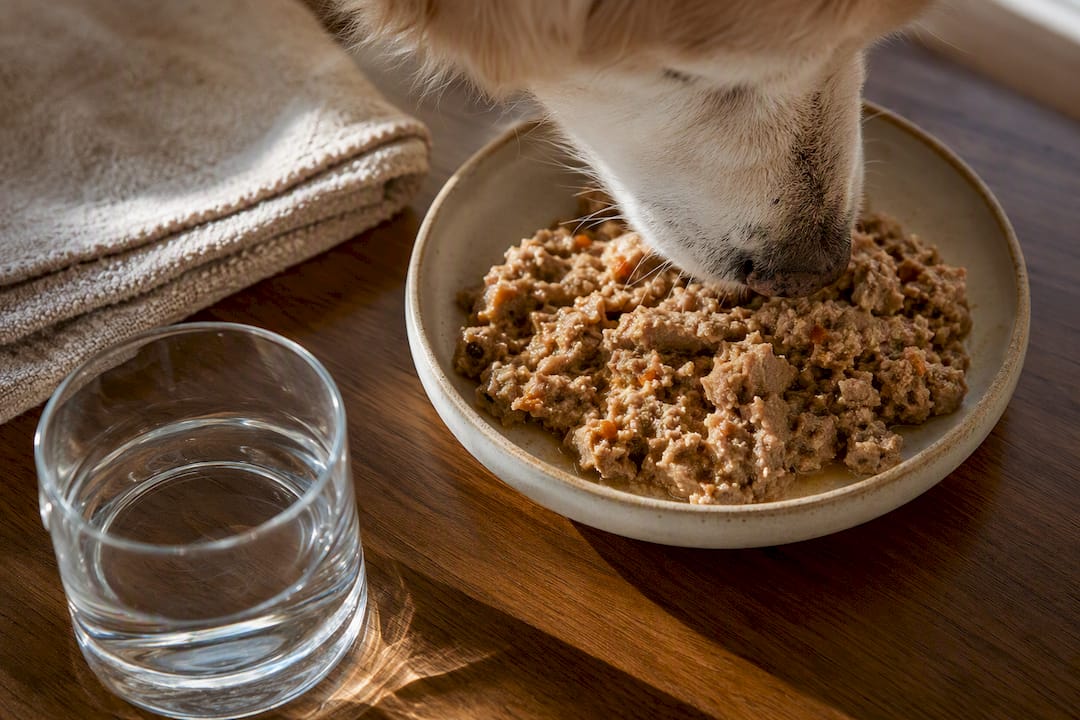
If you do switch formulas, stretch the transition over 10 to 14 days: mix 25% new food with 75% old for a few days, then move to 50/50, then 75/25, watching stool consistency at each stage and slowing down if you see loose stool or vomiting.
A few tactics that consistently help with reluctant eaters:
- Warm wet food slightly to release more aroma, since scent drives appetite more than taste at this age.
- Add a low-sodium broth topper or a splash of warm water to dry kibble to soften texture and boost smell.
- Switch to a softer kibble or fully wet formula if you notice dropped food, head tilting while chewing, or bad breath suggesting dental pain.
- Split one large meal into two or three smaller ones if appetite fades as the day goes on.
Supplements and Prescription Diets: What Actually Helps
Not every supplement on a pet store shelf has real backing. A short list does, though, and it's worth discussing dosing with your vet rather than eyeballing a label.
- Marine-source EPA/DHA (fish oil): A standard 1,000 mg capsule often provides about 300 mg of combined EPA/DHA, and some vets suggest 1 to 2 capsules per 10 pounds of body weight for lameness, though this needs individual calibration.
- Glucosamine and chondroitin: Commonly used for joint support alongside omega-3s, best chosen through a vet or reputable supplier rather than the cheapest online listing.
- SAMe: Sometimes used to support cognitive function and liver health in older dogs.
- MCT oil: Linked to cognitive support in some studies, likely by providing an alternative brain fuel source as glucose metabolism shifts with age.
Statistic: Veterinary Practice News notes that functional nutrients like these should be layered onto an individualized plan, not treated as a one-size fix.
Prescription diets become necessary, not optional, for confirmed chronic kidney disease, liver disease, diabetes, or advanced cognitive dysfunction. If your dog is dealing with heart-related conditions too, how heart disease shapes diet covers the sodium and taurine considerations that come into play. Bowlful's own supplement guide for aging dogs breaks down dosing frameworks in more depth. Always buy supplements through your vet or a reputable retailer, since the supplement market has real counterfeit and mislabeling problems.
Everyday Feeding Habits That Actually Move the Needle
Small daily choices add up faster in a senior dog than a younger one, because their calorie budget is smaller to begin with.
- Keep treats under 10 calories each. Fresh or frozen green beans, carrot slices, or a few berries work well and won't blow the day's budget.
- Check out this healthy dog treat guide for more low-calorie swaps beyond the usual produce list.
- Offer canned food, bone broth, or ice cubes to boost water intake, since older dogs often drink less on their own.
- Feed on a fixed schedule, skip table scraps entirely, and if you have multiple dogs, feed seniors separately so a faster eater can't steal their portion.
Bowlful's Vet-Backed Tools for Getting This Right
Nutrient targets on a label only mean something once they're matched to your specific dog's weight, breed, and health status. Bowlful builds its recommendations using the same RER and MER formulas veterinarians use, without any affiliation to a specific pet food brand skewing the numbers.
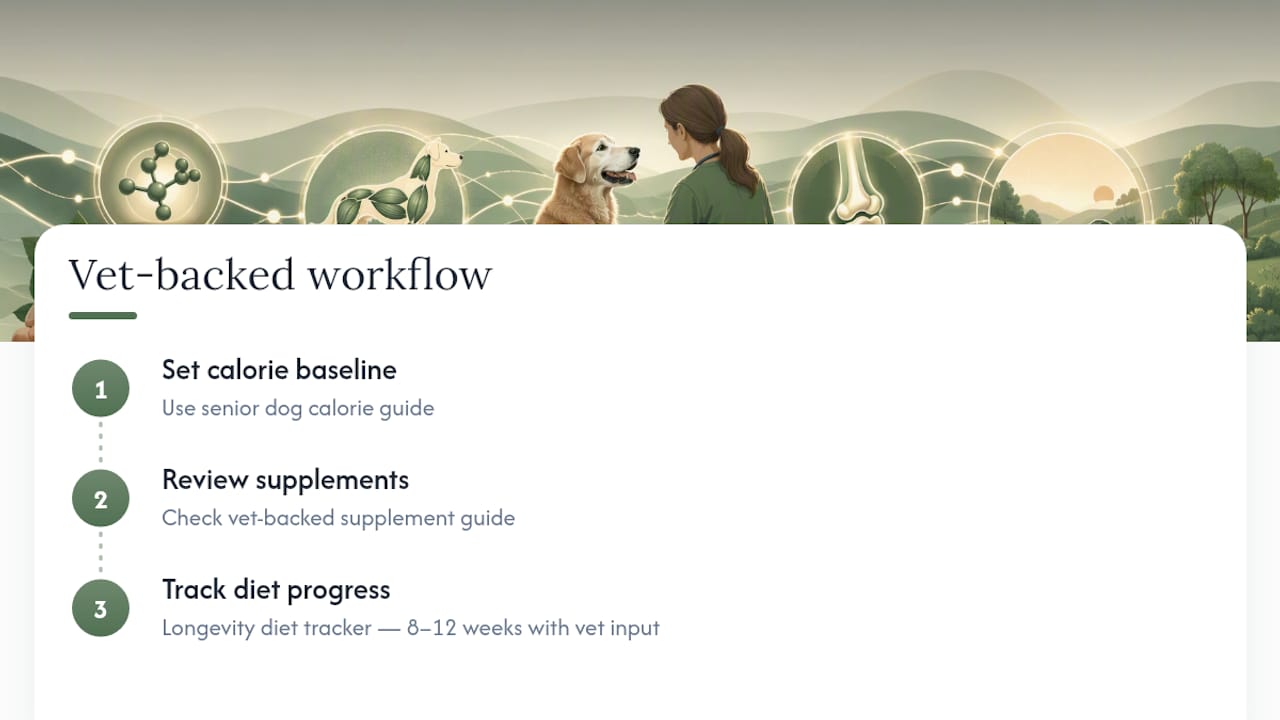
Start with the senior dog calorie guide to set a baseline, then review the vet-backed supplement guide before adding anything new. For dogs managing multiple age-related conditions, the longevity diet tracker offers a structured way to follow progress over 8 to 12 weeks alongside your vet's input.
A Note From Robert on Feeding Aging Dogs Well
Nutrition for older dogs isn't a set-it-and-forget-it decision. What worked at 8 rarely still fits at 12, and the vets I've drawn from throughout this piece keep circling back to the same point: reassess regularly, don't guess. Pair any plan with your veterinarian's read on your dog's bloodwork, not just what's trending in pet nutrition circles.
— Robert
Get a Feeding Plan Built for Your Dog's Actual Numbers
Guesswork on a feeding chart isn't the same as a plan built around your dog's weight, breed, and activity level. Bowlful is the alternative to generic bag instructions: it runs the same RER/MER formulas veterinarians use, without any pet food brand paying to influence the result.
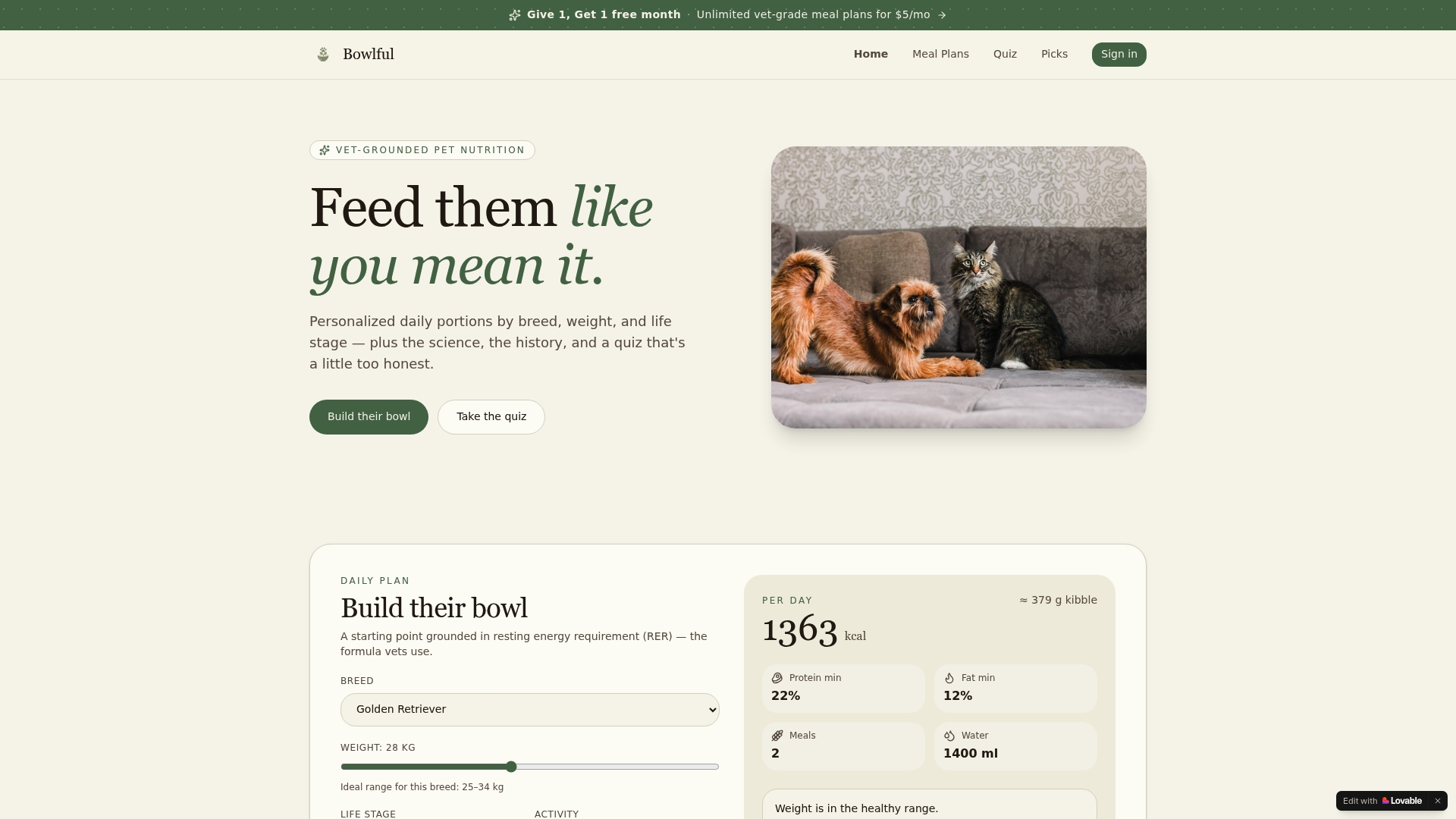
Take the feeding quiz or run the calculator to get a personalized senior feeding plan, downloadable as a PDF you can bring straight to your next vet visit. It takes a few minutes and gives you real numbers instead of a rough estimate from a bag. Start your dog's personalized plan and adjust it as your dog's needs change with age.
Sources
- Choosing food for your senior dog
- Feeding Mature and Senior Dogs | VCA Animal Hospitals
- How Much Protein Does a Senior Dog Need? Vet Guide
- Nutrition management in aging pets - Veterinary Practice News
- Low-calorie treat options for dogs and cats