
Keeping your dog lean, from puppyhood through the senior years, is the single most powerful dietary lever you control. Decades of controlled research tie a lean body condition to delayed disease and longer median lifespan, and individualized protein and calorie management protects muscle as your dog ages. If you're not sure where your dog stands, run a body condition check today and loop in your vet before making changes.
TL;DR:
- Maintaining an ideal body condition score is crucial as it more accurately predicts lifespan than weight alone, especially when monitoring muscle and fat levels.
- Slight calorie reductions of 10% every few weeks, combined with regular BCS and MCS assessments, support healthy aging without risking muscle loss.
- Feeding high-quality protein and omega-3 fatty acids, guided by vet advice, helps preserve muscle and joint health in senior dogs.
- The choice of diet format, whether kibble, fresh, or raw, influences blood chemistry and nutrient delivery but does not guarantee increased lifespan.
- Regular dental care and early detection of health issues like kidney or mobility problems are key to extending quality life, alongside tailored nutritional adjustments.
Table of Contents
- What the Research Actually Shows About Dog Longevity Diet Strategies
- Core Principles for a Healthy Diet That Supports Aging Well
- Kibble, Fresh, or Raw: Which Diet Format Actually Holds Up?
- Running an 8 to 12 Week Feeding Plan You Can Actually Track
- When Standard Longevity Advice Needs to Change
- Weighing Calorie Restriction: Real Benefits, Real Limits
- Don't Overlook Teeth: The Longevity Link Diet Rarely Gets Credit For
- Balancing Research Rigor With Real Life
- Put These Numbers to Work With Bowlful's Free Tools
- Sources
What the Research Actually Shows About Dog Longevity Diet Strategies
The evidence behind a dog longevity diet isn't theoretical. It comes from one of the longest-running controlled feeding studies ever conducted on any species, plus newer work on how diet processing changes a dog's internal chemistry.
The landmark study fed pairs of Labrador Retrievers from the same litters differently for their entire lives: one dog per pair ate a restricted, lean-maintaining diet, the other ate free-choice amounts. The lean-fed dogs lived a median longer lifespan and showed delayed onset of osteoarthritis and other age-related conditions, according to the 14-Year Life Span Study in Dogs from the Purina Institute. Follow-up reviews of that same multi-decade project linked higher fat mass and earlier loss of lean muscle to earlier death, reinforcing that body composition, not just body weight, drives the outcome, according to long-term observations published in the British Journal of Nutrition.
A separate, more recent line of research looked at diet format rather than quantity. Researchers tracked older dogs switched from standard extruded kibble to a fresh, minimally processed diet over a full year. Blood chemistry shifted within 30 days and stayed changed through the 12-month mark.
The metabolic shifts included:
- Higher serum EPA and DHA (the omega-3 fatty acids tied to joint and cognitive support)
- Changes in branched-chain amino acid metabolism, which relates to muscle maintenance
- Lower levels of advanced glycation end products (AGEs), compounds linked to oxidative stress and tissue aging
The finding that matters most: these metabolic changes appeared fast and held steady for a year, according to the year-long fresh vs. extruded diet metabolomics study published in PMC. But the study measured blood markers, not lifespan outcomes, so treat it as a promising signal rather than proof that fresh food adds years.
Here's where owners often overreach with this data. A metabolic marker moving in a favorable direction is not the same as a dog living longer. The researchers behind the fresh-diet study are careful to note that the long-term clinical implications of these changes remain under investigation. That distinction should shape how much weight you put on any single study, including the calorie-restriction work. Breed, starting body condition, genetics, and concurrent illness all modify how any dog responds to dietary change, and a 14-year Labrador study doesn't automatically transfer to a 9-year-old Chihuahua with kidney concerns.
Core Principles for a Healthy Diet That Supports Aging Well
Translating the research into daily feeding decisions comes down to five variables you can actually control: calories, protein, fat, water, and fiber.

Start with body condition, not the bathroom scale. A body condition score (BCS) on the standard 9-point scale tells you far more than raw weight. You should be able to feel your dog's ribs under a thin layer of fat without pressing hard, see a visible waist from above, and notice an abdominal tuck from the side. Dogs with an ideal body condition consistently outlived and outlasted disease onset compared to heavier littermates in the Purina lifespan work. Pair BCS with a muscle condition score (MCS), which grades muscle wasting along the spine and hips separately from fat, since a dog can be lean and still be losing muscle.
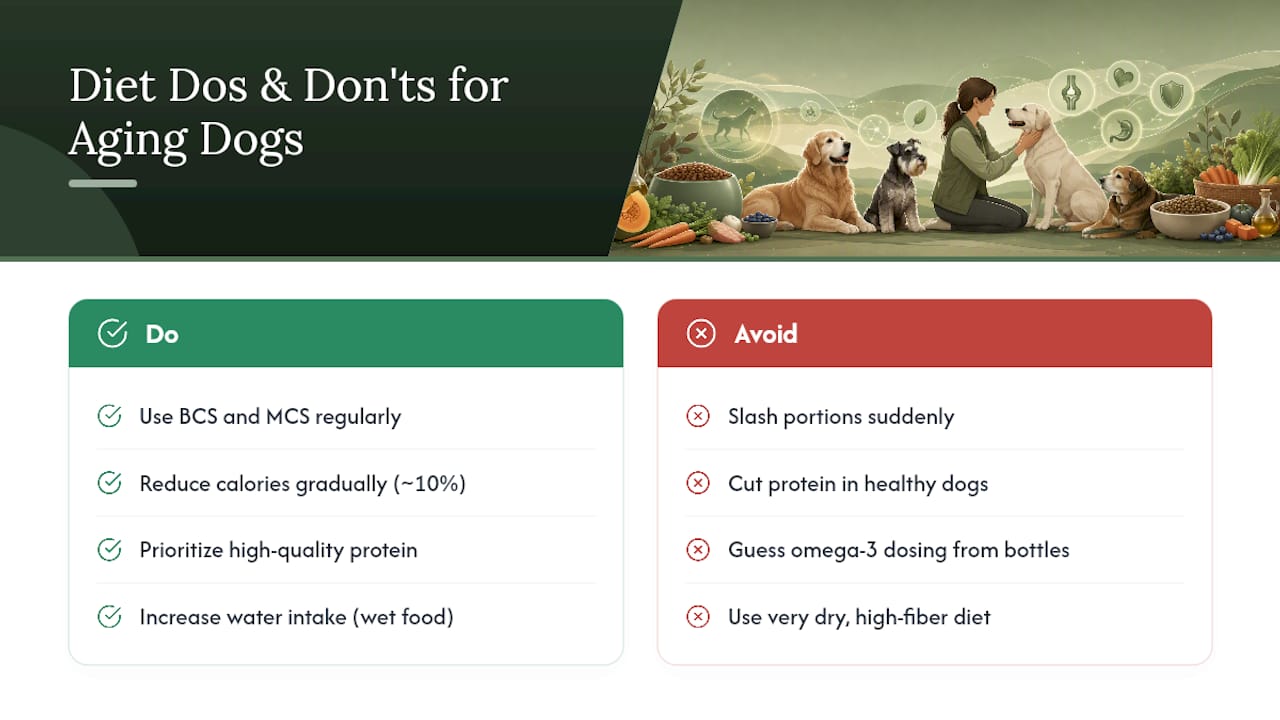
Calorie needs drop as dogs age, largely because activity declines and metabolism slows. A senior dog often needs fewer calories than the same dog needed at age three, but cutting food blindly risks stripping away muscle along with fat. The safer move is a gradual 10% reduction, reassessed against BCS every two to three weeks, rather than a sudden slash in portions.
Protein deserves more attention than most feeding charts give it. Older dogs frequently need more, not less, high-quality protein to counteract age-related muscle loss, a point Cornell's veterinary nutrition team emphasizes directly. The old assumption that senior dogs need "less protein to protect the kidneys" only applies to dogs with diagnosed kidney disease, not healthy aging dogs.
Omega-3 fatty acids, specifically EPA and DHA, support joint comfort and cognitive function, but the doses that produce measurable clinical benefit typically exceed what a standard over-the-counter fish oil capsule provides, so dosing should be guided by a veterinarian. Getting the dose right matters enough that it's worth a conversation with your vet rather than guessing off a bottle label.
Water intake quietly declines in many senior dogs, especially those eating dry kibble exclusively or dealing with early kidney changes. Watch for darker urine, dry gums, or reduced skin elasticity. Adding warm water to kibble, incorporating wet food, or placing multiple water bowls around the house all help.
Fiber supports digestive regularity and gut health in aging dogs, but too much can reduce palatability right when appetite may already be declining. Moderate, moisture-rich fiber sources tend to work better than heavily processed high-fiber diets that taste like cardboard to a dog with a weakening sense of smell.
Pro Tip: Weigh your dog on the same scale, same time of day, every two weeks, and log it. A slow half-pound drift over two months is far easier to catch and correct than a five-pound swing you notice by accident.
For a fuller breakdown of how nutrient needs shift across a dog's life, see this vet-backed guide to life-stage feeding.
Kibble, Fresh, or Raw: Which Diet Format Actually Holds Up?
No single format wins outright. Each comes with trade-offs worth understanding before you commit.
The fresh-food metabolomics research found real, measurable changes when dogs moved off extruded kibble, including higher EPA/DHA and lower AGEs. That's a meaningful signal, but the same researchers stop short of claiming fresh food extends life, since the study tracked blood chemistry rather than mortality. Extruded kibble, for its part, benefits from decades of shelf-stability testing and consistent nutrient delivery, which matters for owners who need reliable, affordable feeding at scale.
Raw diets carry the highest contamination risk of the major formats, both for the dog and for anyone handling the food, and quality control varies enormously between brands. Canned and wet foods sit in the middle: high palatability and moisture content, useful for dogs with reduced appetite or thirst issues, but often pricier per calorie than dry food.
Before trusting any bag, can, or fresh-food subscription, check for these:
- An AAFCO nutritional adequacy statement confirming the food is "complete and balanced" for the dog's life stage
- Nutrient values listed per 1,000 kcal of metabolizable energy, not just per cup, so you can compare formulas accurately
- A named formulation method (feeding trial versus nutrient profile) on the label
- Manufacturer transparency about sourcing and quality control, especially for raw or fresh-frozen products
If you're building a homemade diet, don't wing it. Nutrient minimums and maximums set by AAFCO and NRC exist because deficiencies and excesses both cause real harm over time, and a board-certified veterinary nutritionist can formulate a homemade recipe that actually meets them.
Running an 8 to 12 Week Feeding Plan You Can Actually Track
Vague intentions like "feed him a bit less" rarely produce results. A structured trial does.
- Week 1: Baseline assessment. Weigh your dog, score BCS and MCS, and photograph him from above and the side under consistent lighting. Note current daily food amount and brand.
- Weeks 1 to 2: Calculate the target. Use the Resting Energy Requirement formula, RER = 70 × (body weight in kg)^0.75, then apply a life-stage and activity multiplier to estimate Maintenance Energy Requirement, following the approach outlined in the Merck Veterinary Manual. A daily calorie calculator does this math instantly if you'd rather skip the exponents.
- Weeks 2 to 3: Introduce changes gradually. If reducing calories, cut by 10% initially rather than jumping straight to 20%, and mix any new food in over five to seven days to avoid digestive upset.
- Weeks 3 to 8: Track weekly. Weigh every one to two weeks, recheck BCS every three to four weeks, and log energy level and appetite daily in a note app or simple spreadsheet.
- Weeks 8 to 12: Reassess and adjust. If BCS hasn't shifted toward the 4 to 5 range, drop calories another 10 to 20%. If your dog is losing weight too fast or muscle is visibly wasting, increase intake and add protein.
Pro Tip: Split the daily calorie total across two or three smaller meals instead of one large one. Older digestive systems often handle smaller, more frequent meals better, and it curbs the begging that leads to unplanned treats.
Book a vet visit if you see weight loss without a diet change, weight that won't budge despite calorie cuts, muscle wasting alongside stable or rising weight, or any change in water intake or urination. Those patterns point to something a scale can't diagnose, and they warrant either a general checkup or a referral to a board-certified veterinary nutritionist for a formal diet plan. A calorie calculator built for larger, high-activity breeds can also help you sanity-check whether your current portions were ever right to begin with.
When Standard Longevity Advice Needs to Change
The lean-and-individualized rule holds for most healthy dogs, but several conditions call for a different playbook entirely.
- Obesity: Aim for 1 to 2% body weight loss per week, never faster, and lean on fiber and added water volume to preserve fullness while cutting calories. Crash diets in dogs risk hepatic lipidosis and muscle loss. This guide to preventing obesity covers portion strategies that apply well beyond small breeds.
- Muscle wasting (sarcopenia): Increase protein density and improve palatability with warm water or wet food toppers, and track MCS monthly rather than relying on the scale alone.
- Arthritis and mobility loss: EPA and DHA supplementation offers modest, real relief for many dogs, but expect a supporting role alongside physical therapy and pain management, not a cure. This vet-backed supplement guide breaks down dosing considerations.
- Kidney disease: Standard longevity advice does not apply here. Protein, phosphorus, and sodium levels need therapeutic adjustment under veterinary guidance, as detailed in this nutrition guide for kidney disease in dogs.
- Cognitive decline: Antioxidant-rich diets and targeted supplements show some promise, but always confirm dosing and interactions with your vet before adding anything new.
Weighing Calorie Restriction: Real Benefits, Real Limits
The Purina lifespan data is compelling, but "restrict calories" isn't a blank check to underfeed your dog. The benefit came from sustained, moderate restriction that kept dogs lean without starving them, not aggressive deprivation.
Done right, lifelong calorie moderation delays arthritis onset, may push back the timeline on several chronic diseases, and adds a measurable stretch of healthy years, based on findings from the Purina Institute's long-term study. Done wrong, calorie restriction risks nutrient deficiencies, muscle wasting, and a dog who's thin on the scale but losing the lean tissue that actually protects joints and metabolism.
The line between the two comes down to pace and monitoring. A 10 to 20% reduction, tracked against BCS and MCS every few weeks, sits in safe territory for most healthy adult and senior dogs. Restriction beyond that, or restriction applied to a dog with an unclear health status, needs veterinary oversight. Puppies, pregnant or nursing dogs, and dogs recovering from illness or surgery are not candidates for calorie restriction at all. The dogs in the original study started their restricted diet as puppies and stayed on it for life. Copying the endpoint without the gradual, supervised approach that got them there misses the actual lesson.
Don't Overlook Teeth: The Longevity Link Diet Rarely Gets Credit For
Dental disease affects a large share of adult dogs by middle age, and it does more than cause bad breath. Chronic oral infection allows bacteria into the bloodstream, where it can affect the heart, kidneys, and liver over years of low-grade exposure. A dog fighting dental pain also eats less, chews less thoroughly, and often shifts toward soft, calorie-dense foods that make weight management harder.

Diet plays a direct role in prevention. Dry kibble with a larger, textured kibble size can provide mild mechanical abrasion against plaque, though it won't replace brushing or professional cleanings. Dental-specific diets and treats carrying the Veterinary Oral Health Council (VOHC) seal have been tested for actual plaque and tartar reduction, unlike products that simply market themselves as "dental" without supporting data.
Texture matters as much as ingredient list here. A dog with painful teeth or missing molars may need a switch to canned or softened food, and that switch often triggers a calorie recalculation since wet food is typically less calorie-dense per cup than dry kibble. Watch for dropped food, chewing on one side of the mouth, or sudden preference for soft treats. Those behavioral shifts usually show up before you'd notice anything looking at the teeth directly, and they're worth a vet visit before the underlying disease progresses further and undermines everything else you're doing on the nutrition side.
Balancing Research Rigor With Real Life
Chasing every longevity marker at the expense of a happy, hungry dog misses the point. Steady, moderate changes beat extreme restriction almost every time. Watch mobility, appetite, and how engaged your dog seems with the world, not just the numbers. Measure objectively, but keep your vet in the loop and let quality of life set the boundaries research alone can't.
— Robert
Put These Numbers to Work With Bowlful's Free Tools
Reading about RER and MER formulas is one thing. Running the actual numbers for your dog is another, and that's the gap Bowlful was built to close. Bowlful's calculators use the same vet-standard formulas referenced throughout this guide, weight, age, breed, and activity level, to output a specific daily calorie target and portion size, not a generic range pulled from a bag label.
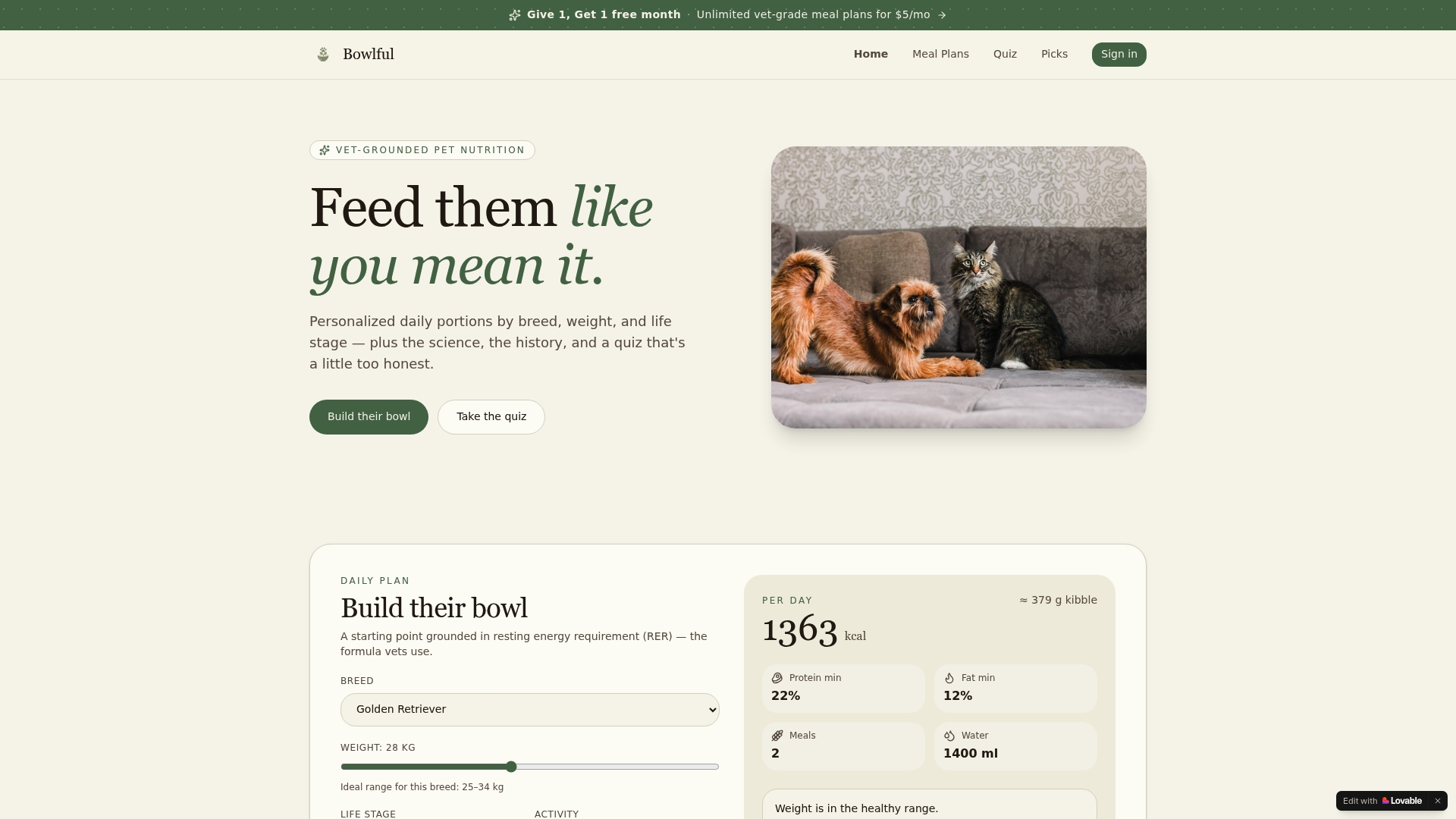
Start with the daily calorie calculator to get your dog's baseline number, then check the water intake calculator to confirm hydration is on track. Run those numbers for two to four weeks, log weight and BCS the way this guide outlined, and see where the gaps show up. If your dog has a health condition, an unusual breed profile, or you want a fully personalized meal plan instead of building the trial yourself, Meal Plan Pro turns those same formulas into a downloadable, week-by-week feeding plan built around your dog specifically. Because Bowlful carries no food-brand affiliations, every recommendation comes from the numbers, not a sponsorship. Head to Bowlful to run your dog's numbers now.
Sources
For the full studies and guidance behind this article: the Purina lifespan study, the fresh-diet metabolomics research, FEDIAF's senior nutrition statement, and Cornell's senior feeding guidance.
- 14-Year Life Span Study in Dogs | Purina Institute
- Year-long fresh vs extruded diet metabolomics study (PMC)
- Choosing food for your senior dog | Cornell University