
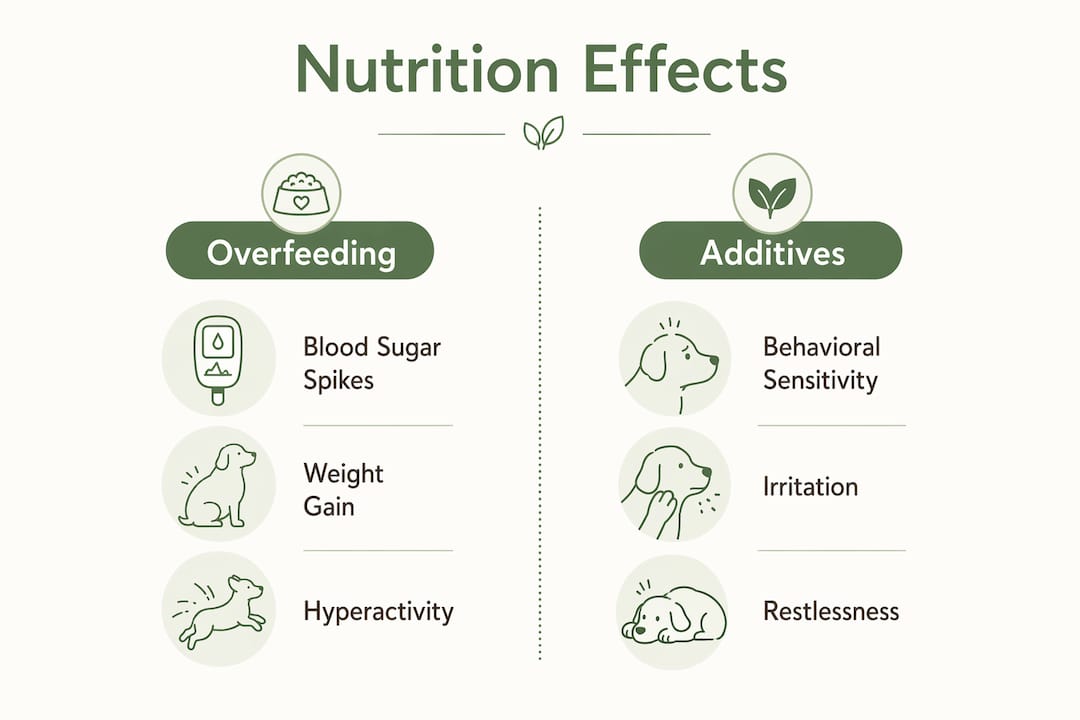
Overfeeding can contribute to hyperactivity in dogs, though the relationship is more nuanced than a simple cause and effect. Excess calories, particularly from foods high in simple carbohydrates and sugars, trigger rapid blood sugar swings that leave dogs restless, unfocused, and difficult to settle. Artificial additives and preservatives found in many commercial dog foods add another layer of behavioral sensitivity for some dogs. That said, overfeeding more commonly leads to weight gain and lethargy over time, so the picture depends heavily on what you're feeding and how much.
Here's what the connection actually looks like in practice:
- Blood sugar spikes: Too many simple carbs cause fast rises and crashes in blood glucose, which can produce bursts of frantic energy.
- Additive sensitivity: Artificial colorings, flavors, and preservatives in commercial foods may trigger excitability in certain dogs.
- Caloric excess: More energy than a dog can burn often shows up as restlessness, especially in younger or high-drive breeds.
- Nutritional imbalance: Overfeeding calorie-dense but nutrient-poor food can disrupt the amino acid balance that supports calm, stable behavior.
- Food bloat confusion: Dogs that eat too much too quickly may show restlessness and discomfort that owners mistake for hyperactivity.
How does nutrition influence dog behavior?
What goes into your dog's bowl directly shapes how they act. Protein, carbohydrates, fats, and additives each play a distinct role in canine brain chemistry and energy regulation, and getting the balance wrong, in either direction, has real behavioral consequences.
Carbohydrates and blood sugar
Excess sugar and carbohydrates in dog food cause rapid blood sugar swings that contribute to hyperactivity and unfocused behavior. Think of it like a child who eats a bag of candy before school: the spike is fast, the crash is hard, and the window in between looks a lot like chaos. Dogs fed diets heavy in corn syrup, white rice, or other refined carbs cycle through this pattern repeatedly throughout the day.

Research on mammals confirms the longer-term risk. Long-term high sugar intake is correlated with weight gain, neurocognitive deficits, and increased hyperactivity responses, suggesting the effects of a poor diet compound well beyond a single meal.
Additives and behavioral sensitivity
Artificial additives, preservatives, and coloring agents in many commercial dog foods may contribute to behavioral sensitivity and hyperactivity in some dogs, though clinical proof remains limited. The pattern mirrors what researchers have observed in children: several studies link artificial colorings to hyperactivity, while others find no effect, leaving the question open but worth taking seriously. Veterinary experts generally recommend whole food diets built around lean meat and vegetables for dogs that seem excitable or reactive.
The protein misconception
High protein does not cause hyperactivity in most dogs. Research published in Nutrition Research Reviews found no effect of dietary protein content on hyperactivity scores when dogs were analyzed individually, though protein adjustments do warrant monitoring in dogs already predisposed to excitability. The real culprits are usually the carbohydrate and additive profiles of a food, not the protein level. Vets recommend gradual changes and close observation rather than dramatic protein cuts.
Key fact: A balanced diet supports proper nutrient intake and prevents the nutritional deficiencies that worsen both behavioral and physical health. Overfeeding often means loading up on empty calories, which creates problems on both fronts simultaneously.
Recognizing signs of overfeeding and its behavioral impact
Spotting overfeeding early saves you from a much harder correction later. The signs split into two categories: physical and behavioral, and they often show up together.
Physical signs of overfeeding:
- Visible weight gain or loss of a defined waist when viewed from above
- Digestive upset, including loose stools, gas, or vomiting after meals
- Skin irritations or a dull coat, often tied to nutritional imbalance
- Low energy and reduced willingness to exercise, a common long-term outcome
Behavioral signs linked to diet:
- Restlessness and inability to settle after meals
- Excessive vocalization, particularly around feeding time
- Food guarding or obsessive interest in the food bowl between meals
- Frantic, unfocused energy that spikes shortly after eating
54% of U.S. dogs are overweight or obese, driven largely by overfeeding and poor nutritional habits. That statistic matters because obesity complicates the behavioral picture: an overweight dog may be lethargic most of the time but still show bursts of agitated, hyperactive behavior tied to blood sugar fluctuations or food-seeking.
One distinction worth making: food bloat, which happens when a dog eats a large quantity very quickly, causes genuine physical discomfort and restlessness that can look exactly like hyperactivity. The dog isn't energized; they're distressed. Recognizing that difference helps you respond appropriately rather than misattributing the behavior to diet quality alone.
Pro Tip: Keep a simple feeding journal for two weeks. Note what your dog ate, how much, and any behavioral changes within an hour of meals. Patterns become obvious fast, and you'll have something concrete to share with your vet.

It's also worth separating breed-driven energy from diet-driven hyperactivity. A Border Collie or Jack Russell Terrier running laps in the yard is doing what their genetics demand. A Basset Hound suddenly unable to settle after switching to a high-carb kibble is telling you something different. Context, breed, age, and baseline temperament all factor into reading the signs accurately. For a deeper look at how boredom and eating habits intersect with behavior, the patterns are often more connected than owners expect.
Nutritional guidance to manage hyperactivity from overfeeding
Fixing a diet-driven behavior problem starts with the food itself, not the training. Here's how to approach it without creating new problems in the process.
Reduce calories gradually, not all at once. Cutting a dog's food intake too sharply causes irritability and nutritional deficiencies, and in severe cases, risks liver complications. Veterinary nutritionists advise gradual reductions with professional guidance to avoid those complications. A reduction of 10–20% over several weeks is a reasonable starting point for most dogs.
Check the ingredient list for hidden sugars and additives. Corn syrup, propylene glycol, BHA, BHT, and artificial dyes are common in budget commercial foods. Swapping to a food where the first three ingredients are named proteins, not grains or by-products, makes a measurable difference for many dogs. Knowing your dog's daily calorie needs is the foundation for making that swap correctly.
Establish a consistent feeding schedule. Free-feeding, where food sits out all day, makes portion control nearly impossible and keeps blood sugar in a constant state of flux. Two measured meals per day, timed consistently, stabilizes energy levels and reduces food-obsessive behavior. A structured pet feeding routine also gives your dog a predictable rhythm, which itself has a calming effect.
Balance protein thoughtfully. Dogs need adequate protein for muscle maintenance and neurotransmitter production, including serotonin precursors like tryptophan. The goal isn't a low-protein diet; it's a diet where protein comes from quality, digestible sources rather than fillers. For dogs showing territorial aggression alongside hyperactivity, research suggests that protein level adjustments combined with behavioral observation can help, but always with vet input.
Add exercise as a complement, not a substitute. Diet changes work faster when paired with consistent physical activity. A dog burning appropriate energy through walks, play, and mental stimulation is less likely to express excess calories as frantic indoor behavior.
Pro Tip: Before making any significant dietary change, ask your vet for a body condition score assessment. That single number tells you exactly where your dog sits on the weight spectrum and gives you a concrete target to work toward, rather than guessing.
For whole food recipe ideas that support calmer behavior, natural dog recipes built around lean proteins and vegetables offer a practical starting point. Pair those with guidance on caring for your dog's overall health to build a complete picture.
What science and veterinary experts say about diet and canine hyperactivity
The scientific case connecting diet to canine behavior is real but still developing. Here's where the evidence stands and what experts actually recommend.
On sugar and long-term behavior: A peer-reviewed study found that long-term sucrose overconsumption produces persistent hyperactivity and neurocognitive deficits in mammals, with effects on hippocampal neurogenesis that parallel ADHD-like symptoms. The research used a mouse model, so direct extrapolation to dogs requires caution, but the underlying mechanism, sugar disrupting brain development and impulse control, applies broadly across mammals.
On artificial additives: Expert consensus leans toward caution. While controlled clinical trials in dogs are limited, the behavioral sensitivity observed in some dogs after consuming additive-heavy foods is consistent enough that veterinary nutritionists routinely recommend whole food diets for excitable or reactive animals.
On rapid dietary changes: Veterinary nutritionists at Tufts University caution explicitly against dramatic calorie cuts, citing risk of liver failure and irritability when reductions happen too fast. The liver condition in question, hepatic lipidosis, is a serious risk in dogs that lose weight too quickly. Gradual, supervised change is the standard of care.
Key findings at a glance:
- Dietary protein content alone does not reliably cause hyperactivity in dogs without other behavioral predispositions.
- Blood sugar fluctuations from high-carb diets are the most consistently documented dietary trigger for restlessness and unfocused energy.
- Long-term poor diet quality, not just single-meal overfeeding, drives the most persistent behavioral changes.
- Clinical evidence for additive-driven hyperactivity in dogs is suggestive but not yet definitive; the precautionary approach is to minimize artificial ingredients.
Bowlful's feeding methodology addresses these variables directly. Using the Resting Energy Requirement (RER) formula, the same calculation veterinarians use to determine a dog's baseline caloric need, Bowlful builds personalized meal plans calibrated to each dog's breed, weight, and life stage. That precision matters because a generic feeding guideline printed on a kibble bag is designed for an average dog, and your dog almost certainly isn't average. Research cited by Bowlful also points to lean-fed pets living up to 1.8 years longer, which puts the behavioral benefits of proper portioning in a larger health context. For a thorough breakdown of the science behind proper dog feeding, the RER approach is worth understanding before your next vet visit.
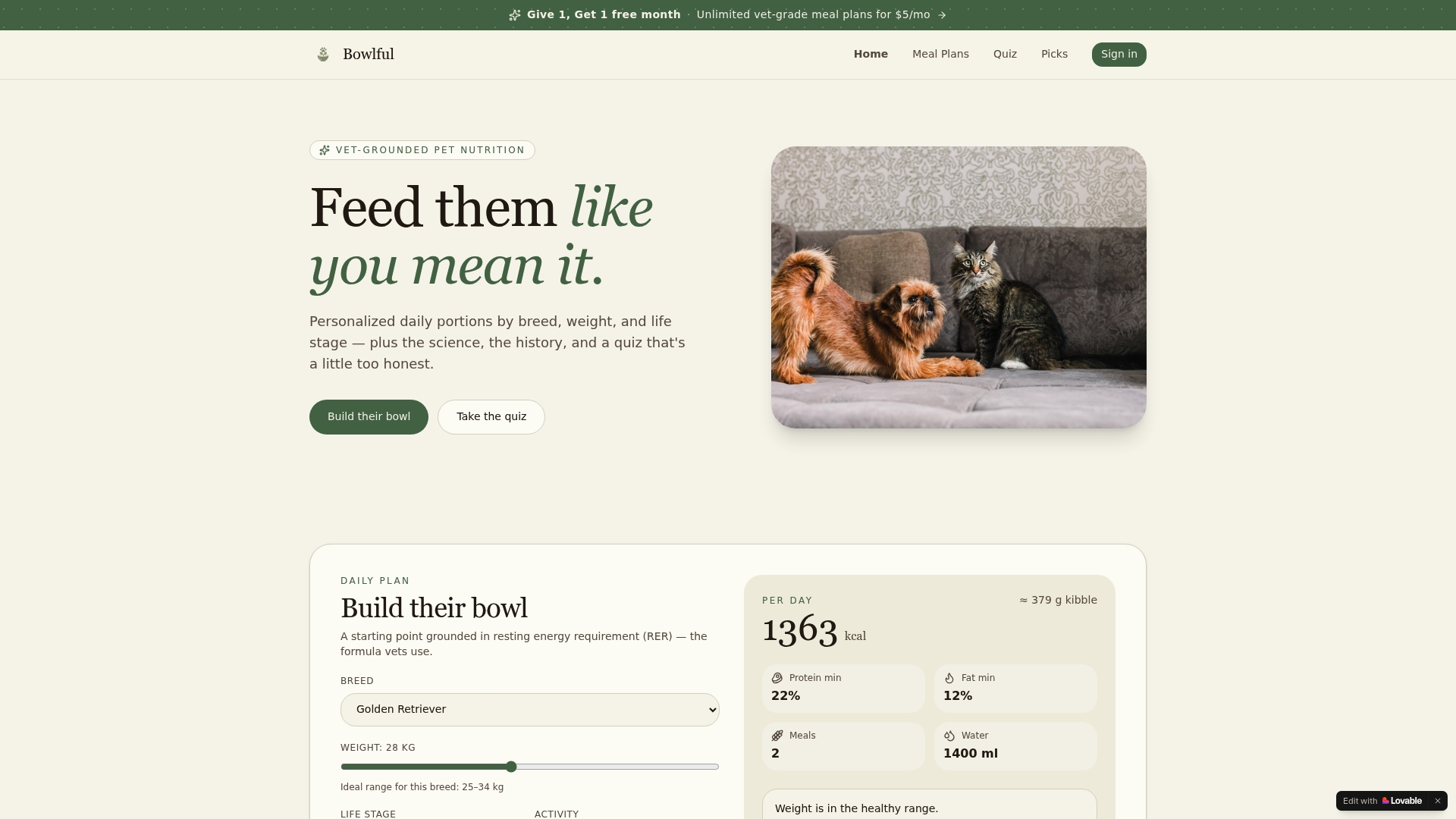
Ready to stop guessing about portions? Bowlful's interactive quiz builds a personalized meal plan based on your dog's specific breed, weight, and life stage using the RER formula. Start your dog's plan and take the guesswork out of feeding.
Key Takeaways
Overfeeding contributes to hyperactivity in dogs primarily through blood sugar spikes from excess carbohydrates and sugars, with artificial additives adding behavioral risk for sensitive dogs.
| Point | Details |
|---|---|
| Blood sugar drives restlessness | Excess simple carbs cause rapid glucose swings that produce bursts of unfocused, hyperactive energy. |
| Additives carry behavioral risk | Artificial colorings and preservatives may increase excitability in some dogs, though clinical evidence is still limited. |
| 54% of U.S. dogs are overweight | Overfeeding is the primary driver; obesity complicates behavior by layering lethargy with intermittent agitation. |
| Gradual change is safer | Rapid calorie cuts risk liver complications and irritability; veterinary nutritionists recommend slow, supervised reductions. |
| Protein is rarely the culprit | Research shows dietary protein content does not reliably cause hyperactivity without other predisposing behavioral factors. |