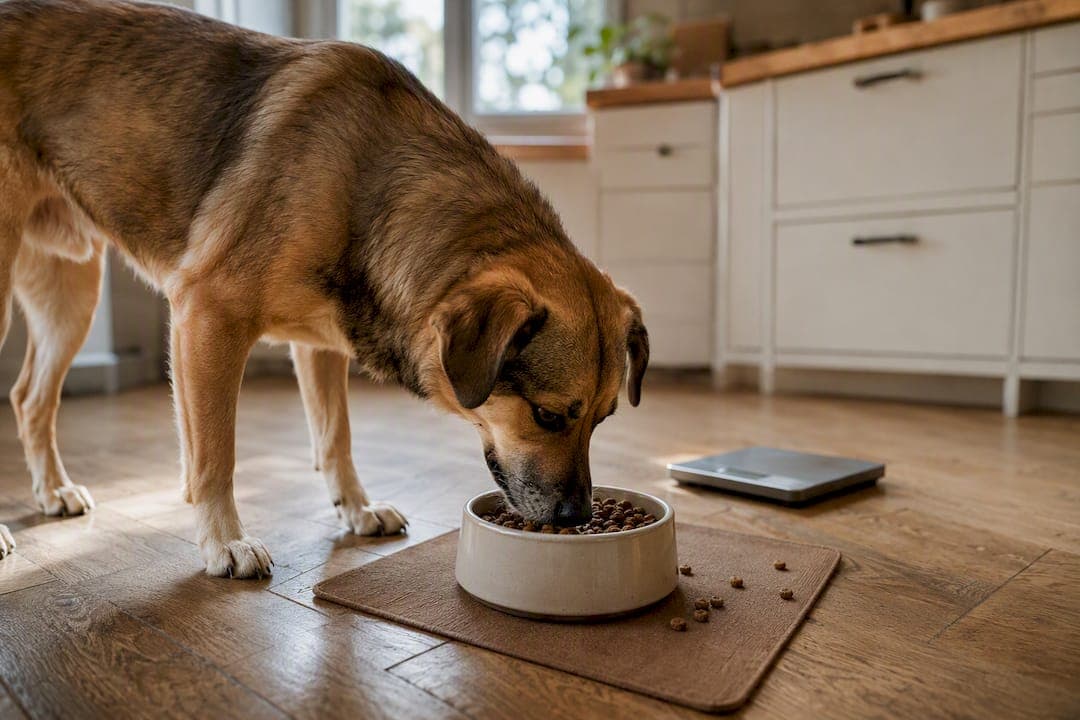
Feeding your dog or cat at the same times, in the same amounts, every day stabilizes digestion, supports a healthy weight, and lowers stress-driven behavior. That's the core finding behind large observational data from the Dog Aging Project, which tracked feeding patterns against health outcomes in tens of thousands of dogs. The mechanism isn't mysterious: predictable meals let the gut, the metabolism, and the nervous system all work off the same script, day after day.
- The one thing to do today: pick two anchor points already fixed in your routine, like wake-up and your commute home, and feed at those times using a kitchen scale instead of a scoop.
- Bowlful's RER/MER calculators build portions off the same NRC and AAFCO formulas veterinarians use, so you're not guessing.
Key Takeaways
Consistent feeding times and portions stabilize digestion, support healthy weight, and reduce anxiety by giving a pet's body and behavior a rhythm to rely on.
| Point | Details |
|---|---|
| Feed on a schedule, not free-choice | Scheduled, portion-controlled meals lower obesity risk compared with free-feeding for most pets. |
| Respect stomach capacity | Keep single meals under about a third of stomach capacity to limit distension and reflux. |
| Cap treats at 10% | Treats should stay under 10% of total daily calories to avoid undermining portion control. |
| Anchor meals to routine events | Tying feeding to wake-up or homecoming improves consistency more than chasing an exact clock time. |
| Watch for red flags | Persistent vomiting, appetite loss, or rapid weight change warrants a same-day vet call. |
Table of Contents
- Why Pet Feeding Consistency Improves Health: The Physiology
- How a Feeding Routine Shapes Behavior and Training
- Portion Control and Metabolic Health
- What Consistent Feeding Prevents or Catches Early
- Building a Feeding Schedule That Actually Sticks
- When to Bring In Your Veterinarian
- What the Research Actually Shows, and What It Doesn't
- Sources
Why Pet Feeding Consistency Improves Health: The Physiology
A predictable meal schedule keeps your pet's gut running on a rhythm it can actually anticipate. Gastric acid secretion, motility, and enzyme release all ramp up around expected mealtimes; when meals arrive at random hours or in random sizes, that timing gets thrown off, and digestion becomes less efficient.
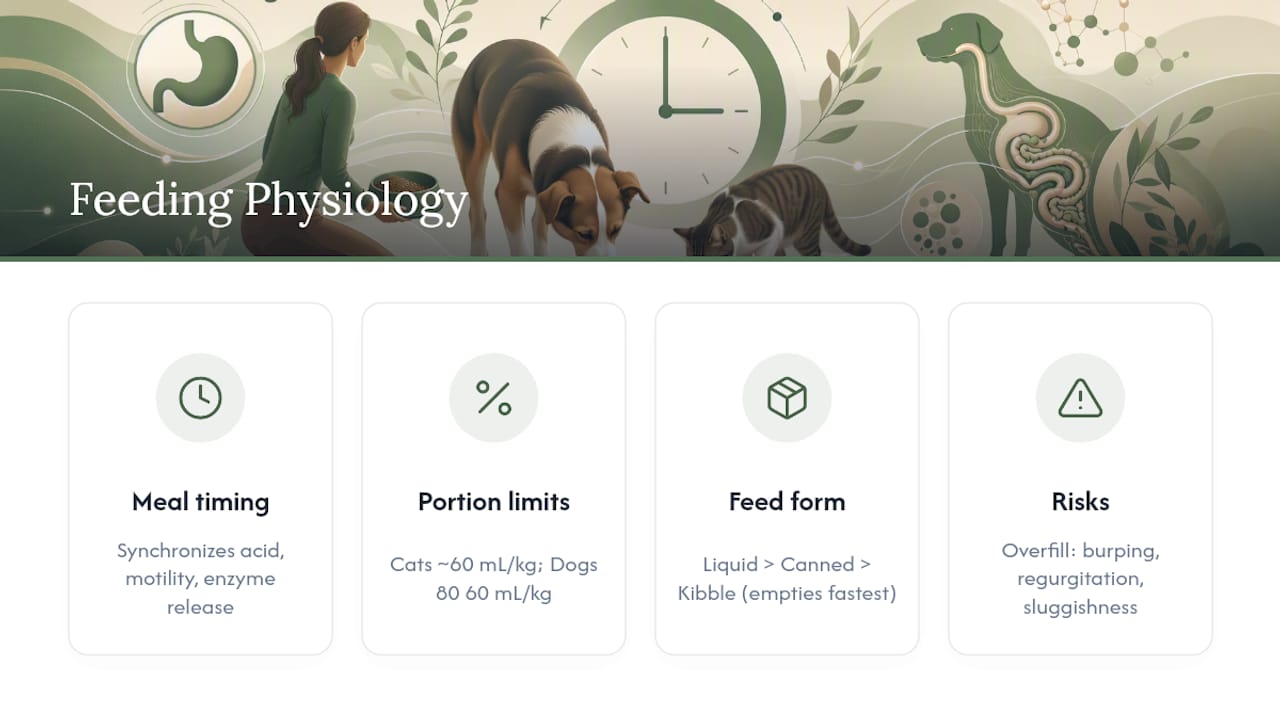
Portion size matters as much as timing. Veterinary guidance generally caps a single meal at less than one third of stomach capacity, roughly 60 mL per kilogram of body weight in cats and 80 to 90 mL per kilogram in dogs, to limit gastric distension and reflux. Overshoot that, and you get the slow, uncomfortable digestion that shows up as burping, regurgitation, or a pet that seems sluggish an hour after eating.
Diet form changes the math too. Clinical nutrition guidance notes that liquid diets empty from the stomach faster than canned food, which empties faster than dry kibble. Switching formats without adjusting frequency can shift how much nutrition actually gets absorbed, and it can raise diarrhea risk in sensitive pets.
Pro Tip: Anchor mealtimes to something that already happens on a fixed schedule, like your alarm or your drive home from work, rather than trying to hit an exact clock time. It's easier to sustain, and it's the same approach VCA Hospitals recommends for building routine adherence.
How a Feeding Routine Shapes Behavior and Training
Pets that know when food is coming worry less about whether it's coming at all. That predictability reduces anxiety-driven behaviors and makes training noticeably easier, because you're pairing consistent cues with a consistent outcome.
- Lower anxiety signals around mealtime, including pacing, whining, and door-watching.
- Easier house-training, since regular meals produce regular, predictable bathroom needs.
- Fewer food-guarding incidents, particularly in multi-pet homes where unpredictable feeding breeds competition.
- More stable appetite, which makes it obvious fast when something's actually wrong.
A simple example: dogs in crate training often settle faster when meals happen right after crate time, turning the crate into a cue for something good rather than a holding pen. Bowlful's guide on routine and dog anxiety walks through the research behind this link in more depth.
Portion Control and Metabolic Health
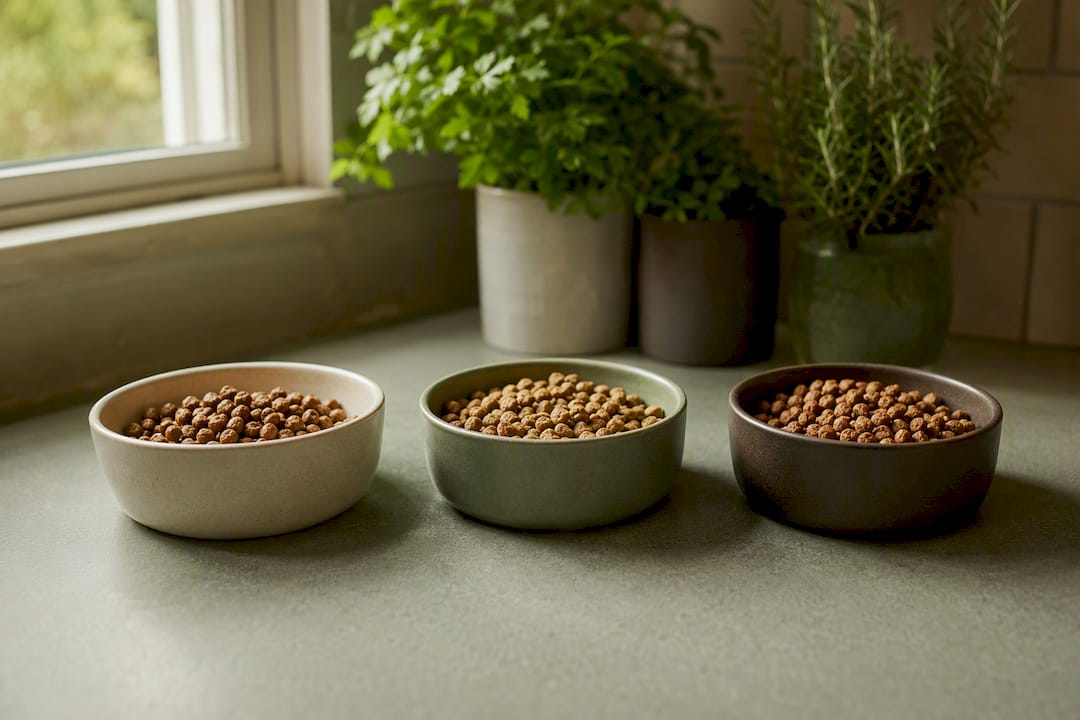
Scheduled, portion-controlled meals lower obesity risk compared with free-feeding for most dogs and cats. Free-feeding works for a minority of pets that self-regulate well, but most animals, especially food-motivated breeds, will eat past fullness if the bowl stays full.
Start portioning with RER (resting energy requirement) scaled up to MER (maintenance energy requirement) based on activity level, then weigh food rather than eyeballing it. A kitchen scale removes the guesswork that measuring cups introduce. Merck Veterinary Manual recommends keeping treats under 10% of total daily calories, since treat calories are the most common blind spot in an otherwise well-managed diet.
- Puppies and kittens need more frequent, calorie-dense meals to fuel growth.
- Adult pets typically stabilize at one or two measured meals daily.
- Senior pets often need recalculated portions as activity and metabolism slow, sometimes with a vet-guided calorie reduction.
What Consistent Feeding Prevents or Catches Early
Consistent food type and timing reduce digestive upset, lower several obesity-related disease risks, and make it far easier to catch a food allergy or intolerance before it becomes chronic. When the variables stay fixed, a new symptom actually means something.
- GI upset: vomiting and diarrhea are easier to trace back to a cause when meals aren't constantly changing.
- Hepatic lipidosis risk in cats, which can develop quickly if a cat stops eating or undergoes an abrupt diet change.
- Obesity and secondary diabetes risk, both strongly tied to free access to food.
- Dental buildup, since irregular grazing on dry kibble throughout the day gives less opportunity for scheduled dental chews or routine oral checks to do their job.
- Medication absorption problems. Some drugs require food to prevent stomach irritation, while others like levothyroxine need an empty stomach for stable blood levels, so erratic feeding times can undercut a treatment plan entirely.
Warning: Sudden appetite loss lasting more than 24 hours, or repeated vomiting, is not a "wait and see" situation, especially in cats, where even short-term food refusal can trigger hepatic lipidosis. Call your vet the same day.
Building a Feeding Schedule That Actually Sticks
Pick two daily anchor points, like your morning wake-up and your evening return home, and build meals around those rather than an arbitrary clock time you'll inevitably miss on a busy Tuesday.
- Determine frequency by life stage: kittens and puppies need more frequent meals than adults.
- Calculate a starting portion using RER, then adjust to MER based on activity level.
- Weigh and pre-portion meals in advance, ideally into containers or bags for the week.
- Log treats and table scraps so they don't quietly blow past that 10% calorie ceiling.
- Recheck body weight every two to four weeks and adjust portions before drift becomes a problem.
| Life Stage | Typical Frequency | Notes |
|---|---|---|
| Puppy/kitten | 3 times daily | Cornell recommends 3×/day for kittens, then 2× for adult cats. |
| Adult | 1 to 2 times daily | Frequency depends on breed, activity, and any digestive sensitivity. |
| Senior | 2 times daily, smaller portions | Often needs recalculated calories as metabolism and mobility change. |
Individualize every number here with your veterinarian. In multi-pet households, feed animals in separate spaces or use a microchip feeder to stop the fastest eater from finishing two bowls. Bowlful's feeding routine guide walks through building this out step by step, and a feeding schedule documentation template can help multi-caregiver households stay aligned.
Pro Tip: In homes with more than one pet, feed in separate rooms with the doors closed for the first ten minutes. It removes the competitive pressure that drives fast, overeating behavior.
When to Bring In Your Veterinarian
Talk to your vet if weight shifts quickly in either direction, vomiting or diarrhea persists past a day or two, appetite loss continues, or a medication doesn't seem to be working as expected.
- Rapid weight loss or gain over a few weeks.
- Repeated vomiting or diarrhea, especially with blood present.
- Appetite that disappears or spikes suddenly with no clear cause.
- Signs of pain, lethargy, or behavior changes around mealtime.
Bring a food log covering three to seven days (times, amounts, treats), photos of ingredient labels, a list of current medications and supplements, and recent weight numbers. It turns a vague "something seems off" visit into a productive one.
What the Research Actually Shows, and What It Doesn't
The evidence here is genuinely strong, but it's associative, not proof of a direct cause. Dog Aging Project researchers found that dogs fed once daily had lower odds of several health conditions and lower cognitive dysfunction scores than dogs fed more often, but they're careful to say this doesn't establish that once-daily feeding causes those outcomes.
The associations between feeding frequency and health span gastrointestinal, dental, orthopedic, kidney, and liver conditions, yet the authors are explicit that longitudinal, controlled research is still needed before anyone claims once-daily feeding causes better health.
Clinical guidance on gastrointestinal disease backs the mechanism, noting that smaller, more frequent meals reduce distension and acid secretion in pets already prone to GI issues, while Cornell's feline feeding guidance and Merck's portion-control recommendations both stress individualizing the plan. Treat this article as a starting point for that conversation, not a substitute for it.
A Note From Robert
I've read enough of this research to trust the pattern even where causation isn't nailed down: predictable meals, sized correctly, solve more problems than they create. If you want the math done for you, Bowlful's feeding tools build portions off the same formulas cited above.
Sources
- Once-daily feeding is associated with better health in companion dogs (Dog Aging Project) - PMC
- Feeding practices in small animals - Merck Veterinary Manual
- Feeding times and frequency for your dog - VCA Hospitals
Treat these as a foundation for a conversation with your veterinarian, since the strongest findings here are associations, not universal prescriptions.