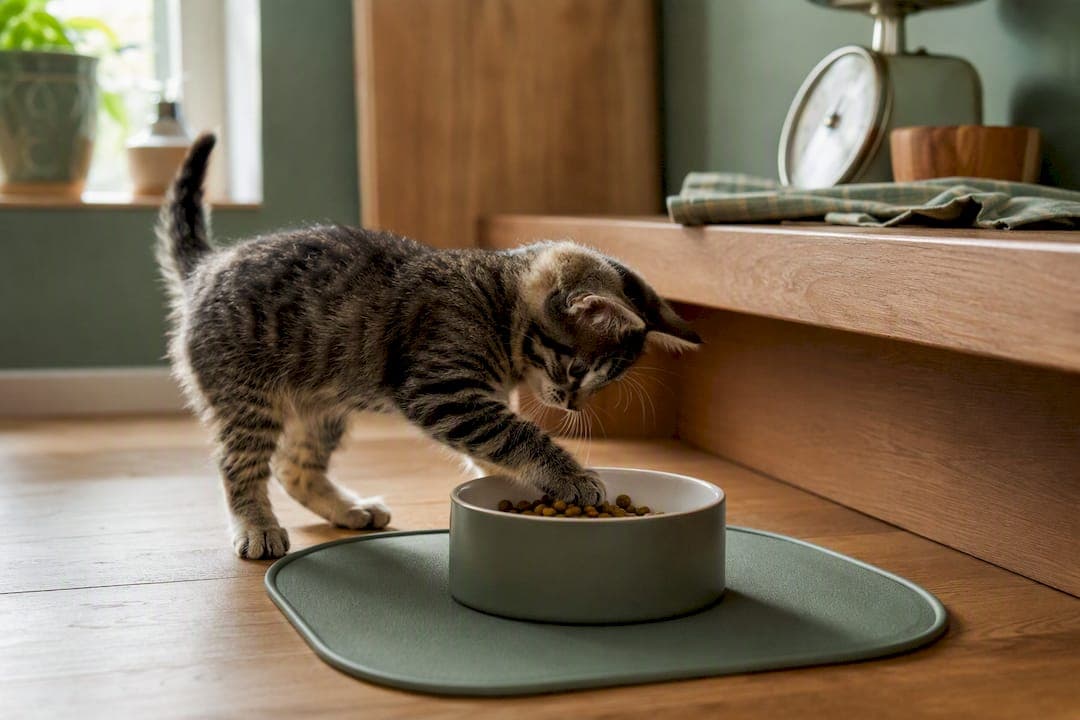
Most healthy adult cats do best on two measured meals a day, spaced roughly 8 to 12 hours apart, according to VCA Animal Hospitals. Kittens need more frequent fuel, typically 3 to 4 meals daily, while seniors and cats with medical conditions often shift to 2 to 3 smaller meals based on a veterinarian's advice. Scheduled, measured feeding beats free-feeding for weight control in almost every case.
TL;DR:
- Most healthy adult cats do best with two measured meals a day spaced 8 to 12 hours apart, avoiding the drawbacks of free-feeding.
- Kittens require 3 to 4 small meals daily, while seniors and cats with medical issues often need 2 to 3 smaller meals, based on veterinarian advice.
- Extending the fasting interval beyond 8 to 10 hours can cause hunger, yowling, or behavioral issues, especially if the schedule is inconsistent.
- Using a kitchen scale to measure portions accurately helps maintain proper calorie intake and prevents gradual weight gain or loss.
- Adjustments for medical conditions or travel should prioritize consistency, with vet-approved routines, gradual changes, and reliable feeders to minimize stress.
Table of Contents
- Cat Feeding Times by Life Stage: Kittens, Adults, and Seniors
- Why Vets Recommend 8 to 12 Hours Between Meals
- Free-Feeding vs. Scheduled Meals: What the Evidence Shows
- Sample Cat Feeding Schedules for Real-Life Routines
- How to Measure Cat Food Portions Correctly
- Switching From Free-Feeding to a Schedule Without a Fight
- Bowlful's Approach to Feeding Times and Portions
- Feeding Cats With Diabetes, Kidney Disease, and Other Health Conditions
- Matching Feeding Times to Your Cat's Natural Hunting Rhythm
- How Feeding Times Shape Cat Behavior and Mood
- Spotting Overfeeding and Underfeeding Through Mealtime Behavior
- Adjusting Cat Feeding Schedules for Travel and Time Away
- A Few Honest Notes on Making This Stick
- Getting Your Cat's Feeding Plan Right With Bowlful
- Sources
Cat Feeding Times by Life Stage: Kittens, Adults, and Seniors
A kitten's stomach is tiny and its energy needs are enormous, which is why feeding schedules change dramatically as your cat ages. Get the timing wrong early and you either stunt growth or set up habits that lead to a chunky adult cat.
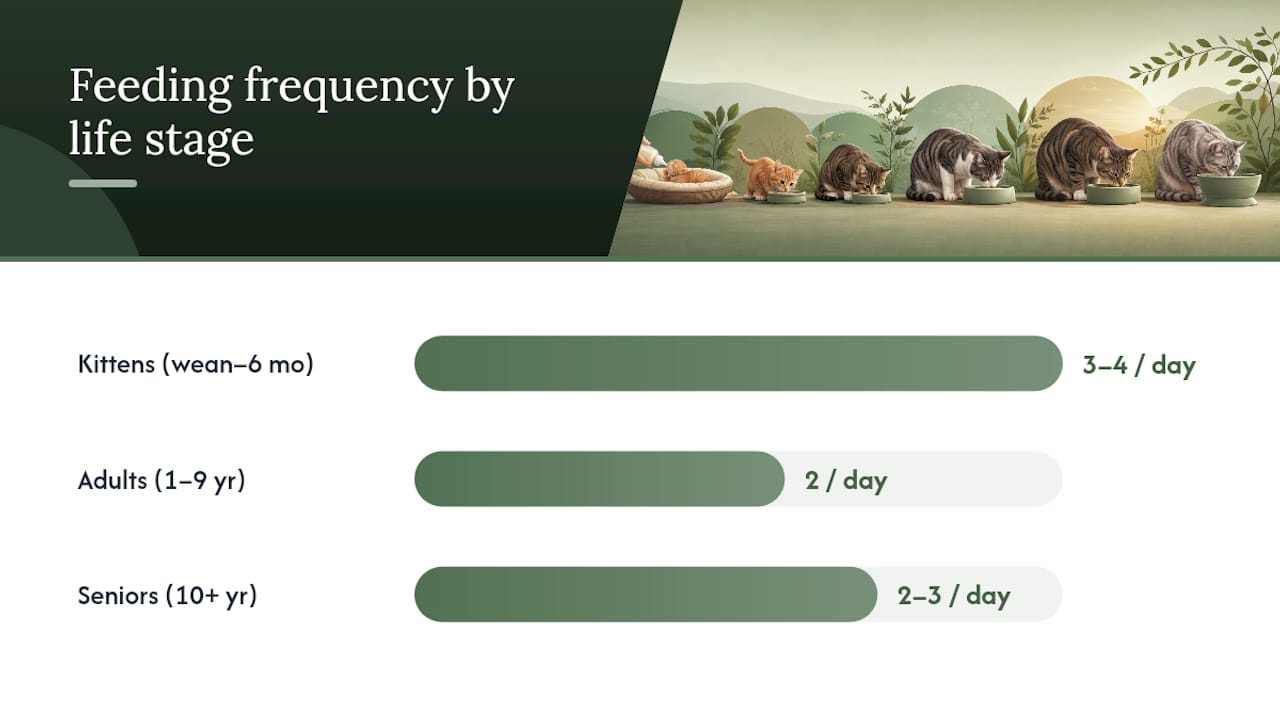
Kittens (weaning to 6 months) need 3 to 4 meals a day to keep up with rapid bone and muscle development, as emphasized by catteries listing their available kittens for prospective owners. Very young kittens just off the bottle sometimes do better starting at 4 or more small meals, then consolidating as they get more efficient at eating larger amounts at once.
Juveniles (6 to 12 months) are slowing their growth curve, so this is the window to taper toward two to three meals a day. Cornell's Feline Health Center notes that twice daily feeding is generally appropriate once a cat approaches the one-year mark.
Adults (roughly 1 to 9 years) settle into a practical rhythm:
- Two meals a day is the standard recommendation for most healthy adults.
- One meal a day works for some cats, but it stretches the fasting window and can trigger more intense hunger behavior.
- Active or outdoor cats may do better with three smaller meals to match their energy burn.
Seniors (10 years and up) often benefit from 2 to 3 smaller meals rather than two large ones, especially if arthritis, dental issues, or kidney concerns make big meals uncomfortable. Coordinate any change with your vet, since older cats' calorie needs shift in either direction depending on muscle loss or slowing metabolism.
Why Vets Recommend 8 to 12 Hours Between Meals
A cat's stomach typically empties within 8 to 10 hours of eating, which is roughly when hunger signals kick back in. Feed much beyond that window and you get the 4 a.m. yowling that plagues so many households. Sticking to a defined interval, rather than feeding on demand, cuts down on begging because your cat learns when food actually shows up instead of testing you all day.
Consistent spacing also matters for anything medical. Diabetic cats need meals timed with insulin doses, and cats on other medications often absorb them better with food in the stomach at predictable intervals.
Pro Tip: Pick an interval that survives your actual schedule, not an idealized one. A consistent 7 a.m./7 p.m. split beats an ambitious 12-hour gap you'll blow past every time work runs late.
Free-Feeding vs. Scheduled Meals: What the Evidence Shows
Leaving a bowl out all day feels convenient, but VCA Animal Hospitals points to free-choice grazing as a common driver of overeating and obesity in cats. Scheduled, measured feeding gives you a portion ceiling that grazing simply doesn't.
If you're committed to leaving food out anyway, a few rules limit the damage:
- Measure the entire day's calorie allotment upfront rather than topping off the bowl whenever it looks low.
- Remove uneaten portions on a schedule instead of letting food sit indefinitely.
- Watch body condition monthly, not just weight on a scale.
There are legitimate exceptions. A single cat that's genuinely good at self-regulating portions can sometimes graze without gaining weight. Cats recovering from illness, surgery, or being underweight may also need food available more often on a vet's recommendation, at least temporarily.
Sample Cat Feeding Schedules for Real-Life Routines
Theory is easy. Fitting a schedule around a job, a commute, and an actual human life is where most feeding plans fall apart. Here are workable starting points.
- Standard workday household: Feed around 7 a.m. before you leave and 7 p.m. after you're home. That's a 12-hour gap, right at the upper end of what Petful and other veterinary sources consider ideal spacing for adult cats.
- Active, pregnant, or nursing cats: Split into three meals at roughly 7 a.m., 1 p.m., and 7 p.m. to keep energy steadier across the day without oversized portions at any one sitting.
- Shift workers and split schedules: Anchor two meals to whatever times bookend your work block consistently, even if that means 6 a.m. and 6 p.m. one week and 2 p.m. and 2 a.m. the next during a schedule rotation. The interval matters more than the clock time.
How to Measure Cat Food Portions Correctly
Calorie needs come first, timing second. Once you know your cat's daily calorie target based on Resting Energy Requirement and Maintenance Energy Requirement formulas, you can divide that number across however many meals you've chosen.
Skip the measuring cup. A kitchen scale is far more accurate, and VCA Animal Hospitals specifically recommends weighing food to avoid "calorie creep," the slow portion inflation that happens when a slightly heaping cup becomes the new normal.
Here's how that plays out for different cats, using the kcal-per-cup or per-can figure printed on the food label:
- 5-pound cat: Lower daily calorie need, often split into two meals of roughly 40 to 50 grams of dry food each, depending on the food's calorie density.
- 9-pound cat: A common adult weight where daily needs land around 180 to 280 kcal, per Petful's practical range, divided into two measured meals.
- 12-plus pound cat: Higher calorie targets, but resist the temptation to just add volume. Weigh the food and check the label's kcal-per-cup so portions stay proportional to actual energy needs, not just bowl size.
Switching From Free-Feeding to a Schedule Without a Fight
Cats used to grazing all day won't love a sudden cutoff, but a gradual transition avoids most of the drama.
- Calculate your cat's current total daily calories before changing anything.
- Divide that same total into your target number of meals, so nothing changes except timing and structure.
- Shorten the grazing window over 7 to 10 days, per the transition approach VCA Animal Hospitals recommends, until you land on set mealtimes.
For cats that inhale food in seconds, a slow feeder or scattering kibble across the floor forces slower, more natural eating. Picky eaters often respond to slightly warmed wet food or smaller, more frequent offers rather than one big meal they can ignore. Watch for sudden weight loss or gain, appetite changes that stick around more than a day or two, or repeated vomiting. Any of those warrants a vet visit rather than more schedule tweaking.
Bowlful's Approach to Feeding Times and Portions
Bowlful builds its recommendations on the same RER and MER calorie formulas veterinarians use, cross-checked against AAFCO and NRC nutrient guidance, rather than guessing at portions from a bag's suggested serving.
That translates into tools you can actually use:
- A feeding calculator that turns your cat's weight, age, and activity level into a daily calorie target.
- Downloadable meal-plan PDFs that break that target into gram-based portions per meal.
- Blog guides covering feeding routines and pre-calculated portions for owners building a schedule from scratch.
Bowlful operates independent of pet food brands, so the numbers reflect your cat's needs rather than a manufacturer's serving suggestion. Medical conditions always warrant a conversation with your veterinarian first.
Feeding Cats With Diabetes, Kidney Disease, and Other Health Conditions
Medical conditions change the feeding-time equation entirely, and generic schedules stop applying the moment a diagnosis enters the picture.
Diabetic cats usually need meals timed tightly around insulin injections, often twice daily at consistent intervals, because blood sugar swings get harder to manage when food timing drifts. Skipping a meal before an insulin dose can trigger dangerous low blood sugar, so consistency here isn't optional the way it might be for a healthy adult cat.
Cats with chronic kidney disease often do better on smaller, more frequent meals rather than two large ones, since smaller portions are easier on a compromised system and can help maintain appetite in cats prone to nausea. Some cats in kidney disease management also need therapeutic diets with strict feeding instructions from a vet, which can override general age-based guidelines entirely.
Cats recovering from surgery, dealing with pancreatitis, or managing inflammatory bowel disease frequently need smaller, more frequent feedings too, at least temporarily. The common thread across all of these conditions: the standard 8 to 12 hour, two-meal framework is a starting point for healthy cats, not a rule that overrides your vet's specific instructions. When in doubt, defer to whatever feeding plan came from the exam room, not a general guide.
Matching Feeding Times to Your Cat's Natural Hunting Rhythm
Cats in the wild aren't three-square-meals animals. They're built to eat small prey items, often 8 to 12 times a day, hunting opportunistically rather than gorging on one or two big kills.
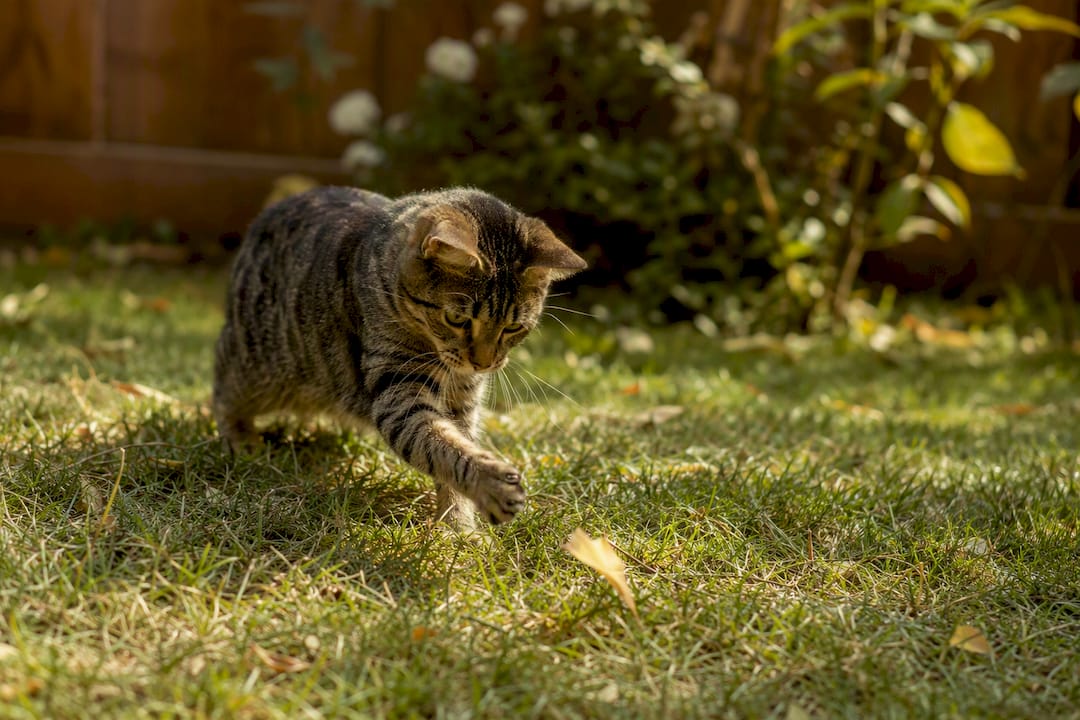
That biology explains why a single giant bowl once a day tends to backfire, and why Adoptapet frames an age-appropriate, multi-meal schedule as a way to mirror that natural rhythm rather than fight it. A cat fed twice daily isn't getting a perfect recreation of wild hunting patterns, but it's a lot closer than one massive feeding.
This is also why so many house cats seem hardwired to beg around dawn and dusk. Those are peak hunting windows for the species, and domestication hasn't erased the instinct. If your cat is relentlessly vocal at 5 a.m., you're not dealing with a behavior problem so much as a mismatch between an ancient feeding pattern and a modern schedule.
Puzzle feeders and scatter feeding lean into this instinct productively. Instead of fighting the urge to hunt and forage, they give it an outlet, which tends to produce calmer cats between meals rather than ones pacing the kitchen. It's not about feeding more often necessarily. It's about feeding in a way that acknowledges what the animal is built to do.
How Feeding Times Shape Cat Behavior and Mood
Mealtime isn't just fuel delivery. VCA Animal Hospitals describes it as a genuine bonding opportunity that becomes a cornerstone event in a cat's day, and that framing holds up in multi-cat households especially.
Predictable feeding times reduce a surprising amount of household friction. Cats that know food arrives at 7 a.m. and 7 p.m. spend less energy monitoring you for signs of an early meal, which shows up as less door scratching, less meowing at the pantry, and fewer 4 a.m. wake-up calls. Irregular timing does the opposite: it teaches a cat that persistence eventually gets rewarded, which trains exactly the begging behavior owners complain about.
In homes with more than one cat, consistent scheduled feeding also reduces resource guarding and tension around the food bowl. When cats know when and how much food is coming, there's less incentive to rush, block a bowl, or hover over a housemate's dish. Free-fed multi-cat households, by contrast, often see one cat quietly monopolizing the food supply while another loses weight without anyone noticing until a vet visit reveals the gap.
There's also a stress angle that's easy to overlook. Cats are creatures of routine, and unpredictable feeding times can contribute to low-grade anxiety that shows up as overgrooming, litter box avoidance, or general irritability. None of that means you need military precision down to the minute, but a mealtime window your cat can count on does real psychological work beyond nutrition.
Spotting Overfeeding and Underfeeding Through Mealtime Behavior
The clock can tell you almost as much as the scale if you know what to watch for.
A cat that's ravenous well before the next scheduled meal, every single day, might be signaling that portions are too small for its energy needs or that the interval between meals is stretched too long. That's different from occasional begging, which is often behavioral rather than physiological. Persistent, escalating hunger cues across multiple days point toward an actual caloric shortfall.
Overfeeding shows up differently. A cat that leaves food behind at every meal, seems uninterested at scheduled times, or has visibly gained weight over a few weeks despite "normal" portions is likely getting more calories than it's burning. Ribs that are hard to feel under a light layer of fat, a sagging belly pouch that's more pronounced than typical, and reduced activity between meals are all physical signs worth tracking alongside the feeding log.
Weight change is the most reliable long-term signal, but it lags behind the actual problem by weeks. Appetite and energy around mealtimes tend to shift first. A cat that used to trot over eagerly at feeding time and now saunters over unenthusiastically, or one that used to leave a clean bowl and now leaves a third of it, is telling you something before the scale confirms it.
The fix in either direction starts with the same step: weigh the food, don't eyeball it, and compare the actual daily total against the calorie target your cat's weight and activity level call for. Guessing in either direction is how gradual weight problems sneak up on attentive owners.
Adjusting Cat Feeding Schedules for Travel and Time Away
Cats handle schedule disruption better than most owners expect, but a few adjustments keep things smooth when you're not the one filling the bowl.
If a pet sitter or neighbor is taking over, write down the exact portions in grams and the target times, rather than relying on verbal instructions that get diluted by the third handoff. A sitter working from "give her a scoop or two" is far more likely to overfeed or underfeed than one working from a printed gram amount and a clock time.
Automatic feeders are worth the investment for trips longer than a day or two, since they hold to a schedule better than a well-meaning but distracted house sitter. Just test the feeder for a few days before you leave. Mechanical failures and jammed food are common enough that you don't want to discover one from a different time zone.
For boarding situations, ask the facility directly about their feeding schedule and whether they'll accommodate your cat's usual meal times and pre-measured portions. Many boarding facilities default to their own house schedule unless you specifically request otherwise, which can mean a cat used to 7 a.m. and 7 p.m. suddenly eating once at 9 a.m. for a week.
Coming home, expect a day or two of adjustment as your cat resettles into the normal rhythm. A slightly more vocal cat for 24 to 48 hours after a schedule disruption is normal and usually resolves on its own once the routine snaps back into place.
A Few Honest Notes on Making This Stick
The cats that beg the least aren't the ones on the fanciest schedule. They're the ones whose owners picked a realistic routine and didn't waver from it for months at a time. Consistency beats precision here.
Pair whatever timing you choose with actual measured portions and a yearly vet check to confirm the calorie target still fits.
— Robert
Getting Your Cat's Feeding Plan Right With Bowlful
Figuring out the right calorie target and translating it into gram portions across two or three meals is where most feeding plans go sideways, especially with a growing kitten or a senior cat whose needs keep shifting. Bowlful builds a personalized plan around your cat's actual weight, age, and activity level using the same RER and MER math vets rely on, then hands you exact numbers instead of a vague label suggestion.
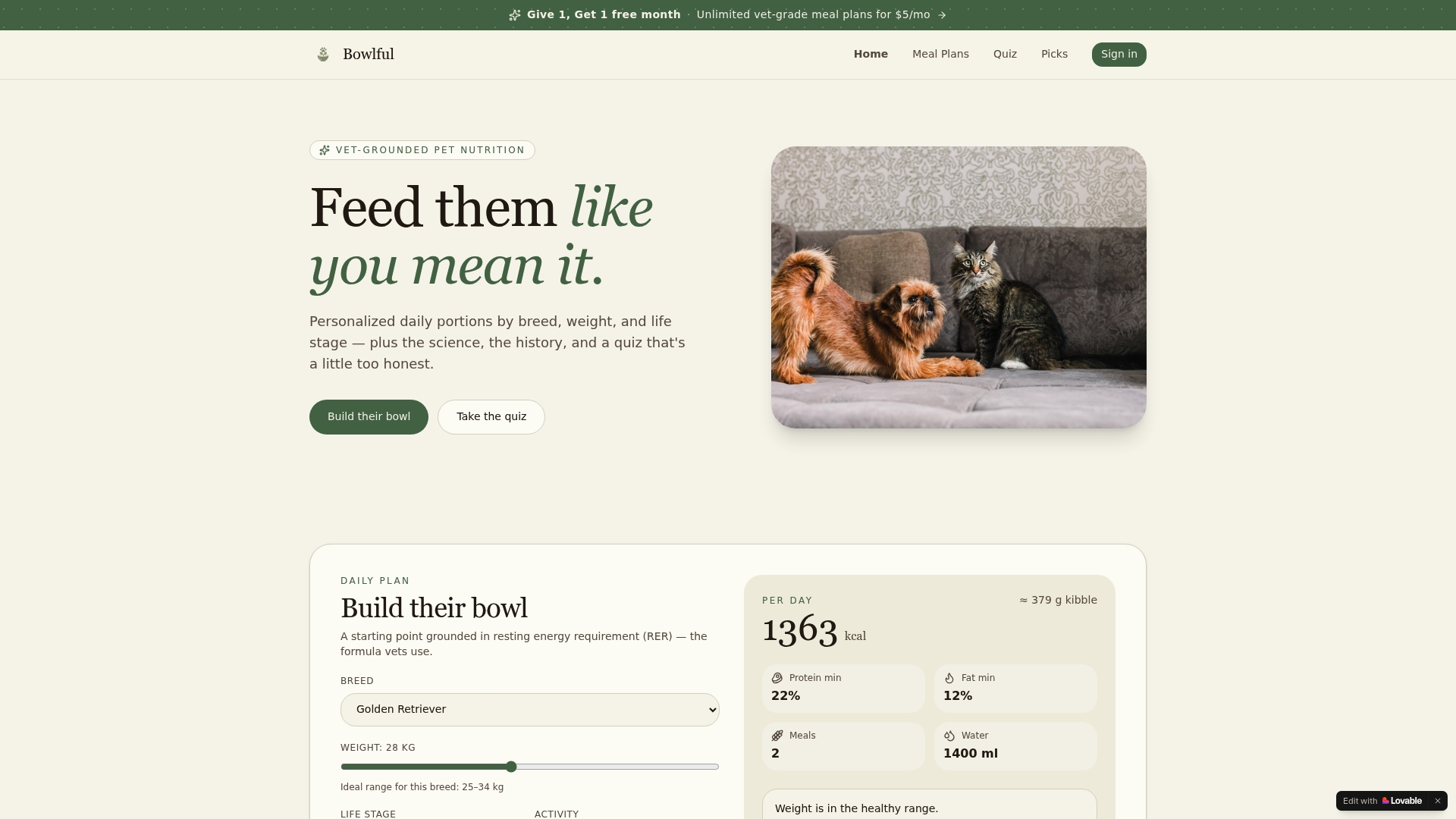
The free feeding calculator gives you a starting daily calorie target in minutes, and the downloadable meal-plan PDFs break that number into specific gram portions timed to whatever schedule fits your household, whether that's two meals a day or three for an active kitten. If you've been eyeballing portions or guessing at intervals, build your cat's feeding plan and get a schedule with actual numbers behind it.
Sources
This guide draws on veterinary guidance from VCA Animal Hospitals, the Cornell Feline Health Center, Petful, and Adoptapet. For related reading, see Bowlful's guides on feeding windows and signs your pet needs a feeding adjustment.
- Feeding Times and Frequency for Your Cat | VCA Animal Hospitals
- How often should you feed your cat? | Cornell Feline Health Center
- How Often Should I Feed My Cat? Amounts & Schedule | Petful
- What Is the Best Feeding Schedule for Cats? Nutrition Guidelines | Adoptapet