
Choose a complete-and-balanced formula that carries an AAFCO nutritional adequacy statement matched to your dog's exact life stage, not the flashiest bag on the shelf. From there, weigh three things: your dog's age and size, any medical or allergy needs, and a clean recall history. Everything else, including grain-free trends and "human-grade" labels, is secondary.
TL;DR:
- Choose a formula with an AAFCO statement specific to your dog's life stage and avoid based solely on marketing claims or trendy labels.
- Perform dry-matter basis calculations to accurately compare protein and fat levels between wet and dry foods, as moisture skews guaranteed analysis numbers.
- Match your dog's formula to their age, size, activity level, and health needs, consulting a vet for specialized diets if necessary, especially for allergies or medical conditions.
- Transition foods gradually over two weeks, monitoring stool quality and behavior, and stop the switch if persistent vomiting, diarrhea, or lethargy occur.
- Use personalized calculations based on your dog's current data rather than rankings or ingredient lists to select the best diet for their individual needs.
Table of Contents
- What to Check First When You Choose Dog Food
- How Do You Read a Dog Food Label?
- Matching Food to Your Dog's Life Stage and Size
- How Do You Switch Foods Safely?
- Bowlful's Vet-Backed Way to Personalize Your Dog's Diet
- Why the "Best Food" Question Is the Wrong One to Ask
- Get a Feeding Plan Built Around Your Dog, Not a Ranking
- Sources
What to Check First When You Choose Dog Food
Start with the label, not the marketing copy on the front of the bag. Flip it over and look for the nutritional adequacy statement, a short sentence that confirms the food is complete and balanced for a specific life stage. Skip that step and you're guessing.
AAHA notes there is no single best food for every dog; the right pick depends on your dog's age, breed, health status, and how active they are. That's the whole reason a checklist works better than a "top rated" list.
Run through this order before you buy:
- Confirm the AAFCO statement lists the correct life stage (growth, adult maintenance, or "all life stages").
- Match the formula to your dog's size and breed. Large-breed puppies need controlled calcium; toy breeds need smaller kibble.
- Set a realistic budget. Premium kibble often costs a few dollars per day for a medium dog; fresh or raw formats can be substantially more expensive.
- Flag any health goals up front: weight loss, joint support, skin issues, or a diagnosed condition that might call for a veterinary therapeutic diet.
- Search the FDA's recall and safety notices for the brand before you commit to a bag.
That last step takes ninety seconds and it's the one most owners skip entirely.
How Do You Read a Dog Food Label?
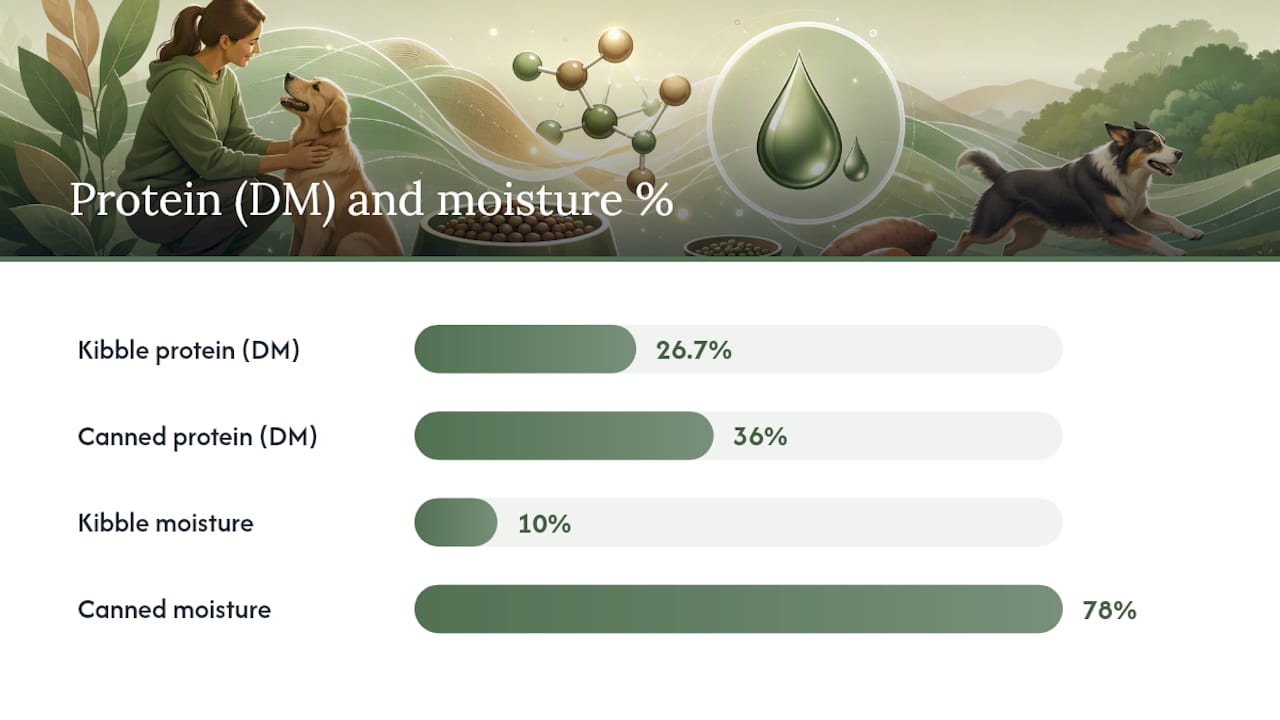
The guaranteed analysis on the back of the bag lists minimum protein and fat, and maximum fiber and moisture. The problem is that wet food and dry food can't be compared directly this way, because moisture content skews the numbers. A canned food showing 8% protein might actually beat a kibble showing 24% protein once you strip out the water.
Here's how to make a fair comparison:
- Find the moisture percentage on the label.
- Subtract it from 100 to get the dry matter percentage.
- Divide the guaranteed protein (or fat) by the dry matter percentage.
- Multiply by 100 to get the dry-matter basis number.
A kibble at 24% protein with 10% moisture works out to about 26.7% protein on a dry-matter basis. A canned food at 8% protein with 78% moisture comes out to roughly 36% dry-matter protein, higher than the kibble looked at face value.
Ingredient lists matter less than most owners think. Tufts University's veterinary nutrition team points out that the order and names of ingredients don't reveal actual nutrient adequacy; the formulation and nutrient profile do. Named meat sources ("chicken," "beef liver") are generally better labeled than vague terms like "meat meal" or "animal fat," but a long list of recognizable words doesn't guarantee a balanced diet, and a shorter list doesn't automatically mean a worse one.
Pro Tip: Ignore "grain-free," "natural," and "premium" on the front of the bag entirely. None of those terms are regulated. The only two things that actually confirm quality are the AAFCO statement and the dry-matter math.
Matching Food to Your Dog's Life Stage and Size
A puppy, an adult, and a senior dog have different nutrient needs, and feeding one dog's food to another life stage causes real problems over time. Growing puppies need higher protein, fat, and controlled calcium and phosphorus ratios to support bone development without triggering skeletal issues, especially in large breeds. Bowlful's puppy growth stage guide breaks down exactly what those ratios should look like by breed size.

Adult dogs need maintenance-level nutrition tied to their activity, not their age. A working border collie and a couch-loving bulldog of the same weight have wildly different calorie needs, which is where a personalized calculation matters more than a one-size-fits-all bag recommendation. Senior dogs often benefit from adjusted protein and added joint support, covered in more detail in Bowlful's aging dog nutrition guide.
Size and breed change the math too:
- Large and giant breeds need growth formulas with controlled calcium to prevent developmental orthopedic disease.
- Small breeds often do better with smaller kibble pieces and calorie-dense formulas, since their stomachs are tiny relative to their energy needs.
- Dogs with diagnosed allergies, chronic GI upset, or organ disease, cardiac or renal issues among them, often need a veterinary therapeutic diet rather than an over-the-counter formula. JAVMA research has examined diet-related cardiac concerns, which is one more reason to loop in a vet before switching a dog with heart disease onto a new formula.
On format: dry kibble is the most budget-friendly and shelf-stable option. Wet and fresh foods tend to appeal to picky eaters and dogs needing more hydration. Raw diets carry real upside for some dogs but also real risk. Cornell's veterinary team advises caution with raw feeding due to bacterial contamination risk and the difficulty of balancing raw diets without expert guidance. The same caution applies to homemade recipes: UC Davis research found many homemade dog food recipes fall short nutritionally unless a veterinary nutritionist designs them.
How Do You Switch Foods Safely?
Sudden food changes are the single most common cause of the vomiting and diarrhea owners blame on a "bad" new food, when the real cause is just too fast a transition. A gradual swap gives your dog's gut bacteria time to adjust.
- Days 1 to 3: mix 75% old food with 25% new food.
- Days 4 to 6: move to a 50/50 blend.
- Days 7 to 9: shift to 25% old food with 75% new food.
- Days 10 to 14: feed 100% new food.
Dogs with sensitive stomachs or a history of GI issues often need the slower end of that range, closer to 14 days than 7. Watch stool quality, energy level, coat condition, and weight throughout. Most healthy dogs show clear signs of adjustment, normal stool, steady appetite, no excessive gas, within the first 1 to 2 weeks of a careful transition.
Stop the switch and call your vet if you see persistent vomiting, diarrhea lasting more than 48 hours, lethargy, or refusal to eat. Keep a simple log of what you fed and when symptoms appeared; it saves time if you end up needing a referral to a board-certified veterinary nutritionist for a food trial or elimination diet. If allergies are suspected, a structured elimination diet protocol is the standard next step rather than guessing your way through bag after bag.
Bowlful's Vet-Backed Way to Personalize Your Dog's Diet
Bowlful builds its recommendations on the same RER and MER calorie formulas veterinarians use, not on which brand pays for placement. That independence matters because most "best dog food" lists online are built on affiliate commissions, not your dog's actual bloodwork or body condition.
The free feeding calculator and quiz give you:
- A calorie target based on your dog's weight, age, and activity level.
- Formula and format suggestions that fit your dog's life stage and any special needs you flag.
- A sample feeding schedule and portion size, plus a downloadable meal plan PDF for the higher tiers.
Two dogs illustrate why this matters: a 65-pound, moderately active 4-year-old Labrador retriever needs roughly 1,300 to 1,500 calories a day from an adult maintenance formula, while a 9-pound, low-activity 11-year-old Chihuahua with early kidney concerns needs closer to 220 calories from a senior or renal-support formula entirely. Same species, completely different bowls.
Pro Tip: Re-run the calculator every time your dog's weight, activity level, or health status changes, not just when you buy a new bag.
Why the "Best Food" Question Is the Wrong One to Ask
Most owners come into this looking for a ranked list, and that instinct sets them up to fail. The AAHA guidance is blunt about it: there's no single best food for all dogs, only a best food for your dog right now, at this weight, this age, this activity level. A list can't capture that. A calculation can.
The conventional advice, read every ingredient, avoid anything with "by-product," chase the highest protein number, gets a lot of well-meaning owners chasing the wrong metrics. Tufts' own nutrition researchers have said as much: ingredient order tells you almost nothing about nutrient adequacy. Dry-matter math and a valid AAFCO statement tell you far more than a front-of-bag ingredient list ever will.
If there's one thing worth doing differently starting today, it's this: stop comparing bags by their marketing claims and start comparing them by calories, life stage fit, and your dog's actual body condition. That shift alone eliminates most of the bad decisions owners make at the pet store.
— Robert
Get a Feeding Plan Built Around Your Dog, Not a Ranking
Bowlful skips the ranked "top 10 dog foods" approach entirely and gives you a plan built on your dog's actual numbers instead. The free feeding quiz asks about weight, age, activity, and any health flags, then returns a calorie target, recommended formats, and a sample feeding schedule you can start using the same day.
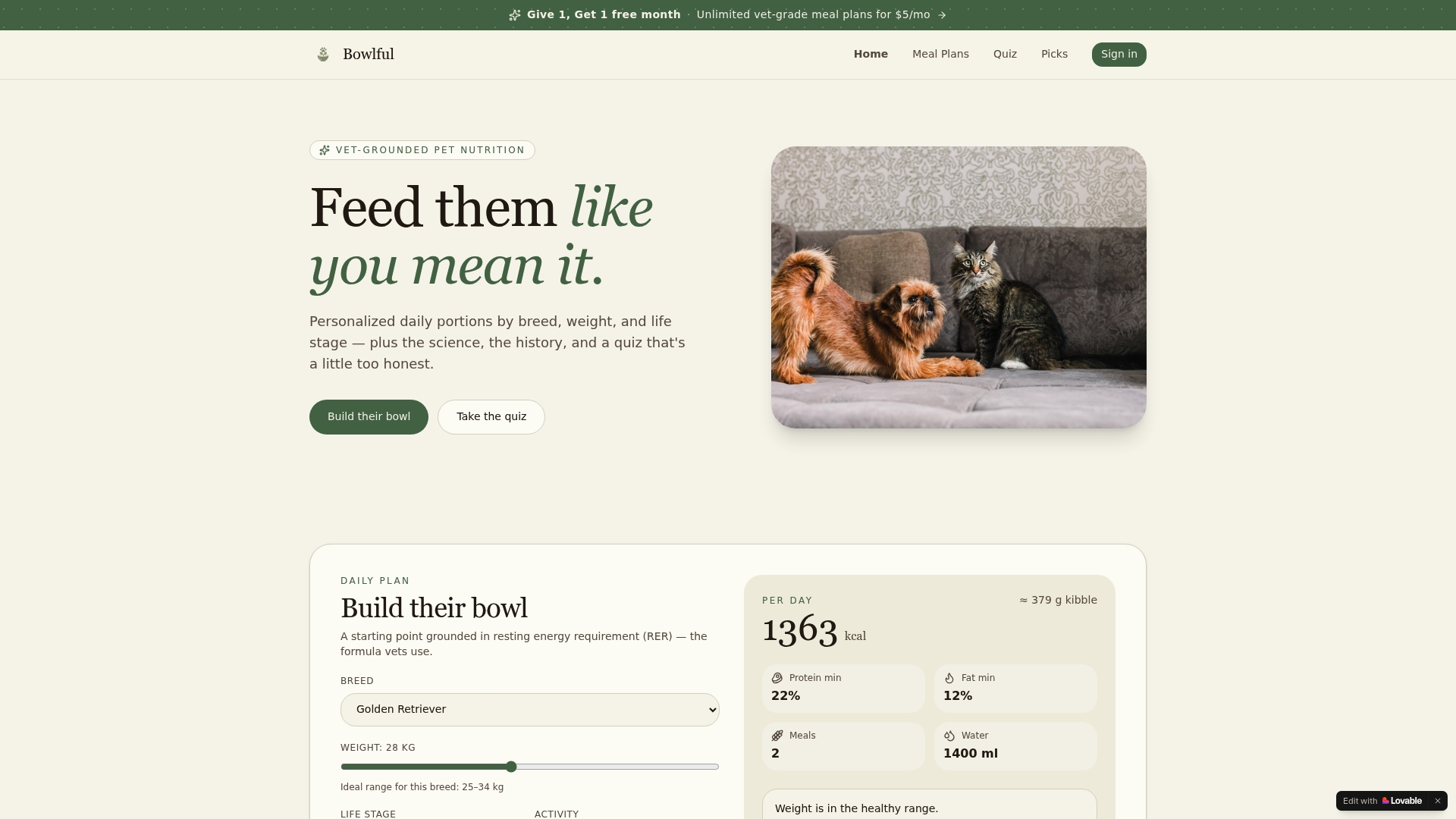
If you want more depth, downloadable PDF meal plans and deeper personalization are available through Bowlful's paid Meal Plan Pro tier. Either way, the process is simple: take the quiz, follow a 7 to 14 day transition schedule using the new food, then track stool, coat, and weight for two to three weeks and adjust the plan if anything looks off. That's the whole system, no ingredient-list guesswork required.
Sources
- Complete and balanced pet food | FDA
- How to choose the right food for your pet | AAHA
- Stop reading your pet food ingredient list | Tufts University
- Homemade dog food recipes can be risky | UC Davis