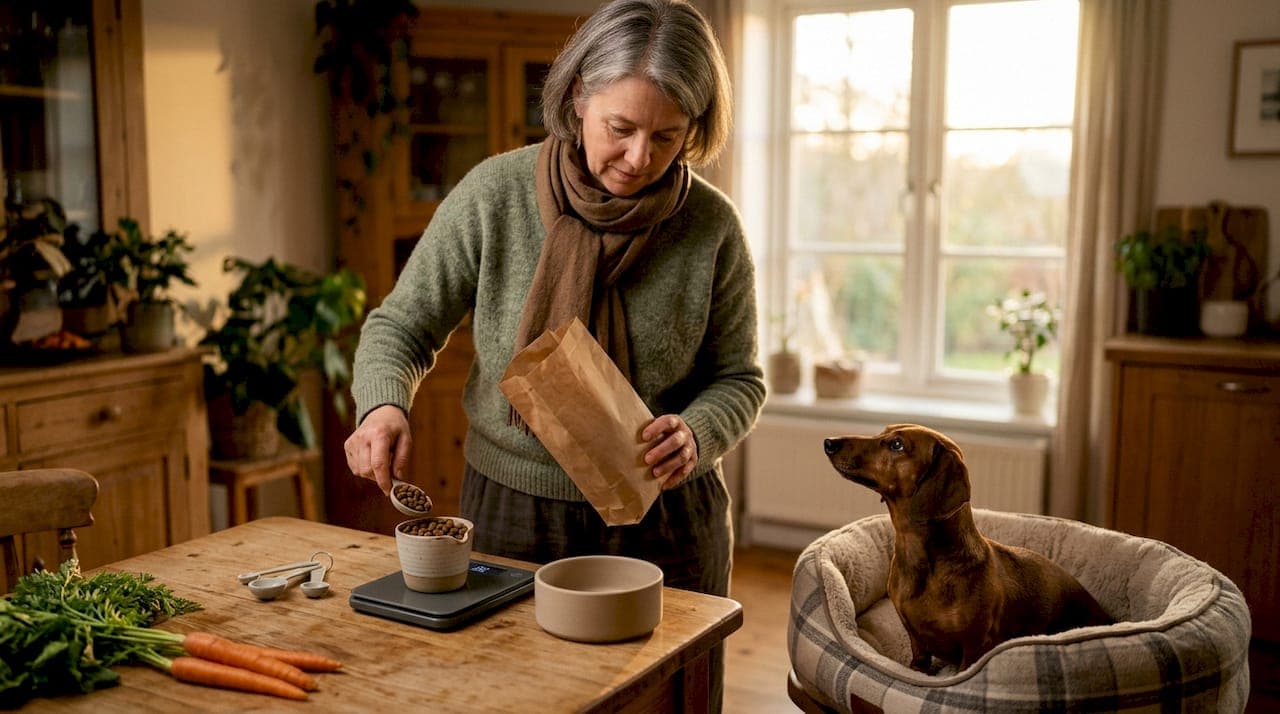
Dachshund weight management is the practice of maintaining your dog's healthy body weight through measured feeding, regular low-impact exercise, and consistent monitoring to prevent obesity and spinal injury. Dachshunds carry a long-backed, short-legged structure that puts the spine under constant mechanical stress. Extra weight makes that stress significantly worse, raising the risk of Intervertebral Disc Disease (IVDD), a painful and often debilitating condition. The good news is that targeted daily habits, not dramatic interventions, keep most dachshunds at a healthy weight and protect their backs for years to come.
1. Dachshund weight management starts with the right calorie target
Calories are the foundation of every weight plan. Adult Standard Dachshunds need roughly 490–830 kcal daily, split across two meals. Miniature Dachshunds need fewer calories because of their smaller body mass. These ranges exist because activity level, age, and reproductive status all shift daily energy needs.
The critical rule: base portions on your dog's ideal target weight, not their current weight. Feeding based on current overweight body weight locks your dog into a calorie surplus and perpetuates the obesity cycle. Ask your vet to confirm the target weight first, then calculate portions from that number.
- Adult dachshunds: two measured meals per day
- Puppies under 6 months: three to four smaller meals per day
- Treats: no more than 10% of the daily calorie allowance
- Portions: weighed on a kitchen scale, never estimated by eye
Pro Tip: Use a digital kitchen scale for every meal. A tablespoon of kibble can vary by 20% or more in weight depending on the brand, so volume measures are unreliable.
2. Schedule meals and eliminate free-feeding
Free-feeding is one of the fastest routes to an overweight dachshund. Dachshunds have strong food motivation, which means an always-full bowl becomes an always-empty bowl. Scheduled meals give you precise control over daily calorie intake and make it easy to spot appetite changes that might signal a health issue.
Set meal times at the same hours each day. Pick up the bowl after 15 minutes whether your dog finishes or not. This routine also reduces begging behavior, because your dog learns food appears at specific times, not on demand.
For owners who need guidance on meal timing and portions, updated feeding frequency guidelines provide a clear framework based on life stage and breed size.
3. Build a safe dachshund exercise routine
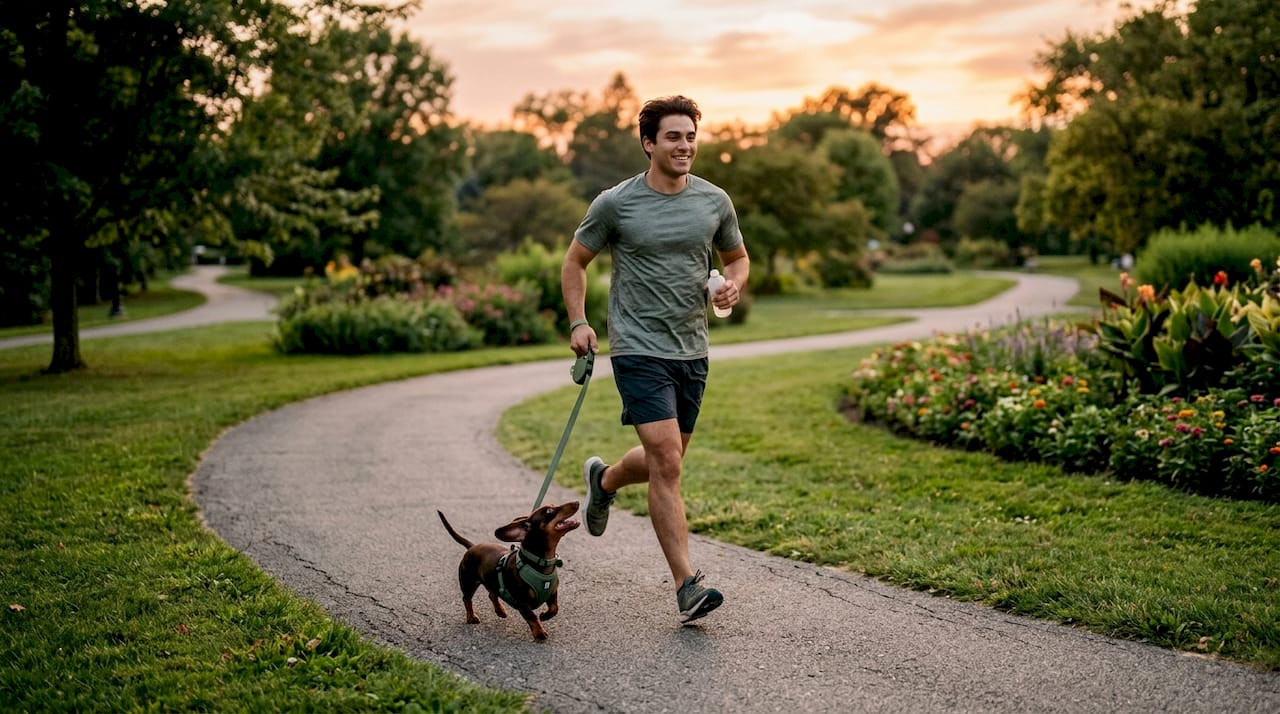
Daily movement burns calories and keeps muscles strong enough to support the spine. Standard Dachshunds need 30–60 minutes of activity daily, while Miniatures do well with 20–30 minutes. The key word is low-impact. High-impact activities like jumping on and off furniture, running on hard surfaces, or rough play put the intervertebral discs at risk.
Safe exercises for a dachshund exercise routine include:
- Gentle leash walks on flat or gently sloped terrain
- Controlled play sessions in a fenced yard
- Underwater treadmill therapy, especially for dogs recovering from back issues
- Sniff walks, where the dog sets the pace and explores freely
- Short, calm fetch sessions on grass
Always use a harness rather than a neck collar during walks. A collar concentrates pressure on the neck and upper spine, which is the last place a dachshund needs extra stress.
Pro Tip: Split the daily walk into two shorter sessions rather than one long one. Two 15-minute walks are easier on the joints and spine than a single 30-minute push.
4. Monitor weight and body condition monthly
Early detection prevents small gains from becoming serious problems. Regular rib checks and waist measurements are the two most practical tools for tracking body condition at home. You should feel your dog's ribs easily with light finger pressure but not see them from across the room. A visible waist tuck when viewed from above is a good sign. A straight or barrel-shaped silhouette signals excess weight.
A ±3% weight fluctuation over three months is acceptable. Anything beyond that range needs a feeding or activity adjustment. That means a 10-pound dachshund should not gain or lose more than 0.3 pounds over a three-month period without a deliberate plan in place.
Weigh your dog at home using a simple method: weigh yourself, then weigh yourself holding the dog, and subtract. Log the number monthly in a notebook or phone app. Patterns become visible over time in ways that single weigh-ins never reveal.
5. Lose weight at a safe, controlled rate
Rapid weight loss is not safer than slow weight loss. It causes muscle wasting and nutritional deficiencies that create new health problems. A safe weight loss rate is 1–2% of current body weight per week. For a 12-pound dachshund, that means losing no more than 0.12–0.24 pounds per week.
Adjust portions progressively every 4–6 weeks as your dog's weight changes. A dog that has lost two pounds now has a lower metabolic need, so the original reduced portion may no longer create a deficit. Recalculate regularly to keep progress steady without stalling.
Owners managing weight in small breeds often find that patience is the hardest part of the process. Slow and steady genuinely produces better long-term outcomes than aggressive calorie cuts.
6. Choose healthy snacks for dachshunds wisely
Treats feel like love, but the wrong ones quietly wreck a calorie plan. Healthy snacks for dachshunds are low in calories, free from toxic ingredients, and high enough in fiber or water content to feel satisfying. Good options include:
- Baby carrots (low calorie, high fiber, satisfying crunch)
- Plain cooked green beans (filling and nearly calorie-free)
- Blueberries (small size makes them easy to portion)
- Plain cooked chicken breast, cut into pea-sized pieces
- Cucumber slices (mostly water, very low calorie)
Avoid grapes, raisins, onions, garlic, macadamia nuts, and anything sweetened with xylitol. These are toxic to dogs regardless of quantity. High-fat human foods like cheese or deli meat add calories fast and offer little nutritional benefit for a dog on a weight plan.
Mental stimulation through puzzles and training reduces boredom-driven begging. Use treats to reward training behaviors rather than handing them out casually. A treat earned through a sit or a stay serves double duty: it reinforces good behavior and keeps the dog mentally engaged.
7. Avoid the most common feeding mistakes
Most weight management failures come from a handful of predictable errors. Recognizing them early saves months of frustration.
- Feeding by current weight instead of target weight. A dog that weighs 16 pounds but should weigh 12 pounds needs portions calculated for 12 pounds, not 16.
- Estimating portions by volume. Scoops and cups vary. A kitchen scale removes all guesswork.
- Skipping vet consultations. Vets confirm the target weight and rule out thyroid or hormonal conditions that mimic simple obesity.
- Misjudging exercise intensity. Letting a dachshund jump off a couch or run down stairs counts as high-impact activity, even if it looks minor.
- Treating inconsistently. One family member following the plan while another slips the dog table scraps undoes daily progress.
"Free-feeding is incompatible with maintaining a healthy dachshund. Their high food motivation means an open bowl is an invitation to overeat every hour of the day. Scheduled, weighed meals are the single most effective structural change an owner can make."
For a deeper look at how much to feed your dog based on weight and life stage, a complete feeding guide breaks down the math clearly.
8. Use mental stimulation as a weight management tool
Physical exercise alone does not fully address a dachshund's energy needs. Mental stimulation burns calories, reduces anxiety-driven eating, and keeps a dog satisfied between meals. A bored dachshund is a begging dachshund.
Puzzle feeders slow down eating and make mealtime mentally demanding. Scatter feeding, where you spread kibble across a sniff mat or in the grass, activates the dog's nose and extends the meal without adding calories. Short training sessions of five to ten minutes teach new commands while burning mental energy.
Rotate toys weekly to maintain novelty. A toy that has been sitting out for two weeks holds no interest. A toy reintroduced after a break feels new again and keeps the dog engaged without food as the reward.
9. Partner with your vet to set and adjust the plan
A vet visit is not optional at the start of a weight management program. Your vet confirms the target weight, rules out medical causes of weight gain like hypothyroidism, and sets a realistic timeline. Without that baseline, owners often target the wrong weight or move too fast.
Schedule follow-up visits every 6–8 weeks during active weight loss. Bring your home weight log to each appointment. Vets can adjust the plan based on real data rather than estimates. Once the dog reaches target weight, annual wellness checks with weight monitoring keep things on track long term.
Owners who track why dogs need different food amounts based on breed, age, and activity level make better decisions at every stage of the process.
Key Takeaways
Effective dachshund weight management requires feeding based on ideal target weight, scheduled meals, low-impact daily exercise, and monthly body condition monitoring to protect spinal health.
| Point | Details |
|---|---|
| Feed to ideal weight | Calculate portions from your dog's target weight, not their current overweight body weight. |
| Schedule and measure meals | Two weighed meals daily for adults; eliminate free-feeding to control calorie intake precisely. |
| Exercise low-impact daily | Aim for 30–60 minutes for Standards and 20–30 for Miniatures using walks and controlled play. |
| Monitor monthly | Use rib checks and home weigh-ins; a ±3% fluctuation over three months is the acceptable range. |
| Lose weight slowly | Target 1–2% of body weight per week to preserve muscle and avoid nutritional deficiencies. |
What I've learned from watching dachshund owners get this wrong
Most owners I talk to are not overfeeding out of ignorance. They are overfeeding out of love, and that distinction matters. A dachshund staring up at you with those eyes is genuinely hard to resist. But the spine does not care about intentions.
The mistake I see most often is owners who do everything right with meals and then quietly hand over half a cracker, a bite of cheese, and a dog biscuit across the course of a day. Those additions can equal 30–40% of a small dog's daily calorie budget. The meal plan looks perfect on paper, but the dog still gains weight, and the owner cannot figure out why.
The second mistake is treating weight management as a short-term project. You get the dog to target weight, feel relieved, and relax the habits. Three months later, the weight is back. The habits that got the dog to a healthy weight are the same habits that keep the dog there. There is no finish line, only a routine that becomes second nature.
Consistency beats perfection every time. A plan followed at 80% for two years produces far better outcomes than a perfect plan followed for six weeks and then abandoned. Build the habits small, track them honestly, and work with your vet as a partner rather than a last resort.
— Robert
Bowlful's approach to feeding your dachshund well
Getting the calorie math right for a dachshund is harder than it looks. Breed, weight, age, and activity level all shift the number, and generic feeding guides on the back of a bag are rarely accurate enough for a dog with spinal health stakes this high.
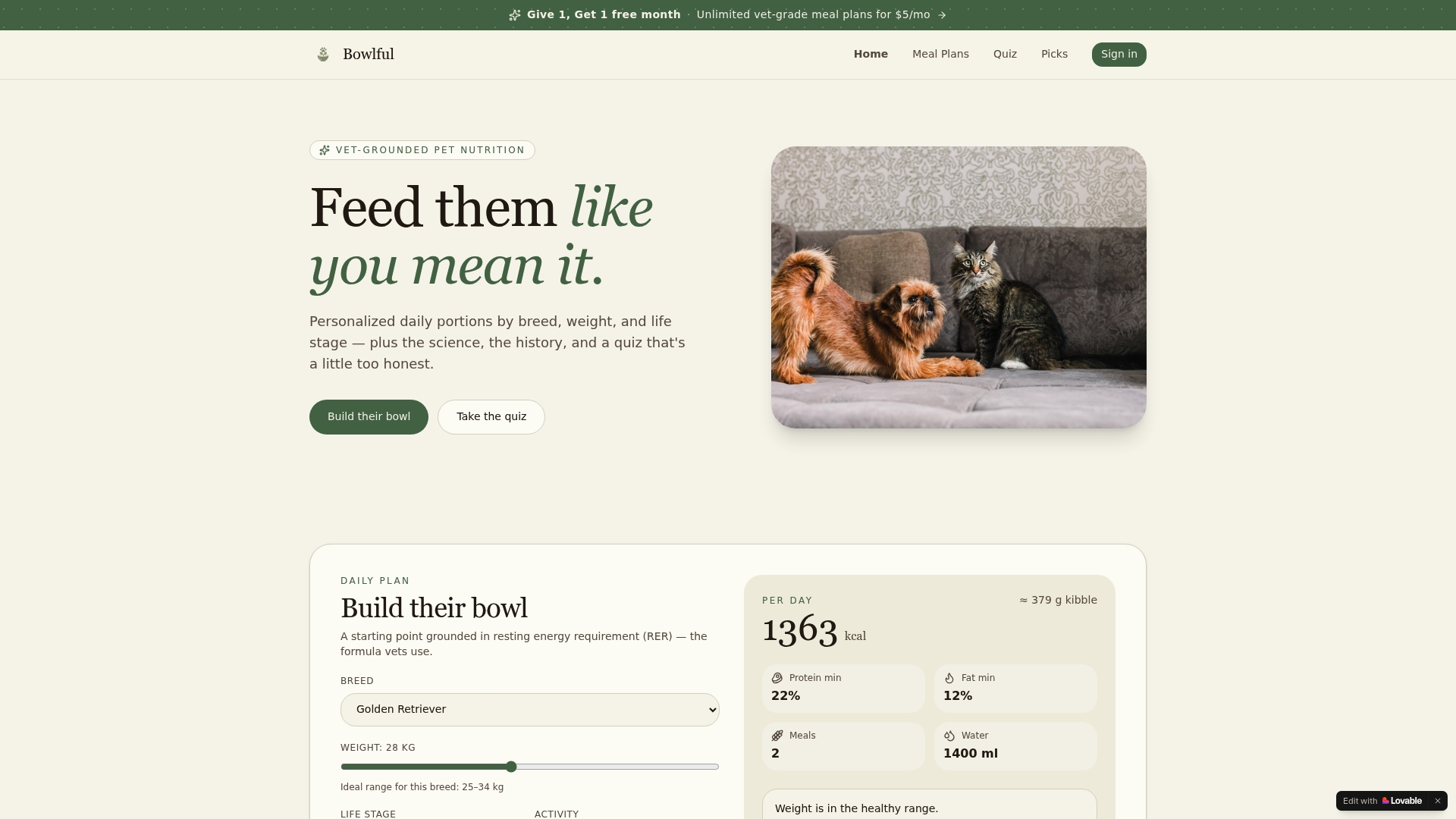
Bowlful builds personalized meal plans using the Resting Energy Requirement (RER) formula, the same calculation veterinarians use. You answer a short quiz about your dog's breed, current weight, target weight, and life stage, and Bowlful produces a feeding plan calibrated to those specifics. Research shows lean-fed dogs may live 1.8 years longer than their overweight counterparts. For a dachshund, those extra years mean more walks, more play, and a back that holds up. Start with Bowlful's personalized feeding plan and take the guesswork out of portion control from day one.
FAQ
How many calories does a dachshund need per day?
Adult Standard Dachshunds need roughly 490–830 kcal daily, split into two meals. Miniature Dachshunds need fewer calories based on their smaller body mass and activity level.
What is a safe rate of weight loss for a dachshund?
A safe rate is 1–2% of current body weight per week. Faster loss risks muscle wasting and nutritional deficiencies that create additional health problems.
Can dachshunds jump and run during exercise?
Jumping and running on hard surfaces are high-impact activities that strain the intervertebral discs. Stick to leash walks, sniff walks, and controlled play on grass to protect the spine.
What healthy snacks can I give a dachshund on a diet?
Baby carrots, plain green beans, blueberries, and cucumber slices are low-calorie options that satisfy without adding significant calories to the daily budget.
How often should I weigh my dachshund at home?
Weigh your dachshund once a month and log the result. A fluctuation beyond ±3% over three months signals a need to adjust feeding amounts or activity levels.