
French bulldog food portions are the precise, calorie-measured amounts of food your dog needs each day based on weight, age, and activity level. Get this wrong and your Frenchie faces a short list of serious consequences: obesity, breathing problems made worse by excess weight, and joint stress on a frame that was never built for carrying extra pounds. The Resting Energy Requirement (RER) formula, used by veterinarians to calculate baseline caloric needs, gives owners a far more reliable starting point than the generic cup measurements printed on most dog food bags. This guide applies 2026 nutritional standards and expert breeder insights to help you feed your French Bulldog the right amount at every life stage.
How to calculate French bulldog food portions by weight and age
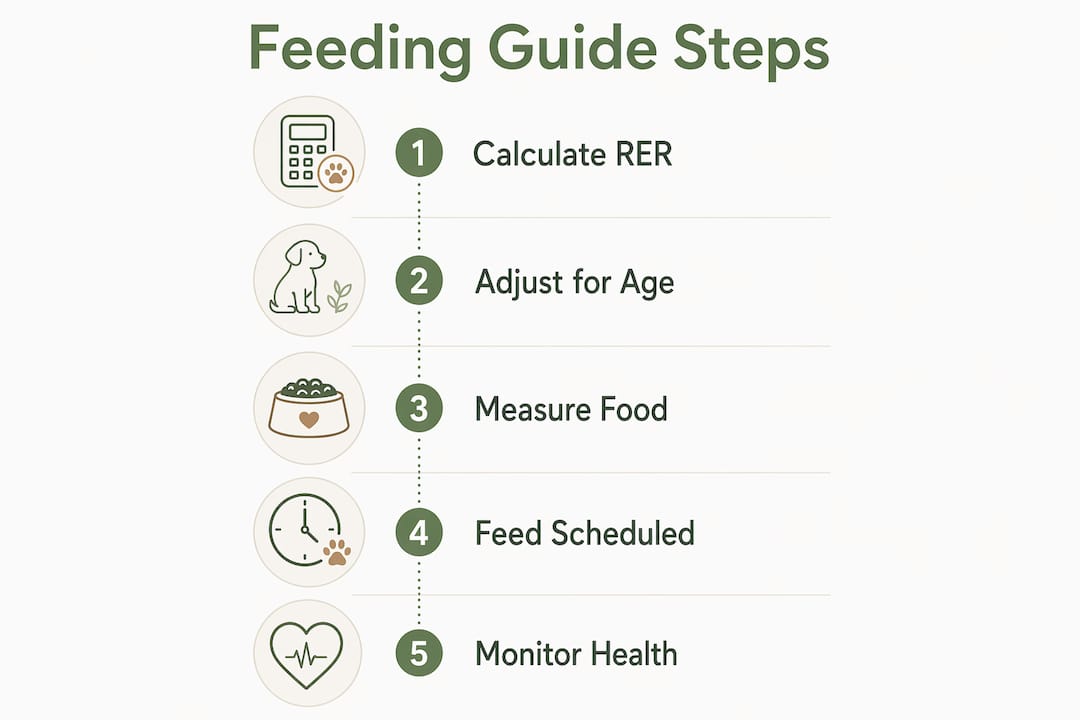
Portion sizes for French Bulldogs are calculated using the RER formula, which estimates the calories a dog needs at rest before adjusting for activity. The formula is: RER (kcal/day) = 70 × (body weight in kg)^0.75. From that baseline, you multiply by a life stage factor: roughly 3.0 for puppies under four months, 2.0 for puppies four to twelve months, and 1.6 for neutered adults. This gives you a daily calorie target, not a cup measurement, which is the key distinction most owners miss.
A typical adult French Bulldog weighs between 20 and 28 pounds. At 22 pounds (10 kg), the RER is approximately 400 kcal/day. A neutered adult at that weight needs around 640 kcal/day. Most standard dry kibble runs 350–400 kcal per cup, so that translates to roughly 1.5–1.75 cups per day, split across two meals. The number shifts meaningfully if your dog is intact, highly active, or recovering from illness.
The table below summarizes typical daily portion ranges by weight and life stage. These are starting points, not fixed rules.
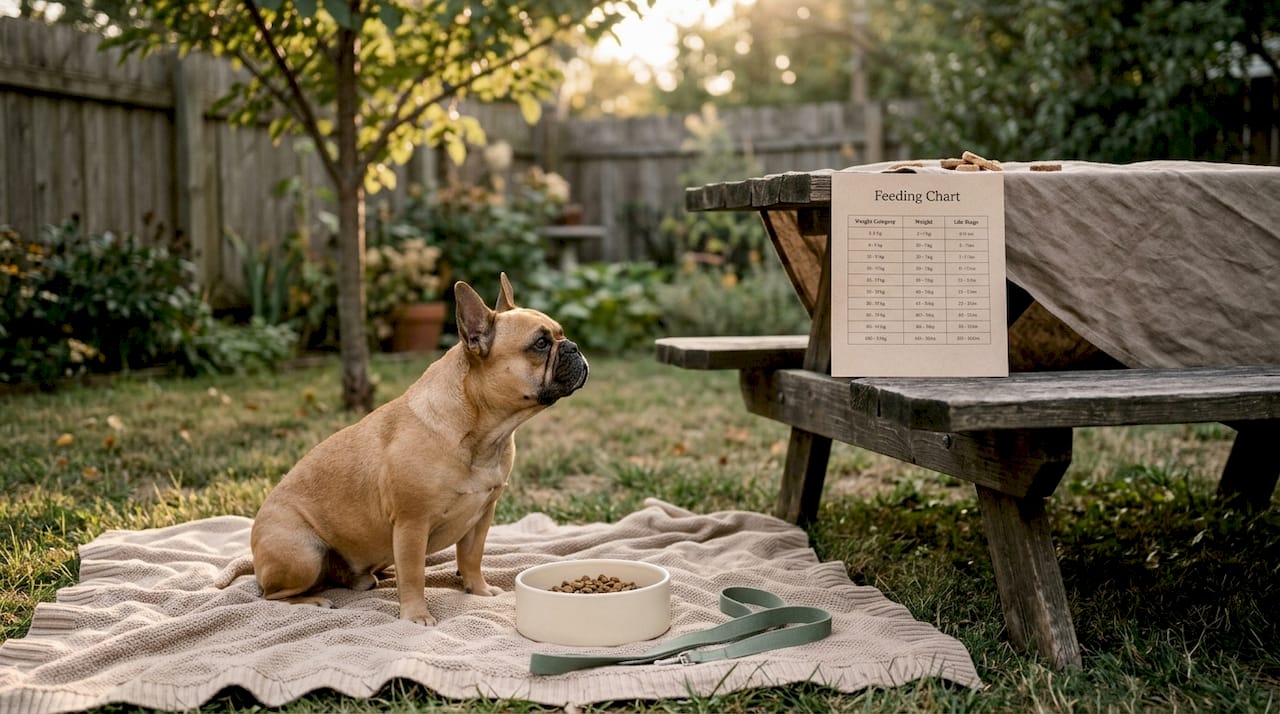
| Weight | Puppy (under 6 months) | Adult (6+ months) | Senior (7+ years) |
|---|---|---|---|
| Under 10 lbs | 0.5–0.75 cup/day | 0.5–0.75 cup/day | 0.5 cup/day |
| 10–16 lbs | 0.75–1 cup/day | 0.75–1 cup/day | 0.75 cup/day |
| 17–24 lbs | 1–1.5 cups/day | 1.25–1.75 cups/day | 1–1.25 cups/day |
| 25–28 lbs | 1.5–2 cups/day | 1.5–2 cups/day | 1.25–1.5 cups/day |
Breeders warn against overfeeding puppies for rapid growth because it risks skeletal and respiratory health. Steady, measured growth with puppy-specific food produces better long-term outcomes than pushing weight gain early. Check your dog's weight against breed standards regularly to catch drift before it becomes a problem.
Pro Tip: Weigh your dog's food on a kitchen scale rather than scooping by cup. Cup measurements vary by as much as 20% depending on kibble shape and how tightly you pack the scoop.
How often should you feed a French Bulldog?
Feeding frequency changes significantly as your Frenchie grows. Puppies aged 8–12 weeks need four meals per day. From 3–6 months, three meals per day supports stable blood sugar without overloading a small digestive system. Adults at six months and older do well on two meals per day. This schedule is not arbitrary. It reflects how a puppy's metabolism and stomach capacity change over time.
Skipping meals or consolidating too early creates real risks. Young puppies are prone to hypoglycemia, a dangerous drop in blood sugar that causes weakness, trembling, and in severe cases, seizures. Spreading meals evenly across the day keeps glucose levels stable and supports consistent energy. The 2026 feeding frequency guidelines reinforce this staged approach across all small breeds.
Veterinarians advise against feeding adult French Bulldogs one large meal per day. Twice-daily feeding decreases the risk of gastric torsion, commonly called bloat, and supports steadier energy throughout the day. Bloat is less common in small breeds than in large ones, but French Bulldogs with deep chests are not immune.
Best practices for feeding frequency:
- Feed puppies 8–12 weeks old four times daily, spaced roughly four hours apart.
- Move to three meals per day between 3–6 months as stomach capacity increases.
- Transition to two meals per day at six months and maintain that schedule through adulthood.
- Keep mealtimes consistent. Feed at the same times each day to support digestion and reduce anxiety around food.
- Never leave food out all day. Free feeding makes it nearly impossible to track actual intake.
- Remove uneaten food after 20 minutes to discourage grazing and maintain portion discipline.
Pro Tip: Set phone alarms for feeding times until the schedule becomes automatic. Consistency in timing is almost as important as consistency in amount.
How do treats fit into your Frenchie's daily calorie budget?
Treats are the most common source of untracked calories in a French Bulldog's diet. The 2026 feeding guideline is clear: treats must stay under 10% of total daily caloric intake. For a 22-pound adult eating 640 kcal/day, that means no more than 64 kcal from treats. A single commercial dog biscuit can contain 30–50 kcal. Two biscuits and a training treat can easily push past that ceiling without the owner noticing.
Precision feeding with pre-measured portions improves weight management outcomes, especially for French Bulldogs affected by BOAS (brachycephalic obstructive airway syndrome), where even modest excess weight worsens breathing. Treat calories count toward the daily total, not in addition to it. When you give a treat, reduce the next meal slightly to compensate.
Treat dos and don'ts:
- Do use small, low-calorie treats like blueberries, plain cooked chicken pieces, or baby carrots.
- Do break larger treats into smaller pieces to extend training sessions without adding calories.
- Do count treat calories against the daily total before feeding them.
- Don't use treats as a substitute for a missed meal.
- Don't give table scraps. Many human foods are calorie-dense and some are toxic to dogs.
- Don't let family members give treats independently without tracking. Uncoordinated treat-giving is one of the fastest routes to an overweight Frenchie.
What breed-specific factors affect portion decisions?
French Bulldogs have a shorter list of food tolerances than most owners expect. Veterinary experts recommend single, named protein sources such as salmon or lamb over generic "meat meal" formulas, because common proteins like chicken and beef trigger allergies in a meaningful share of the breed. Symptoms include itchy skin, ear infections, and loose stools. If your dog shows any of these signs, the food itself may be the problem, not the portion size.
Dr. Kim Podlecki, a veterinarian who has worked extensively with brachycephalic breeds, emphasizes focusing on body condition score over bag recommendations. She advocates for AAFCO-substantiated foods with single protein sources tailored to Frenchie sensitivities. AAFCO (the Association of American Feed Control Officials) sets the nutritional adequacy standards that appear on pet food labels. A food that meets AAFCO standards for "all life stages" or the specific life stage of your dog is a minimum requirement, not a guarantee of quality.
Kibble shape matters more for French Bulldogs than for most breeds. Their flat faces make it harder to pick up standard round or small kibble. Flat, wide pieces or specially shaped kibble designed for brachycephalic breeds reduce gulping, which lowers the risk of gas and bloating. Food texture also affects digestion. Some Frenchies do better on wet food or a mix of wet and dry, particularly dogs with dental crowding.
Monitoring stool quality is one of the most reliable indicators of correct portion sizing. Firm, easy-to-pick-up stool suggests the amount and food type are working. Soft or pasty stools point to overfeeding or a food intolerance. Adjust the portion or the protein source before assuming the problem is something else. Check the prevention strategies for small breed obesity if weight gain persists despite correct portions.
Pro Tip: Transition to any new food over 7–10 days by mixing increasing amounts of the new food with the old. French Bulldogs have sensitive digestive systems and abrupt changes cause stomach upset even when the new food is nutritionally superior.
Key Takeaways
Correct French bulldog food portions require calculating daily calorie needs from the RER formula, adjusting for life stage, keeping treats under 10% of daily calories, and choosing single-protein foods suited to the breed's digestive sensitivities.
| Point | Details |
|---|---|
| Use RER to set calorie targets | Calculate daily calories from body weight, then adjust for age and activity level. |
| Match meal frequency to life stage | Four meals for young puppies, three for growing pups, two for adults. |
| Cap treats at 10% of daily calories | Count treat calories against the daily total and reduce meals accordingly. |
| Choose single, named protein sources | Salmon or lamb reduces allergy risk better than generic meat meal formulas. |
| Monitor stool quality as a feedback tool | Firm stools confirm correct portions; soft stools signal overfeeding or intolerance. |
Fine-tuning portions is where most owners get it wrong
Most French Bulldog owners I've spoken with make the same mistake: they set a portion once and never revisit it. A Frenchie at eight months is not the same dog at three years. Weight creeps up slowly, and by the time it's visible, the dog has been overfed for months.
The adjustment protocol that actually works is small and slow. Change portions by no more than 1–2 tablespoons per meal and observe for 7–10 days before adjusting again. This pace feels frustratingly slow, but it gives you accurate feedback. A larger cut produces digestive upset that masks whether the new amount is actually working.
Body condition score is a better tool than the scale alone. Run your hands along your dog's ribs. You should feel them without pressing hard, but not see them. A visible waist from above and a slight abdominal tuck from the side are the targets. If the ribs disappear under fat, reduce portions. If they're prominent, increase them.
Picky eaters are common in this breed, and owners often overfeed trying to coax a reluctant dog to eat. The better move is to set the bowl down, give the dog 20 minutes, and remove whatever remains. A healthy dog will not starve itself. Consistent meal timing and removing food between meals usually resolves pickiness within a week.
— Robert
Bowlful can take the guesswork out of your Frenchie's feeding plan
Getting French bulldog food portions right is a moving target. Your dog's weight, activity level, and age all shift the numbers, and most owners are working from bag guidelines that were never designed for a brachycephalic breed with a sensitive stomach.
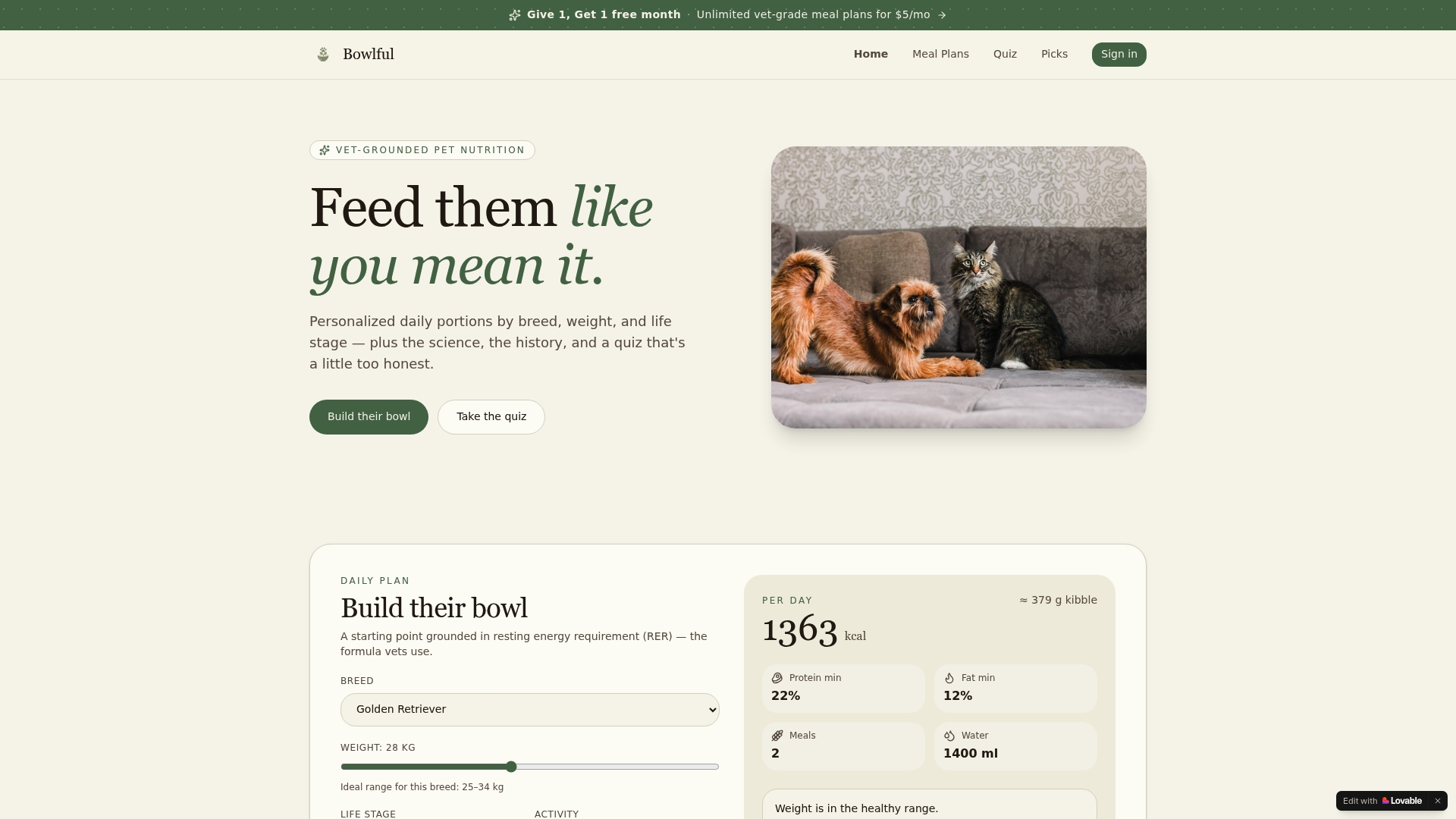
Bowlful builds personalized meal plans using the same RER formula veterinarians use, calibrated to your dog's specific breed, weight, and life stage. The process starts with a short quiz that captures the details that actually matter. Lean-fed dogs have been shown to live 1.8 years longer than their overfed counterparts. That's a meaningful number for a breed that already faces health challenges. Start your Frenchie's feeding plan at Bowlful and feed with confidence from day one.
FAQ
How much should a French Bulldog eat per day?
Most adult French Bulldogs need 1.25–1.75 cups of dry kibble per day, split across two meals, based on a daily calorie target calculated from the RER formula and adjusted for activity level. Exact amounts vary by weight, age, and whether the dog is spayed or neutered.
What is the correct portion size for a French Bulldog puppy?
Puppies under six months generally need 0.75–1.5 cups per day depending on weight, divided into three or four meals. Puppy-specific food with measured portions supports steady growth without the skeletal and respiratory risks that come from overfeeding for rapid weight gain.
How often should I feed my French Bulldog?
Feed puppies aged 8–12 weeks four times per day, move to three meals between 3–6 months, and settle into two meals per day at six months and beyond. Consistent timing at each stage supports blood sugar stability and reduces bloat risk.
Can I give my French Bulldog treats every day?
Yes, but treats must stay under 10% of total daily caloric intake. For a typical adult Frenchie eating 640 kcal/day, that ceiling is about 64 kcal from treats. Count those calories against the daily total and adjust the main meal portions accordingly.
What is the best food for French Bulldogs with sensitive stomachs?
Veterinary experts recommend AAFCO-substantiated foods with a single, named protein source such as salmon or lamb. These reduce the allergy and digestive sensitivity issues common in the breed, and firm stool quality is the clearest sign that the food and portion size are both working correctly.