
A dog weight chart by breed is the standard veterinary tool for determining whether your dog falls within a healthy weight range for its specific breed. 59% of dogs are overweight or obese, yet only 35% of owners correctly identify their dog's weight status. That gap costs dogs years of life. Lean-fed dogs may live up to 1.8 years longer than overweight dogs. Knowing your dog's breed-specific weight range is the first step toward closing that gap.
How to use a dog weight chart by breed accurately
Breed weight ranges are guides, not fixed targets. Breed standards allow weight variation due to frame size, meaning two Labrador Retrievers of the same sex can have different healthy weights depending on bone structure and muscle mass. A chart tells you the range. Your dog's individual build tells you where within that range they belong.
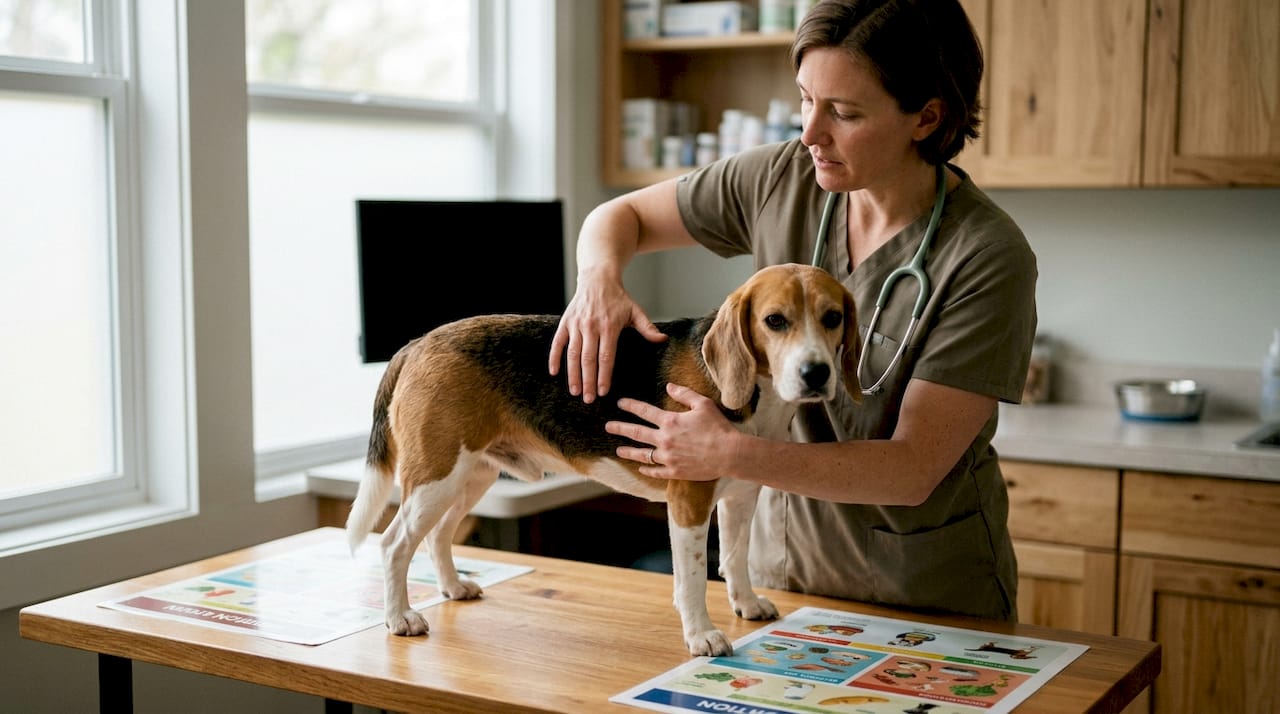
Weight charts work best when paired with Body Condition Scoring, or BCS. BCS offers more precise health assessment than weight alone because it accounts for fat versus lean muscle. A muscular dog may read as "overweight" on a scale but score perfectly on BCS. A thin-coated dog can look slim while carrying excess fat underneath.
Sex and reproductive status also shift the numbers. Intact male dogs can be 10–15% heavier than females, and spaying or neutering affects metabolism, often increasing fat storage if calorie intake stays the same. Any breed weight range you reference should account for your dog's sex.
Key factors that affect where your dog lands in a breed weight range:
- Frame size. Larger-boned dogs sit at the top of the range; lighter-framed dogs sit at the bottom.
- Sex. Males typically weigh more than females within the same breed.
- Neuter status. Altered dogs often need fewer calories to maintain the same weight.
- Age. Senior dogs lose muscle mass, which can mask fat gain on the scale.
- Activity level. Working dogs and sport dogs carry more lean muscle than sedentary pets.
Pro Tip: Run the rib test at home. Place both thumbs on your dog's spine and spread your fingers across the ribcage. You should feel each rib with light pressure, covered by a thin layer of fat. If you can't feel the ribs at all, your dog is likely carrying excess weight.
1. Labrador Retriever: 55–80 lbs
The Labrador Retriever is one of the most weight-variable breeds in the AKC registry. Males typically range from 65–80 lbs, while females range from 55–70 lbs. Labs are prone to obesity because they carry a genetic mutation affecting the POMC gene, which regulates hunger. An active, working Lab can sit at the top of the range healthily. A sedentary house Lab at the same weight may be overweight.
2. French Bulldog: 16–28 lbs
French Bulldogs are compact, but their small frames make extra weight dangerous. The breed standard caps weight at 28 lbs. Even a few extra pounds stress their joints and worsen the breathing issues common in brachycephalic breeds. A French Bulldog at 30 lbs is technically overweight by clinical definition, which sets the threshold at 15% above ideal weight.
3. Golden Retriever: 55–75 lbs
Golden Retrievers share a similar weight range with Labs but tend to carry weight differently, often around the chest and hindquarters. Males run 65–75 lbs; females run 55–65 lbs. Goldens are highly food-motivated, which makes portion control critical. A feeding schedule by weight prevents the gradual overfeeding that leads to chronic weight gain in this breed.
4. German Shepherd: 50–90 lbs
German Shepherds show significant weight variation by sex and working status. Males range from 65–90 lbs; females from 50–70 lbs. A working or sport German Shepherd at 85 lbs may be lean and muscular. A retired or sedentary dog at the same weight may be obese. BCS is especially important for this breed because their thick double coat hides fat deposits effectively.
5. Bulldog: 40–50 lbs
English Bulldogs have a narrow healthy weight range relative to their body size. The breed standard targets 40–50 lbs. Their low-slung build and short legs mean excess weight directly compresses their spine and joints. Bulldogs are also prone to heat intolerance, which limits their exercise capacity and makes dietary control the primary weight management tool.
6. Poodle: 4–70 lbs (by variety)
Poodles span three size categories with dramatically different weight ranges. Toy Poodles weigh 4–6 lbs, Miniature Poodles weigh 10–15 lbs, and Standard Poodles weigh 40–70 lbs. This range illustrates why a generic "dog weight chart" without breed specificity is nearly useless. A Standard Poodle at 20 lbs is dangerously underweight. A Toy Poodle at 20 lbs is severely obese. Breed and variety both matter.
7. Beagle: 20–30 lbs
Beagles are notorious for weight gain because they were bred to follow scent trails for hours, giving them strong food drive and high endurance. The AKC recognizes two size varieties: under 13 inches (20 lbs and under) and 13–15 inches (20–30 lbs). Beagles that transition from active to sedentary lifestyles gain weight quickly. Owners of small breed dogs can find targeted advice on preventing obesity in small breeds to stay ahead of this pattern.
8. Yorkshire Terrier: 7 lbs and under
The Yorkshire Terrier breed standard sets a maximum weight of 7 lbs. At this size, even half a pound of excess weight represents a meaningful percentage of body mass. Yorkies are prone to hypoglycemia, which makes both underfeeding and overfeeding genuinely risky. Owners should weigh Yorkies monthly and track trends rather than reacting to single readings.
9. Dachshund: 8–32 lbs (by variety)
Standard Dachshunds weigh 16–32 lbs; Miniature Dachshunds weigh 8–11 lbs. The breed's elongated spine makes excess weight a direct orthopedic risk. Intervertebral disc disease (IVDD) is the leading health concern in Dachshunds, and weight is a primary modifiable risk factor. Keeping a Dachshund at the lower end of its healthy range reduces spinal stress significantly.
10. Siberian Husky: 35–60 lbs
Siberian Huskies are built for endurance in cold climates, which gives them an unusually efficient metabolism. Males weigh 45–60 lbs; females weigh 35–50 lbs. A Husky that is not working or running regularly needs fewer calories than its breed history suggests. Owners often overfeed Huskies based on their active reputation, leading to weight gain in dogs that spend most of their time indoors.
| Breed | Male weight range | Female weight range |
|---|---|---|
| Labrador Retriever | 65–80 lbs | 55–70 lbs |
| French Bulldog | 20–28 lbs | 16–24 lbs |
| Golden Retriever | 65–75 lbs | 55–65 lbs |
| German Shepherd | 65–90 lbs | 50–70 lbs |
| Bulldog | 40–50 lbs | 40–50 lbs |
| Standard Poodle | 60–70 lbs | 40–50 lbs |
| Beagle | 20–30 lbs | 20–30 lbs |
| Yorkshire Terrier | up to 7 lbs | up to 7 lbs |
| Dachshund (Standard) | 16–32 lbs | 16–32 lbs |
| Siberian Husky | 45–60 lbs | 35–50 lbs |
Common pitfalls when using breed weight charts
The biggest mistake owners make is treating a chart number as a pass or fail grade. Owners often miss gradual weight creep as dogs age because ideal weight is a range influenced by multiple factors beyond breed alone. A dog that weighed 60 lbs at age two and weighs 65 lbs at age seven may have gained 5 lbs of fat while losing 3 lbs of muscle. The scale shows only a 2 lb increase, but the body composition shift is significant.
Common pitfalls to avoid:
- Ignoring life stage changes. Puppies, adults, and seniors have different healthy weight targets even within the same breed.
- Skipping BCS. Visual cues alone are insufficient; combining weight charts with BCS and vet input offers the best assessment.
- Comparing to other dogs. Two dogs of the same breed can have legitimately different healthy weights based on frame size.
- Reacting to single weigh-ins. Weight fluctuates daily with hydration and digestion. Track trends over weeks, not single readings.
- Using puppy charts for adults. A puppy growth chart predicts expected adult weight. It does not define healthy adult weight.
Pro Tip: Weigh your dog on the same scale, at the same time of day, once every two to four weeks. Log the number. A consistent upward trend over three months is a clear signal to consult your vet, even if the dog is still within the breed range.
Regular veterinary check-ups establish a baseline weight and catch gradual changes before they become health problems. A vet visit twice a year gives you professional BCS assessments alongside scale data.
How to maintain your dog's ideal weight
Maintaining a healthy weight requires consistent caloric control, not periodic dieting. Dogs' weight management requires consistent caloric control and lifestyle adjustment rather than sudden changes. Here is a practical framework:
-
Calculate calorie needs by breed size and activity level. Toy breeds have faster metabolisms per pound than giant breeds. A 10 lb Chihuahua needs proportionally more calories per pound than a 100 lb Great Dane. Use the Resting Energy Requirement (RER) formula, which veterinarians use to set baseline calorie targets.
-
Adjust for neuter status and age. Spayed and neutered dogs typically need 20–30% fewer calories than intact dogs of the same weight. Senior dogs lose muscle mass and burn fewer calories at rest. Both groups need calorie reductions to avoid fat gain.
-
Match exercise to breed characteristics. A Border Collie needs two or more hours of vigorous activity daily. A Basset Hound needs moderate daily walks. Feeding a low-activity dog the same calories as a working dog of the same breed causes steady weight gain.
-
Transition food changes gradually. Sudden diet changes cause digestive upset and make it harder to track whether a new feeding plan is working. Shift over seven to ten days.
-
Watch for red flags that signal intervention. Contact your vet if your dog shows any of these signs: difficulty rising from rest, labored breathing after mild activity, visible fat deposits over the spine or tail base, or consistent weight gain over three consecutive monthly weigh-ins.
-
Use breed-specific meal plans. A balanced meal plan accounts for breed size, life stage, and activity level rather than generic portion sizes printed on a food bag. Generic bag guidelines are often calibrated for intact adult dogs at moderate activity, which describes a minority of household pets.
-
Involve your vet in weight loss plans. Rapid weight loss in dogs causes muscle loss alongside fat loss. A vet-supervised plan targets 1–2% of body weight per week as the safe rate of loss.
Key takeaways
Breed weight charts are starting points. Combining them with Body Condition Scoring, regular weigh-ins, and vet input gives you the complete picture your dog's health actually requires.
| Point | Details |
|---|---|
| Charts define ranges, not targets | Two dogs of the same breed can have different healthy weights based on frame size and sex. |
| BCS beats the scale alone | Body Condition Scoring reveals whether weight is lean muscle or excess fat, which the scale cannot show. |
| Sex and neuter status shift numbers | Intact males can weigh 10–15% more than females; altered dogs often need fewer calories. |
| Gradual weight creep is the real risk | Owners miss slow gain because it stays within the breed range while body composition worsens. |
| Consistent tracking beats reactive dieting | Monthly weigh-ins and twice-yearly vet visits catch problems before they require major intervention. |
What I've learned from watching owners use weight charts
Most owners come to weight charts looking for a single number. They want to know if their dog "passes." That framing is the core problem. A chart gives you a range for a reason. The range exists because healthy dogs of the same breed genuinely vary.
The owners who manage their dogs' weight well share one habit: they track trends, not snapshots. They know their dog's weight from six months ago. They notice when it creeps up two pounds over three months. They catch problems when a small adjustment fixes them, not when a vet has to prescribe a weight loss program.
I've also seen owners dismiss weight concerns because their dog "looks fine." Long-coated breeds like Golden Retrievers and Bernese Mountain Dogs are particularly deceptive. The coat hides fat deposits that a quick BCS check would reveal immediately. If you haven't run the rib test on your dog in the last month, do it today.
The science of feeding dogs properly is not complicated, but it does require paying attention to the right signals. Weight charts are one signal. BCS is another. Your vet's assessment is a third. Use all three together, and you will rarely be caught off guard by your dog's weight.
— Robert
Bowlful's approach to breed-specific weight management
Knowing your dog's breed weight range is step one. Translating that knowledge into a daily feeding plan is where most owners get stuck.
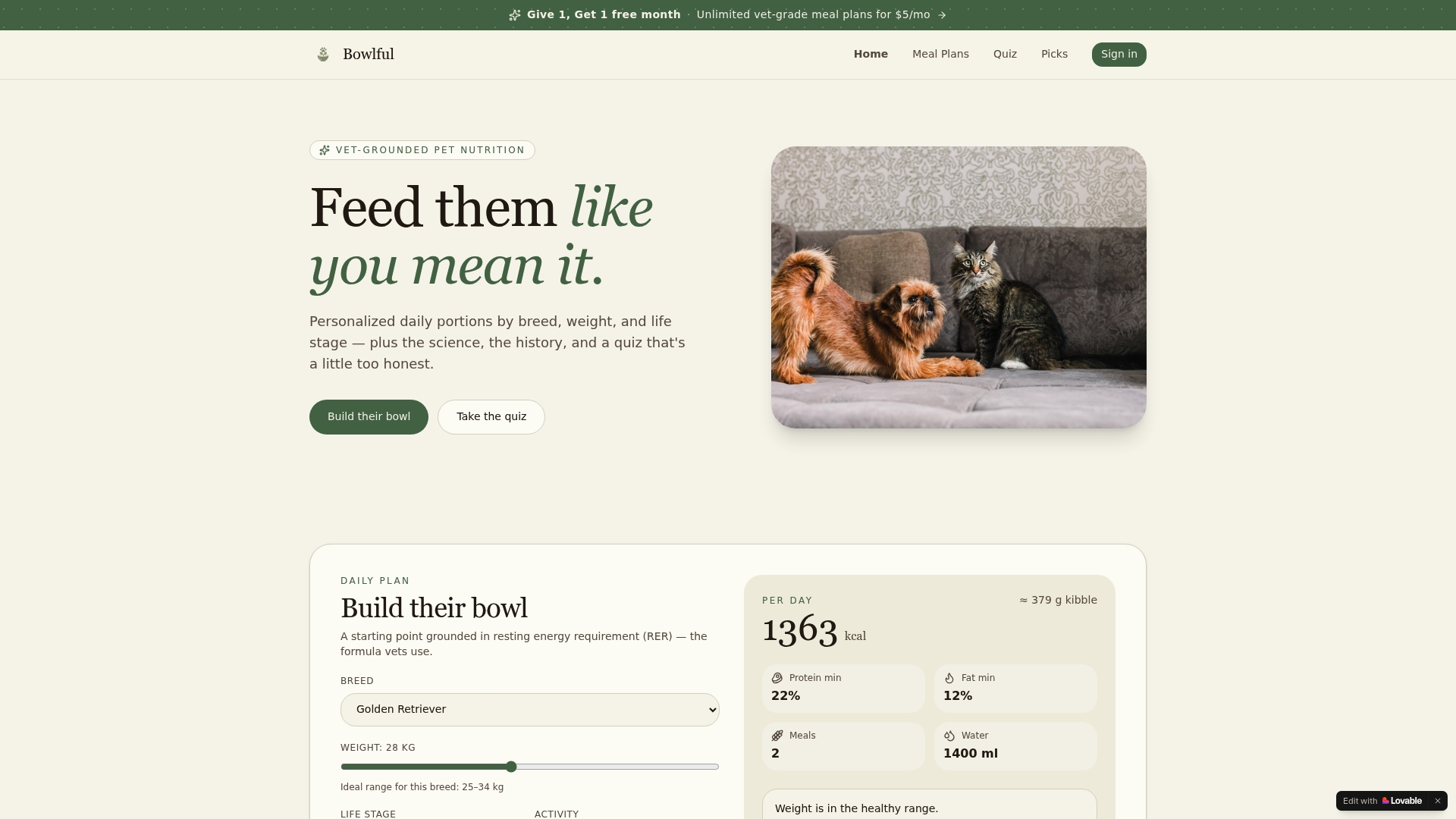
Bowlful builds personalized meal plans using the Resting Energy Requirement (RER) formula, the same calculation veterinarians use to set calorie targets. The process starts with a short quiz covering your dog's breed, current weight, age, sex, and activity level. From that data, Bowlful generates a tailored nutrition plan calibrated to your dog's actual needs, not a generic bag guideline. Research shows lean-fed dogs may live up to 1.8 years longer than overweight dogs. A feeding plan built around your dog's breed-specific healthy weight range is one of the most direct ways to protect that potential.
FAQ
What is a healthy weight for my dog by breed?
Healthy weight varies by breed, sex, and frame size. Use a breed-specific weight chart as a starting range, then confirm with a Body Condition Score assessment from your vet.
How do I know if my dog is overweight?
Veterinary standards define overweight as 15% or more above ideal weight. Run the rib test at home: if you cannot feel your dog's ribs with light pressure, your dog is likely carrying excess fat.
Does neutering affect my dog's ideal weight?
Yes. Spayed and neutered dogs typically have slower metabolisms than intact dogs. Intact males can weigh 10–15% more than females of the same breed while still being healthy.
How often should I weigh my dog?
Weigh your dog every two to four weeks on the same scale at the same time of day. Track the trend over months rather than reacting to individual readings.
Can I use a puppy growth chart to predict adult weight?
A puppy growth chart estimates expected adult size, not healthy adult weight. Once your dog reaches adulthood, switch to a breed-specific adult weight range and BCS for ongoing assessment.