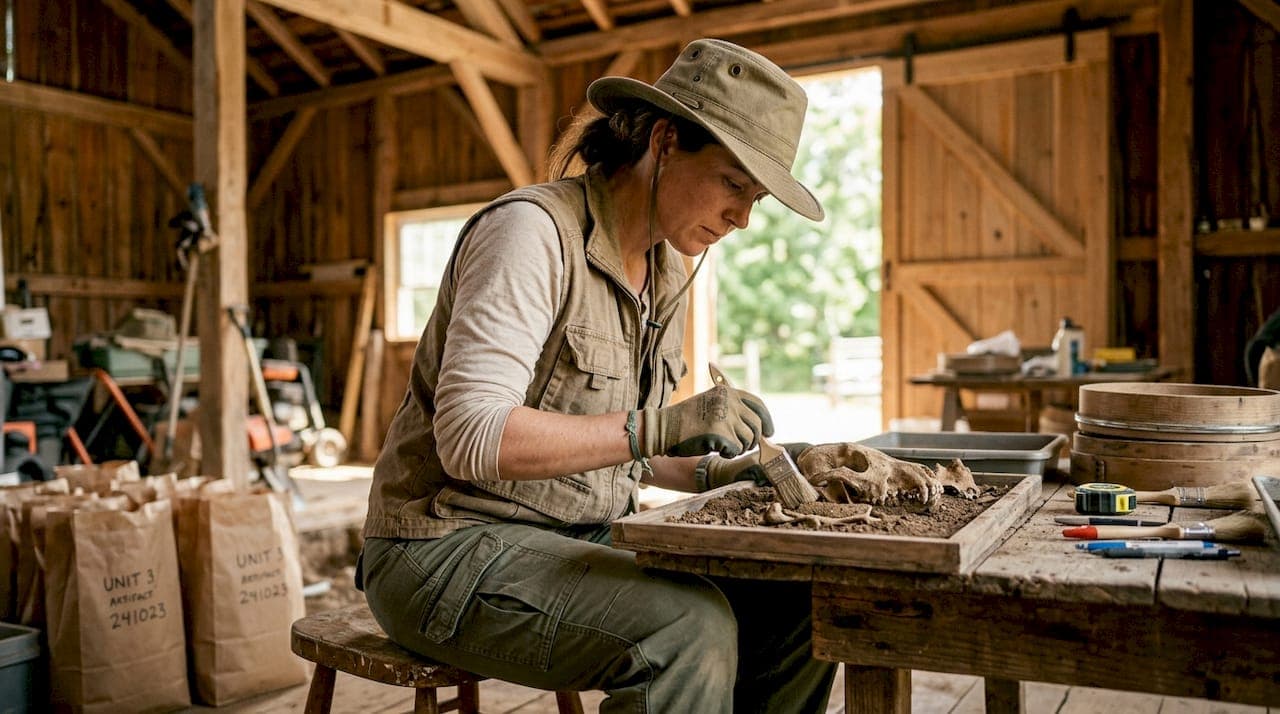
Dog domestication is defined as the process by which wolves transitioned into domestic dogs, beginning over 30,000 years ago, and this shift fundamentally changed both canine body shape and dietary habits. The history of dog breeds and diet is not a modern story. It stretches back to the Stone Age, when early dogs scavenged alongside hunter-gatherers and began adapting to whatever humans ate. By the time agriculture took hold, dogs had already started evolving new digestive tools to handle starch-rich foods. Understanding this arc, from ancient campfire scraps to breed-specific feeding plans, gives you a far clearer picture of what your dog actually needs in the bowl today.
What does archaeological evidence reveal about early dog breeds and diet?
Nearly half of modern dog morphological diversity existed over 10,000 years ago, well before Victorian kennel clubs ever registered a single breed. A 2025 study published in Science confirmed that 50% of dog skull diversity was already present in the Stone Age. That finding overturns the popular belief that selective breeding in the 1800s created the wide range of dogs we see today.
Research led by Dr. Carly Ameen found fossil evidence of morphology changes dating to roughly 11,000 years ago. Dogs were already diverging in size, snout shape, and skull structure based on the roles they filled and the food they accessed. Sled dogs in Arctic regions developed compact, muscular builds fueled by fat-rich diets. Hunting dogs in warmer climates stayed leaner and faster, eating more meat and less starch.
The genetic record is equally revealing. Dogs evolved additional copies of the amylase gene that allow them to digest starch far more efficiently than wolves. This expansion happened in parallel with the rise of agricultural societies, when humans began eating grain-heavy diets and dogs ate from the same table. The shift from carnivory to omnivory was not accidental. It was a survival adaptation that made dogs indispensable partners across wildly different human cultures.
"The physical transformation of dogs from wolves started in the Middle Stone Age, with environmental, dietary, and human interaction factors all contributing to the diversity we see in breeds today."
| Era | Key dietary shift | Morphological change |
|---|---|---|
| 30,000+ years ago | Scavenging meat and fat from human camps | Reduction in jaw size and aggression traits |
| 10,000 years ago | Starch introduction via agricultural scraps | Skull shape diversification, 50% of modern variation present |
| 5,000 years ago | Task-specific feeding (sled, hunting, herding) | Size and limb specialization by role |
| 2,000 years ago | Documented feeding of bread, milk, and meat | Coat, body type, and snout refinement |
How did breed size shape different nutritional needs?
Breed size is the single most reliable predictor of a dog's metabolic rate and calorie needs. Toy and small breeds burn energy faster per pound of body weight than large or giant breeds. That difference has direct consequences for what and how often you feed them.

Small breeds need 28–32% protein and calorie-dense meals to sustain their fast metabolism. Large and giant breeds, by contrast, need lower fat content, typically 10–14%, along with glucosamine and chondroitin to protect their joints. Feeding a Great Dane the same food as a Chihuahua is not just imprecise. It can cause real harm over time.
Kibble size also matters more than most owners realize. Small breeds have smaller mouths and teeth, so oversized kibble leads to poor chewing and incomplete digestion. Large breeds benefit from bigger pieces that slow eating and reduce the risk of bloat, a life-threatening condition in deep-chested dogs like German Shepherds and Dobermans.
- Toy and small breeds (under 20 lbs): 28–32% protein, 3–4 meals per day, small kibble, calorie-dense formulas
- Medium breeds (20–50 lbs): Balanced protein around 25–28%, 2 meals per day, moderate energy density
- Large breeds (50–90 lbs): Lower fat (10–14%), joint-support nutrients, 2 meals per day, larger kibble
- Giant breeds (90+ lbs): Controlled calcium and calorie intake, especially as puppies, to prevent skeletal problems
Pro Tip: If your small breed dog seems lethargic between meals, low blood sugar from infrequent feeding is often the cause. Splitting daily portions into 3–4 smaller meals can resolve this quickly.
For a deeper look at how food amounts vary by breed, the metabolic differences between size categories explain far more than most generic feeding charts do.
How did human history shape what dogs ate?
The dietary habits of dogs across history mirror the dietary habits of the humans they lived with. That parallel is not coincidental. Dogs ate what was available, and what was available depended entirely on human culture and geography.
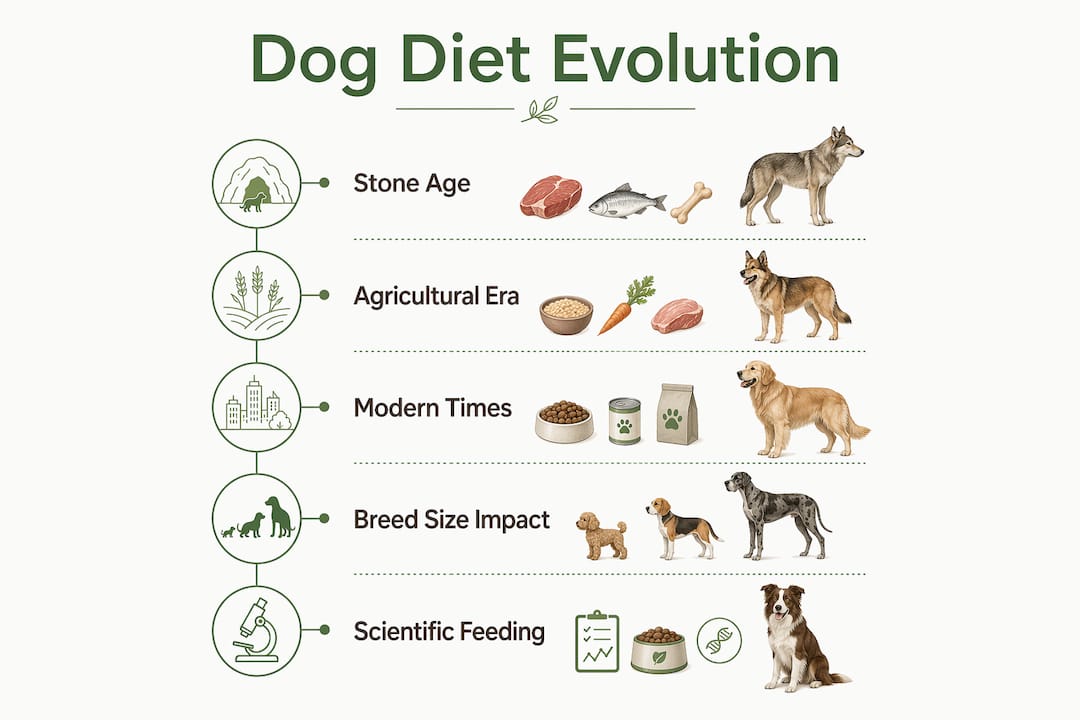
Hunter-gatherer dogs ate meat, fat, and bone. They scavenged carcasses, ate organ meat, and occasionally consumed berries or roots. Their bodies were built for high-protein, high-fat fuel. When humans settled into farming communities, the dog's diet shifted dramatically. Grain, legumes, and root vegetables became staples, and dogs ate the scraps from those meals.
Ancient Romans fed dogs barley bread soaked in milk, along with meat scraps, over 2,000 years ago. This is one of the earliest documented feeding practices in history, and it shows that even then, humans were thinking about what their dogs needed rather than just tossing them leftovers at random. The combination of carbohydrate, fat, and protein in that ancient recipe is not far from what modern nutritionists recommend for balanced canine diets.
- Hunter-gatherer era: Dogs ate raw meat, fat, and bone from hunt leftovers. High protein, zero starch.
- Early agricultural period: Grain scraps, legumes, and cooked vegetables entered the dog's diet. The amylase gene expanded to handle this shift.
- Ancient civilizations (Rome, Egypt, China): Documented feeding practices emerged. Dogs received structured meals, not just random scraps.
- Medieval period: Dogs in working roles (herding, guarding) ate meat and bread. Companion dogs in wealthy households ate better than many humans.
- Early modern period (1600s–1800s): Commercial dog food did not exist. Dogs ate table scraps, raw meat, and grain mash depending on their owner's means.
Pro Tip: Ancestral diet patterns are useful context, but they are not a prescription. A raw-only diet based on "what wolves ate" ignores 30,000 years of digestive evolution. Your dog is not a wolf.
What does modern science say about breed-specific feeding?
Modern tailored nutrition focuses on physiological traits like metabolism and joint health rather than pedigree alone. That shift in thinking is significant. It means the right food for your dog depends on how their body works, not just what breed certificate they carry.
Small breeds require 3–4 meals a day to prevent hypoglycemia, a condition caused by blood sugar dropping too low between meals. This is a genuine medical risk, not a preference. Large breeds benefit from glucosamine and chondroitin to protect cartilage and reduce the risk of hip dysplasia, which affects breeds like Labrador Retrievers and Rottweilers at disproportionate rates.
Life stage adds another layer. Puppies need higher protein and calcium for growth, but large breed puppies need controlled calcium to avoid skeletal deformities from growing too fast. Senior dogs need fewer calories but more joint-support nutrients and omega fatty acids to manage inflammation. A one-size feeding plan fails at every stage.
| Breed size | Protein target | Fat target | Key supplements | Feeding frequency |
|---|---|---|---|---|
| Toy/Small | 28–32% | 15–18% | B vitamins, dental support | 3–4 times daily |
| Medium | 25–28% | 12–16% | Omega-3 fatty acids | 2 times daily |
| Large | 22–26% | 10–14% | Glucosamine, chondroitin | 2 times daily |
| Giant | 20–24% | 8–12% | Calcium control, joint support | 2 times daily |
The science of feeding dogs properly now uses tools like the Resting Energy Requirement (RER) formula, a veterinary standard that calculates calorie needs based on body weight. This approach removes guesswork and replaces it with math your vet can verify.
- Omega-3 fatty acids reduce inflammation and support coat health across all breeds
- Glucosamine and chondroitin are non-negotiable for large and giant breeds over age 5
- Dental-support kibble matters most for small breeds, which are prone to periodontal disease
- Controlled calcium in large breed puppy formulas prevents growth-related skeletal damage
Key Takeaways
The history of dog breeds and diet shows that breed-specific nutrition is not a modern marketing concept. It is a biological reality shaped by tens of thousands of years of co-evolution between dogs and humans.
| Point | Details |
|---|---|
| Breed diversity is ancient | 50% of modern dog skull diversity existed over 10,000 years ago, long before Victorian breeding. |
| Diet drove genetic change | The amylase gene expanded in dogs as humans shifted to agricultural, starch-rich diets. |
| Size determines metabolism | Small breeds need calorie-dense, frequent meals; large breeds need joint support and lower fat. |
| Human history shaped dog diets | From hunter-gatherer scraps to Roman barley bread, dogs ate what their humans ate. |
| Modern feeding requires precision | The RER formula and breed-specific nutrient targets replace generic feeding charts with real data. |
Why I think we've been reading dog history backward
Most people assume that Victorian kennel clubs invented the dog breeds we know today. The 2025 Science study proves that assumption wrong, and I think the implications go further than most owners realize. If half of your dog's physical traits were already locked in 10,000 years ago, then feeding them based purely on their registered breed name is only half the picture.
What actually matters is the underlying physiology. A Chihuahua and a Miniature Pinscher share similar metabolic demands not because they share a breed club, but because they share a body type shaped by thousands of years of small-dog evolution. The same logic applies to large breeds. A Bernese Mountain Dog and a Saint Bernard both need joint support because their skeletal load is enormous, regardless of which kennel club recognizes them.
The other myth worth challenging is the raw-diet-as-ancestral-truth argument. Dogs diverged from wolves genetically and digestively over 30,000 years. The amylase gene expansion is real, documented evidence that your dog's gut is built for a more varied diet than any wolf ever ate. Ignoring that in favor of a purely carnivorous feeding plan means ignoring 30 millennia of adaptation.
My practical advice: use breed history as context, not as a feeding prescription. Consult a veterinarian who uses physiological markers like weight, body condition score, and life stage alongside breed type. That combination gives you a feeding plan grounded in both evolutionary reality and modern science.
— Robert
Feeding your dog based on real science, not guesswork
Understanding the deep history behind your dog's breed and body type is only useful if it changes how you feed them today. Bowlful was built on exactly that principle.
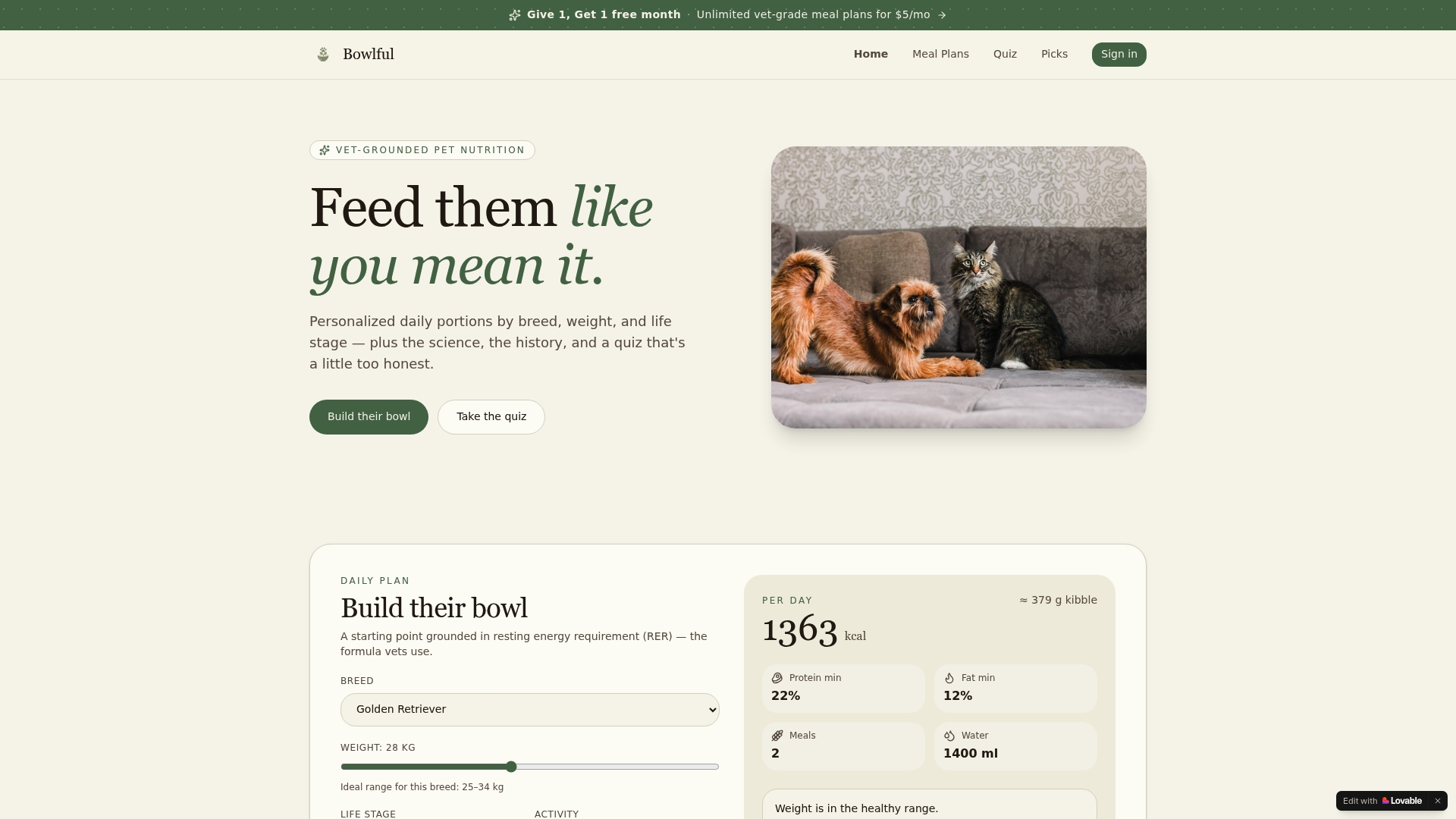
Bowlful uses the veterinary-standard RER formula to calculate your dog's precise calorie needs based on breed, weight, and life stage. Research shows that lean-fed pets may live 1.8 years longer than those fed without portion control. Bowlful's interactive quiz takes the complexity out of breed-specific nutrition and turns it into a clear, personalized meal plan your dog can actually benefit from. If you want feeding advice grounded in the same science that traces back to your dog's evolutionary roots, Bowlful is the place to start.
FAQ
How far back does the history of dog breeds and diet go?
Dog domestication began over 30,000 years ago, and dietary adaptations like the amylase gene expansion occurred alongside the rise of agriculture roughly 10,000 years ago.
Did Victorian breeders create modern dog diversity?
No. A 2025 Science study found that 50% of modern dog skull diversity already existed in the Stone Age, well before Victorian kennel clubs began formal selective breeding.
Why do small breeds need to eat more frequently than large breeds?
Small breeds have faster metabolic rates and are at risk of hypoglycemia if they go too long between meals. Veterinary guidelines recommend 3–4 meals per day for toy and small breeds.
What nutrients do large breed dogs need most?
Large breeds need lower fat diets (10–14%) along with glucosamine and chondroitin to support joint health and reduce the risk of hip dysplasia and skeletal problems.
How does breed size affect protein requirements?
Small breeds need 28–32% protein to sustain their high energy output, while large and giant breeds do well on 20–26% protein with tighter control over fat and calcium levels.