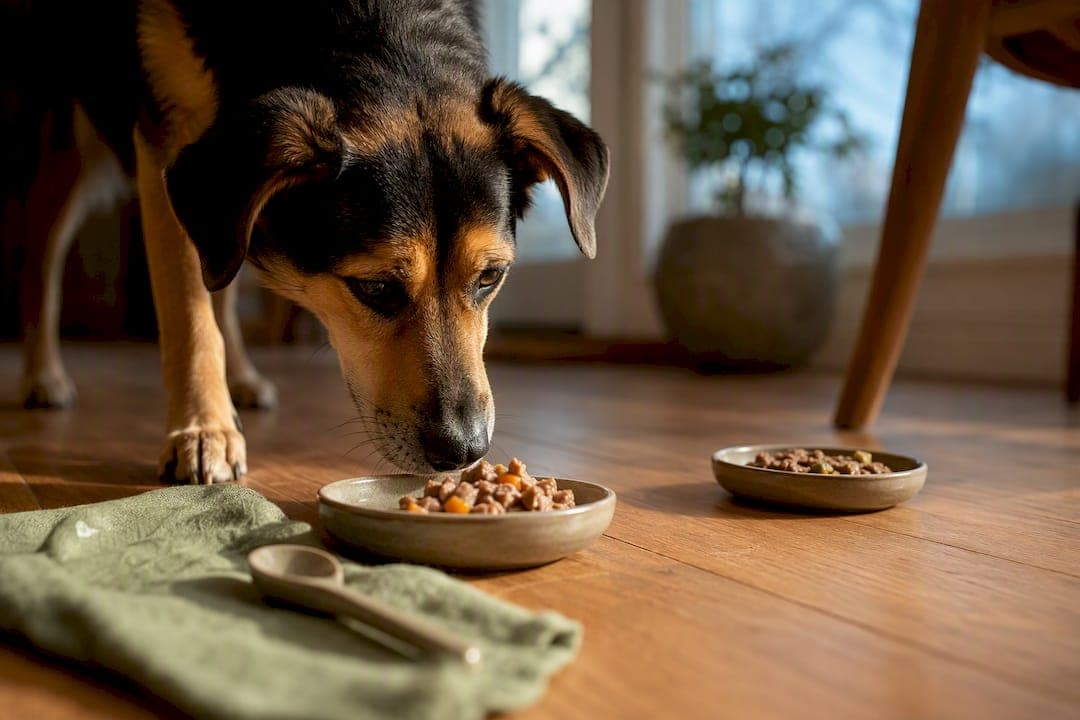
First rule out health causes. For a healthy picky eater dog, timed meals, limited treats, and modest palatability boosts usually restore normal eating within 1 to 3 weeks. If refusal is sudden, or comes with vomiting, diarrhea, weight loss, or lethargy, skip the behavioral fixes and call your vet first.
TL;DR:
- Owners should rule out health issues first, especially if the dog shows symptoms like vomiting, diarrhea, or lethargy, before attributing picky eating to behavior.
- Consistent routines, limiting treats, and improving food presentation are key; chaotic environments or frequent hand feeding tend to reinforce pickiness.
- Heating food gently and changing bowls can enhance aroma and acceptance, while engagement tools like puzzle feeders work better than plain bowls.
- If feeding routines do not improve appetite or the dog loses weight, a vet visit is necessary to identify underlying illnesses.
- Use personalized calorie calculations based on breed, age, and activity to tailor portions and avoid training the dog to expect novelty or treats for eating.
Table of Contents
- Is Your Picky Eater Dog Actually Sick? When to Call the Vet
- Why Dogs Get Picky: Behavior, Habits, and Home Environment
- The Feeding Fixes That Actually Change Behavior
- Safe Toppers and Diet Swaps for a Finicky Dog
- Keeping a Healthy Dog From Becoming Picky Again
- How Bowlful Turns Vet Math Into a Daily Feeding Plan
- Your 2-Week Plan to Fix a Picky Eater Dog
- A Vet-First Take on Picky Eating
- A Practical Next Step for Picky Eaters
- Sources
Is Your Picky Eater Dog Actually Sick? When to Call the Vet
Not every finicky eater in dogs is a training problem. Some are early signs of illness, and catching that distinction fast matters more than any feeding trick.
Call your vet promptly if you notice any of these alongside appetite loss:
- Vomiting, diarrhea, or rapid weight loss
- Lethargy or reduced activity
- Increased or decreased drinking
- A puppy or senior dog skipping meals (they have less reserve than healthy adults)
Vets typically look for dental disease, kidney disease, GI obstruction, or arthritis-related pain that makes eating uncomfortable. A workup usually starts with an oral exam, bloodwork, and urinalysis, then moves to fecal testing, dental X-rays, or abdominal imaging if something looks off.
Here's the reassuring part: if your dog is otherwise healthy and holding steady weight, occasional missed meals are often not dangerous. Track daily appetite, weigh your dog weekly, and check stool consistency. That's more useful than panicking over one skipped bowl.
Why Dogs Get Picky: Behavior, Habits, and Home Environment
Most cases of a picky eater dog trace back to behavior, not biology. The trick is telling the two apart.
A dog with genuinely low food motivation just isn't that hungry. A dog with learned pickiness eats treats and table scraps eagerly but turns its nose up at regular meals. That second pattern is the telltale sign of a trained habit, not a medical issue, according to the AKC.
Common triggers worth checking:
- Rescuing a "picky" dog by swapping in better food after refusal teaches it to hold out
- Frequent hand feeding or constant topping trains the same pattern, as explained in our practical safety guide for owners on outdoor routine disruptions affecting appetite.
- Competition from other pets, noisy feeding spots, or a bowl that reflects light or smells like old food
- Smaller breeds are often noted for lower food drive, though environment usually plays a bigger role than breed alone
The Feeding Fixes That Actually Change Behavior
This is where most owners get results, if they commit to the routine for more than a couple of days.
- Set a timed-meal window. Most adult dogs do well on two meals a day; puppies need three to four. Put the bowl down, give it a short, limited time window, then pick it up whether it's finished or not. A WebMD slideshow on picky eaters backs this exact approach, and consistency is what makes it work.
- Cut the between-meal snacks. If treats or scraps are available all day, your dog has no reason to eat the less exciting bowl of kibble.
- Add measured toppers, not a new diet. A spoonful of low-sodium bone broth, a small cooked egg, or plain yogurt can help, but keep toppers under 10 to 20% of daily calories so you're not just building a new bad habit.
- Warm wet food carefully. Heating food to roughly 100°F (38°C) releases aroma and often perks up interest. Stir thoroughly and test the temperature yourself before serving. Skipping this step risks a hot spot that burns your dog's mouth, which can create a lasting food aversion.
- Change the bowl. Stainless steel can reflect light or hold odor. A ceramic or ceramic-style bowl sometimes solves pickiness on its own, a detail easy to overlook.
- Use a puzzle or slow feeder. Engagement often beats a plain bowl for a dog that's bored rather than actually uninterested in food. A slow feeder adds enough friction to make mealtime feel like something to do, not something to refuse.
- Exercise before meals, and feed away from the family table. A tired dog is a hungrier dog, and one that isn't watching you eat won't expect a share of it.
Pro Tip: Resist the urge to "fix" a skipped meal by offering something better right away. That single decision is usually what teaches a dog to hold out in the first place.
Safe Toppers and Diet Swaps for a Finicky Dog
Sometimes the base food itself is the problem, not just the routine around it.
Wet food, shelf-stable fresh food, or rehydrated freeze-dried meals often work better for palatability, especially when a named protein sits at the top of the ingredient list, per WebVet. Safe additions include plain cooked vegetables, unsweetened canned pumpkin, and low-sodium bone broth, always kept to a limited share of daily calories.
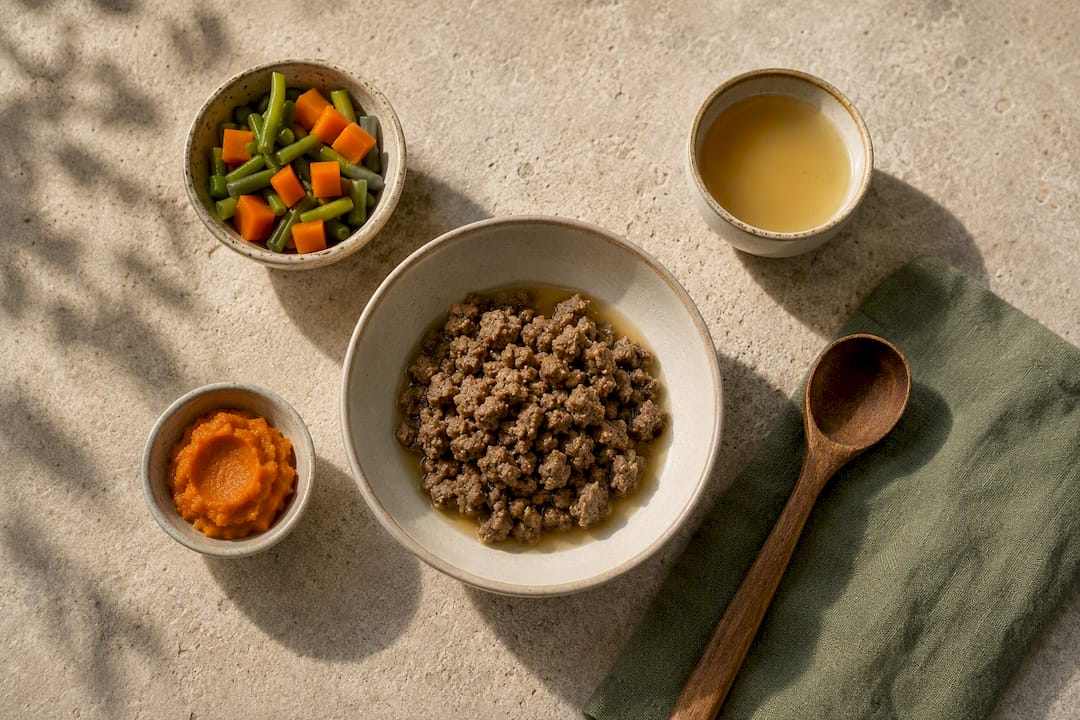
Skip onions, garlic, chocolate, xylitol, and anything heavily salted. When you switch foods, do it gradually over 3 to 7 days, mixing old and new while you watch stool consistency for signs of an upset stomach.
Keeping a Healthy Dog From Becoming Picky Again
Long-term appetite management is mostly about resisting the shortcuts that created the problem in the first place.
- Base daily portions on RER and MER calorie formulas, the same NRC and AAFCO-aligned math vets use, rather than guessing
- Limit treats to 10% or less of total daily calories, and treat high-value toppers as occasional, not routine
- Do a monthly weight check or body-condition score and adjust portions when the number drifts
- Keep bowls clean and feeding locations consistent. Feeding time shouldn't feel like a different experience every day
A WebVet review of picky-eater diets notes that too much variety in food choices tends to backfire, training dogs to expect novelty instead of accepting a stable diet. A steady feeding routine does more for long-term appetite than any single food swap.
How Bowlful Turns Vet Math Into a Daily Feeding Plan
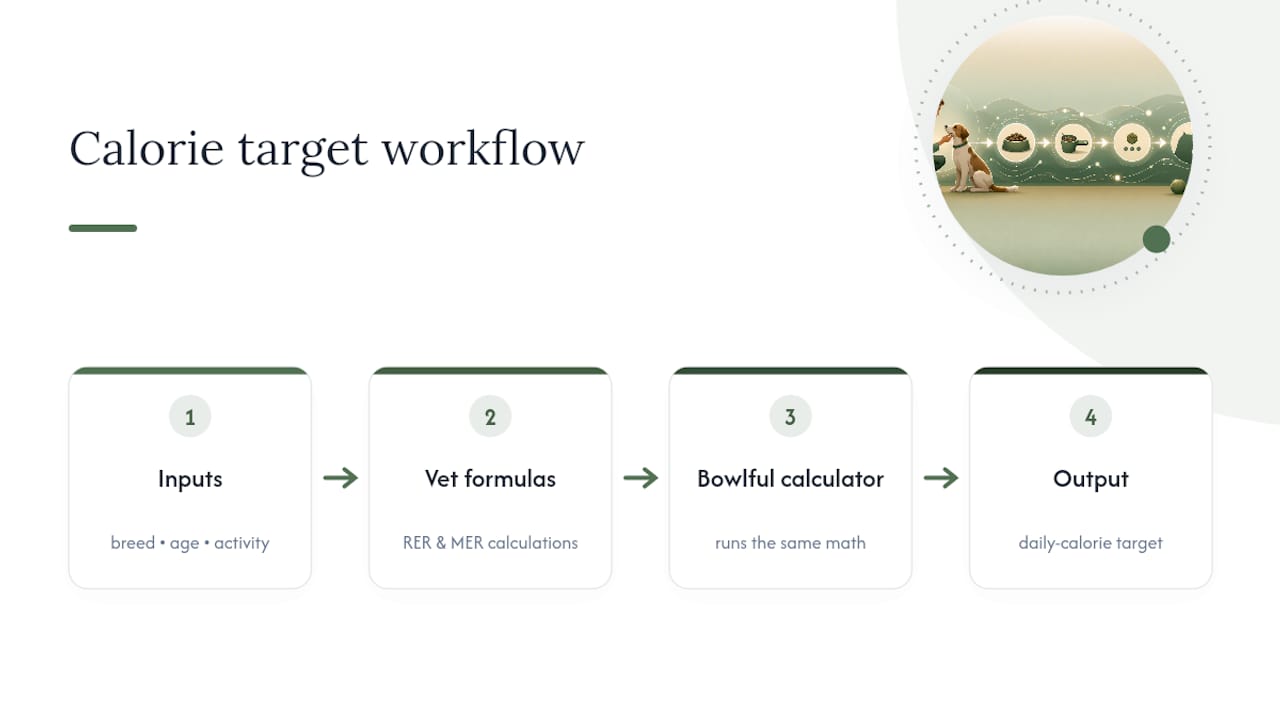
RER and MER are the resting and maintenance energy formulas vets use to calculate how many calories a dog actually needs. Bowlful's calculators run that same math using breed, age, and activity level to produce a daily-calorie target, explained further in our guide to feeding dogs properly.
A tailored plan helps most when picky eating persists despite a solid routine, when weight is drifting up or down, or when a multi-dog household means everyone's stealing from everyone else's bowl. Bowlful's free quiz and feeding guides work alongside your vet, not instead of one. When something feels medically off, a vet visit still comes first.
Your 2-Week Plan to Fix a Picky Eater Dog
Start with a quick check: rule out red-flag symptoms, remove snacks between meals, begin the 15 to 20 minute feeding window, swap to a non-reflective bowl, and pick one topper to test.
- Days 1 to 3: Log appetite (ate, partial, refused), record starting weight, note stool quality.
- Days 4 to 7: Keep the routine identical. Small improvements in bowl interest count as progress.
- Days 8 to 14: Weigh again. Steady or rising weight with more consistent eating means keep going.
If there's no improvement by day 14, or if weight drops at any point, book a vet visit rather than trying another fix.
| Day Range | Watch For | Action |
|---|---|---|
| 1 to 3 | Baseline appetite and weight | Start scheduled meals, remove snacks |
| 4 to 7 | Small gains in interest | Hold routine steady, no swaps yet |
| 8 to 14 | Weight and stool trend | Continue if stable, escalate if not |
A Vet-First Take on Picky Eating
Most picky eating fixes fail because owners try the fun stuff (new food, new toppers) before ruling out the boring stuff (teeth, gut, kidneys). Get the vet clearance first, then track weight and appetite like data, not vibes. Free quizzes and calorie tools exist to make that tracking easier once you know your dog is healthy.
— Robert
A Practical Next Step for Picky Eaters
You can find RER and MER math to help calculate your dog's calorie needs, reducing guesswork about portion sizes. The free feeding quiz turns your dog's breed, age, and activity level into an actual daily-calorie number, and the downloadable meal plans give you toppers and portions that stay inside safe limits instead of accidentally teaching more pickiness.
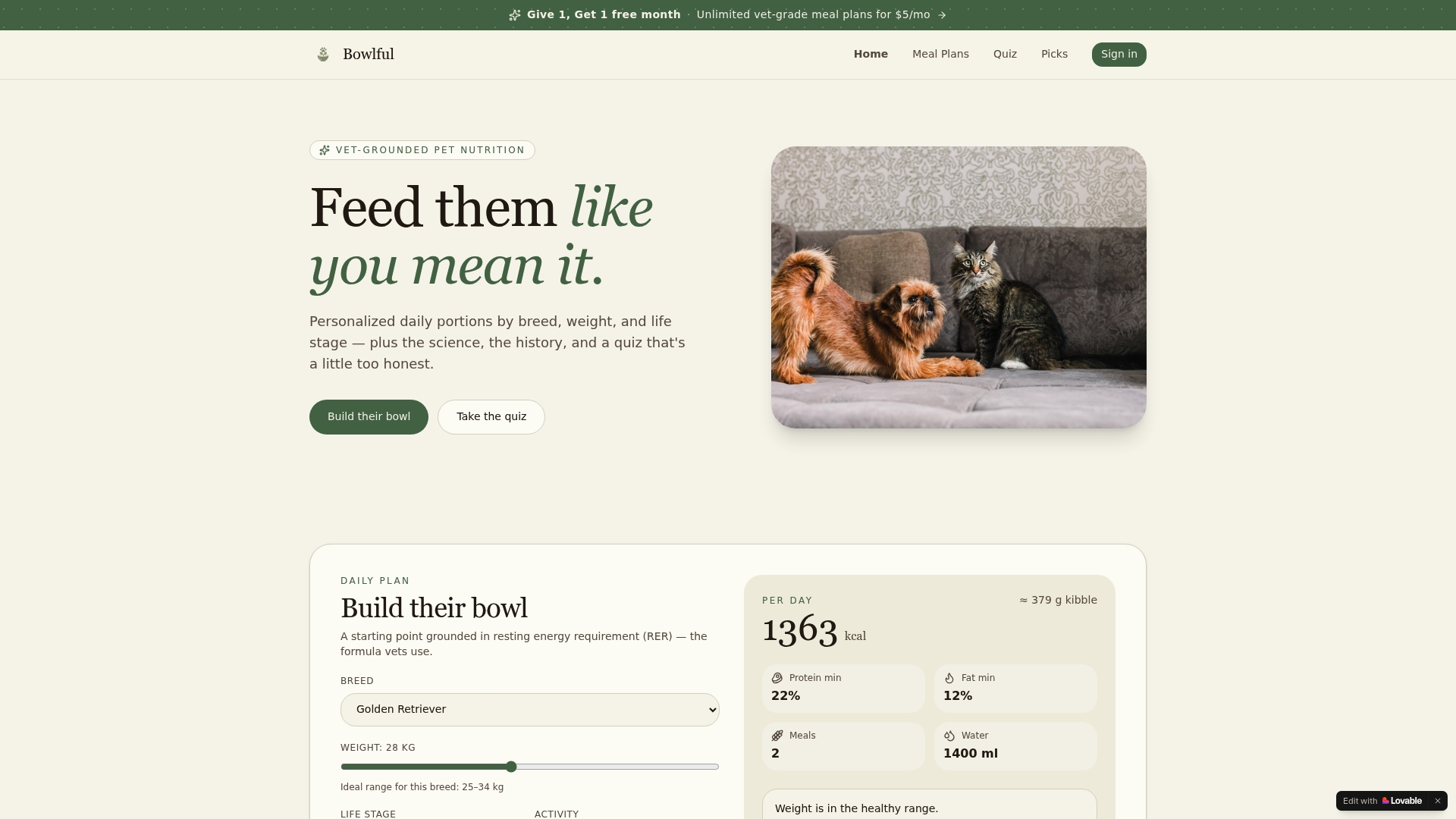
If your picky eater dog has cleared a vet check and you're ready to stop guessing at portions, take the quiz on Bowlful and get a calorie target built around your dog's actual numbers, not a generic bag label.
Sources
- My Dog Won't Eat: Feeding Picky Eaters | VCA
- Why Is My Dog a Picky Eater? | WebMD
- Picky Eaters - Veterinary Hospital - NC State University
- Why Is My Dog a Picky Eater? | AKC
Persistent or severe appetite loss always deserves a veterinarian's opinion before another home fix.