
A staffy weight loss plan is a structured approach combining precise calorie control, high-protein nutrition, and breed-appropriate exercise to reduce body fat in Staffordshire Bull Terriers while preserving their signature muscle mass. Safe weight loss for a Staffy targets 1–2% of body weight per week over a 2–4 month period. That rate matters because going faster risks stripping the lean muscle that defines the breed. The Resting Energy Requirement (RER) formula, used by veterinarians to calculate daily calorie needs, is the gold standard for setting portion targets. Get the numbers right from the start, and the rest of the plan becomes far easier to follow.
What does a staffy weight loss plan actually involve?
A Staffordshire Bull Terrier weight loss plan has three non-negotiable pillars: measured food intake, a high-protein diet, and consistent daily exercise. Most owners focus on exercise first. That instinct is understandable, but food intake controls weight far more than activity does for this breed. Staffies are food-motivated and stocky, which means even moderate overfeeding adds up fast.
The plan works by creating a controlled calorie deficit. You reduce daily calories below maintenance while keeping protein high enough to protect muscle. Exercise then burns additional calories and supports cardiovascular health. Neither element works well without the other.
How do you know if your Staffy is overweight?
Visual checks alone are unreliable for this breed. A Staffy's muscular build often masks obesity, making an overweight dog look solid rather than fat. Staffies also do not develop the rounded belly silhouette common in other breeds, so the usual visual cues mislead owners regularly.
The rib check is the most reliable at-home method. Place both hands flat on your dog's sides and press gently. You should feel each rib with light pressure but not see them. If you have to press hard to find the ribs, your Staffy is carrying excess fat. A visible waist when viewed from above and a slight belly tuck when viewed from the side are also positive signs.
Watch for these behavioral and physical indicators of excess weight:
- Reluctance to play or run after short bursts of activity
- Labored or noisy breathing during mild exercise
- Stiffness when getting up after rest
- Slowing down on walks that previously caused no fatigue
- Difficulty jumping onto furniture they once cleared easily
Pro Tip: Ask your vet to score your Staffy on the Body Condition Score (BCS) scale of 1–9 at your next checkup. A score of 4–5 is ideal. Anything above 6 calls for a structured weight loss plan.
How to build a nutrition plan for Staffy weight loss
Nutrition is the engine of any effective staffy diet plan. The goal is to reduce total calories while keeping protein high enough to prevent muscle loss during the deficit.
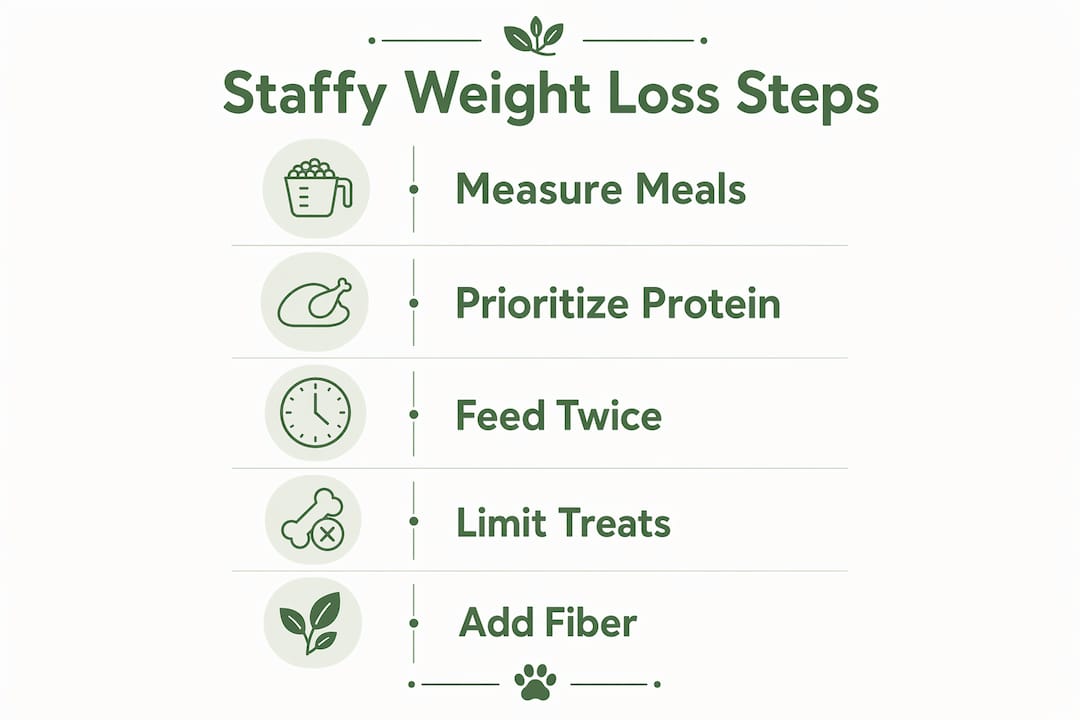
1. Prioritize protein above everything else
High-protein, moderate-fat diets preserve lean muscle during calorie-restricted weight loss. Look for a dog food where a named meat protein (chicken, beef, lamb) appears as the first ingredient. Avoid foods where corn, wheat, or rice dominate the first three ingredients. Those fillers add calories without meaningful nutrition.
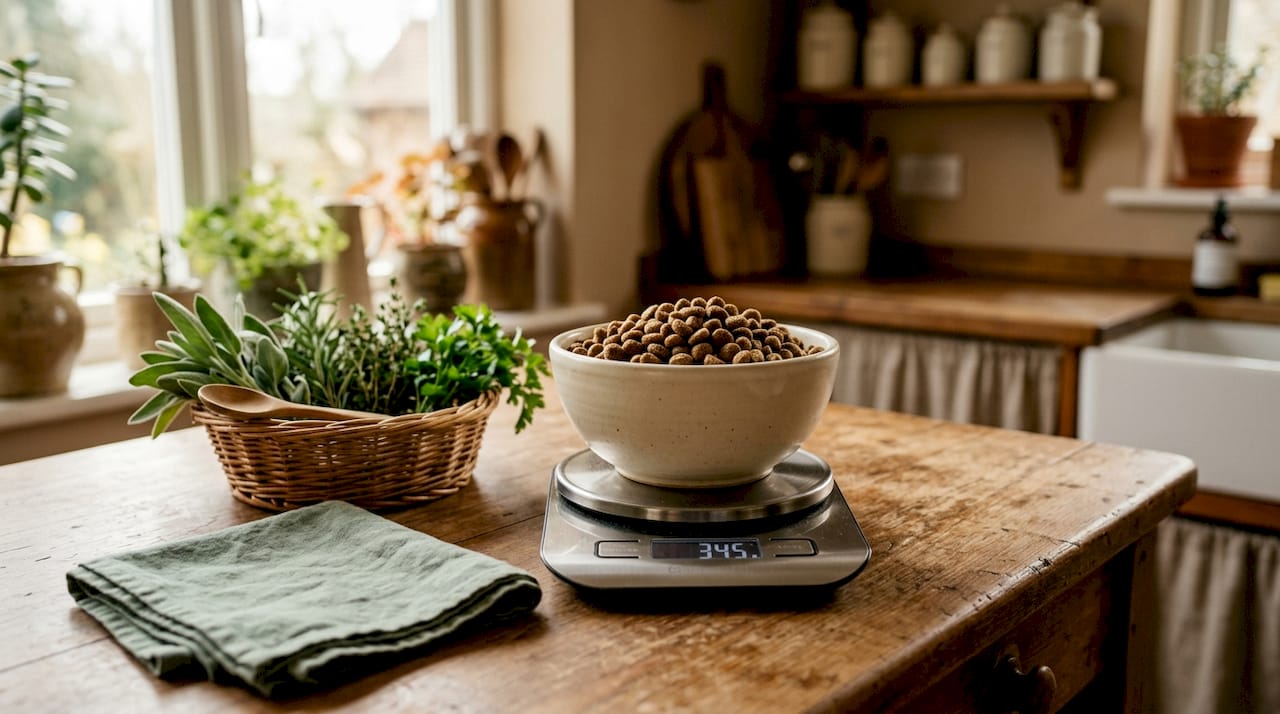
2. Measure every meal with a kitchen scale
Owners who estimate portions by eye or cup consistently overfeed by 20–30%. A kitchen scale eliminates that error entirely. Weigh each meal in grams, not cups. Cup measurements vary depending on kibble size and how tightly you pack the scoop.
3. Feed two scheduled meals per day
Two measured meals daily stabilize blood glucose and reduce begging behavior between feedings. Free feeding, where food sits out all day, makes portion control impossible. Set a morning and evening mealtime and stick to it every day.
4. Cap treats at 10% of daily calories
Treats must not exceed 10% of your Staffy's daily caloric intake. That limit sounds generous until you realize a single commercial dog biscuit can represent 5–8% of a small Staffy's daily allowance. Swap high-calorie treats for low-calorie options like plain baby carrots or small kibble pieces broken from the daily ration.
5. Add fiber to increase satiety
Fiber slows digestion and helps your Staffy feel full on fewer calories. Foods with added beet pulp, pumpkin, or green beans achieve this without adding significant calories. You can also add a tablespoon of plain canned pumpkin (not pie filling) to meals as a low-calorie volume booster.
Pro Tip: Use a balanced meal plan as a reference when calculating your Staffy's daily targets. Seeing real portion examples for similar-sized dogs makes the numbers far less abstract.
Here is a simple daily nutrition framework for an average adult Staffy weighing 13–17 kg:
| Nutrient | Target | Why it matters |
|---|---|---|
| Protein | 30%+ of diet (dry matter) | Preserves muscle during calorie deficit |
| Fat | 10–15% of diet (dry matter) | Supports coat and joints without excess calories |
| Fiber | 3–5% of diet (dry matter) | Increases fullness between meals |
| Treats | Max 10% of daily calories | Prevents hidden calorie surplus |
| Meal frequency | 2 meals per day | Stabilizes energy and reduces begging |
What exercise does a Staffy need to lose weight?
Exercise supports fat loss and improves cardiovascular fitness, but it must start at the right intensity for an overweight dog. Gradual exercise progression protects joints and prevents injury, which is especially important for Staffies carrying extra weight on their compact frames.
The target for fat loss is two 30-minute walks daily, building toward up to one hour of total activity per day. If your Staffy is significantly overweight, start with two 15-minute walks and add five minutes per session each week. Pushing too hard too soon causes joint strain and discourages the dog from wanting to move at all.
Effective exercise options for overweight Staffies include:
- Leash walks on flat ground. The safest starting point. Flat surfaces reduce joint load compared to hills or rough terrain.
- Swimming. Low-impact and joint-friendly, swimming burns significant calories without stressing the legs or spine. Many Staffies take to water quickly once introduced calmly.
- Fetch on grass. Short bursts of running on soft ground build cardiovascular fitness without the repetitive impact of road walking.
- Sniff walks. Slower-paced walks where your Staffy leads by scent. These are mentally tiring and physically active, which helps on days when full exercise is not possible.
Watch for signs of overexertion: excessive panting, lagging behind, lying down mid-walk, or drooling heavily. Staffies are also prone to heat stress, so schedule walks in the early morning or evening during warm months.
Pro Tip: Check your dog's feeding schedule relative to walk times. Exercising 30–60 minutes after a meal, rather than immediately after, reduces the risk of bloating and digestive discomfort.
Common pitfalls that derail Staffy weight loss
Staffies are persistent and clever when it comes to food. Their high food drive is one of the biggest obstacles owners face when trying to maintain a weight loss plan.
Consistent portion control matters more than any single dietary change. A Staffy that receives precisely measured meals twice a day, with no extras slipped in between, will lose weight even on a moderate exercise plan. The moment portion discipline breaks down, progress stalls.
Avoid these common mistakes:
- Eyeballing portions. Even experienced owners misjudge by 20–30% without a scale. Measure every single meal.
- Feeding table scraps. A small piece of chicken or bread seems harmless but adds uncounted calories that erase the day's deficit.
- Giving in to begging. Staffies are theatrical beggars. Redirect begging behavior with a chew toy, a puzzle feeder, or a short training session instead of food.
- Skipping weigh-ins. Weigh your Staffy every two weeks. If weight loss stalls for more than three weeks, reduce daily calories by 10% and reassess.
- Losing patience and cutting calories too fast. Rapid weight loss causes muscle wastage. Slow and steady protects the muscular build that makes a Staffy a Staffy.
Enrichment activities reduce food-seeking behavior between meals. Scatter feeding (spreading kibble across the lawn), lick mats, and Kong toys stuffed with a portion of the daily ration all keep your Staffy mentally occupied without adding extra calories. Check the new feeding frequency guidelines for additional strategies on managing food-motivated dogs.
Key Takeaways
A successful Staffy weight loss plan requires precise portion control, high-protein nutrition, and consistent daily exercise to reduce fat while protecting lean muscle mass.
| Point | Details |
|---|---|
| Safe weight loss rate | Target 1–2% of body weight per week to preserve muscle and avoid health risks. |
| Measure every meal | Use a kitchen scale, not a cup, to eliminate the 20–30% overfeeding error. |
| Protein first | Choose foods where a named meat protein leads the ingredient list to protect muscle during the deficit. |
| Exercise progressively | Start with two 15-minute walks and build toward two 30-minute sessions daily as fitness improves. |
| Manage treats strictly | Cap treats at 10% of daily calories and swap commercial biscuits for carrots or kibble pieces. |
What I've learned watching owners manage Staffy weight
Most owners I've spoken with make the same mistake at the start. They look at their Staffy, see a solid, muscular dog, and convince themselves the weight is mostly muscle. It rarely is. The breed's build is genuinely deceptive, and that deception costs months of progress because the problem goes unaddressed.
The second mistake is treating exercise as the primary solution. Owners start walking their Staffy twice a day and expect the weight to fall off. It does not, because the food intake has not changed. A 30-minute walk burns far fewer calories than most people assume, and a single extra treat can cancel it out entirely. Food control is where the real work happens.
What actually works is boring, consistent, and unglamorous: weighed meals, scheduled feeding times, treats counted against the daily total, and walks that gradually get longer. Owners who stick to that framework for 8–12 weeks see real results. The ones who want faster results cut calories too aggressively, lose muscle along with fat, and end up with a dog that looks thinner but feels weaker.
My honest recommendation is to get a vet-confirmed BCS score before you start, set a target weight, and calculate the weekly loss you need to hit that target in 2–4 months. Then build the plan backward from there. Patience is not optional with this breed. It is the strategy.
— Robert
Bowlful's approach to Staffy weight management
Knowing what your Staffy needs and calculating exactly how much to feed are two different problems. Bowlful solves the second one.
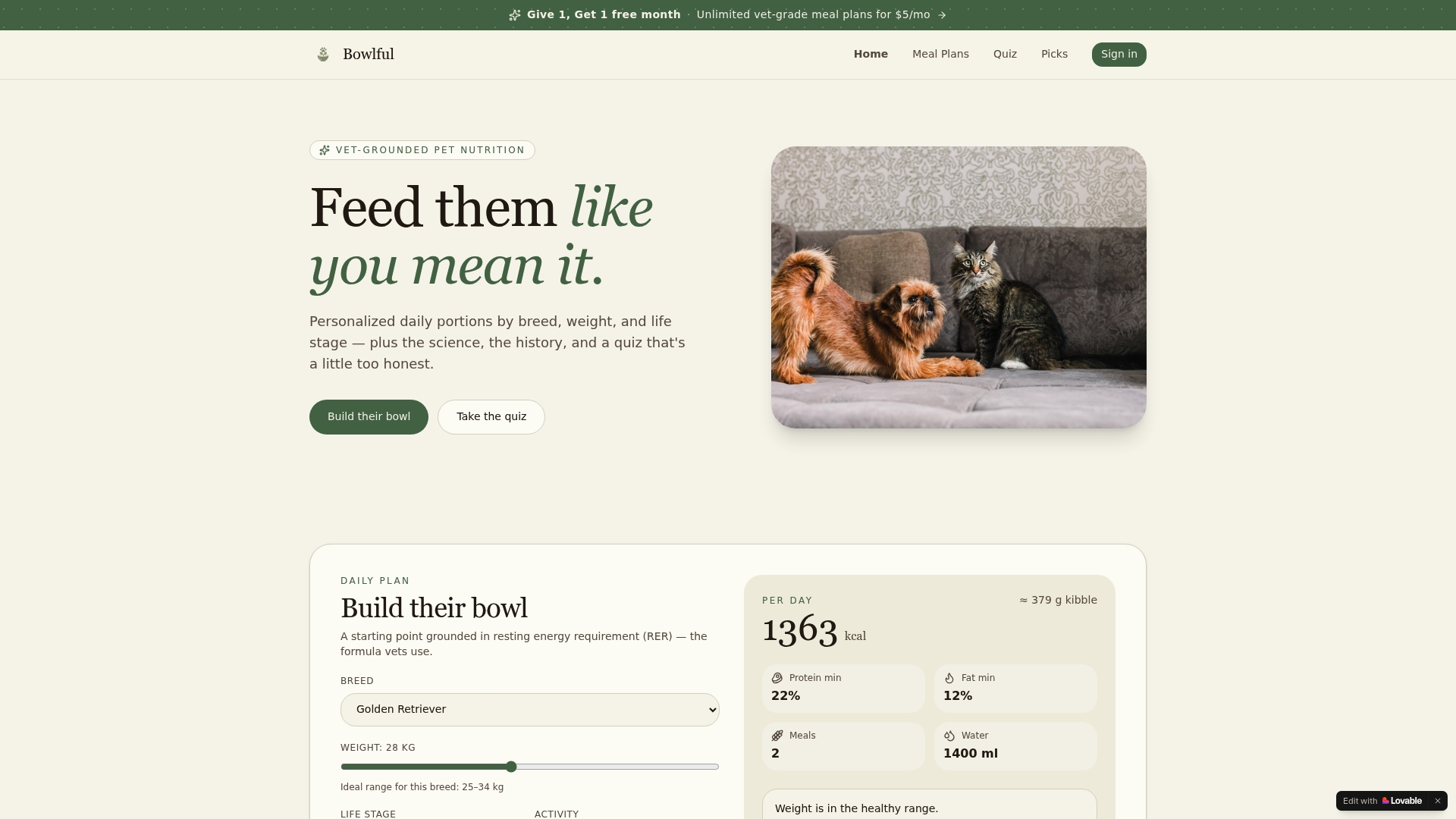
Bowlful builds personalized feeding plans using the RER formula that veterinarians rely on, calibrated to your dog's breed, current weight, and life stage. Research shows that lean-fed dogs may live up to 1.8 years longer than their overweight counterparts. That is not a small difference. Bowlful's interactive quiz takes your Staffy's specific details and produces a daily feeding plan with precise gram targets, so you never have to guess. If you are ready to stop estimating and start seeing results, Bowlful gives you the numbers to make it happen.
FAQ
How fast should a Staffy lose weight safely?
A Staffy should lose 1–2% of body weight per week, reaching a healthy goal over 2–4 months. Faster loss risks muscle wastage, which undermines the breed's athletic build.
Can I use regular dog food for a Staffy weight loss plan?
You can use standard dog food if it is high in protein and you weigh portions precisely. A food formulated for weight management with higher fiber and lower fat content makes calorie control easier.
How do I stop my Staffy from begging between meals?
Feed two scheduled meals daily and redirect begging with puzzle feeders, lick mats, or a short training session. Consistency is the key. Giving in even occasionally reinforces the behavior.
Is swimming better than walking for an overweight Staffy?
Swimming is lower impact than walking and protects joints under the stress of extra body weight. Both activities support fat loss, and combining them provides variety that keeps your Staffy engaged.
How many calories should a Staffy eat per day to lose weight?
The exact number depends on your dog's current weight, age, and activity level, calculated using the RER formula. A vet or a breed-specific nutrition tool like Bowlful can give you a precise daily target rather than a generic estimate.