
If your dog is restless despite daily walks, barking at nothing, chewing the furniture, or shadowing your every step, understimulation is the most likely culprit. The clearest behavioral signs are persistent restlessness, excessive vocalization, destructive chewing, velcro-style attention-seeking, and a flat inability to settle. Your immediate next step: rule out a medical cause or separation anxiety before adding enrichment.
Quick actions you can try today:
- Spend 10 minutes on a nose-work game (hide kibble around the room)
- Swap one meal into a puzzle feeder or scatter mat
- Add a 5-minute training session focused on a new cue
- Call your vet if you see house-soiling, sudden lethargy, or any self-injury
- Log the timing and triggers of problem behaviors for the next 72 hours
Table of Contents
- What are the real signs your dog is understimulated?
- How do you tell understimulation apart from anxiety or a medical problem?
- What enrichment can you start today to reduce understimulation?
- How does feeding format and meal timing affect your dog's behavior?
- How do you track whether your enrichment plan is actually working?
- Key Takeaways
- Why enrichment without the right nutrition only gets you halfway
- Bowlful makes it easier to get the nutrition side right
- Useful sources and further reading
What are the real signs your dog is understimulated?
Each of these behaviors looks different in daily life, and knowing the specifics helps you tell understimulation from something else.
Restlessness. A dog that wanders from room to room, can't hold a nap, and keeps repositioning isn't just quirky. According to Vetster's Dr. Jo Myers, a dog whose enrichment needs are met shows a reliable "off-switch" — it can genuinely relax. If yours can't, that's the signal.
Excessive vocalization. Boredom barking tends to be repetitive and context-free: no stranger at the door, no unusual sound, just noise. Whining that ramps up mid-afternoon, when the house has been quiet for hours, fits this pattern closely.
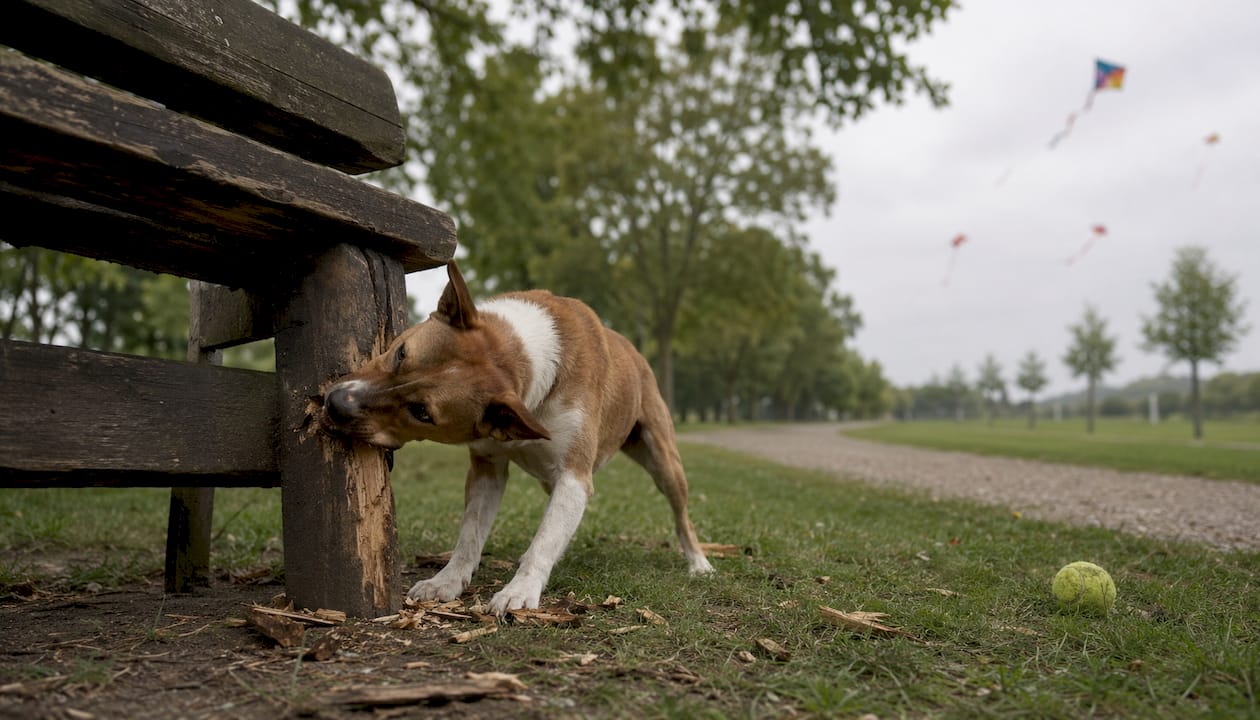
Destructive chewing. Dr. Gary Dattner of Tandem Vet Care explains that chewing is self-soothing. When a dog lacks appropriate outlets, it redirects that impulse to household items — shoes, baseboards, couch cushions. The target is often something carrying your scent, which gets misread as spite. It isn't.
Velcro behavior. Constant pawing, following you from room to room, nudging your hand every few minutes — Dr. Dattner describes this as a dog actively trying to initiate the engagement it isn't getting elsewhere. Puppies and younger dogs do this most visibly, but any age can show it.
Inability to settle and excessive sleeping. These two seem contradictory but both signal the same problem. Dogs in unstimulating environments sleep roughly 20% more than dogs in enriched ones. A dog that naps all day and still can't settle when you're home isn't well-rested. It's checked out.
Pro Tip: For the first 72 hours, note the exact time each problem behavior starts and what happened in the hour before. Patterns that cluster around mid-morning or late afternoon, when activity is lowest, point strongly toward understimulation rather than anxiety or pain.
How do you tell understimulation apart from anxiety or a medical problem?
Pattern and timing are the most practical diagnostic tools you have before a vet visit.
Understimulation builds gradually. Behaviors get worse over days or weeks as the dog's routine becomes more monotonous. Separation anxiety, by contrast, triggers immediately at departure: the dog escalates within minutes of you leaving, regardless of how long you're actually gone. If you set up a phone camera and the chaos starts before you've reached the end of the driveway, separation anxiety is the stronger suspect.
Medical causes follow their own pattern. House-soiling, sudden lethargy, compulsive licking, or changes in appetite can all look like boredom but may point to pain, GI problems, allergies, or cognitive dysfunction in older dogs. Boredom behaviors also tend to respond quickly to enrichment. Anxiety and medical signs don't.
Red flags that need a vet, not a puzzle feeder:
- Blood in stool or urine
- Sudden appetite loss lasting more than 24 hours
- Severe or new-onset lethargy
- Repetitive self-injury (licking a spot raw, obsessive tail-chasing)
- House-soiling in a reliably trained dog
What to record before your appointment:
- Time of day each episode occurs
- Frequency per day and whether it's getting worse
- Whether the behavior happens only when you're absent
- A short video clip if possible — vets and behaviorists find these far more useful than descriptions
What enrichment can you start today to reduce understimulation?
Mental enrichment — nose work, problem-solving, working for food — often resolves understimulation faster than adding more physical exercise. Bradley Phifer of the CCPDT puts it plainly: "a tired dog is a well-behaved dog" is only half the story. Exercise without mental engagement leaves the thinking brain untouched.
A simple daily routine template
| Time slot | Activity | Duration |
|---|---|---|
| Morning | Nose-work or scatter feeding | 10 min |
| Midday | Puzzle feeder for a meal | 15–20 min |
| Afternoon | Short training session (new cue or trick) | 5–10 min |
| Evening | Structured walk with sniff breaks | 20–30 min |
| Anytime | Appropriate chew (bully stick, rubber chew) | As needed |
Frequency matters by age and breed. High-drive working breeds — Border Collies, Belgian Malinois, Jack Russell Terriers — need two or three mental sessions daily. A senior Basset Hound may do well with one shorter session and a slow-feeding bowl. The indoor mental stimulation guide at Bowlful breaks this down by energy level if you want a more tailored starting point.
Walk structure counts. A 30-minute walk where your dog sniffs freely provides more mental work than a brisk 45-minute march on a tight leash. Let the dog lead the nose. Varied routes add novelty; the same sidewalk loop every day stops registering as stimulation.
Low-cost options that work: a muffin tin covered with tennis balls (hide kibble underneath), a snuffle mat made from fleece strips, a frozen Kong stuffed with plain yogurt and kibble. Rotate toys every few days so nothing feels stale.
Pro Tip: "Work for food" is one of the highest-return enrichment swaps you can make. Replace one meal per day with a puzzle feeder or a training session where the dog earns kibble piece by piece. It costs nothing extra and adds 15–20 minutes of focused mental work.
Two-week starter plan: Week one, add one puzzle-feeder meal and one 5-minute training session daily. Week two, layer in a nose-work game three times per week. Most owners see a calmer, more settled dog by day 10–14.
How does feeding format and meal timing affect your dog's behavior?
Food is one of the most underused enrichment tools. Scatter feeding and meal-dispensing toys activate foraging instincts that a bowl sitting on the floor never touches. A dog that works for its food is mentally occupied, not just fed.
Meal size and timing also shape energy patterns. Large, infrequent meals can produce energy spikes followed by restless troughs. Two or three measured meals per day, sized to the dog's actual caloric need, tend to produce steadier behavior. Overfeeding is its own problem: excess calories fuel the hyperactivity that gets mistaken for understimulation. The relationship between overfeeding and hyperactivity is worth understanding before you adjust portions.
Practical feeding swaps:
- Replace a standard bowl with a slow-feeder or snuffle mat at least once daily
- Use a portion of the daily kibble allowance as training rewards during enrichment sessions
- Pair the puzzle-feeder meal with the dog's lowest-energy window (typically mid-morning or early afternoon) to fill the dullest part of the day
- Consider a functional feeding station that keeps feeders, mats, and chews organized and accessible
Portion accuracy matters more than most owners realize. The RER-based feeding science behind Bowlful's plans calculates each dog's actual resting energy requirement by breed, weight, and life stage. Research suggests lean-fed dogs may live up to 1.8 years longer than their overweight counterparts. Getting calories right isn't just about weight — it directly affects the energy level and restlessness you're trying to manage.
How do you track whether your enrichment plan is actually working?
Set a baseline in the first three days: count how many times the problem behavior occurs, note its intensity on a simple 1–3 scale, and clock how long it takes your dog to settle after you arrive home.
| Timeframe | What to expect |
|---|---|
| Days 1–3 | Baseline logged; no change expected yet |
| Week 2 | Frequency of problem behaviors starts to drop |
| — | Dog settles faster; destructive episodes rare |
| — | Stable improvement or clear plateau indicating professional help needed |
Daily log (takes 2 minutes): note the date, which behaviors appeared, time of day, and a 1–3 intensity rating. Once a week, count the total episodes and compare to the previous week.
If you see no improvement after four weeks of consistent enrichment, or if behaviors are intensifying, that's the point to contact a certified professional dog trainer (CPDT-KA) or a veterinary behaviorist. Boredom-driven behaviors respond to enrichment relatively quickly. Persistent signs that don't budge usually have a deeper cause.
Key Takeaways
A dog showing persistent restlessness, destructive chewing, excessive vocalization, and velcro behavior despite regular exercise is almost certainly understimulated, and the fix starts with mental enrichment paired with accurate, portion-controlled feeding.
| Point | Details |
|---|---|
| Core behavioral signs | Restlessness, destructive chewing, excessive barking, velcro behavior, and inability to settle are the clearest indicators. |
| Rule out medical causes first | House-soiling, sudden lethargy, or compulsive licking may signal pain or illness, not boredom — see a vet before assuming understimulation. |
| Mental enrichment beats exercise alone | Nose work, puzzle feeders, and training sessions address the thinking brain in ways that walks alone do not. |
| Feeding format is enrichment | Scatter feeding and meal-dispensing toys add 15–20 minutes of daily mental work at zero extra cost. |
| Bowlful's RER-based plans | Bowlful's personalized feeding plans calibrate calories to breed, weight, and life stage, supporting steadier energy and calmer behavior. |
Why enrichment without the right nutrition only gets you halfway
Most articles on understimulation stop at enrichment activities, and that's a real gap. A dog eating the wrong number of calories for its size and life stage will either have too much restless energy to engage with a puzzle feeder or too little drive to bother. The behavior and the bowl are connected.
What I find consistently overlooked is how much meal timing and portion accuracy shape a dog's baseline mood. A dog running on excess calories is already in a state of low-level agitation before you've introduced a single enrichment activity. Conversely, a dog that's slightly underfed loses the motivation to engage with nose work or training. The window where enrichment actually lands is narrower than most owners expect, and it's set by nutrition.
The combination that works: accurate portions based on the dog's actual RER, meals timed to the dog's energy troughs, and at least one meal delivered through a puzzle feeder or scatter mat. That's not a complicated protocol. It's just treating food as part of the enrichment plan rather than a separate chore. Always confirm any significant diet change with your vet, particularly for dogs with existing health conditions or seniors whose needs shift with age.
Bowlful makes it easier to get the nutrition side right
Most enrichment advice assumes the feeding side is already handled. For a lot of dogs, it isn't. Portions are guessed, meal timing is inconsistent, and the calorie count has nothing to do with the dog's actual breed, weight, or activity level.
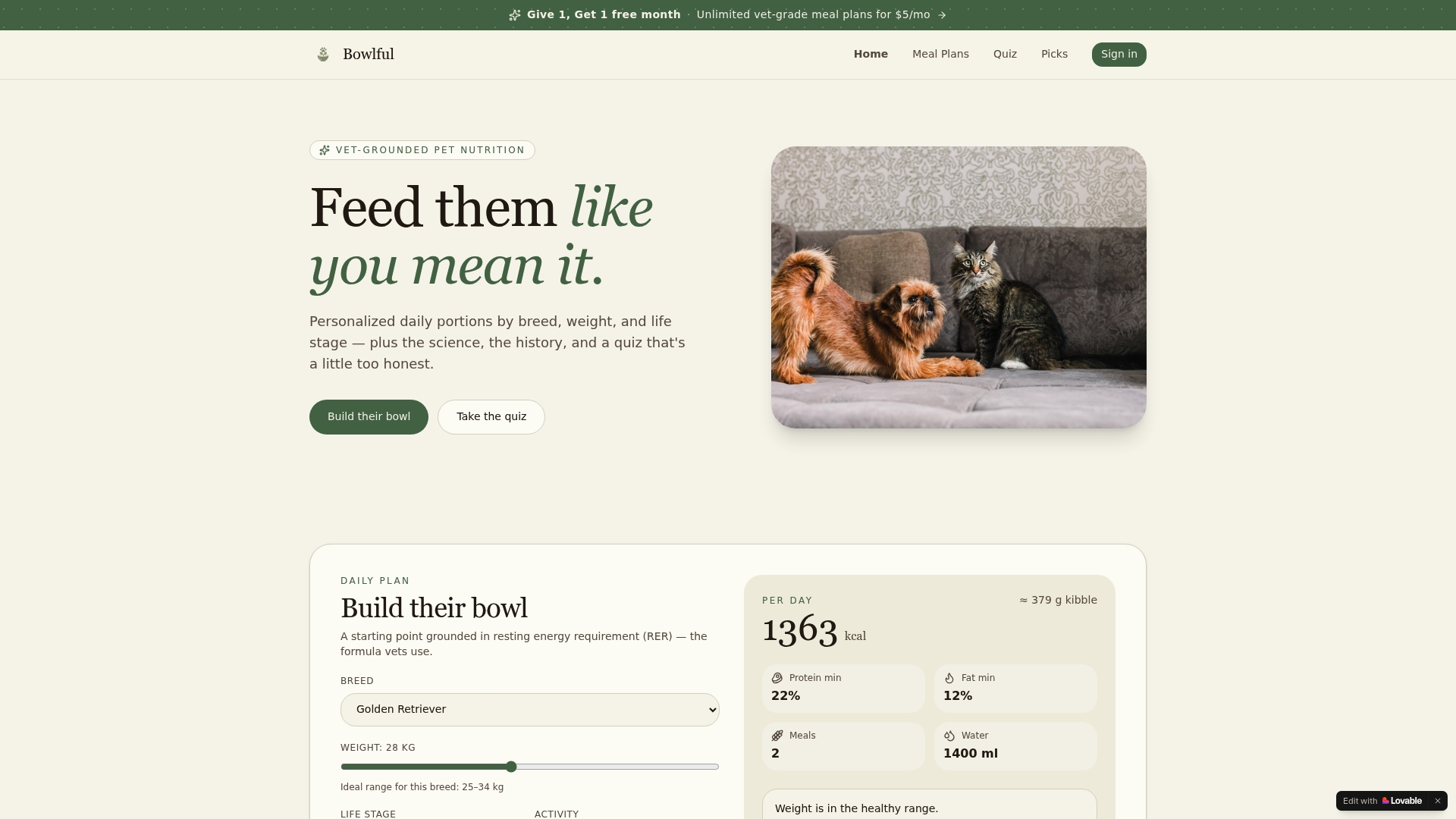
Bowlful builds personalized feeding plans using the same RER formula veterinarians use, calibrated to your dog's specific breed, life stage, and weight. The plans integrate naturally with enrichment: portion out daily kibble for puzzle feeders and training rewards, time meals to your dog's lowest-energy windows, and stop guessing whether your dog is eating the right amount. Take Bowlful's interactive feeding quiz to get a plan built around your dog's actual needs, not a generic bag recommendation.
Useful sources and further reading
Veterinary and behavioral references used in this article:
- Do dogs get bored? — Great Pet Care (Bradley Phifer, CCPDT; enrichment and exercise evidence)
- Boredom, anxiety and destructive behavior in dogs — Vetster (Dr. Jo Myers; off-switch concept and differential diagnosis)
- Bored dogs — Cesar's Way (Dr. Gary Dattner; chewing, velcro behavior, medical red flags)
- How to Tell If My Dog Is Bored — Many Pets (pattern and timing diagnostics)
- 10 Signs Your Dog Is Understimulated — GetAPet (core behavioral sign list)
- Bored dogs: how to recognize and solve doggy boredom — AKC (enrichment activity examples)
Bowlful further reading (suggested order):
- The science of feeding dogs properly — start here for RER/MER basics
- Indoor dog mental stimulation guide — practical enrichment by energy level
- Bored dog eating habits — how boredom affects food behavior
- Working breed behavior indoors — high-drive breed adaptations
Pro Tip: If you're unsure whether your dog's behavior is boredom, anxiety, or a medical issue, start with the vet visit and the 72-hour behavior log simultaneously. You'll arrive with data instead of a vague description, and that makes the appointment significantly more useful.
This article is general information, not veterinary or behavioral advice. Confirm any significant changes to your dog's diet or care routine with a qualified veterinarian for your dog's specific situation.